
If you’re new around here, these polaroids are a place where I journal through small windows. They’re more personal than my longer form essays and (usually) more regular. Out of all the places you could be, thanks for being right here.
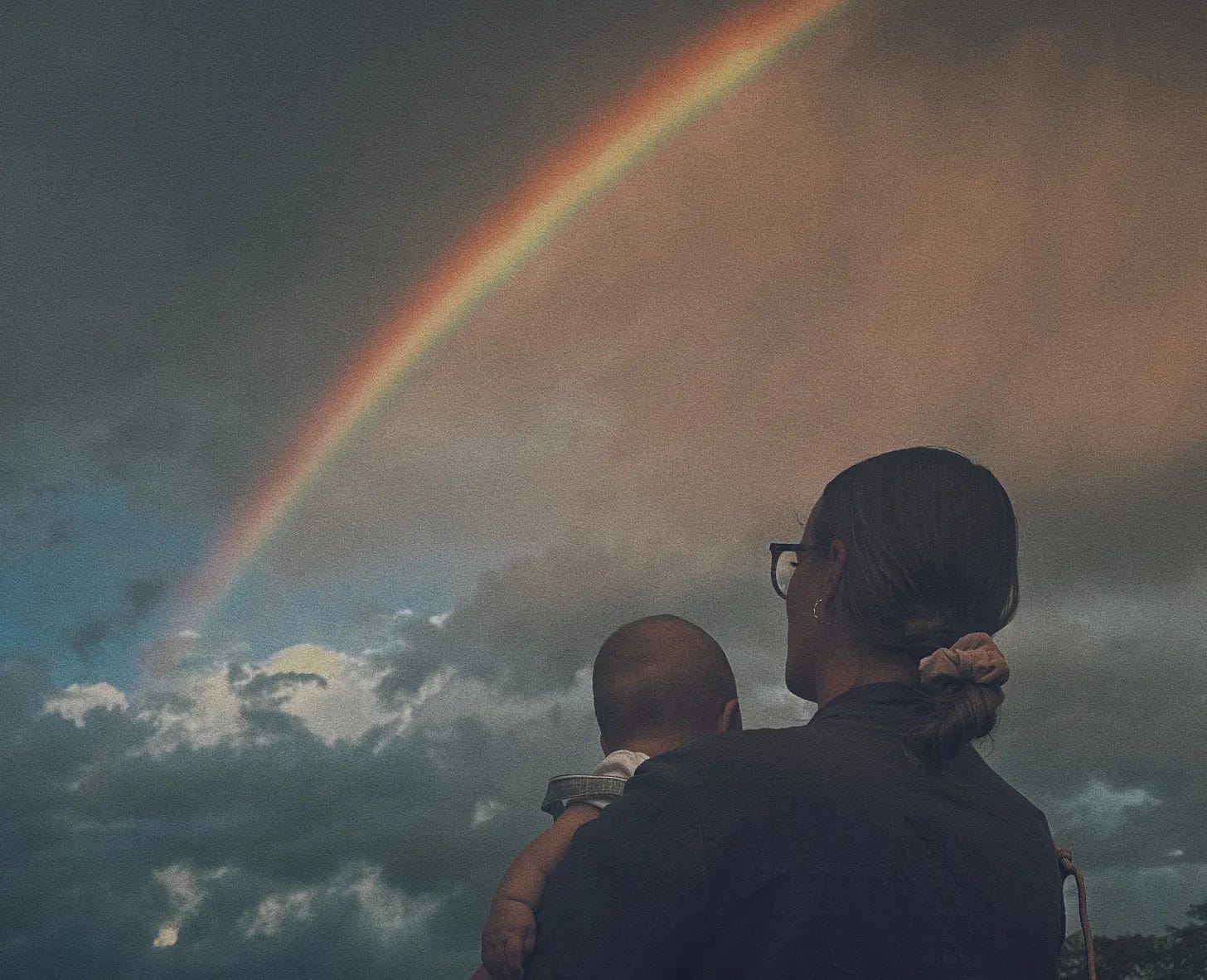
Kaleidoscopic moments / spinning / turning / slotting / shifting again before long / fifth / sixth / where-are-we trimester / of post-partum weaning and my second baby is nearly a child and learning to stand on the soles of his soft / cloud feet. His first footprints press through leather moccasins which I can hold in the middle of the palm of my hand. Small ovals, shining.
Ken, the Noongar1 word to mark the action of taking a step / Ken, the Noongar word to mark the act of walking / Ken, also the word to dance.
The land where I walked as a child has soil naturally low in nutrients—chalky, lime-rich and free-draining. From our old family home, the skyline is shaped by an Iron Age hill fort and, before that, a Bronze Age hilltop enclosure. The attic window faces a steep north-facing slope, carved with one of Wiltshire’s oldest white horses, revealing the white chalky bedrock underneath. It was upon these chalky fields that my dad once farmed.
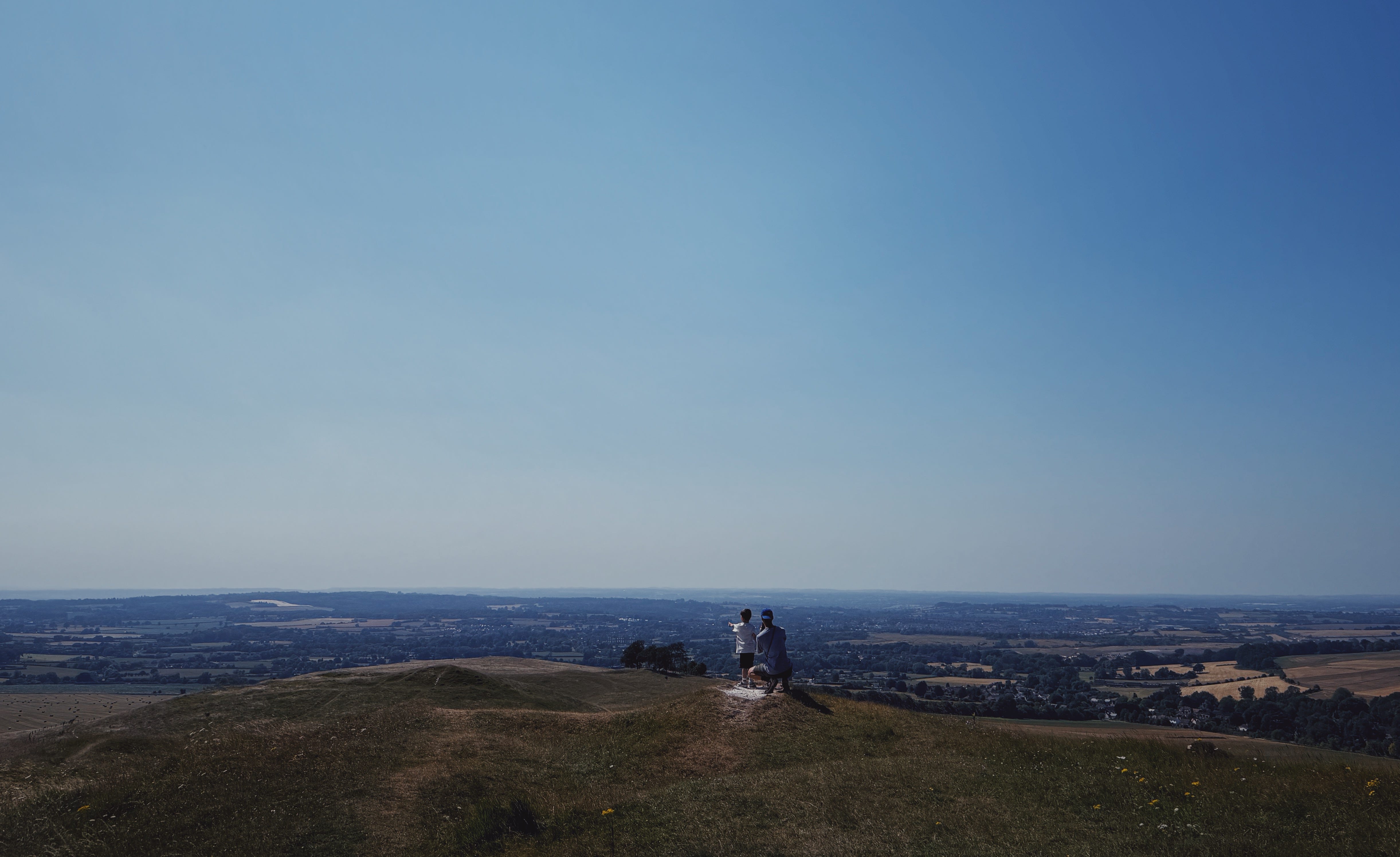
Thousands of hectares in this county undergo fallowing. Fallow field rotation in Wiltshire involves resting workable land for a season to restore soil organic matter, manage weeds, and break disease cycles. This echoes the scriptures I read: God commands His people to work their land for six years, but in the seventh year, they were not allowed to sow seeds / prune vines / or harvest crops for profit. The land was given time to rest, lying naked under the open sky. I couldn’t stop thinking about these exposed and empty fields during my seventh year of living in Australia, just before my second child was born. It was a fallow year—a strange, silent rest defined by stillness / and not necessarily of my own choice. Fallow fields can like foolishness in the short run. I couldn’t see it then, and wouldn’t have wanted to, but now I realize there was an invisible, somewhat risky replenishing happening beneath the soil, with new designs unfolding. If all this sounds mysterious and vague, I can only agree that it was and that the harvest may or may not show in the years to come.
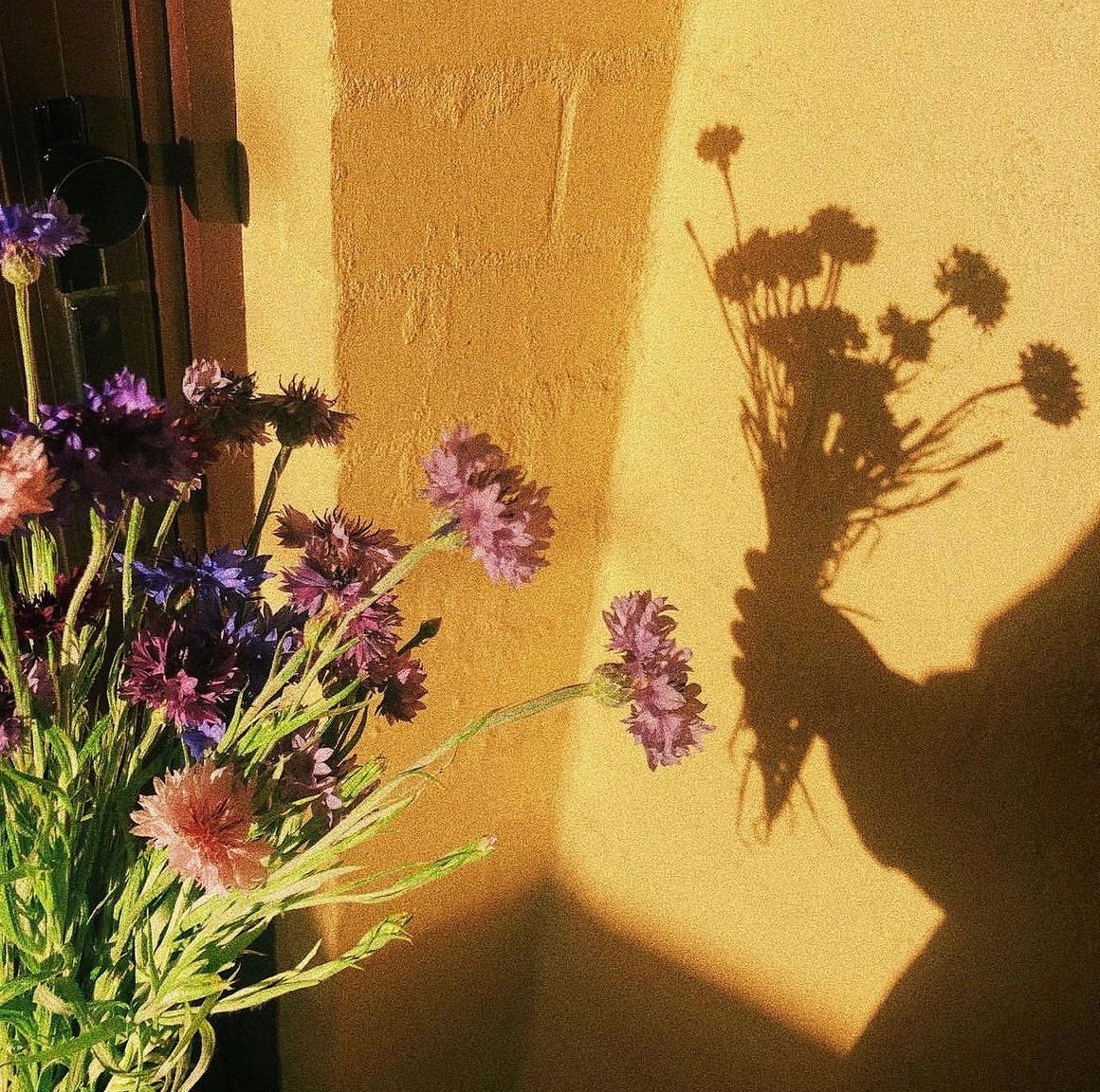
Looking back further, before the weight of motherhood took root, in one of our neighborhoods in Australia, I remember carrying a posy of my blue and purple cornflowers across the road to a neighbour; one of so many small acts of learning to participate in a community and culture that I wasn’t born into. We grew them from a small patch of soil that had lain empty since we moved into the house. As I carried them across the road in the day’s waning orange light, I heard a whisper on the breeze:
It’s a simple joy to give away the labour of sunlight.
In the fallow fields in ancient Hebrew scriptures, whatever grew without labour was left for the orphans and widows to take: whatever remained was for those who needed it most. Now I look at both my children and wonder what I’m leaving behind for those who need it / colours turning / blue cornflowers / green baby eyes / bronze bushland / sunset here / sunrise there / family here / family there / absence here / loss there / infinite possible combinations / infinite ways to give joy away / infinite ways that sunlight sustains us / but we can only grow cornflowers on less than 8% of the earth’s surface / we must be rooted somewhere / maybe upon a fallow field / in infinite light / it slows / to a still / hues slotting into place / forming a new design.
Five Days before I became an Australian citizen, and just a few weeks ago, I was crouching in a Tuk-Tuk being driven through a cemetery in Manila. Leaving my camera behind, I watched flashes of tombstones, market fronts, and homes from a window the size of my hand were shifting / and turning / greys / sheeted rooves / pale blues / bold yellows / whitewashed / patterns / spinning / slotting. This was the first family I had returned to visit in over a decade of work. I was last here eight years ago, when their daughter was still a child.
Those few weeks ago, I saw her. I hugged her. I met her son. She asked why I remembered her. Both of us now mothers.
In a kaleidoscope, a tiny shift in a single bead is multiplied by six or eight, transforming the entire design.
Here we both were, years later, her and I, mothers, turning, together in the same cramped room. Here in this cemetery, people take their place quietly, and somewhat invisibly, amongst ancestors. Clearing out these cemetery slums are a priority of the government during eviction drives, but many residents rely on jobs inside the graveyards, like stone sweeping, floristry and masonry. Though often controlled by informal syndicates, many of these communities are concealed to the general population. My entry here was concealed. Homes here are defined by change, impermanence and fragility; rotating shapes.
When I had visited last time, a child had drawn a coffin in this house on the boarded stairwell wall in black ink. Now, I saw drawings of playgrounds and swings in coloured crayons. I see the family’s house extension, their pride. I witness her composure, her permanence in this place, even though I ask, “Where will you go?” reaching for a pillar of certainty into her future. I listen as my colleague asks through the archway of the past, “What would you go back and tell your younger self, if you could?” and I hear her reply: “That my little dreams mattered.”
After my visit, a friend asked me, ‘Had anything changed since your last visit?’ and, in the most visible ways, not really. They were still living as ‘squatters’ between tombstones, their toothbrush holder, different now, but still nailed to the same cement wall.
But, in impossibly harder ways to measure, I sensed knowledge, maturity and wisdom. More children ran between the walls; flowers grew between the fractures. Her parents had jobs. The family were healthy. New life had been raised here, grown here, amongst the dead. ***
I thought of her / three days later when I held a paper certificate / of Australian citizenship / in my hands / wondering what my own little dreams once were / and hearing my own question echo // where will you go // wondering whether I had inherited someone else’s dream / it’s a strange thought I know / but some days / I don’t know how to walk through this bizarre dual inheritance beneath my feet / Ken, the Noongar action of taking a step forward / Ken / between the chalky green hills / of my birth / and the dry sand of my children’s country / between an official certificate of citizenship / between
all the shining / shards / that make us citizens / of earth and of heaven
between displacement / and return / between an abundant harvest / growing from fallow fields / between the tombstones / and the cornflowers / between the first baby steps and the worn out shoes /the colours turning / rolling / shifting / shining / and we sing / as the colours turn / that it is simple enough / to enjoy / the labour / of sunlight.
As always, I love hearing from you. Feel free to leave feedback, comments or reflections.
Words I Can’t Stop Thinking About :
“About ten years ago, I photographed a craftsman who makes sumi ink. I asked him, “What is the most beautiful black?” He paused for a moment, then answered, “The feathers of a crow wet with rain.” I still remember those words.” - Takashi Yasui, Photographer at Beyond the Frame
“These days, I am trying to see myself and the people around me with tourist’s eyes. I try to remain curious, as if I’ve never seen any of this before.” - Cailey Rizzo, I wanted to be Anthony Bourdain—until I met him. (CW : suicide, addiction)
“The laws of light shroud those who lurk in the deep.” - rebecca hooper, in her recent blog, Only Light at Between Two Seas.
Noongar is the overarching Aboriginal nation encompassing the entire South West of Western Australia, made up of 14 different language or dialect groups.
No posts
Comments
Nothing yet. Say the first thing.
Sign in to join the conversation.