
Socks that felt like razor blades, causing me to stop walking in the street while we sat on brick walls and my mum brushed away every potential crumb or thread she could find.
Shoes that I would spend hours choosing, only for them to cause agony. I would cry at how it had gone wrong again, upset that I had upset everyone else when I’d tried so hard to make them work.
My dad on his hands and knees, searching the house for my special toy Lamb, the one that made the world smell better when I could suck my thumb and press him against my face.
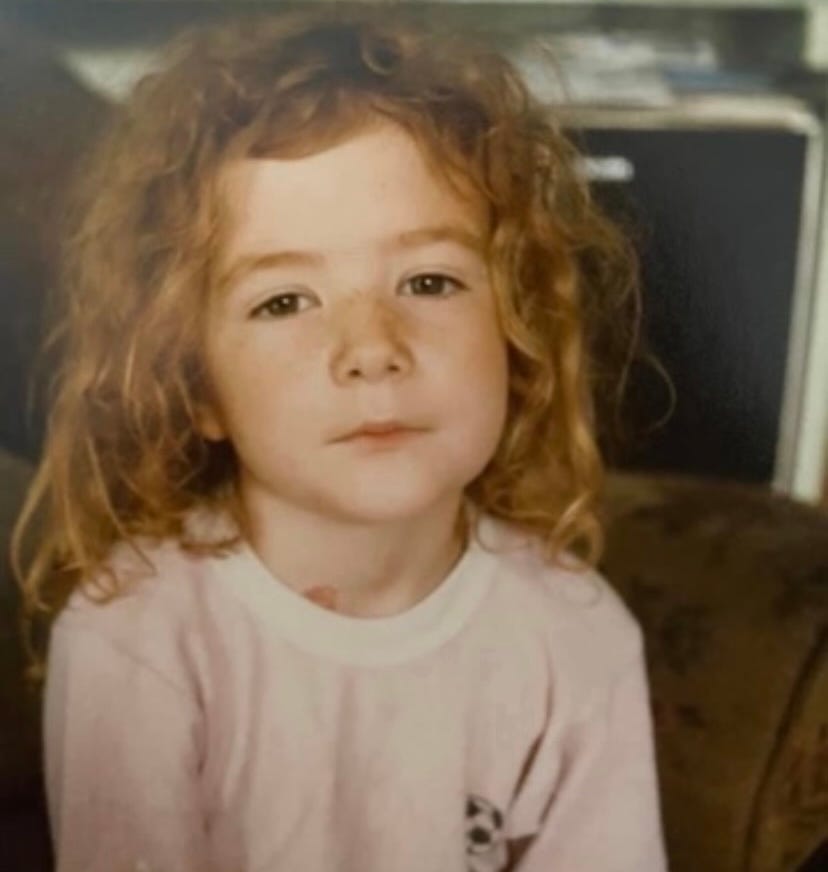
These are some of my earliest memories, and only a few examples. Many of these experiences have evolved and expanded with age.
I still need the same breakfast bowl.
Clothes can leave me feeling uncomfortable for an entire day if they don’t feel right.
Tiredness and hunger are things I try hard to avoid because the dysregulation they bring is difficult to manage.
Other traits I have lost, not because of age, but because for many years I tried to suppress my seemingly unreasonable behaviour and become more like everyone else.
Others may have been pleased with this seemingly acceptable adult, but the truth is that wasn’t really me.
Meltdowns have continued throughout my adult life and, in unhealthy relationships, were weaponised against me.
So too were many other parts of who I am.
Faced with difficult circumstances, I learnt to survive at a great cost to myself, relying on people-pleasing and dissociation to get by.
Recent years, and healthier, more stable relationships, have been a process of coming back to myself.
I live with someone who is patient, someone who can stay with me and with it all, without judgement or retribution.
Diagnosis has also helped enormously, allowing me to nurture both acceptance and self-compassion.
Alongside that, I have done a great deal of work with both my brain and body, learning to notice what is happening inside me and, in doing so, rebuilding a connection with myself.
There are many who would say that this understanding could have been reached without a diagnosis.
After all, I appear “high functioning”. But I know that I remain autistic.
I do have sensory differences.
I become overwhelmed.
I am still, at times, easily led.
People have taken advantage of my seemingly cheerful nature, and I often struggle to recognise those who are not quite what they seem.
Autism explains so much of who I am.
Recognising my support needs does not make those needs any less real.
My life is now more aligned with who I truly am, and that alignment has made things easier and gentler.
But when life’s curveballs arrive and they seem to arrive even more frequently in middle age, I know that I am still me.
I will still forget things.
I will still become overwhelmed by too many words or too many explanations.
I will probably change my mind several times.
I don’t say any of this to make things heavier.
I say it because, after years and years of hiding so much away, I need to remember that it is okay to be all of these things.
It is okay to find things difficult, to contradict myself, to trust someone and later realise that perhaps I shouldn’t have.
Because I am autistic: high, low, up, down, a little bit, a lot. It doesn’t really matter. This is me.
And luckily, I have found people to surround myself with who are kind and compassionate.
In a world so often hell-bent on division and on demanding proof of difference, that is all I hope for.
Because while we are still fighting tooth and nail as parents and carers to stop our children from being suspended, fined or punished for their differences, we do not need narratives that deepen that harm.
We need understanding, compassion and space to be exactly who we are.
Could Try Harder: An illustrated journey through an undiagnosed autistic adolescence by Eliza Fricker out now and available from all good bookstores
No posts
Comments
Nothing yet. Say the first thing.
Sign in to join the conversation.