
There is an extreme state that I have only realised was part of my survival or coping mechanisms, and one I have had to use far too recently.
This is a heightened fawning or people-pleasing that I have adopted in the moment, as well as afterwards.
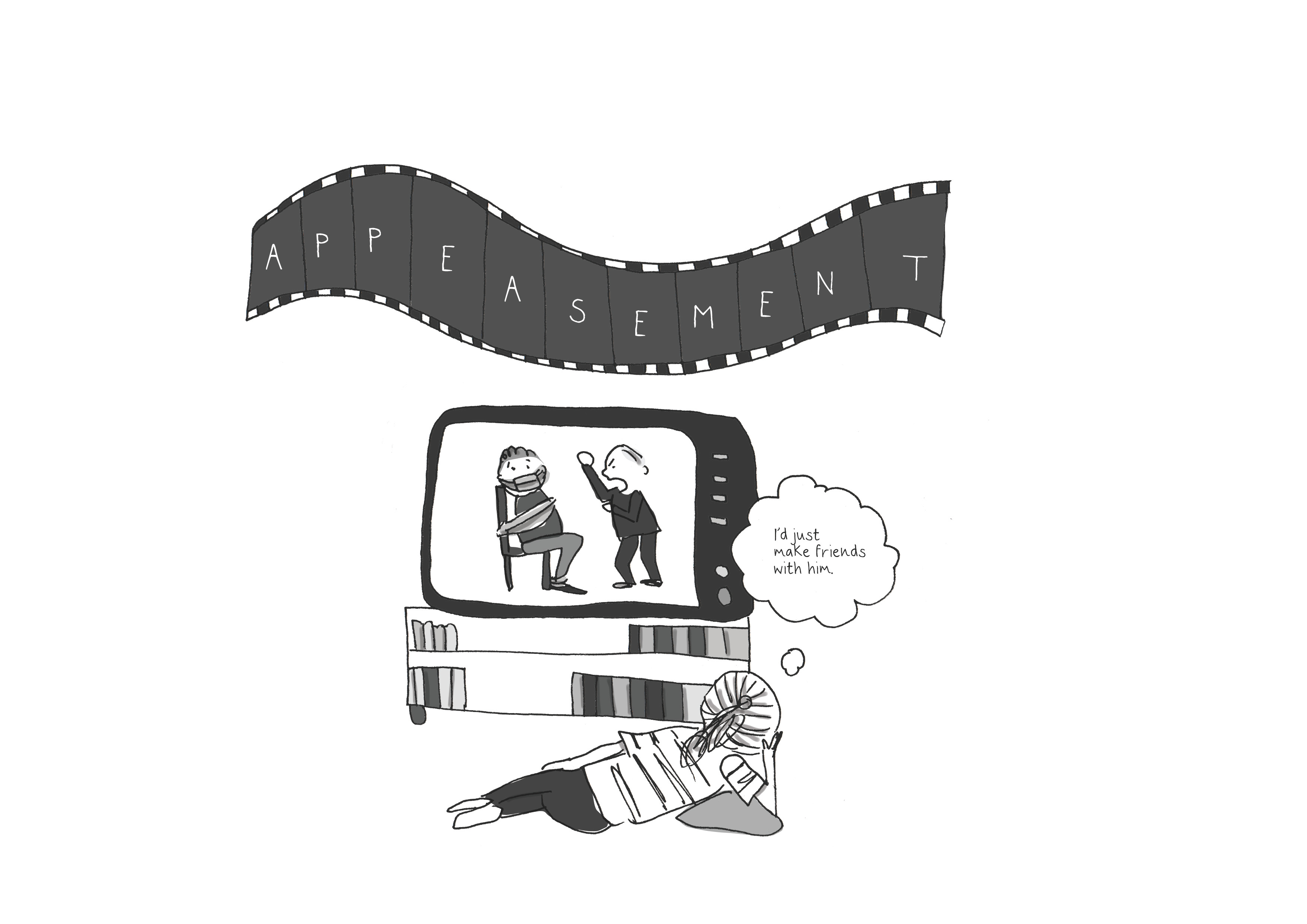
There is the fawning in the present state, when faced with very difficult people or situations. It is here I will appear agreeable, pleasant, easy-going and affable. I call this heightened because it is so ramped up that I do not remember much when I recall the time.
The other is an extended fawning, where I will protract this fawning to continue after a very difficult event or experience. I will continue to praise, celebrate and show enthusiasm for this. I may continue the relationship, send a card or present, talk at length about the person or experience.
The discomfort will remain, sometimes confused as excitement, and I will want and try to do anything to convince myself that the event or person was okay. That I can make it okay by convincing myself through sending a card, continuing the relationship, doing that activity again.
If I can convince myself this was good, then I can make it safe.
And I think there is a wider impact of this, particularly for girls and women who are taught from such a young age to be pleasant, agreeable, accommodating and to prioritise other people’s feelings.
If we become very good at pleasing others, we can become less practiced at pleasing ourselves.
We can learn to override the discomfort in our bodies because someone else is uncomfortable. We can say yes when we mean no. We can stay when we want to leave. We can make excuses for behaviour that doesn’t feel right. We can continue relationships, situations and experiences because we have become so focused on making everyone else okay that we lose sight of whether we are okay.
And this can put girls and women into situations that are harmful, because the instinct to keep someone else comfortable can become stronger than the instinct to protect ourselves.
This is one of the reasons I wrote Could Try Harder. I wanted to show the impact of what happens when we become so focused on pleasing others, meeting expectations and being who we think we are supposed to be, that we move further and further away from ourselves.
Because sometimes what looks like compliance, agreeableness or being a ‘good girl’ from the outside is actually someone learning to override themselves.
I am pleased that, in recent years, this disconnect from myself has dissipated as I have become able to stay connected to myself and feel more anchored. But I did have a recent episode where it became essential in the moment, and I only realised afterwards that it had happened again.
I felt sad and disappointed at the time, but then I realised it was a historical relationship, one that began before this coming back to myself. Perhaps there had been an element of this through the whole time and, actually, as a friend said afterwards, perhaps it was what I needed to do at the time to get out and away.
And so I am letting that pass through and on, while hopefully learning that the less these situations arise in my new, quieter, more observant time, the more these situations will stand out.
Thankfully, there are a lot less of them.
And I know what that was. I know why I did it. I don’t have to make it mean that I have lost myself again.
“This is why the mask of goodness is so dangerous. Because it works. It creates just enough distance between our pain and the people around us that no one notices how lonely it is inside. And if we are liked, we learn not to question it. We learn that safety depends on being palatable. And in that equation, it is always us who disappears.”
Dr Emma Offord.
Extract and illustrations from Could Try Harder by Eliza Fricker
No posts
Comments
Nothing yet. Say the first thing.
Sign in to join the conversation.