
I was driving back from Hackett’s, loaded up with hay for the goats, when two deer appeared in the road. A mother and her child, presumably. They did not seem alarmed by my pick up truck. They paused, eying both the truck and me, then the mother walked to the verge. The child, however, stayed put. She was very young, her fur still spotted with white, her eyes big, brown and mesmerizing. Happily, we were on a country road that doesn’t get much traffic. No other vehicles passed by. For a few minutes, I idled, gazing into the fawn’s eyes as she gazed into mine. Part of me urged her to move. Go to your mom. Be careful of big cars like this. The other part of me, the part of me that looked at her as she looked at me, was simply smitten. Her expression was gentle and curious. Was it possible she did not yet know fear? We kept regarding each other. Eventually, she decided it was time to return to her mother and made her way across the pavement to the verdant green of the woods. I drove slowly home, marveling at this fawn, who had somehow found my eyes amidst the huge assemblage of chrome, steel and glass that is our pick up truck.
And then there was the duckling. A few weeks ago, a friend found a soft and downy duckling, small enough to be cupped in the palm of her hand, peeping under a picnic table in a park that fronts the Hudson. She brought her to our farm in the hopes that our ducks might adopt her. But our ducks were alarmed when we tried to introduce her, and Jess C. was concerned about mixing wild and domestic birds. So the duckling spent the night in a cardboard box filled with straw.
In the morning, after conferring with various rescue organizations, Jess S. and I went to the park where the duckling had been found, hoping that her family might be there. I drove. Jess sat in the passenger seat, the cardboard box on her lap, an urgent peep-peep-peep sounding from within. We were under instructions not to catch her eye, not to pet her. She needed to identify with her own kind, not us. At the park, we wandered along the banks of the river, seeing no ducks, no nests, nothing except for a rocky shoreline and waves. Maybe her family had just left for a bit? They’d be back? The duckling madly batted around in the cardboard box. We placed her on a rock. She quieted down. She pecked at the mud. She looked good, calm, at home. We started to walk away. She hopped over puddles and pebbles, following after us, her eyes insistent, not letting us go.1
A few years ago, I inadvertently swept a baby praying mantis into my dustpan. He was about the length of my thumbnail, his exoskeleton still soft, his color the light green of a fresh new sprout. I took the dustpan outside and gently shook, but instead of hopping onto the grass, he hopped onto my wrist. And there he stayed. You’re very cute, I said, but you should go. He didn’t. We sat on the front stoop, in the sun, my list of to do’s forgotten, just me and the baby praying mantis, looking at each other. Probably about ten minutes into this, the stones were hard under my butt and the to do list had reaffirmed itself. Fondly, regretfully, I edged him onto a hydrangea leaf.
Later that day, working in the garden, something tickled the arch of my foot. I took off my shoe. There was a honey bee on the insole of my espadrille. I was amazed that she hadn’t stung me. Then I remembered the little praying mantis. Could he have somehow requested that the insect world to be kind to me, at least for a day or two?Another completely valid interpretation would be that the honey bee was looking out for herself. Had she thrust her stinger into me, she would have died when it ripped off. Instead, she brushed against the sole of my foot, as if to say, can you please move? Yet even in this scenario, the baby praying mantis may have helped, the light touch of its sticky feet having sensitized my skin to insect requests.
In any case, whether governed by causality, karma or coincidence, the day of the praying mantis and the honey bee remains imprinted in my mind. As does the fawn, looking at me through the windshield, and the duckling, chasing after Jess and me, piercing us with her eyes.
To be seen. To be seen by another creature, whether human or not, can be a treasure, a terror, or any number of in-between states. The way the praying mantis, duckling and fawn saw me fell squarely on the treasured side. I felt acknowledged. Maybe it’s only human beings who other, but I doubt it. All sorts of creatures, both plants and animals, establish territories and create boundaries between their kind and others. When these boundaries are momentarily lifted, it can seem like a revelation. Or, at the very least, a love letter.
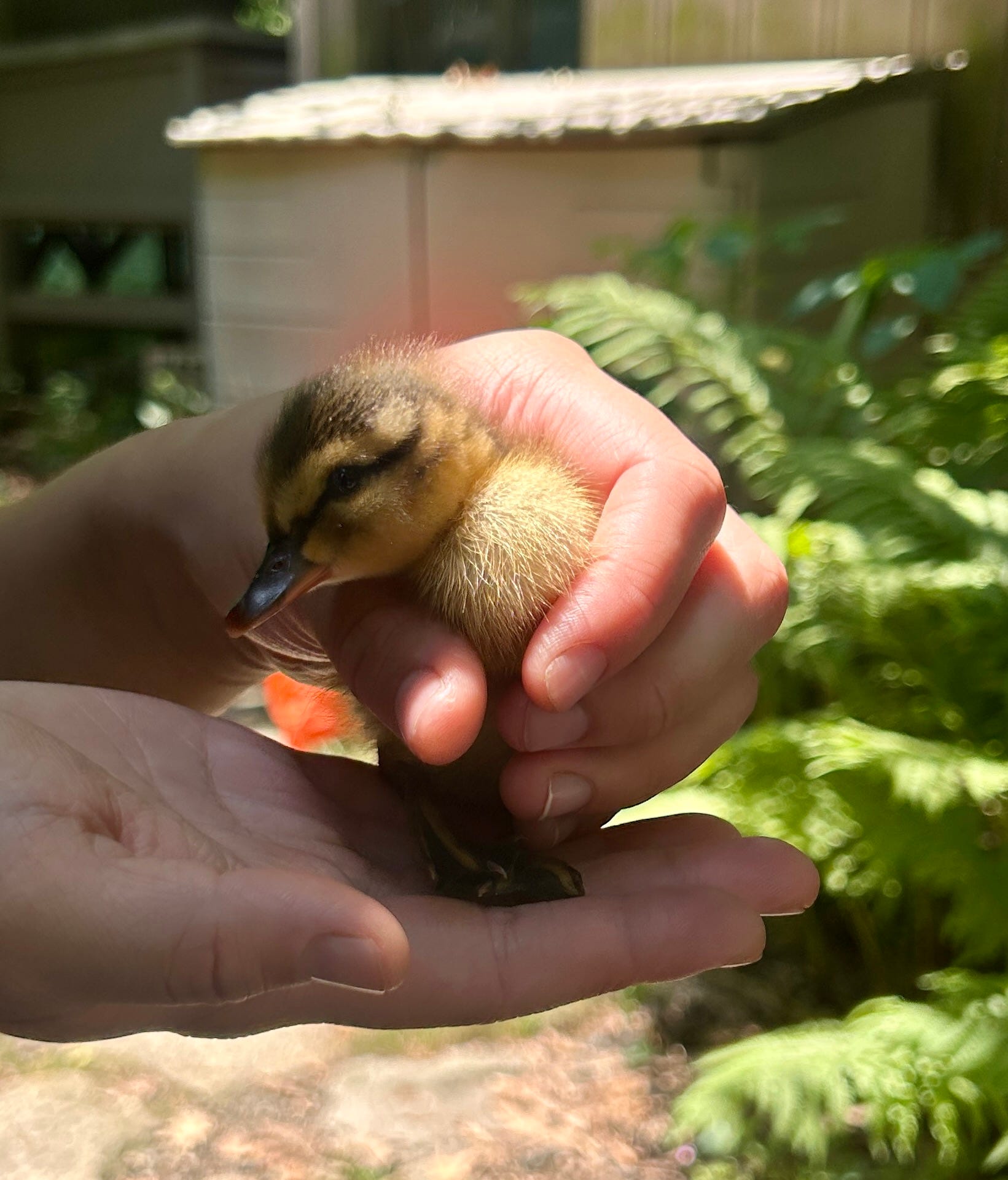
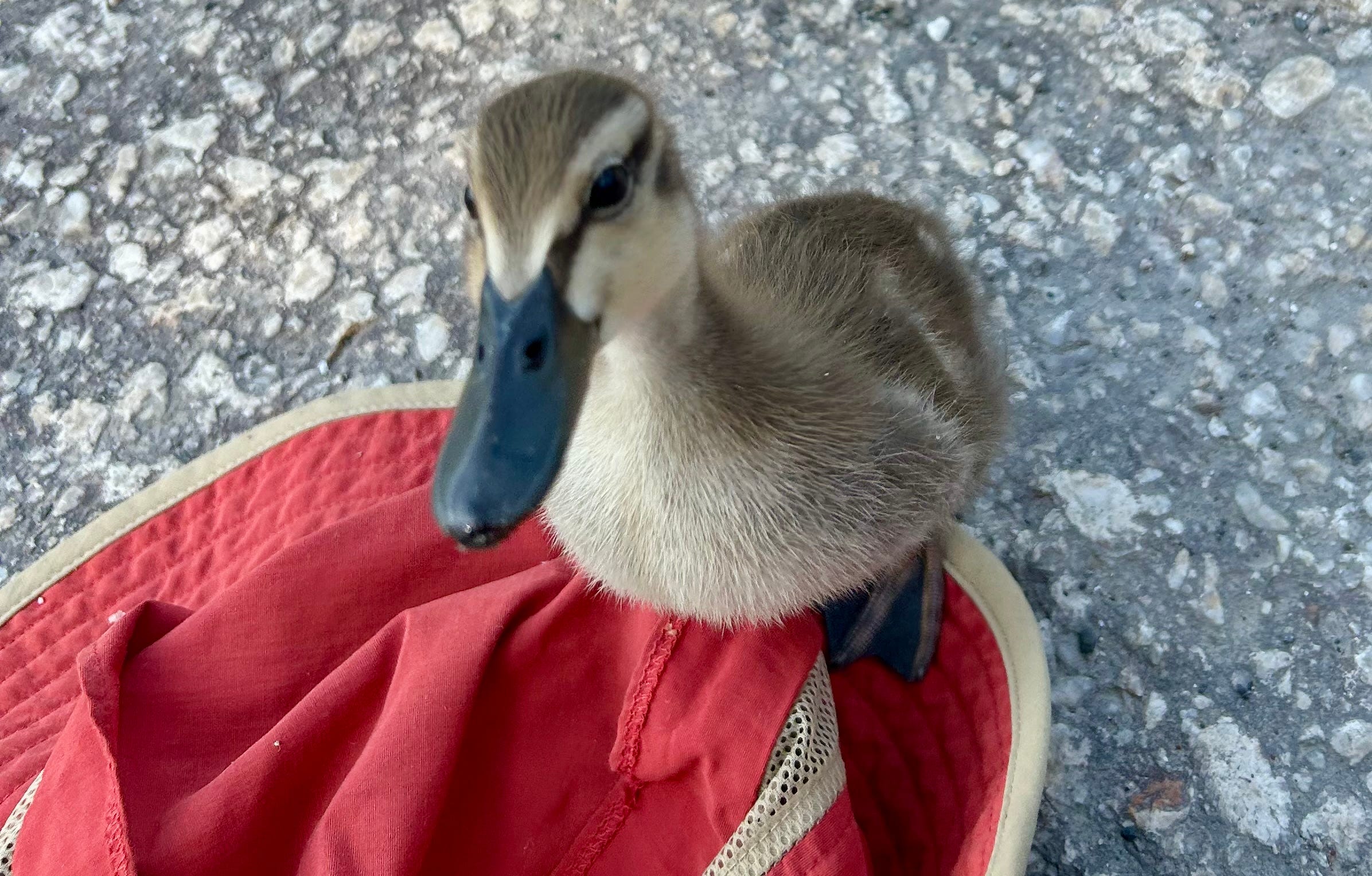
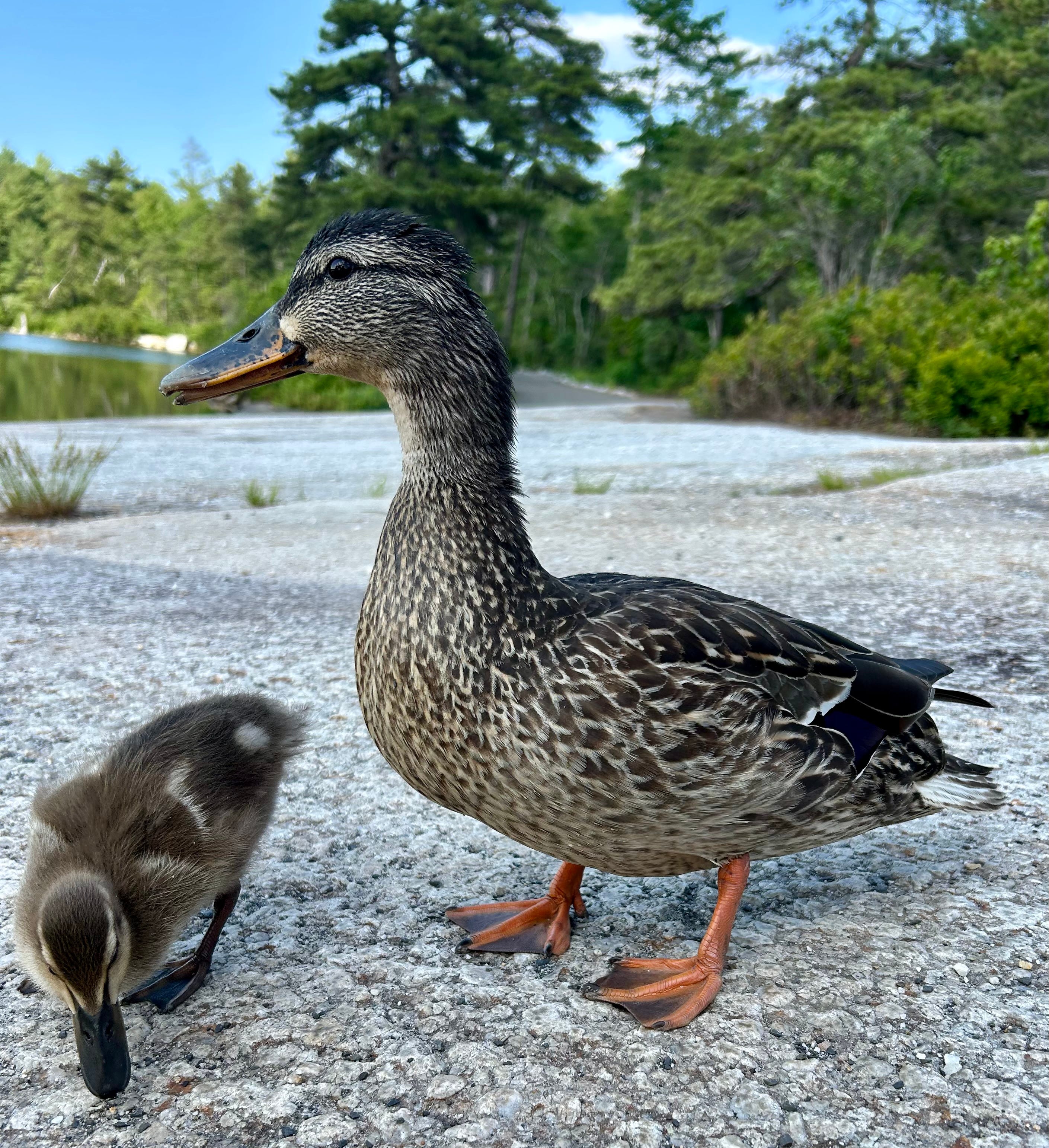
Jess ended up taking her to a re-wilding sanctuary in Beacon. They said the duckling was 10 days old and in good health. They will raise her until she is three months old, when she should be able to fend for herself.
No posts
Comments
Nothing yet. Say the first thing.
Sign in to join the conversation.