
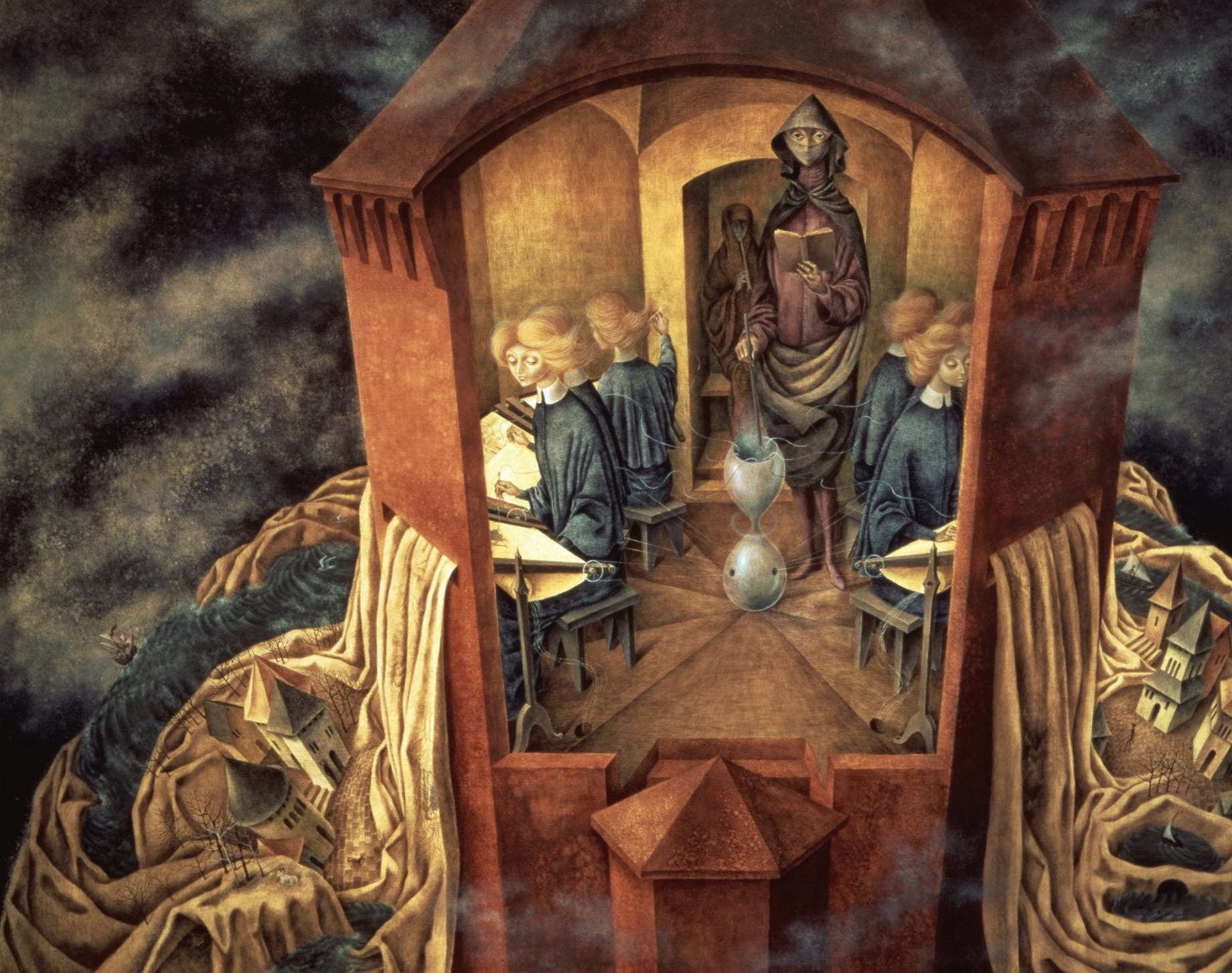
I am trying to finish the book I am writing. I am a few thousand words off my final word target. Not all of the words are good ones, many will be replaced, many will be made sharper, more coherent, more true. But my first draft is forming, and so is a baby inside me. Writing a book alongside growing another human is not what I had planned (but, I tell myself, I always did work well to a hard deadline). I am finding this pregnancy harder, not least I suspect because of my “advanced maternal age”, and that is affecting the shape and style of the book.
I will hand in a draft soon. Our baby is due in August. Those early weeks and months of being in a strange postpartum state will coincide with revisions and edits to the book.
I am not sure how the book I have in my head will become the one I end up holding. This image often comes to mind and it feels about right (I’m not sure where it originated and therefore who to credit — I see it drifting around the web):
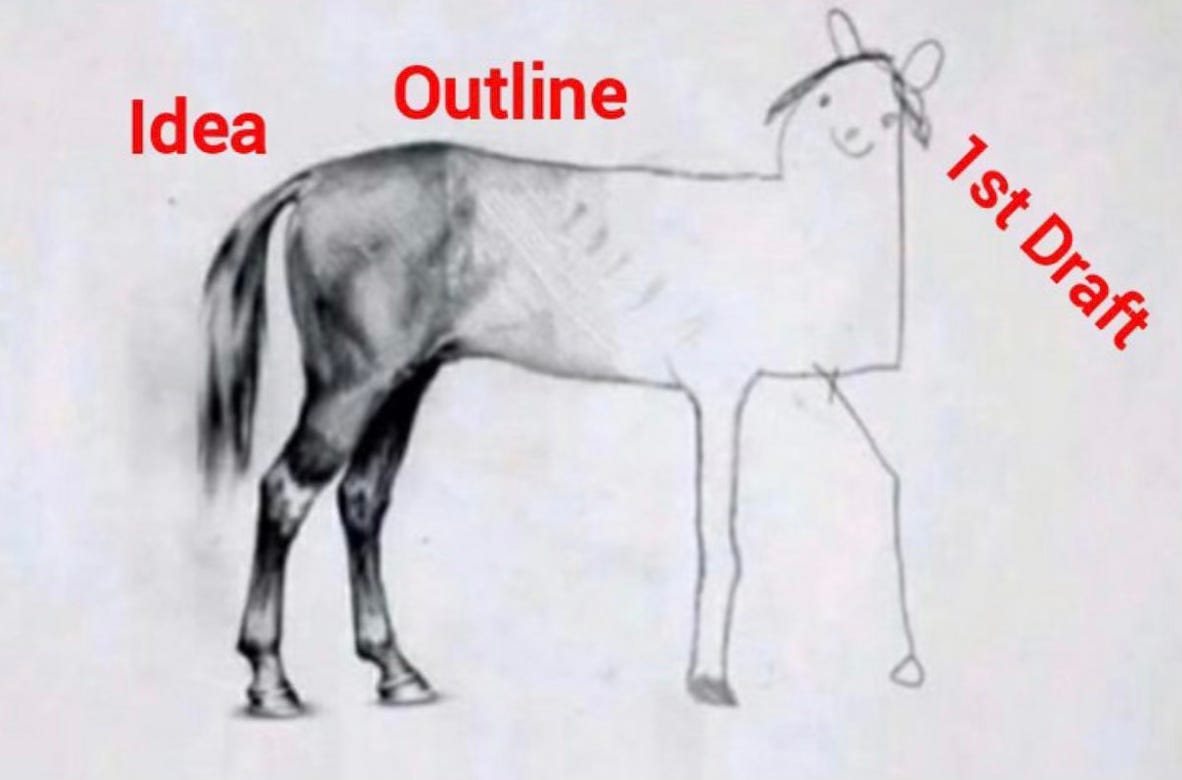
My book is part personal narrative, part exploration of my village, and part historical/mythical/spiritual/natural ranging, threaded through with encounters and conversations and observations. Writing a book proposal, and now an actual book that a publisher actually bought, has felt like a risky use of time, energy, emotion and resources. And yet it is a path — mundane, magic, surprising, confronting — that I feel compelled to walk, not knowing where it will lead. I am excited, I am apprehensive.
I am apprehensive too but also curious about giving birth. When our daughter was born, I went somewhere between the seen and the unseen, the here and there, the material and the spiritual. I was somewhere else but also entirely in my body. I was deconstructed, spoken to as elements, and then reformed into something slightly different, and I am still coming to terms with that difference. I felt separated from an idea I carried of myself and joined to something more true. I wonder if I will experience this again. I felt forced to confront the fact that life and death have always lived so close to each other, much as we keep them separate, and much as we like to treat both birth and death as medical, sterile, controllable procedures. In birth, I was reminded that flesh and spirit were never supposed to be separate.
Living in this old village I am reminded of the same thing — that until recently the physical and non-physical world were both true and indivisible. There are old stories here, superstitions, hallowed ground, darkness, light. There is a ghost that roams the village, there is a green men carved into the church — a human-like face spewing foliage; his expression seeming to say pay attention, asking us not to forget what it means to be alive. He surfaces in the human story whenever the green spirit of the world is at risk of being forgotten. My book moves through the buildings and hedgerows and other places of my Devon village, asking questions about who we are together, and what is forming us, and what raises the village it takes to raise a child.
Meeting my daughter face to face meant that we cleaved — apart, together. What had been two bodies in one body now became two bodies pressed together, as if trying to hold onto wholeness for a little while. Of course the world soon rushed in, and my encounter with wholeness, and with embodiment and ensoulment, and with someplace elsewhere, was soon replaced by the here and now — of crying and feeding and nappies and all the tasks and chores of sustaining a life. It is easy to lose sight of mystery. There are worlds humming and glowing behind, within, around this one. Birth showed me this, and my village shows me this.
I don’t really like the idea of ‘birthing a book’ or creating a ‘book baby’, and yet these two processes — creating a human and writing a book — have been intertwined for me. Each process has taken from the other and each has given to the other. Each process asks me to set expectations aside and to deal with what is in front of me — the physical, the emotional, the gut instincts, the desires, the mess, the wonder. Each is leading to the creation of something that is only partly in my control. In each, I have been wrenched from plans and ideals, and joined to this teeming life in all its givenness and nowness and mystery.
I am both curious and daunted at the prospect of finishing my book and giving birth. I turn to the seen and the unseen to try and make sense of both.
I watched the full moon pour into the window of the hospital room the night I laboured to give birth to our daughter, and I thought of the Nebra Sky Disc I had seen at the British Museum. Sky, moon, sun, Pleiades, boat. It had been distilled to essence, as if designed by a child. The blue-green patina of aged bronze offsets heavenly gold features. The Sky Disc is Bronze Age map which portrays time as a loop not a line, and is the oldest found depiction of astronomical phenomena. It was in my mind as I laboured, as if I existed with its creators; situated in a story, a place, a cycle. I had been waiting on smaller more private cycles happening in my own body.
The space that housed the disc was dark and the curators had filled it with an old earth song, which is the same song I hear outside our house under the milky way at night in the summer — crickets, breeze moving through grass, something beyond sound but still felt.
Clear winter nights in our village seem to fold down time, and so did birth, as if it were possible to briefly look through old Bronze Age eyes. I see the same Pleiades, the same moon, the same sky that has turned from them to us. It is all here: the patterns of the heavens, the world, a village, a body, a soul.
Many people want to find magic,
like a new car or computer,
want to put magic to work
making more money or keeping
them young and immortal.
These are the same things
people have always wanted
which is how magic grew
into capitalism with magic symbols
printed on every dollar.
If only someone would find
a new use for this old technology —
would magic become magical again?
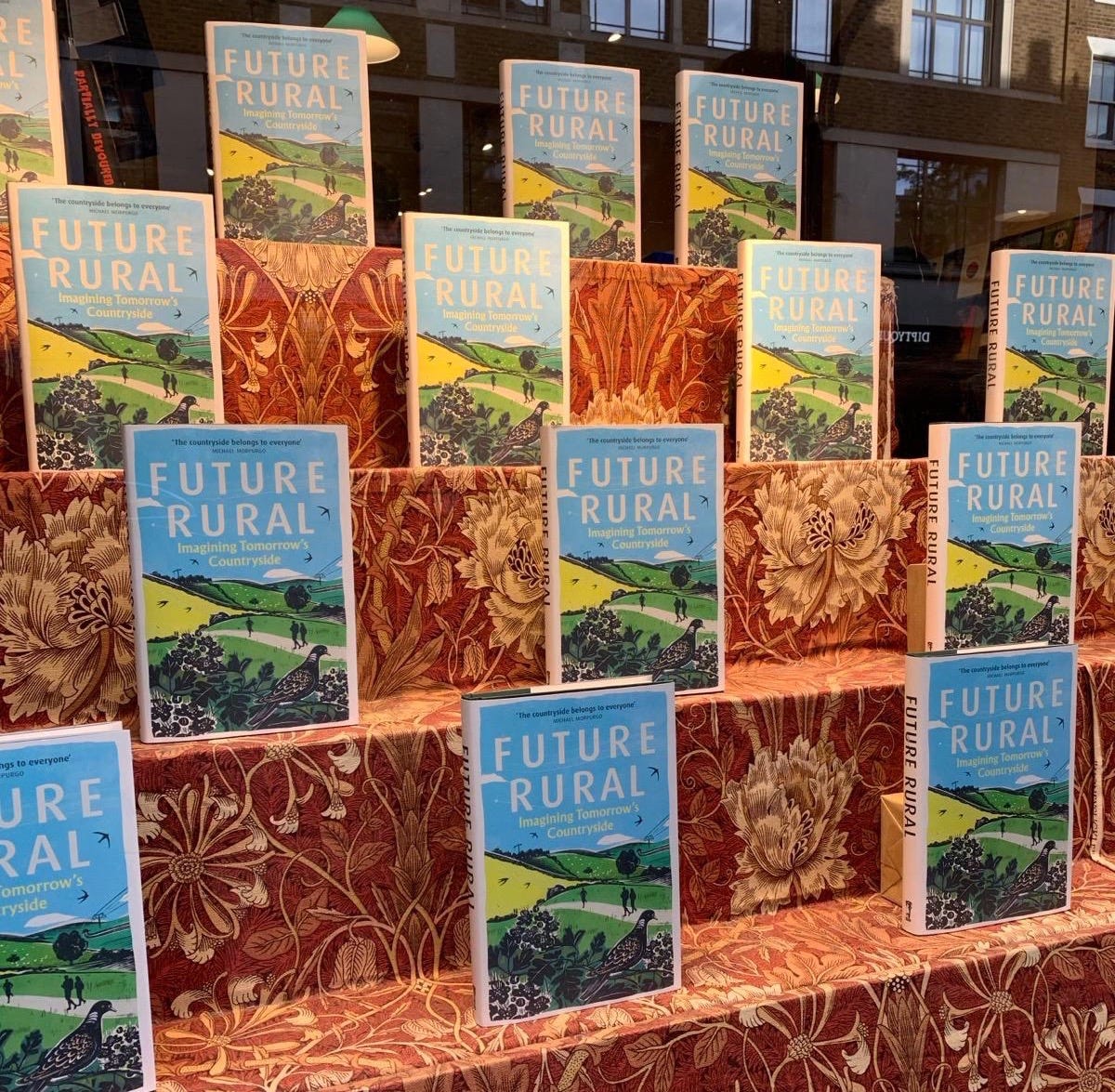
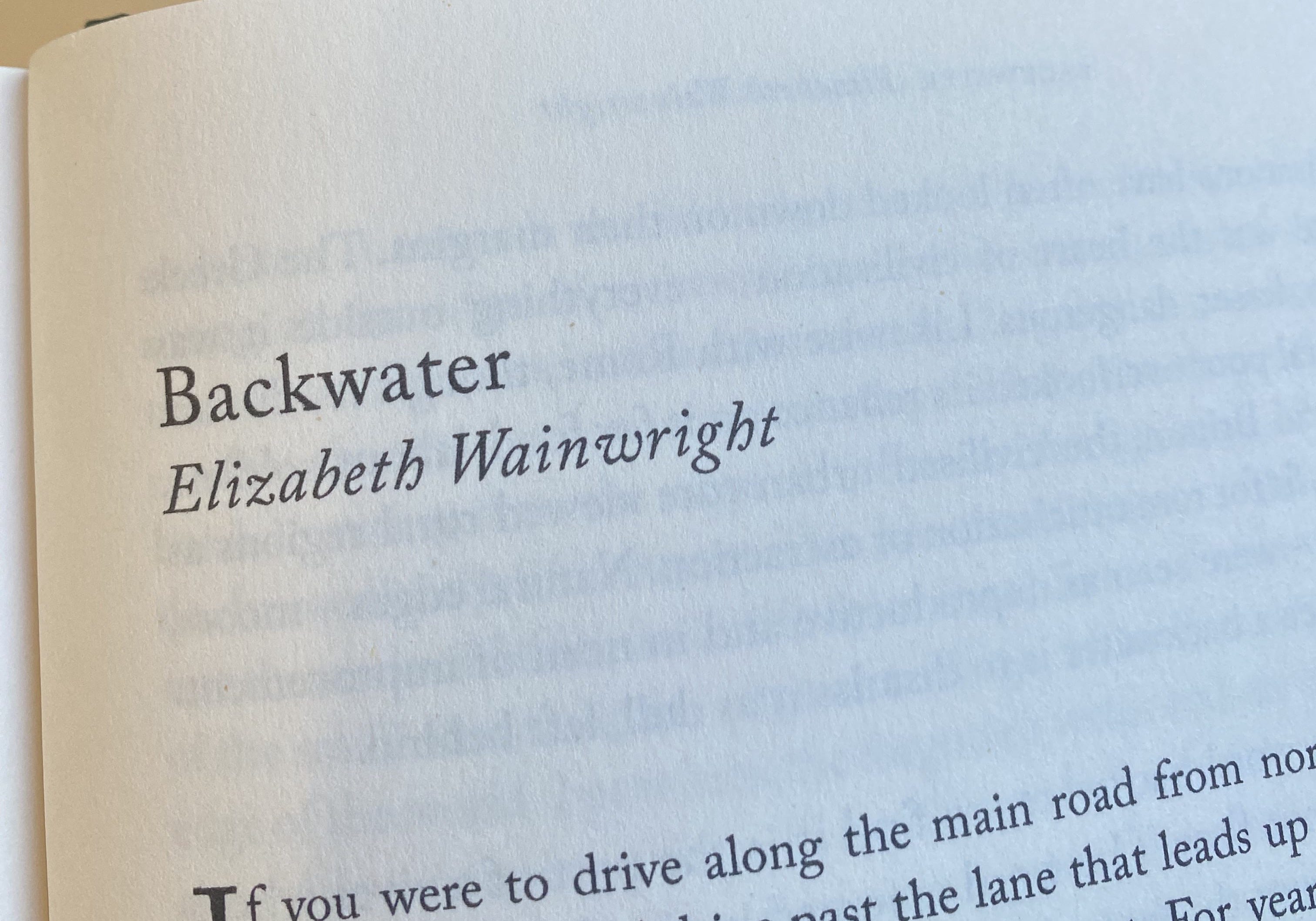
A book I contributed an essay to has just been published. It’s called Future Rural, and my essay is called Backwater.
From the blurb: “Future Rural gathers together a powerful chorus of diverse voices—writers, farmers, activists, ecologists, and thinkers – and asks them to interrogate the past and present in order to imagine what lies ahead for Britain’s rural landscapes and communities. From the creativity of the countryside and the impact of Empire on rural England, to the urgent need for affordable housing, equitable land access and the growing threats of climate change and habitat loss, this new collection confronts the complex realities facing our countryside. But it does so with hope, offering stories of resilience, regeneration and new ideas for how we live with the land.”
We even had a fancy book launch in London, at Daunt Books no less.
Thanks for reading. If you’d like to support my work, I’d be so grateful if you’d consider:
Liking (click the little heart button)
Sharing this post
Commenting
Becoming a subscriber, or upgrading to a paid subscription
More soon,
Elizabeth x
No posts
Comments
Nothing yet. Say the first thing.
Sign in to join the conversation.