
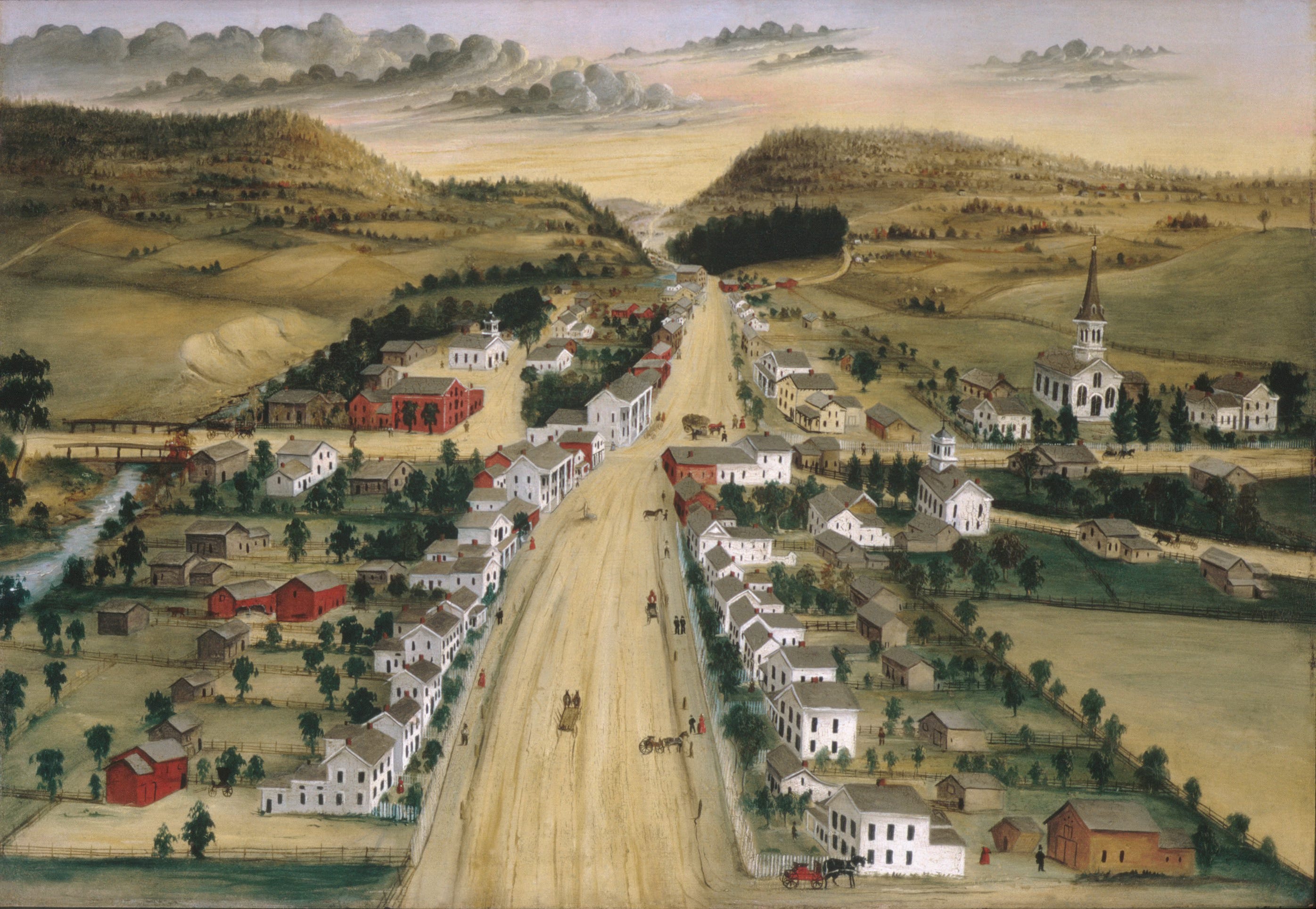
I notice lately that I tend to think about the figurative ‘village’ in one way: people. The village is, of course, made of people. The idea that ‘it takes a village to raise a child’ recognises the importance of community, of help, of mutual care and reciprocity and a network of people who might share relationship, goals, place, hopes.
I live in an actual village, and it is made of people, and many of the people support each other. But I am coming to see that a village is made of more than just people. An actual village comes to exist in a particular place, and so it is formed in part by the ecology of the place: by what the soils can grow, by what the climate nurtures or restricts, by the way humans and non-humans co-exist or rely on each other. And it is formed too by the time it exists in, and by the stories it carries; it has its own history and mythology, its own sense of what matters and what’s sacred. It is made of the seen and the unseen; of stories that are spoken and those that aren’t; of the spirit of the place and its people — the non-productive, the non-logical, the immaterial; the stuff of souls and hearts.
Living here, then, I am placing myself amongst people but also amongst nature, story, spirit. Each helps forms each.
I have been wondering: if this is true for the actual village — that it is formed by more than just people — then how does it apply to the more figurative village that we are seeking to raise children, combat loneliness, and build community?
In seeking a village to raise my daughter, I am seeking people and support but also a sense of place, a connection to things bigger than a human heart and smaller too, a connection to meaning and the stories that shape us and are shaped by us. The village I seek is where all these things might come together and shape each other: people, nature, spirit, story, identity (and the individual, civic and global, too).
Perhaps one reason many people are lonely and village-less is because we live in times that are trying to sever us not only from other people, but also from ourselves, from nature, from spirit. These times tell us that immeasurable and non-extractable things like care and relationship and nature for nature’s sake and anything connected to the immateriality and illogicality of ‘spirit’ are not worth pursuing, will not give us what we think we want.
And so we approach challenges separately. Restoring selves, community, nature, and meaning, are seen as separate quests.
I know these fractured quests. When we moved here we sought community — neighbours to know and be known by. But our daughter was born and I felt lonely, like I was watching the world through a glass screen, not able to touch it. I felt increasingly disconnected not just from a past sense of purpose and from interactions with other people, but from other things too. We had an allotment but little time to tend it. I knew more about baby illness than community activities. I knew the geography of my daughter’s skin more than I knew the fields outside. I would walk around the old church sometimes, seeking something — history, meaning, a sense of connection to things older than me — but doing so awkwardly, like I was visiting a museum of meaning and had forgotten how to make it come alive in my life. I felt like a body moving through the village, not properly in it: I was not in the soil, or in the spirit, I was barely in my own skin.
I simultaneously felt a gathering in my life — the birth of my daughter helped me to put some things into perspective — but also a fracture too. Pieces of my life felt distant, disconnected; not just because I had been thrust into a new role as mother, but because I had touched gatheredness before, and could not now seem to re-find it. I began to think about the ways in which self, community, nature, spirit have been separated, for instance:
→ In education, schools are separated from the land (e.g. from food production); from community (learning happens in classrooms and is age-segregated); from spirit (the curriculum teaches the knowable, the measurable, preparing children for future productivity); even from embodied self (children sit still for hours).
→ Work is often separated from home, from land, from identity and vocation, from community need (people work where the job is, not where they live).
→ In healthcare, the body is separated from environment, from community care, from questions about meaning and mortality, from preventive land-based knowledge (like seasonal eating). Birth and death are medicalised, removed from home/community, stripped of spiritual ritual, separated from natural cycles. (Don’t get me wrong — I was grateful to be in hospital when our daughter was born, and I am grateful for medicine).
→ In food, eating is separated from growing, from seasons, from land knowledge, from blessing, from knowing the person who raised your food.

I think about these things in the context of our actual village, where work, community, land, and even spirit all used to happen all in one place, amongst one extended group of people. I am not romanticising older times: life was hard. Rather, I think restoring fractured lives and re-finding the things we’ve lost might be informed by old structures that once gave people meaning and linked various layers of life for millennia — like structures of faith, of togetherness, of village-rooted rhythm and purpose.
Old christianity for instance wasn’t just about personal salvation; it was a way into a wider unity, a web that connected an individual’s unique identity with other people and with the wonder of the world. And villages pre-industrial revolution were not just where people slept before commuting somewhere else for work; they were social and economic hubs where neighbours actually needed each other, and where the rhythms of home, farm, and church life and church life were in sync.
Rogation Sunday, for instance — the tradition of ‘beating the bounds,’ where the entire village would walk the parish boundary together — wasn’t seen as four separate activities (community-building, nature connection, spiritual practice, identity-formation); it was one integrated practice. Children learned the land by walking it with older neighbours; the community renewed its sense of collective terrain; the vicar blessed the fields, connecting the harvest to the holy. Everyone’s identity was enacted through embodied knowing: we are people who know where this place begins and ends, who belong to this earth, who walk it together, who are small on this earth but big in our togetherness, and we ask blessing on that which sustains us.
These annual earth-linked church calendars were not just religious; for generations they represented an accumulated, localised, and sustainable knowledge of when to sow and harvest; of how to walk carefully and creatively with each other and with the earth.

I think re-finding and restoring all these realms of life — community, nature, meaning, spirit, purpose — is one endeavour that has been fractured into multiple quests. Each can be packaged and sold, each might promise to restore balance to individuals or ecosystems or places. We treat poor mental health with therapy (addressing the self). We combat loneliness through social groups (addressing community). We restore ecosystems through conservation projects (addressing nature). We pursue the spirit through solo retreats and meditation apps (addressing the lone spirit) or sometimes through a closed-off religion that separates itself from the world (but the word ‘spirit’ comes from a breath, a wind; like the wind it cannot be contained or isolated or kept solely for the few). Each intervention might be valuable, but none addresses the fundamental problem: we’re trying to heal a severed web by working on isolated strands, often by our isolated selves. A web is only a web when each strand links together and forms a whole.
Being here in this actual village, I am thinking about how the restoration of our figurative villages — our communities — is not a standalone endeavour. I think that restoring community is linked to restoring nature, to restoring a sense of place, to restoring a spiritual geography, to restoring ourselves. It is something of this unified restoration that my own village-seeking is bending towards. It is all part of the unfathomable indiscriminate breath of life which blows through everything.
At best, I think our villages — literal, figurative — can be places of reintegration of the strands of what it is to be alive. A village is a centre from which we might practice gathering what’s been scattered. We might need a village to raise a child, but we also need a wider unity — of self, others, nature, spirit — to raise a village, and so a world.
These are partial thoughts, I am still working them out. But I’d love to know whether anything here resonates with you? Does your ‘village’ — your place, your community — integrate these layers of life? I’d love to know.
Thank you for reading this ‘Village View’ edition of Field Notes. If you’d like to support my writing, please consider liking / sharing / commenting / becoming a paid subscriber. It all helps. Thank you if you already do!
Elizabeth x
Recent posts:
No posts
Comments
Nothing yet. Say the first thing.
Sign in to join the conversation.