
Happy July!
No fewer than 27 countries celebrate independence in July, though if you’re in North America, you’ll more than likely only know about one of them. Before I became a Canadian (I am a recovering American) I had no idea that Canada Day existed, as I explained in this post from 2024.
Canada Day celebrations around the country this year fell victim to extreme weather events, but our local celebration only experienced a bit of rain and wind. I celebrated with a walk in the park wearing my Canada soccer sweatshirt and a rain shell. Not two minutes into the walk, the clouds disappeared, so I tied my warm layers around my waist and bare-armed it for the rest of the walk.
The hub and I used our holiday to take a long e-bike ride up the Slocan Valley along the Slocan River. We saw a total of 10 people throughout our 3-hour, 44 km ride, and encountered 8 dogs, 3 deer, and 2 piles of bear scat (always a reminder to stay vigilant).
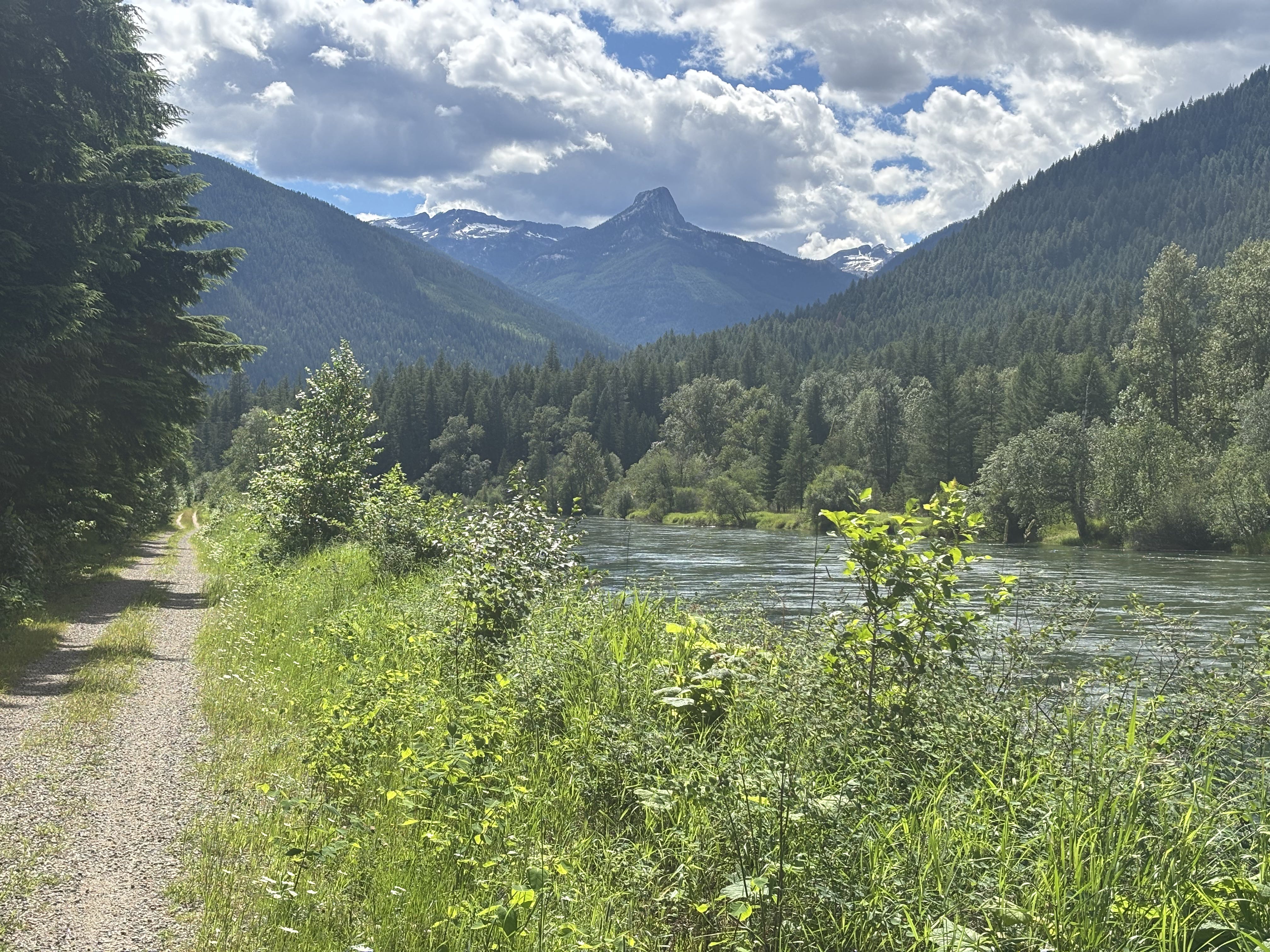
The Slocan Valley is the hub’s childhood stomping grounds, and every time we ride, he shares memories along the route. The region is a mix of independent off-gridders and back-to-the-land folks, living in a wide spectrum of abodes: manufactured homes both new and ancient, plywood shacks surrounded by an assortment of ramshackle sheds, and log cabins with large decks, their own power source, hobby farms and garages for their 4WD toys.
Many have forsaken large incomes for independence. The very thing we celebrate in July.
For those of you looking to celebrate the 250th Anniversary of US independence, the Author’s Guild has an extensive reading list. With publication dates from 1773 to 2024, this list includes historical texts like The Federalist Papers; poetry written by Phillis Wheatley, a girl ripped from her home in Senegal to become enslaved in the US; Mark Twain’s The Adventures of Huckleberry Finn, which opens up race and slavery in the first American novel; and Bury My Heart at Wounded Knee, which details the systematic destruction of Native Nations across the American West.
The selection offers unvarnished and authentic perspectives on the history of the US and featured many titles with which I wasn’t familiar. Check out the list here.
My writing group, the Scribblers, is looking for new members!
Scribblers has been running for three decades. While we typically have twelve members, we are currently two short. The group meets every Monday evening for two and a half hours to review three pieces of work (3,000 words or less) which are submitted by members the week prior on a rotating schedule.
Members hail primarily from British Columbia and write in all genres (except poetry – sorry!), but we have members in LA and in Hawaii. All of us are intent on writing, polishing and publishing our work. Several of us have published novels or short stories in magazines or collections, while others are pursuing traditional publishing. We are serious, but fun!
If you are a writer looking for a critique group and are committed to your craft, you might be just who we are looking for. We want writers who are willing to read and critique 3 pieces per week (I spend 2-3 hours on this) and attend our weekly meeting (7 pm to 9:30 pm PT). It requires a commitment of time and energy, but the payoff is the amazing feedback you’ll receive on your work and the growth that comes from reading with a critical eye.
I have learned much from my fellow Scribblers and appreciate the honest feedback I receive. Scribblers meetings are one of the non-negotiable time commitments I have each week, and I appreciate having a dedicated writing group to help me troubleshoot chapters or short stories.
If you are an interested writer, please contact me at the link below. We have a four-week trial period to determine if it’s a good fit, and I’d be happy to share more information upon request.

June felt like a long month. An unanticipated week in California threw my work schedule off-kilter, and I’m only now beginning to flesh out what I’ll need to do to meet the multiple deadlines I face at the end of the month. My writing and publishing obviously take a back seat to my actual income-earning activities, so in the short term, I’ll be using my creative writing time slot of 6 to 8 am to work. It happens occasionally, when I get too much on my plate, and I either give up the morning writing, or work into the night.
Working into the night is not going to happen. So, without further ado, here’s the writing and publishing news from Doppia Press.

The story of King and Rose continues to spread around the world. Though sales of Tail of Humanity took a nosedive after I stopped buying Amazon ads, people continue find the book and continue to enjoy King’s resilience and his dedication to finding Rose, she of the scent of sap mixed with cedar and earth.
Through the past month’s group promo with authors of stories of cross-species bonds, I’ve gained 83 new readers (if you’re one of them, welcome!). These readers picked up a free copy of Tail of Humanity and will soon be immersed in King’s unique world. Hopefully, they will also spread the word among their friends and book clubs.
Speaking of which, Tail of Humanity would be a great book club read! If you’re looking for the next book for your own book club, consider this heartwarming tale of a dog whose search for love and for family takes him far and wide throughout his rural, mountainous home. Shoot me a message if you’re interested.
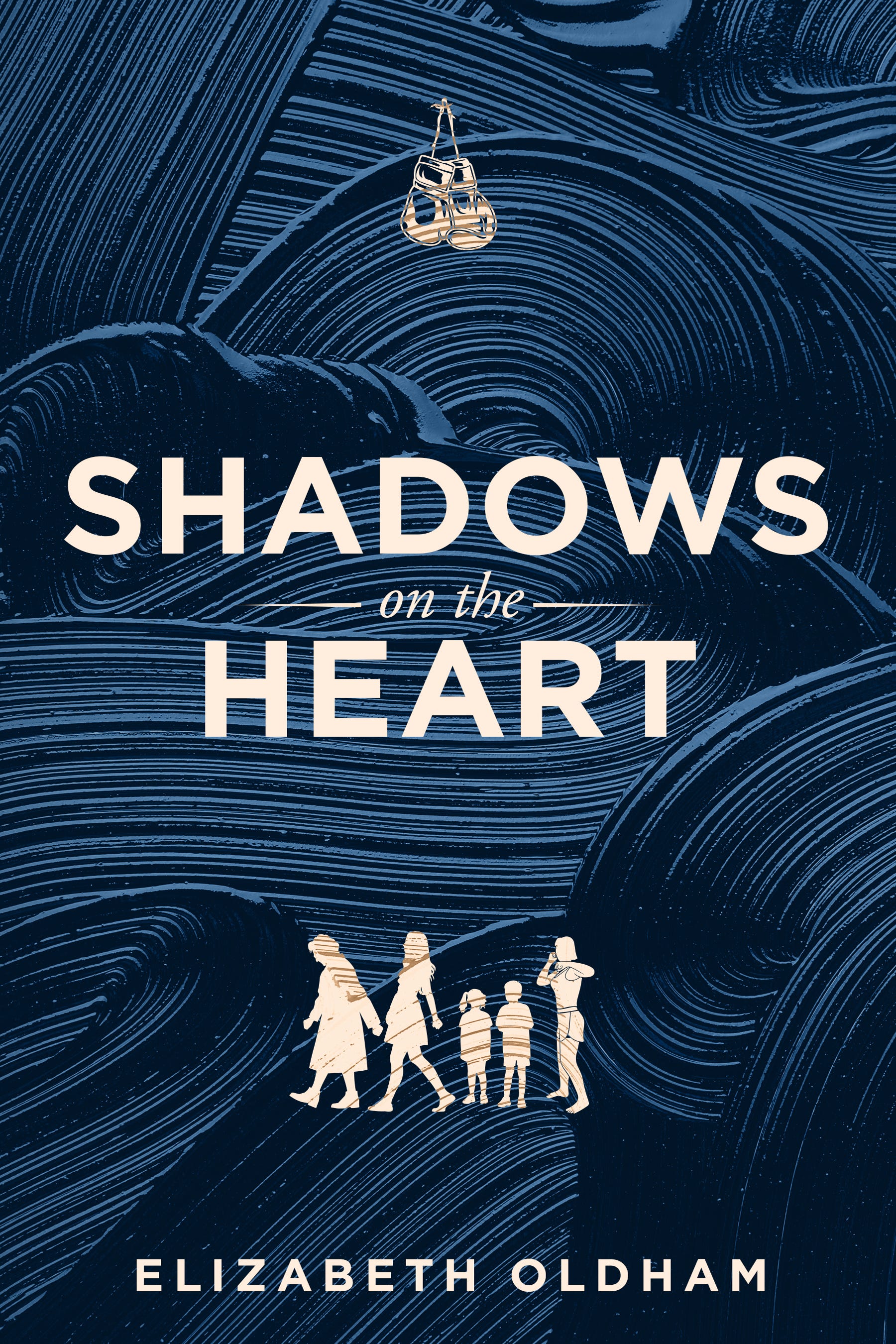
Shadows on the Heart, the story of Lita, Jade and Evie as they rediscover family, continues to hide in the shadows like a child who has eaten the last cookie from the jar after being instructed to leave it for a younger sibling.
With no sales in the past four months and only a handful all year, it’s been stuck in a rut. I’m not completely sure how to move it out. I may try a very targeted Amazon ad campaign just to see if I can lift sales from zero! I may also try a few book swaps or a newsletter feature exchange with another author. Sales of Tail of Humanity jumped when I ran a $0.99 promo, so perhaps that’s something I can do with Shadows.
Indie book marketing requires creativity, especially when the author has a day job and lives in a rural remote region. I’m also not great at self-promotion. I kinda think well, can’t they just see how awesome it is? Must I stand up and attract attention?

A new bookstore opened up in our town, which I discovered right next door to my senior-discount Tuesday shopping spot, Pharmasave! Aside from a fabulous raven rug, the shop has coffee and snacks, and I plan on becoming a regular visitor. It’s been several years since we’ve had a bookshop in town, and I introduced myself to Olivia, the young woman working there.
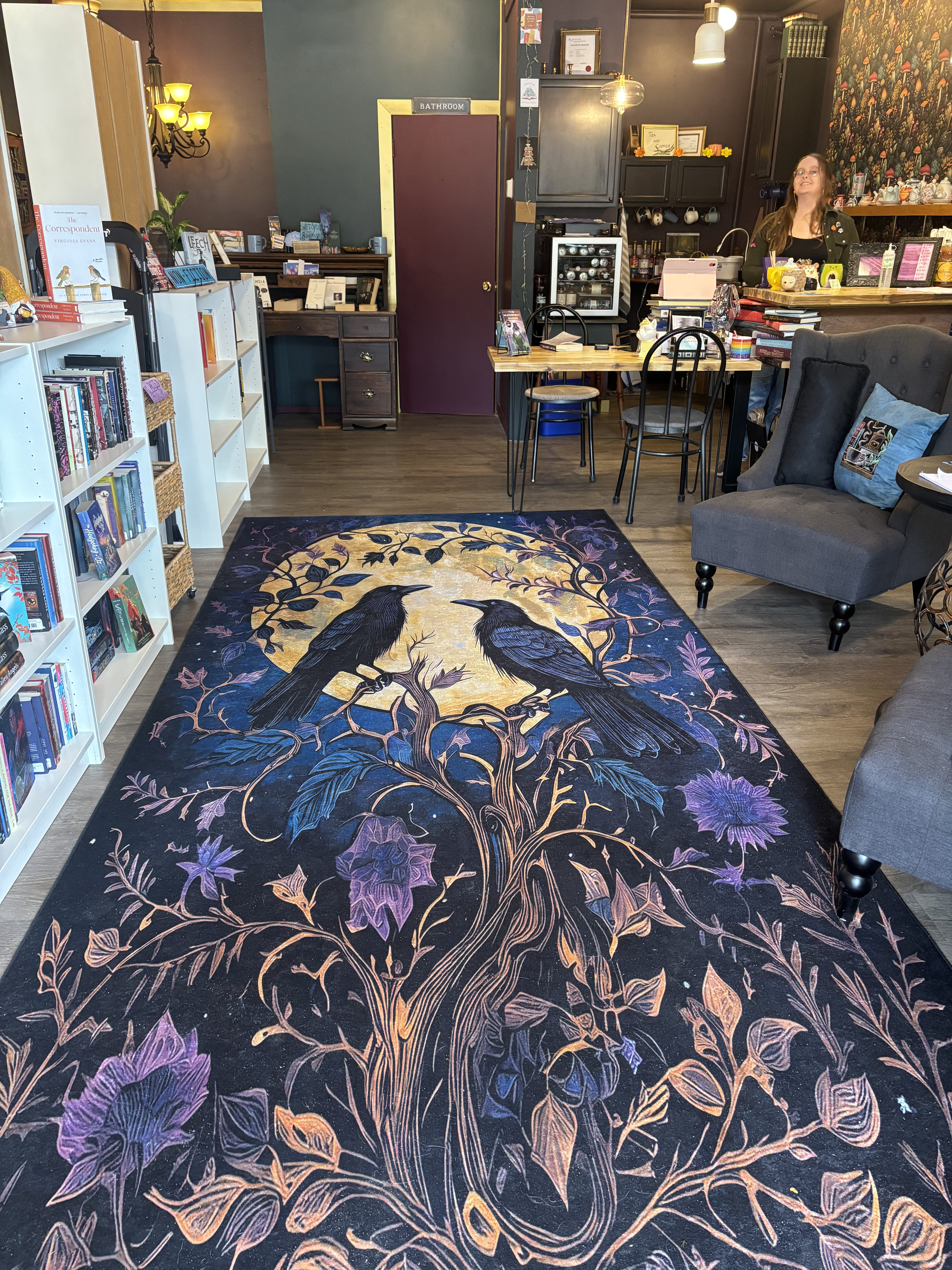
Olivia’s a graphic artist, and we ended up on two cozy armchairs browsing through her latest designs and sharing our contact info. She had lots of questions about publishing (mainly, can you do it without Amazon? Unfortunately, not a lot of us can…), and I offered to do a local workshop on all I’ve learned as an author-publisher. The venue would be an awesome site for a book-lovers/authors event, and I’d love to get my workshop-instructor- feet wet in a small, friendly space.
I’ve already had a call from one of the owners and will hopefully be collaborating with them on an event that supports local authors and provides value to the community.
I have yet again been denied by our local arts council for funding, and though I know it’s not personal, it still stings. The local coordinator has told me that literary arts receives the least amount of funding compared to visual arts or performing arts, which makes sense. It’s easier to reach the masses with sight and sound than through reading. I don’t know if I’ll apply again, but I have a lot of time to decide. And in the meantime, maybe I’ll come up with a project idea that our local folks find attractive.

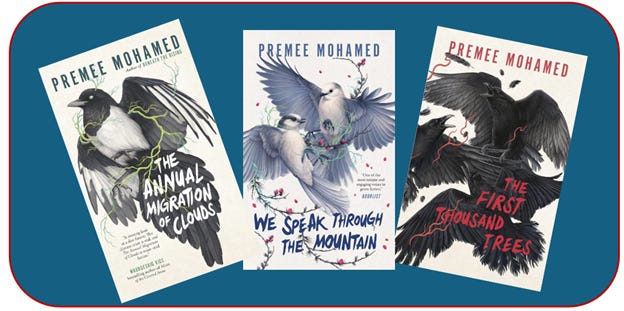
I picked up this series at the Wine Country Writer’s Festival last fall. Mohamed presented at the conference, and the excerpts she read from the final book, The First Thousand Trees, intrigued me. I also purchased a standalone novella, The Butcher in the Forest, which I loved and reviewed in my June Book Report.
The first book centers on Reid, a young woman who lives with her mother in a dystopian future where climate disasters have wrecked the planet. Both Reid and her mother are affected by CAD, a mind-altering fungi that has invaded the bodies of many of the climate survivors scattered throughout the world. It moves through them like a living tattoo, inking itself in real-time across and inside their bodies. Those infected eventually die in a horrible fashion as the fungus takes over.
Reid lives in a former university science lab with her mom and other survivors. They eke out a near-starvation level of existence growing food in handfuls of ameliorated soil that they’ve painstakingly nurtured despite violent dry winds, freezing winters and toxic air clouds. When Reid receives word that she’s been accepted into Howse University, one of the last standing bastions of pre-disaster civilization, she is reluctant to leave her mother, whose illness is getting worse, and her friend Henryk, who has lost his own family to a plague.
The short novel centers on the struggle for survival and Reid’s internal debate about whether or not to accept her invitation to Howse. Howse is an enigma to most, and once someone leaves for Howse, word has it they never return home. Reid struggles with her decision, knowing her mother is falling so ill she won’t be able to scavenge food. When she is given an opportunity to join an expedition that will leave her mother with a solid food supply, Reid decides to join it despite the physical risks. Henryk joins her, and the fallout from the expedition follows her as she departs.
Book 2 begins with Reid hallucinating on her solo journey to Howse across parched and dangerous lands. She’s been given vague instructions to reach a certain point where she’ll be met by folks who will take her to the university, but she’s barely conscious when they arrive and fights them until she blacks out. She awakens at Howse, a society that functions as if there had never been any climate disasters.
Reid struggles with the burden of all she left behind as well as the increasing realization that life at Howse doesn’t acknowledge the suffering of those outside of its confines. The university also doesn’t, despite its medical and technological advances, offer the rest of the world any assistance.
Like Reid, most of the students who attend from outside of the Howse “domes” are infected by CAD. While those at Howse have no cure for CAD, they do have a treatment which keeps the organism in remission. There is a catch, however, one that Reid doesn’t fully realize until it’s almost too late.
The third book follows Henryk, Reid’s hapless friend who has left the community after Reid’s departure to search for his uncle and to separate himself from the culminating events in Book 1. Though family, Henryk’s reception by his uncle is not exactly warm, and he discovers that though the new community has resources that were unheard of in his prior home, life is not any easier.
Henryk struggles with who he is and who he wants to be in this new world. He also struggles to prove himself to the not-friendly-to-outsiders community. The novel (a short 148 pages!) gives us plenty to think about and fills in more details about the extreme consequences of the climate disaster that prompted the world in which he lives. I felt sad as I finished the series but not disappointed to be leaving the violent setting of an earth radically different than ours.
Mohamed’s prose is beautiful, moving, and filled with lyrical descriptions and harsh realities. She imagines what could happen to this planet and its people if the world continues to ignore the climate crisis. It’s a bleak vision but describes a unique world that is well-worth reading.
Happy July everyone! Stay cool!
Comments
Nothing yet. Say the first thing.
Sign in to join the conversation.