
Note 1: I am traveling, have no wifi, and have not had time to write a new Kennel Club. This is a repost of a 2024 article. Enjoy!
Note 2: This was originally written as a story about smoke and wildfires, several of which have recently threatened and impacted friends and families and Canadian national treasures like Jasper National Park. I started to write about a fire I’d seen on the Yukon River in 1996, and a photo I took of my foot on a boat on the Yukon with the fire behind it. But as I moved into the story, it transitioned into something else. Thus, the title.
I thought I knew what I was doing this time. I had a timeline and had a plan. But real life got in the way, especially work deadlines and travel, and now I have to shift. The revisions to Shadows (after much deliberation and thought, I’m keeping the title) are more in depth than I anticipated and while that will make the book much better, it’s also delaying the publication date. To be determined. I thought October, but I need to re-adjust. Stay tuned and keep reading about another shift I made.
I worked as an assistant director for a science camp in the interior of Alaska during my first summer there in the 90’s. Earth Quest Camp offered rural students ages 13-15, primarily Alaska Native youth from villages throughout the interior and northwest coast of Alaska, a week of science exploration. The camp had multiple partners – the Bureau of Land Management (BLM), US Fish and Wildlife Service, the National Park Service, various Alaska Native tribes and Tanana Chiefs Conference, the traditional tribal consortium of the 42 villages of Interior Alaska.
Hired by the camp director Rick, a Ph.D. educator friend of a friend, he tasked me with logistics while he focused on the curriculum. Rick was an interesting guy. Whether he didn’t believe in killing mosquitos, or whether he didn’t want to poison his body with bug spray, he didn’t do either.
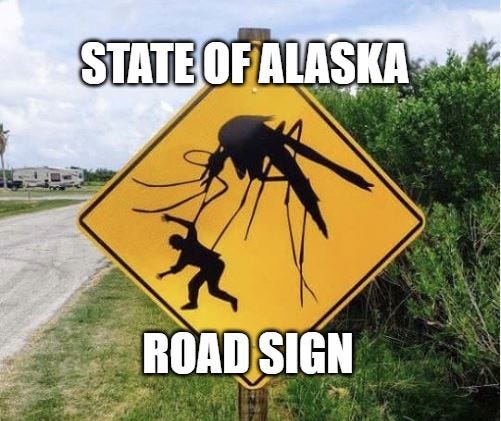
“Pass the Deet,” I’d say, watching him walk through camp with blood streaming down his legs.
But our partnership worked out well for the camp. Logistics are my jam. Camp prep required contacts with and visits to each agency. I spent hours on the phone calling village schools and administrators to recruit interested campers. I flew into remote Alaska Native villages and spoke at schools with Laura, my Athabascan colleague who hailed from the village of Kaltag located west on the Yukon river.
Working with Rick taught me that you can go anywhere with a clipboard in hand. Though we partnered with the BLM and had been invited to use their resources, Rick told me not to check in with anyone when we went to their offices in Fairbanks to use their copier/binder. Handing me a clipboard, he held one himself as we approached the main entrance.
“No one asks questions if you hold a clipboard,” he told me. “Watch and see.”
We walked past the main desk and into the interior of the building, locating the copier and setting up to print and bind thirty copies of the field notebook that Rick had created for the campers. During the hour spent in the BLM building, we received many a quizzical look but not a single question. I learned the value of clipboards. Apparently ladders can do the same thing. Looking official can be just as effective as holding actual authority.
Half of the campers were part of an Upward Bound college readiness program and had already been staying at the university in Fairbanks for a week. They arrived with their own camp director, teachers, camp counselors and familiarity with the camp ethos. The other fifteen had flown in that day and were more tentative, many arriving with their gear and belongings in plastic garbage bags.
“I almost didn’t get on the plane,” one girl from Huslia said to me, shrugging when I expressed surprise. “But my mom told me I should.”
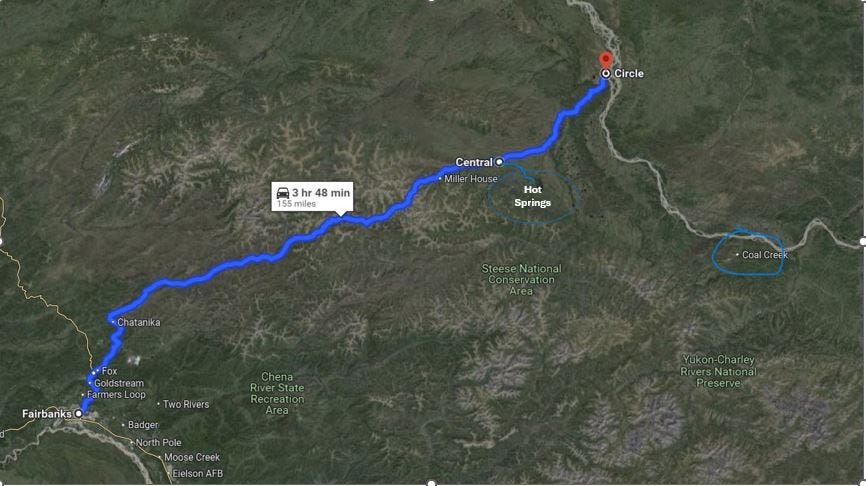
In Fairbanks, the campers climbed onto a bus for the three-hour drive on a gravel/dirt road northeast of Fairbanks to reach a BLM Fire Camp in the community of Central (population around 150). I drove my truck, lugging supplies and happy to skip the bus ride. We stayed for two days at the camp in Central, sleeping in bunkhouses and getting to know each other before heading out to the remote field site.
Two girls from the northwest had never flown out of their home village and had never left their families. In tears the first night, far from anything familiar, they wanted to leave. They called home and spoke with family who convinced them to stay.
To reach Coal Creek Camp in the Yukon-Charley Rivers National Preserve, campers and staff took the bus north to the village of Circle on the Yukon River and climbed onto boats to travel upstream to Slaven’s Roadhouse, an historic mining cabin turned public-use facility (also an official dog-drop along the 1,000 miles Yukon Quest International Sled Dog Race).
From there campers and counselors walked five miles to Coal Creek Camp along a broad, established trail, stopping for lunch at a floating gold dredge shipped in pieces to the site in the 1930’s and then abandoned when mining became too cost-prohibitive.
I, who’d been tasked with finding someone to prepare meals while at camp, didn’t travel with the students. Though I’d hired a local Central resident to cook, she’d fallen short in many ways and wasn’t willing to travel farther into the bush to our remote camp site. I designated myself camp cook and thus was to travel with the food by plane on a four-seater Cessna 185. However, the pilot had to first shuttle the students’ belongings and camp gear to and from camp, so I found myself sitting for hours on the three-day pile of food supplies, alone on the tarmac like a bear beacon.
The park service camp reminded me of any summer camp. It featured a central main hall with a kitchen/dining room and attached bunkroom that I shared with Laura. Campers stayed in bunkhouses spreading out in a line from the main building.
With no facilities and a location in prime bear territory (which is most of Alaska, btw), the camp manager burned garbage twice daily in a barrel on the edge of the camp far from our lodgings. All food had to be removed from the kitchen and dining hall after meals and secured safely behind two locked doors in a storage facility detached from all common areas.
Though I’d backpacked in Utah and the intermountain west, I’d never carried bear spray and had only a general bear awareness (primarily how to cache food). At Coal Creek, signs of bear were everywhere, from piles of scat along trails to scarred trees (and cabin doors!) raked by bear claws. During our downtime when the students were off doing science-y things, Laura and I took one of the camp’s four-wheelers to explore the area. She drove on trails through brush, across creeks and gullies, ending at Slaven’s Roadhouse on the Yukon River. I’d never been anywhere as remote or wild as Alaska, and I had to admit that all the bear signs rattled me.
“You’re too jumpy,” Laura complained as we turned a corner and found yet another steaming pile of bear shit. “You’re making me paranoid.” The joint we’d smoked probably didn’t help.
But it also didn’t help that when Laura had asked the Coal Creek Camp manager how many bear he might see if sitting in one place for an hour, he paused, adding them up in his head.
“Six,” he said.
“That’s a lot,” she replied.
“They’ll avoid groups of four or more,” he said.
Holy fuck, I thought. I’m not going anywhere without a group.
On another day I hung out with the pilot and two fish and wildlife officers. We hiked to the gold dredge and smoked cigars from its deck. I absolutely loved being smack dab in the middle of the wilderness. It didn’t hurt that the camp had running water and a generator for electricity.
Laura and I managed to put together some mighty meals, and between the food, activities, ice breakers and games in the evenings, the camp coalesced into a community. When it was time to head back to Central for our last two nights at the fire service camp, I joined the boat convoy with the students and witnessed many smiles and no tears. I also saw a massive fire (see beginning note).
The final two nights in Central were social evenings, and we’d planned events at a nearby hot springs resort. A soak and dinner on the first night, and a catered banquet on the second. I wouldn’t have to cook.
Soaking in the hot springs that first night felt celebratory. Thirty youth laughing and splashing and hiding and playing. Loud shrieks and cheers. Counselors chilling despite the hot waters.
But when the resort served hot dogs at dinner, the chill vibes and laughter disappeared. Hot dogs and canned vegetables. Which both appalled and confused me.
I eat real food. I don’t eat processed food. Being served a hot dog for a dinner that I’ve paid for was unexpected and unwelcome, but I also wasn’t sure if my reaction was normal. I’m not a good bellwether for the rest of the populace. I am different, after all.
I watched our group. No one moved. Campers stared at their plates with boiled, pale wieners lying limp and cold next to mushy, cubed carrots and wrinkled peas. I saw staff lock eyes with each other, disappointment clear.
I felt angry. I didn’t expect a five-star meal from an eighty year-old operation out in the middle of the bush, but I’d arranged this dinner with the management, and they’d known for weeks we were coming. They could have brought up supplies from Fairbanks if their own gardens didn’t suffice.

They’d put so little effort into this meal that it felt targeted. Disrespectful. The restaurant had a menu, after all, and the other guests in the restaurant weren’t restricted to hot dogs. We pushed our food around the plates as if moving it might help it look appetizing or edible. None of us enjoyed it.
That night I huddled with the camp directors, and we determined a different course of action. I called the resort the next morning and cancelled the banquet. They sounded neither surprised nor upset.
Our team went into action. Funny thing, I don’t remember how I put the menu together or what I prepared. I’m sure that banquet guests driving up that day from Fairbanks – speakers, funders, partners, local politicians – brought any needed supplies. But creativity shined, and we didn’t need much.
A teacher (a woman who’d actually gone for a solo run in Coal Creek despite the bear risk - “I wouldn’t do that,” remarked a longtime park employee watching her go…. I, an avid runner at the time, had thought her bat-shit crazy) created beautiful table settings made of pine cones and spruce boughs. One counselor gathered wildflower bouquets she placed in glass jars around the room. Other counselors hung painted signs and homemade streamers.
We lit the room with candles and when the students arrived for dinner, they walked into a room celebrating them and the community they’d created. Tables set and a feast beckoning. The mood swelled as the room filled.
There were awards and speeches and, at the end, we partied. A dance. The students sat shyly at first until Rick and I performed a swing dance for everyone (even though I’ve never taken swing dance lessons – what did I have to lose?). They lost their hesitation.
My favorite part of the evening came when someone put on Alanis Morissette’s “You Oughta Know”, from her debut album, “Jagged Little Pill” released the prior year. The song had become a personal anthem for me. I loved its pain, its vulgarity and its anger. I’d memorized every word of every song on the album. So when it came on and every single girl under twenty screamed and ran out to the dance floor, I joined them. We screamed the lyrics and jumped up and down as the rest of the crowd backed off and became spectators. When the song ended we collapsed in hugs and laughter on the dance floor.
The party wound down, and we departed for Fairbanks the next morning. Our last minute changes had been a success.
Just as we shifted our banquet planning to make it better for the youth, I’m doing the same with Shadows. It’s already a strong novel, I know that. But the changes are making it even stronger, and I’m excited. Super excited. I wish I didn’t have to wait. I wish you didn’t!
Comments
Nothing yet. Say the first thing.
Sign in to join the conversation.