
I keep thinking about a piece of climate news that really hit me a few weeks ago: a story published in The Guardian: ‘Point of no return’: New Orleans relocation must start now due to sea level, study finds.
I tend to be more of a wilderness gal than a city gal, but New Orleans is my favorite American city. One of my favorite cities anywhere, in fact. I’ve only been a couple times, but my limited experience of it was unlike anywhere else in the world: A place of ghosts and magic where history breathes; a place where the dead live on and the living are so riotously creative that this generative mix of death and creation, suffering and joy, is like stepping into some kind of primordial soup of life itself. New Orleans is rich, fecund, wild.
Plus, the food, you guys!
This study seems to have hit a nerve. It’s been interpreted as advocating for abandoning New Orleans, letting it die. It’s the “redlining of an entire city,” says an 11th-generation New Orleanian in an excellent piece in the New Orleans media outlet, The Lens. Climate writer Anya Kamenetz, who is from New Orleans, also has a beautiful piece about the emotional impact of this study in her Substack, The Golden Hour. I’ve only visited this singular, wondrous city and I reacted audibly when I read the headline. I can only imagine the gut-punch feeling if New Orleans was my home.
There’s a word for the psychological distress caused by witnessing negative environmental changes to your home, and the attendant nostalgia felt for a home where you still live, but no longer recognize: solastalgia. We’re all likely to feel this in the coming decades, in ways big and small. Some more than others; some sooner than others. I don’t think the authors of the New Orleans study were ill-intended, I think they simply want people to be prepared, to avoid deadly catastrophes. I doubt this study even comes as a surprise to most New Orleanians. Who feels the pain of a disappearing home more acutely than they do?
The question this study requires New Orleanians to ask applies to all of us right now: what do we do with the time we have?
If you haven’t heard, we’re facing an impending “super” El Niño this year. This climate cycle, which is linked to Pacific Ocean currents, occurs every few years, and results in slightly warmer overall global temperatures. This year, because of climate change and ocean waters that are already unprecedentedly hot, El Niño is almost certain to be supercharged. This means record shattering heat, of course, which some parts of the world are already experiencing and we haven’t even entered the cycle (London hit 95 degrees recently, southwest France, 97). But it also means potential humanitarian disaster. According to the LiveScience article:
“If a “super” El Niño does occur, it could rival the strongest on record: a catastrophic 1877 event that spurred the 1876-to-1878 global famine. The famine killed over 50 million people, or 3% of the world’s population at the time.”
The world is obviously a very different place now than it was in 1877. Another “super” El Niño like that one doesn’t mean another 3% of the world’s population will die. That said, we should be prepared for chaos, for a glimpse of a future in which we’ve failed to aggressively tend to this existential crisis. Because this “super” El Niño will be coinciding with the energy and agricultural crises resulting from the U.S.’s disastrous war in Iran. We’ll likely be experiencing life at 2 degrees Celsius of warming at a time when farmers can’t get fertilizer and just about every industry is operating at sky-high energy costs.
It’s this combination that transforms this particular El Niño cycle from a mere record-breaker into a crystal ball. Come autumn, we may all be feeling some solastalgia, or at least nostalgia for the days before $6.00/gallon gas and outrageous grocery bills, and we’ll be asking ourselves what we do now.
Meanwhile, the data center construction will continue apace, sucking up our precious and rapidly disappearing water. The Trump regime will probably be mustering its troops, both federal and civilian, in a desperate attempt to control elections. The White House ballroom/bunker will be built, while tech oligarchs and disaster capitalists of all kinds will find ways to profit from the breakdown. The ruling class, the Epstein associates, will party on, as they defund food and aid programs, as disease and hunger spread.
For much of my life, I resisted using the word evil to refer to the actions of other human beings. It felt too supernatural, too biblical. It felt like it was dehumanizing, likening someone more to a demon than a flawed person. I’ve reluctantly come to accept, especially in the past few years, that evil is as human a trait as any other. The ability to inflict unimaginable pain and suffering seems innate in us. Few animals seem capable of committing such horrors, while drawing such pleasure from it, as humans. Much as I’d like to think otherwise, evil, in fact, appears to be uniquely human.
But the opposite remains true, too: few animals seem capable of such expansive love, of working so hard for a better life for people they’ve never met or generations they’ll never see, as humans. And this is what we must hold on to. It’s the answer to “what do we do with this time we have?” as New Orleans drowns and Los Angeles burns and the Colorado River dries up, along with much of the American west, and the wealthy find ways to profit from our pain.
There’s a tendency to frame our striving to make the world better as either a battle or a game. I use the language of “the fight” all the time. There’s a good team and a bad team. There’s winning and losing. Sometimes we’re up, sometimes we’re down.
It’s a convenient framing, and I certainly don’t have any problem categorizing White supremacist Christian nationalists, transnational crime syndicate bosses (aka politicians and businessmen), and billionaires as “bad guys.” It’s helpful to get clear on what’s morally unacceptable. But I’m not sure it’s helpful to frame any of this work as a fight or a game we’re going to win. Or lose. The entire idea of winning and losing implies that there’s an end. For a game to be won, it must come to a conclusion.
But there is no end. I’m afraid what we’re all doing is just living, as flawed human beings in a world that is always, simultaneously, full of suffering, beauty, joy, and violence. When in human history has there ever been a time when we haven’t had to struggle against our own worst impulses?
It’s easy to be tempted to also frame this grand struggle as simply the need to adopt the correct -ism. If we just organize ourselves according to the best social and/or economic structure, the fight will be over. If we figure out what comes after capitalism, authoritarianism, and fascism, to get somewhere better for all of us - democratic socialism, communism, anarchism, or perhaps some kind of techno-utopianism? - we’ll have arrived at a kind of post-struggle future, where our problems cease to exist, or if they don’t, we at least now have a turnkey, just, and egalitarian solution.
But what economic, political, or social theory, or even religion, for that matter, undoes the spiritual deficit that tells us it’s okay to bomb children or build concentration camps or let our humanity atrophy in service of technology or rape the land just as we rape women and children? What victory for our team or transition to a new -ism fills the empty maw of our hungry ghosts?
There is no championship game that will clinch a victory. There is no political theory devised by some dead 19th century White guy that will somehow fix us. All this struggle isn’t about one-upmanship, it’s just living a human life on a complicated, interconnected planet. I feel pretty sure that our one job, if you can even call it that, is simply to care, to tend to one another and do what we can to reduce suffering and make life a little better for the living things around us.
Sure, I might believe that a particular -ism would help achieve this goal of reducing suffering; I might think a particular political party is more likely to get us there. But if my faith is in the -ism or the party, and not in the act of caring itself, then I risk losing sight of what I’m trying to do.
Which isn’t to say I won’t screw up sometimes. The acts of caring and tending are hard, much harder than simply fighting or rooting for a team. I’ll hurt people, accidentally or on purpose. I’ll burn out and have to direct some of my care back to myself. But that doesn’t mean the game is lost or I’ve chosen the wrong team to fight for. Because I’m not playing or fighting. I’m living. And if I’m simply trying to build a better world and live a decent life, then I keep stumbling forward. Because what else is there to do?
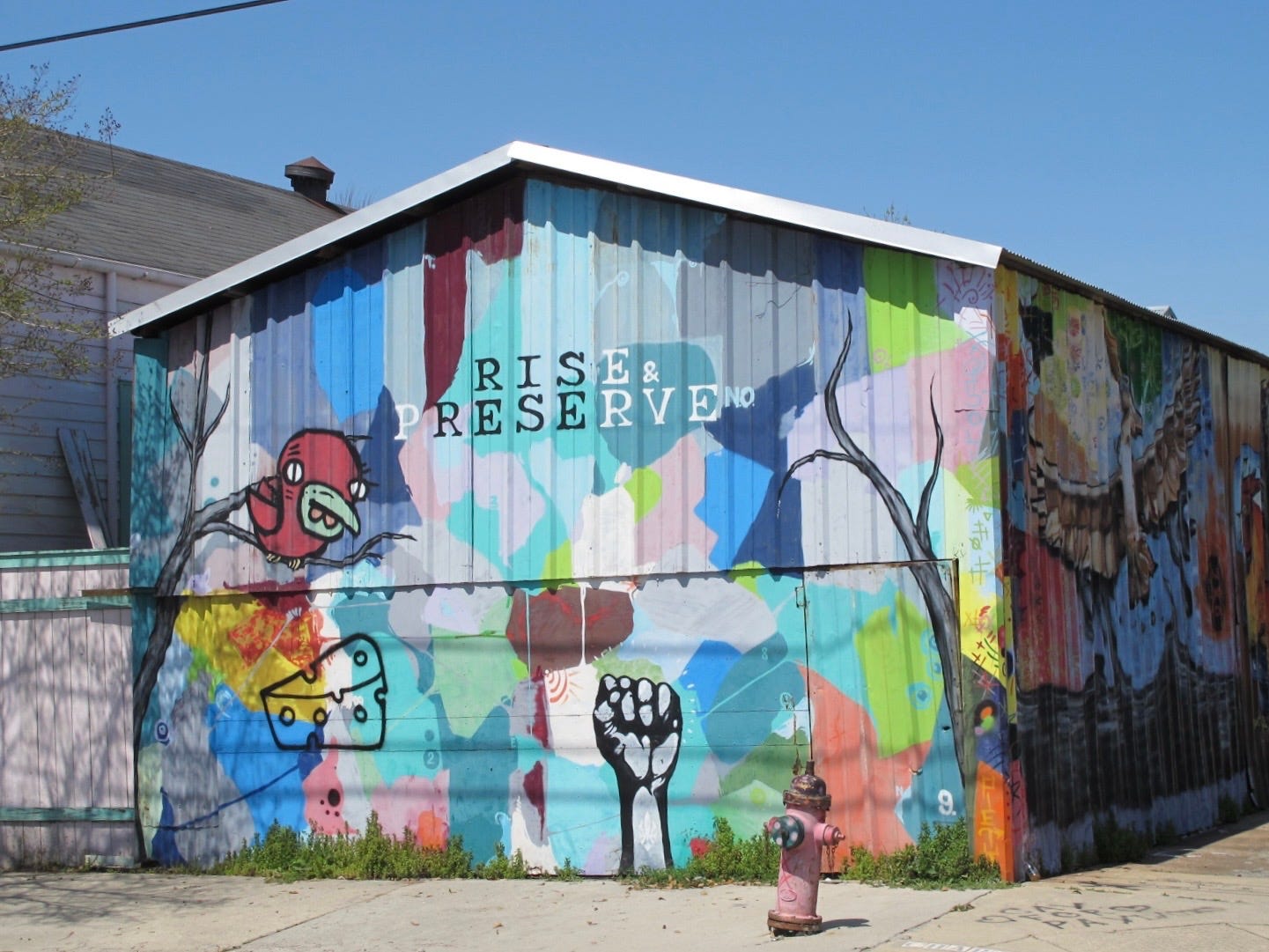
It’s tempting to look around at all the struggle and feel the sting of mounting losses. I certainly do. Which is why I’ve been trying to move away from the rigid frame of win/lose, right/wrong. Because when my home has changed irrevocably, or a place I love has disappeared, when I feel overwhelmed by an uncertain future, it’s a bit easier to know there’s no winning or losing.
There’s just loving what we have the best we can while we have it.
Thank you so much for reading! If you like this post, hitting the “like” button is a great free way to show your appreciation! And if you really like my work, please consider becoming a paid subscriber ❤️
No posts
Comments
Nothing yet. Say the first thing.
Sign in to join the conversation.