
The heatwaves subjugating Europe this summer have been like outlaw gangs in old western movies - they ride into town on dusty winds and bedevil the lives of those who had been living peaceful, non-air-conditioned, lives for generations. Emboldened by these climate-change bullies, those local accomplices, seasonal allergies, rise up against the HVAC-poor villagers, nostril-tickling guns a-blazin’.
So what’s a desperado mom to do when she sees her family sweating and sneezing in a ten-day, pollen-heavy, heatwave? She heads out to rustle up some anti-hero types who can finally redeem themselves by saving the day. For the heat, in the evening she deputizes a portable AC unit, and circles her children around it in sleeping bags, its gentle whirring singing them to a finally-cool sleep. For the allergies, in the morning she goes into the nearby forest, and rustles up some stinging nettles. She brews these into an anti-inflammatory tea, which, when mixed with honey, lemon, mint, and ice, soothes her climate-ransacked family.
As the heatwave retreats, she tips her hat to these helpful techno/natural strangers, tosses the AC unit into a closet and the wilted nettles into the compost, and reflects on the marks this whole ordeal has left on her family: deepened intimacy, greater resourcefulness, and yes, a bit more courage. Her family has faced another test. In doing so, like those old western villagers who finally fight back, they are changed.
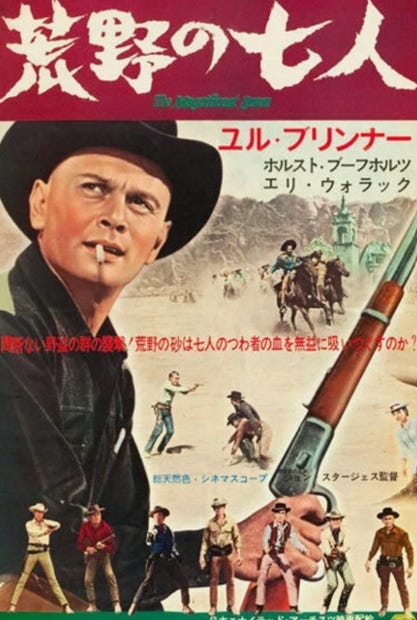
I love how stories like old westerns connect us all together. They become meaningful metaphors for our own shared lives - we can even bring them forward to help us work through difficult things, as I just did with this recent heatwave! We learn from them, and apply their lessons to our complex lives. We share them with our children and grandchildren so that they can do it, too.
These metaphors stick with us, leaving traces. We remember.
Stories carry wisdom. They teach courage, warn against envy, celebrate love, honor sacrifice, and remind us to persevere. But they also do something else. They help us imagine what it feels like to be transformed by our choices. They are like a rehearsal hall for personal change.
We use stories not because they are simply entertaining, though that is part of how it all works. Going a bit deeper, our brains seem to have evolved to use metaphors to package abstract ideas into forms we can absorb beneath conscious thought. Rather than feed you facts about what happened, great stories let you experience what it might feel like. They satisfy your mental appetite: for curiosity, surprise, delight, empathy, and possibility. Once consumed, they settle quietly into memory. They inform your intuition. You dream about them.
While conscious thought serves us well in everyday choices, our hardest decisions often benefit from subconscious processing. Sometimes, when all else seems to fail and you simply do not know the right thing to do, turning to a story can awaken your subconscious and help you find your way. This recently happened for me.
Stories remind us that making a difficult choice involves becoming someone new. Once we choose, we cross a threshold. We cannot return to the person we were before the decision, because making it has already changed us. Whether we notice it or not, we are marked by transformation.
We often think about the marks left on us by transformation as scars. But metamorphosis is one of nature’s most beautiful processes: caterpillars become butterflies; tadpoles become frogs; even trees add internal rings each season. Nature shows us that change leaves signs of growth…and of emergence. I think that is beautiful, and so I have begun to think the psychological traces left on us by change may deserve a different name. Maybe instead of scars, we can come to think of them as beauty marks.
I began to understand these beauty marks while facing a recent decision: whether to stay in Europe or return to the United States. After several months of seeking a new work contract, living in the limbo realm that I call “the Grey Zone,”1 two major opportunities had finally come through for me - one on each side of the Atlantic. Now, seemingly all at once, I had to choose.
I had tried to logic this out for weeks as first one and then the other opportunity formed and took shape for me. Each had related to it what felt like fractal unknowns, with each imagined future branching again with multiple new questions. Meanwhile, my gut feelings, pulled so tightly in both directions, were quiet like birds before a storm. I could not just feel my way through this one.
So, to try and coax my inner birds to sing again I headed to the forest to clear my mind and practice what I call “guided randomness.”2 Wandering among the diverging woodland paths, I allowed myself to go beyond observing my surroundings, and into really appreciating them. I moved from noticing to positively responding. I have found that when I do this, allowing myself to relax and connect feelings to my sensory experience, I can trigger my subconscious to release the intuition that sometimes feels all locked up when trying to detangle a tough decision.
In this case, what came to me was not intuition or a flash of understanding. Instead, two stories surfaced. Long after I left the woods, I could not get them out of my mind.
Growing everywhere in the forest at this time of year are stinging nettles. Though a tiny brush against them can hurt for days, I know them to be of value - both to the ecosystem of the forest, and to my allergy-rich family.
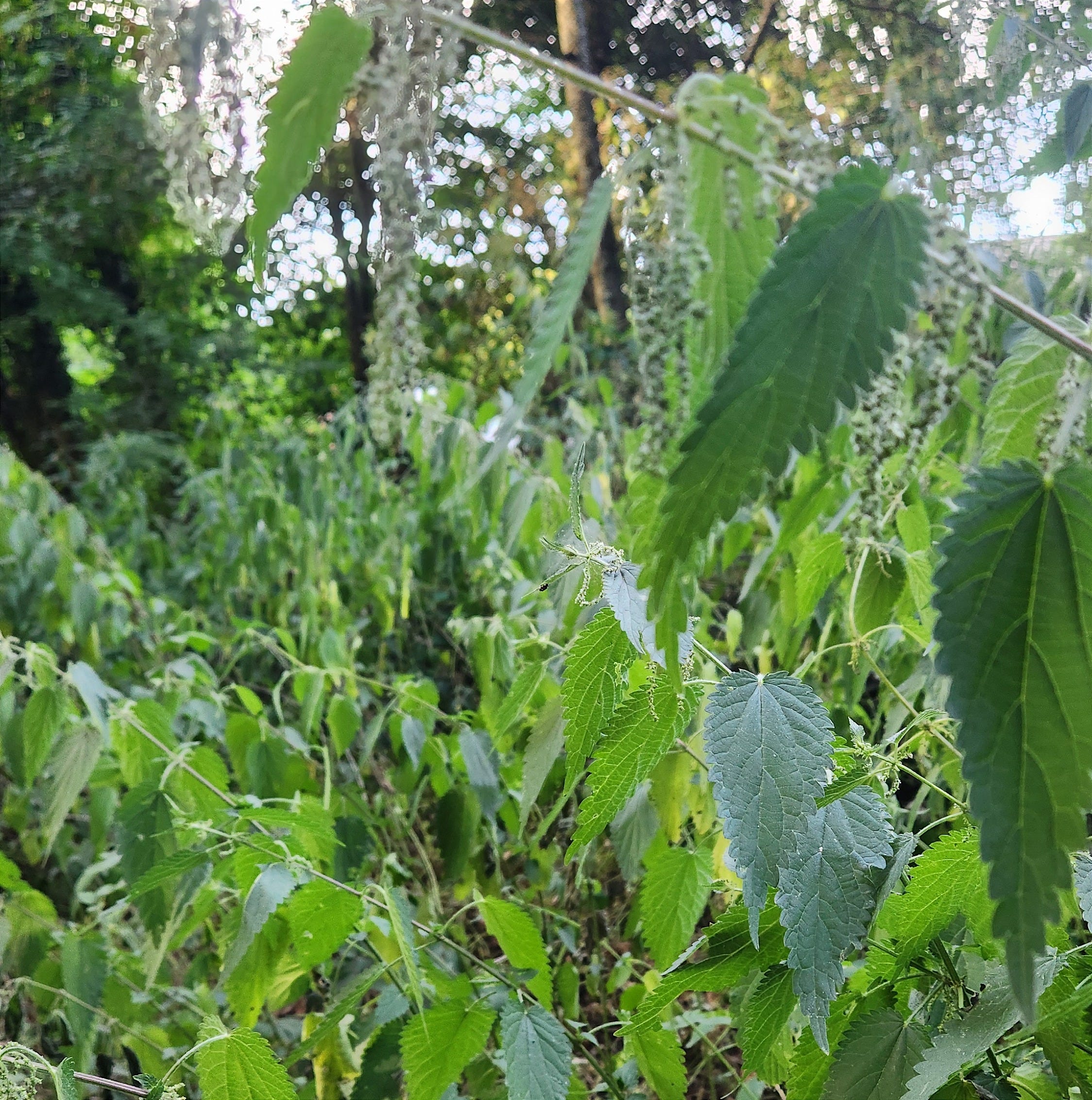
I let my observations of the nettles - not simply my observations but, again, my deeper appreciation - make connections in my open-minded state. Interestingly, rather than releasing my intuition, my appreciation of the nettles awakened two stories from my memory that, at first blush, seemed only distantly related to my decision:
I remembered a nettle-filled fairy tale from my childhood: The Six Swans.
This memory brought me to Robert Frost’s poem: The Road Not Taken.
I took the lessons of these two stories with me as I left the woods. Then I took several other key steps:
I did that greatest of all decision-making activities: I slept on it.
In the morning I went about consciously examining my pros and cons. I wrote the biggest ones down. In a journal. With a pen.
I talked the decision over again with each person affected by it.
I was lucky enough to be able to travel to the US and to the local workplace here in Belgium (thereby not just imagining but actually testing out the experience in each place).
But all the while, those stories from the woods kept returning to my mind. I accepted them, and really gave them consideration. I mused on them. They became my muses.
I was ready to make a decision. As the two choices really did seem so balanced, and my logical pros and cons seemed stuck in a wrestling match, it was this, my walk in the woods and gift of stories, that finally cemented for me the choice that I made.
I stayed.
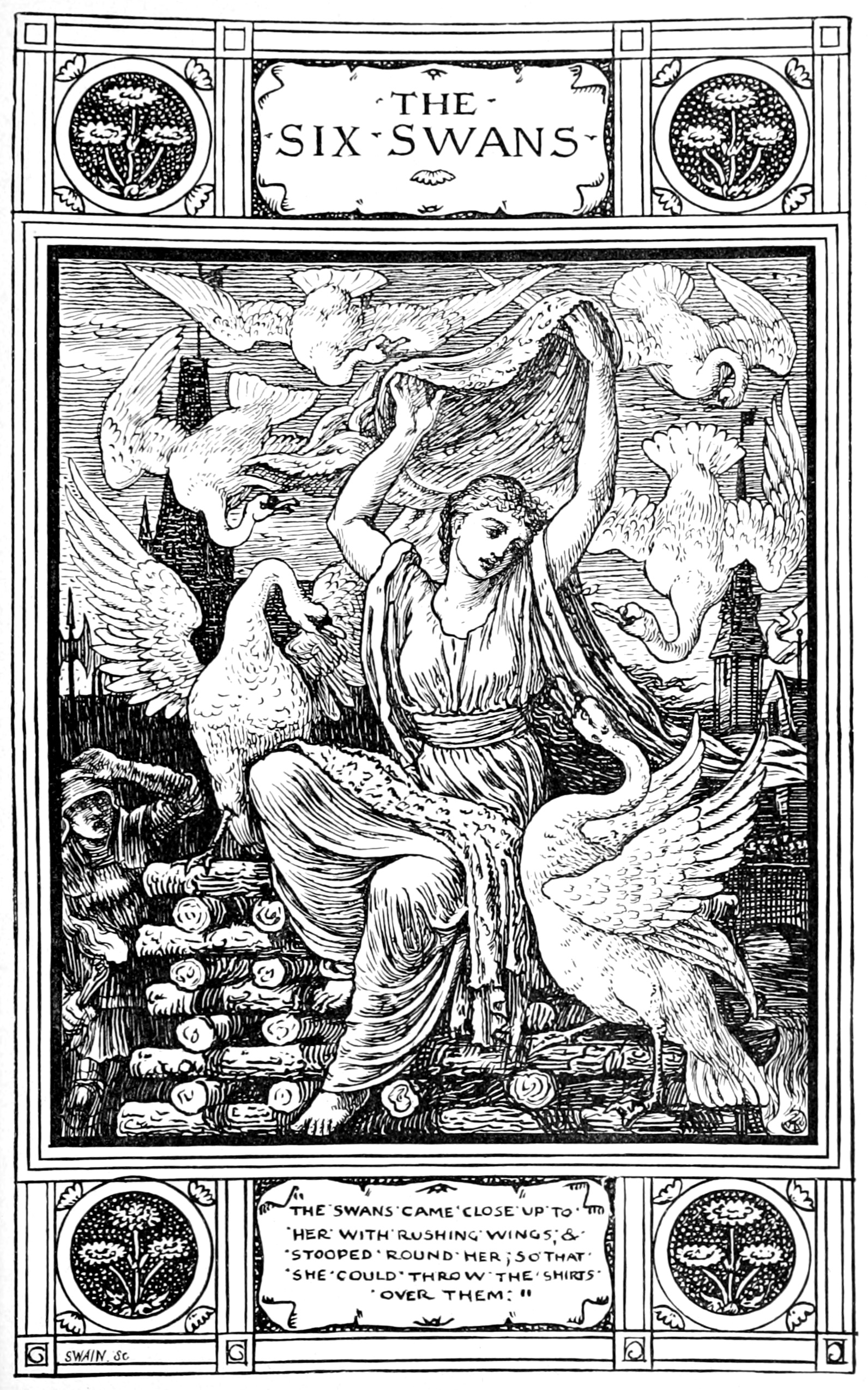
Once there was a girl.3 Sometimes I remember her as a beloved princess; other times, an entitled, vain daughter. Maybe she is both. She deeply loves her six brothers - they are funny, smart, strong, and of course, gorgeous. An enchantress grows jealous of the love they shower on their sister, or maybe she punishes them for their pride in their own beauty and brilliance. Maybe both. She curses the brothers to live out their lives as swans. Only once a season, the brothers land in a faraway cave and become human again, and the girl spends the next six years climbing up on sharp rocks to be with them. She learns suffering, and each time they transform back into swans and fly away, she lays her face upon her cut, rough hands and weeps. I can still see the pastel drawing of this moment in my childhood fairy tale book: all shadowy pinks, purples, and blues surround her as she sits alone and cries.
In my imperfect recollection of this story, another sorceress sees the girl and pities her. She casts a spell: if the girl knits six sweaters from stinging nettles gathered near the cave, she can finally set her brothers free. In the meantime, she must stop speaking. Crying out in pain while handling the nettles is also forbidden. All summer the girl silently bears the pain of gathering the nettles by hand, and, sitting in the cave, spins their terrible stingers into threads that she knits into little, green, swan-sized sweaters.
Onto her by now, and just as the swans are expected for their autumn return, the jealous enchantress accuses the silent, pained, and determined girl - now a strong, capable young woman - of being under the influence of evil. The climax occurs when she is only halfway through the sixth sweater. The enchantress sets an angry mob upon her as her brother-swans sail in from the sky. Out of time, she throws the sweaters into the sky, and all six swans soar into them. The curse finally broken, the brothers land on their feet, human once more! Only, one of them, the youngest who had received the half-finished sweater, retains one majestic wing. He is forever marked.
I had seldom thought about this story until this wandering walk in the woods. Who is this story about? Are they all marked by change?
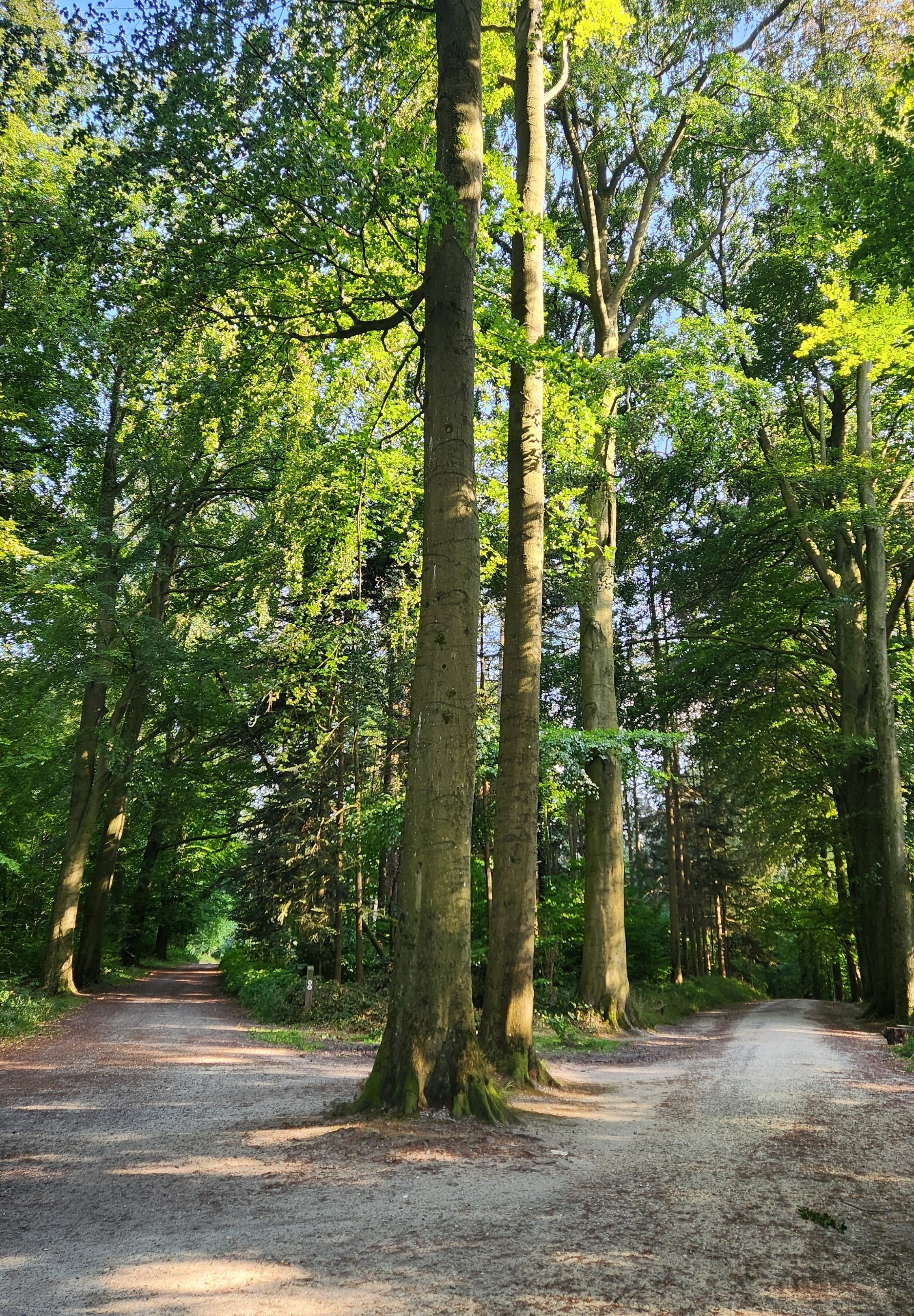
A traveler recollects being presented with two roads diverging in the yellow woods.4 In fact, he writes a poem about it. In it, he recalls trying to look far down each path to see where they go, but they just sort of disappear into the undergrowth. As much as he seeks differences, they both seem to be about the same. He remembers standing there, thinking about which road to take.
And sorry I could not travel both / And be one traveler…
He makes his choice.
Oh, I kept the first for another day! / Yet knowing how way leads on to way, / I doubted if I should ever come back…
Now, many years hence, he reflects with a sigh…
Two roads diverged in a wood, and I— / I took the one less traveled by, / And that has made all the difference.
Everyone knows this famous last line. I’m sure I heard it echoing in my memory as I validated my family’s move to Europe. I bet I said it aloud.
But, if the road he took made such a difference, have you ever thought about why this poem is entitled The Road Not Taken?
On my walk in the forest, I wondered.
It has been a few weeks now since I made this tough decision of staying rather than leaving. Now a dual-citizen in Europe and able to set up a new work structure, I am enjoying setting up my consulting business, checking out potential tax write offs, and negotiating insurance and accountancy costs. A few days a week I bike through the forest in the mornings and grab a bus to work. My legs are already stronger, and with the carless commute, I am calmer. I have met and am enjoying my new colleagues at my client’s worksite. We have lunch together. I also spend time with my wonderful neighbors, including an 89-year-old Italian woman raised in Egypt. She tells me stories from her life as we knit by her pool, which she offers up freely to my kids in the afternoons. In the now-cool evenings my daughter and I plan trips together - a late summer holiday to the coast of Spain, an October trip to historic Prague. My son and I talk about his visit to his friend’s villa in Greece in a week or so. Mirroring my own moment, my older son and I set up his own student business, carefully google-translating all the French and Dutch language forms together. My husband, as a gift, has placed a beautiful full-sized tree decal on the wall in our home’s entryway.
This is who I am now.
Looking back, I realize that these two stories, gifted to me from my own memory, were teaching me something about my choices: I tend to fixate on what I want to do. But why not ask myself the question: Who do I hope to become?
You know, I could imagine myself with a swan’s wing.
The road traveled is not as important as the traveler.
(This essay is dedicated to Cezary Pawlowski, who sat next to me on a plane. We both practiced guided randomness that trip. Now, he is my newest friend.)
Thanks for reading Elizabeth's Substack! This post is public so feel free to share it.
I wrote about this here:
Yes - this is a real practice. It is an active form of what others call “divergent thinking.” Yes this is weird. But divergent thinking, which involves practices of connecting otherwise unrelated ideas together as you grind away on new ideas, has been a celebrated form of thinking for some time. You can read about its uses, from the space race to AI, here: https://en.wikipedia.org/wiki/Divergent_thinking
You can learn about the story here, though my version is just one that lingers in my memory… https://en.wikipedia.org/wiki/The_Six_Swans
You can find Frost’s poem in many places - here is one of them: https://poets.org/poem/road-not-taken. As it is a copyrighted poem, I include it here for purposes of commentary.
No posts
Comments
Nothing yet. Say the first thing.
Sign in to join the conversation.