
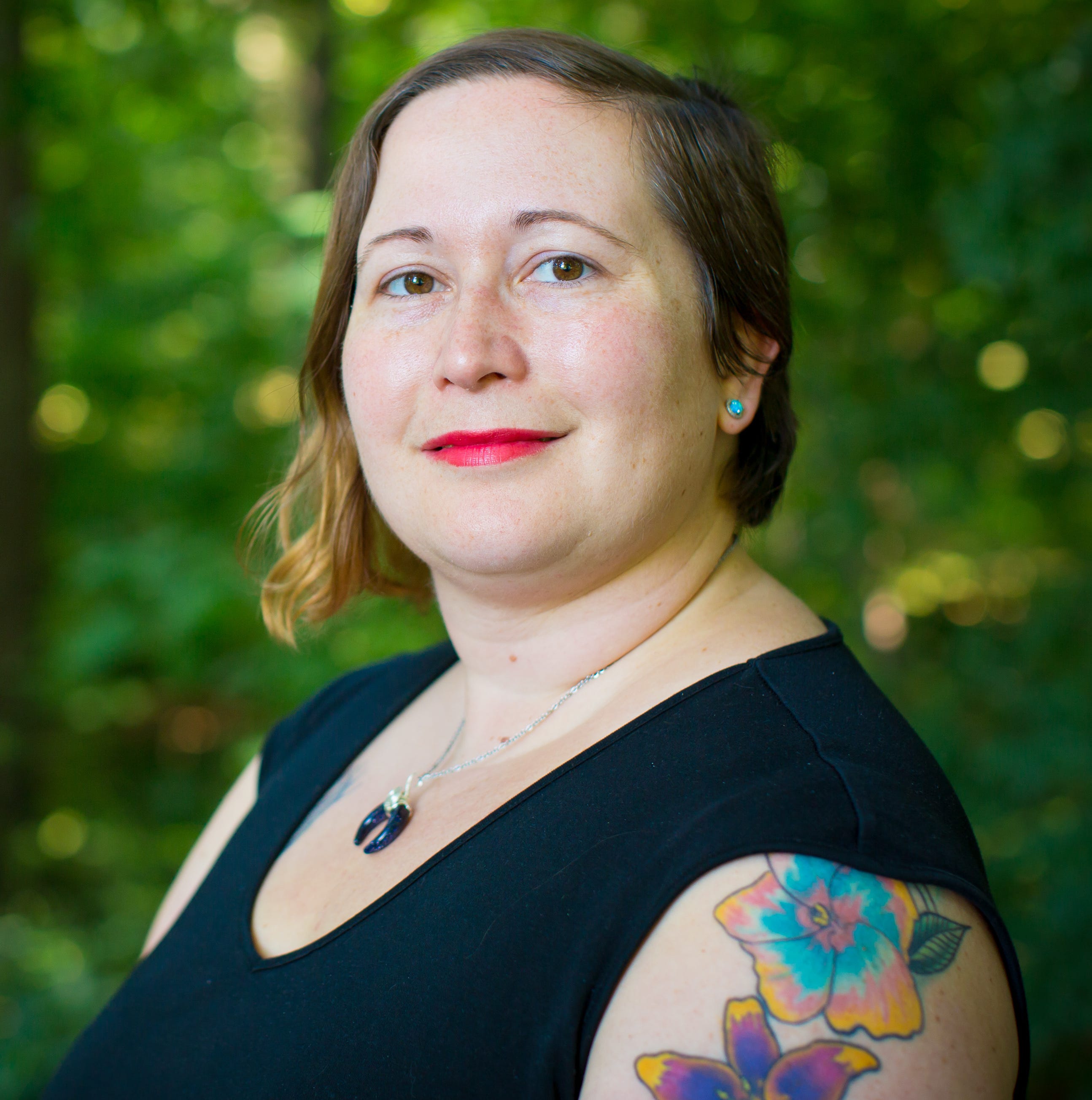
Sonora Taylor (she/her) is the award-winning author of several books and short stories. Her books include Errant Roots, Recreational Panic: Stories, Someone to Share My Nightmares: Stories, Seeing Things, Little Paranoias: Stories, Without Condition, The Crow’s Gift and Other Tales, and Wither and Other Stories. She also co-edited Diet Riot: A Fatterpunk Anthology with Nico Bell. Her short stories have been published by Rooster Republic Press, PseudoPod, Kandisha Press, Camden Park Press, Cemetery Gates Media, Tales to Terrify, Sirens Call Publications, Ghost Orchid Press, and others.
Her short stories and books frequently appear on “Best of the Year” lists. In 2020, she won two Ladies of Horror Fiction Awards: one for Best Novel (Without Condition) and one for Best Short Story Collection (Little Paranoias: Stories). In 2022, her short story, “Eat Your Colors,” was selected by Tenebrous Press to appear in Brave New Weird: The Best New Weird Horror Vol. 1. In 2024, her nonfiction essay, “Anything But Cooking, Please,” was a Top 15 finalist in Roxane Gay’s Audacious Book Club essay contest.
She co-manages Fright Girl Summer, an online book festival highlighting marginalized authors, with V. Castro. She also serves on the board of directors of Scares That Care.
Her latest short story collection, All the Pieces Coming Together: Collected Works, is out now from Manta Press.
She lives in Arlington, Virginia, with her husband and a rescue dog.
As always, thank you to Candace Nola for partnering with me on this interview series!
How long have you been writing? What brought you to it, and what are important highlights of your writing journey?
I have been writing professionally since 2016. I was working at a job I didn’t like and needed a creative outlet, so I decided to dedicate a little time each day to creative fulfillment, working on the writing tip that if you write a page a day, by the end of the year, you’ll have a novel. I initially wrote two short stories, then completed my first novel. I’ve been writing consistently ever since.
What kind of horror do you write or edit? What brought you to the horror genre in particular, and what keeps you around?
I write anxiety-driven horror. I hesitate to call it psychological because I wouldn’t call my work a mind fuck or anything, but a lot of the prompts come from me seeing something benign and turning it sinister, which is how my own generalized anxiety disorder functions. At least when I’m crafting plots, I have control over the twists and turns! I prefer writing (and reading) stories with human monsters, especially serial killers. If I delve into the supernatural, it’s usually a ghost story, though I have written a couple of creature features. My husband once told me that instead of being put in boxes, I make up my own, and that honestly describes my writing better than I ever could.
Can you tell us about your books or short stories?
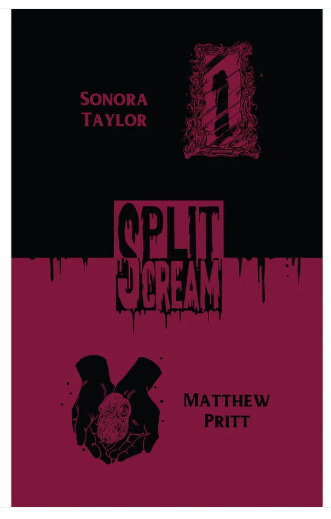
In addition to the books listed above, I have a novelette coming out next month called “Passing Glance,” which appears in Split Scream Vol. 8: Cursed Places, from Tenebrous Press. It’s a haunted house story based on a real and eccentric museum in downtown D.C. I had a lot of fun writing it--when I pitched it to Tenebrous, my comp title was the Japanese horror film Hausu. You can preorder it ahead of its April 21 release here.
What piece of writing is the most meaningful to you and why?
Oh gee, that’s tough. Every time I think of an answer, I think of three other choices! I’m a voracious reader and what moves me changes from year to year, as I myself grow and change.
Are there any other works or writers you think we should be reading?
I’m going to give kind of a general answer here, but because I feel strongly about it: I think genre authors should make it a point to read more books that are outside of the genre they write in. For instance, while I read my share of horror, I read a lot of literary fiction, romance, and nonfiction about food and social issues. I think drawing from many wells makes your own water richer.
What are your thoughts about being a woman writing/editing horror at this particular moment in history? What challenges do we face?
The biggest challenge we face is people trying to put our work into boxes that fit their preconceived notions of what women write. When I first published in the scene, my work was called a range of things, including “not really horror” (a cliche more tired than virgin final girls), “more of a romance than horror” (I consider my romantic horror stories equal parts so), and “cute” (I still don’t know how a cannibal story is cute but okay). Now, I’ll be the first to say that my work as a whole can sometimes be challenging to classify in easy subgenres--for instance, I had to think about my answer to what kind of horror do I write, and that should be easy for me to do! But there’s a big difference between that and refusing to acknowledge something as horror because a woman wrote it.
Any final thoughts? What’s the best place to find you on social media, and if you have a newsletter, how can we sign up for it?
Ladies, and anyone else who needs this advice: write the book you want to write. Do not write to the market, to an imaginary audience, even to the fans of your last book. Write what you want to write. I promise, the readers will follow and your story will be better for it.
My socials are listed below, and you can always learn about my latest releases at sonorataylor.com
Facebook (public profile/page): https://facebook.com/sonorataylor
Instagram, Threads: https://instagram.com/sonorataylor
Bluesky: sonorataylor.bsky.social
Substack/Blog: https://sonorataylor.com/blog
Website: https://sonorataylor.com
The Crow’s Gift and Other Tales
Seeing Things (Available in Spanish from Dilatando Mentes Editorial)
Someone to Share My Nightmares: Stories
Diet Riot: A Fatterpunk Anthology (with Nico Bell)
Comments
Nothing yet. Say the first thing.
Sign in to join the conversation.