
Let’s begin with what this is not.
I am certainly not here to criticize Homer’s Odyssey. Ancient texts, even with all their wonky ethics and backwards gender politics, make me feel alive and I love them for this.
Nor am I here to criticize Christopher Nolan’s film adaptation of The Odyssey, which has already been run through the take mill in every which direction.
What I am here to complain about is our abiding love affair with a certain type of narrative, the Hero’s Journey, and the monopoly it has on what constitutes a compelling and admirable life story.
Hero’s journeys can be riveting—I am not immune to their charms—but their ubiquity has convinced us that one must leave home and family to achieve a dynamic existence. The real experiences that lead to deep knowledge, meaning and transcendence are all out there, far off in the great away, a place few parents and caregivers can reach.
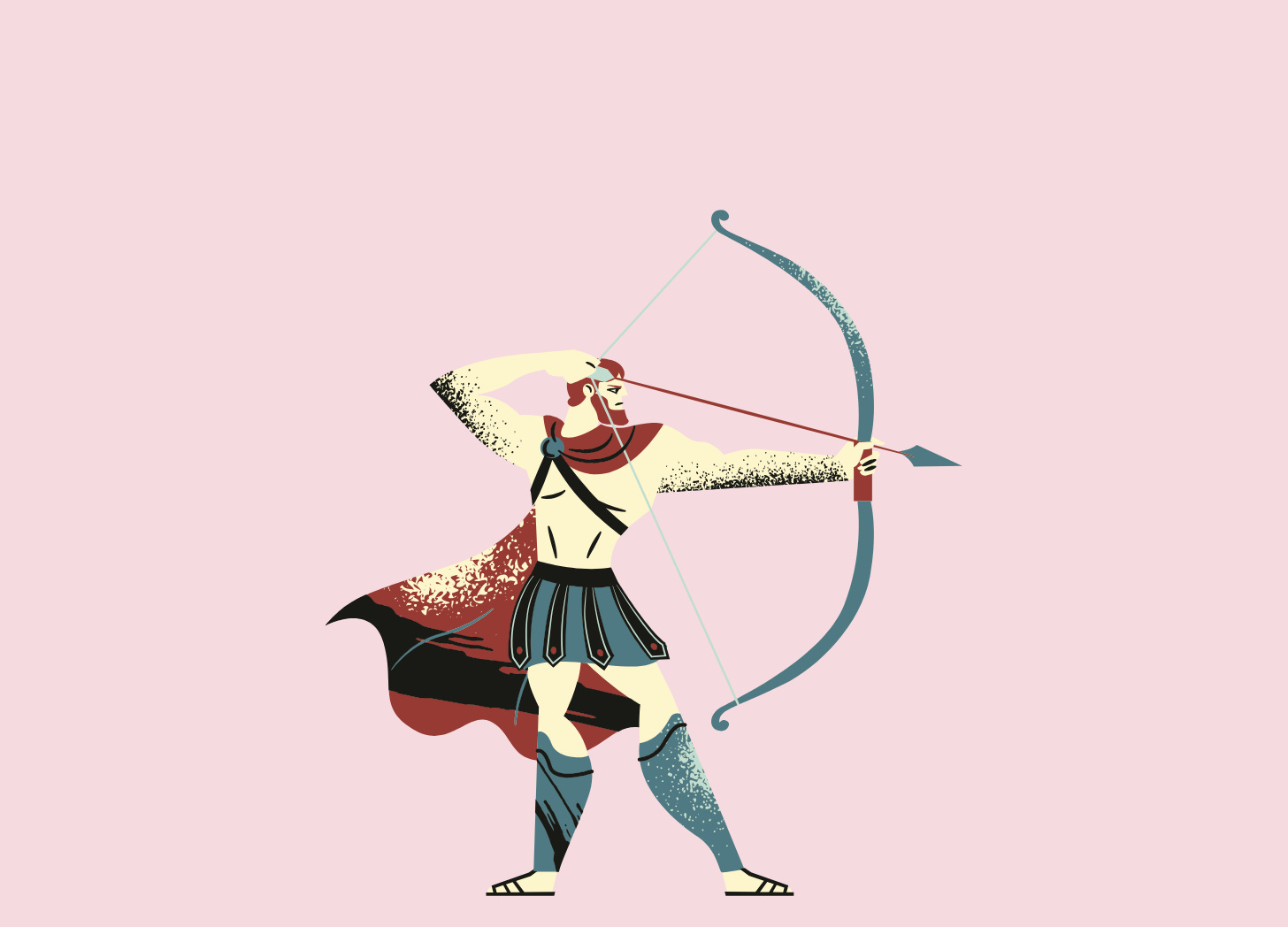
In The Odyssey and countless other variations on the Hero’s Journey, the caregiver is never the protagonist, and the home is never the setting. Instead they are the places the hero, often male, must leave to begin his journey and only returns to when the action is done.
The moms, dads, caregivers, and all the other tenders and maintainers, are the rhythm section to the hero’s waxing and waning melody. Yes, sure, the caregivers can and do experience challenges and growth of their own, but it’s negligible compared to the actual hero’s experience. (Worth mentioning: Penelope, the wife and mother who stays behind, has a much richer inner life and narrative arc in Homer’s version of The Odyssey compared to Nolan’s.)
The Hero’s Journey
In 1949 a scholar named Joseph Campbell published a book called The Hero with a Thousand Faces. In it, he claims to have discovered the core ingredients to most major myths, the “monomyth,” from around the world and throughout time.
Here’s how he summarized it:
“A hero ventures forth from the world of common day into a region of supernatural wonder: fabulous forces are there encountered and a decisive victory is won: the hero comes back from this mysterious adventure with the power to bestow boons on his fellow man.”
In other words, our hero must leave the familiar, the domestic, in order to face the kind of challenges that will bring him wisdom and power, the kind that will help others.
He broke the Hero’s Journey into three acts: Departure, Initiation, and Return.
ACT ONE: Our hero separates or departs from his familiar world. He experiences a call to adventure. At first he refuses the call. Then he agrees and begins the journey away from the familiar and into the unknown.
ACT TWO: Our hero is initiated into his new role and purpose. Obstacles arise which he has to overcome. These obstacles often appear in the shape of a seductive woman. Eventually the hero comes face to face with whatever big challenge he was facing and succeeds. His old self has died, a new wiser self is formed.
ACT THREE: It is time for our hero to go back to his staid old domestic life—wife, kids, the works. But he resists. Life is more alive out here, in the great away. Eventually he decides that he must return, and has one more challenge in bringing back his gains to the ordinary world. He makes it back, at last, a more transcendent, wiser being.
Campbell had his critics who took issue with his research and called into question whether this one pattern really was as common as he said it was. Perhaps, they inquired, he just found what he was looking for and either consciously or subconsciously ignored any counterexamples.
Such criticism had no effect on Hollywood, who fell full rom-com head-over-heels with this narrative structure. “It’s difficult to avoid the sensation that the Hero’s Journey exists somewhere, somehow, as an eternal reality, a Platonic ideal form, a divine model,” writes Christopher Vogler in his popular screenwriting book, The Writer’s Journey: Mythic Structure for Writers.
George Lucas worked with Campbell on Star Wars, screenwriting classes still teach this formula, and a million movies including The Matrix and Moana follow it. Our culture is flooded with stories that promote the message that to live an interesting life, and find meaning and wisdom that is worthy of respect and attention, one must leave home and family and head to the great away.
Joseph Campbell Didn’t Think Women Have Main Character Energy
It would be nice if we could claim that Joseph Campbell didn’t notice the gendered nature of this—but that doesn’t seem to be the case. As he writes in his book, “Woman is the guide to the sublime acme of sensuous adventure…The woman is life, the hero its knower and master.” Dust off the gobbledygook and the message is something like: women can be powerful in some mystical, life-creating sense, but it’s men who take action on planet earth.
While teaching at Sarah Lawrence, Campbell told his students that women should stop “looking at the boys and wondering whether they are in competition with them… I was teaching these courses on mythology and at the end of my last year there this woman comes in and sits down and says, ‘Well, Mr Campbell, you’ve been talking about the hero. But what about the woman?’
I said, ‘The woman’s the mother of the hero; she’s the goal of the hero’s achieving; she’s the protectress of the hero; she is this, she is that. What more do you want?’
She said, ‘I want to be the hero!’ So I was glad that I was retiring that year and not going to teach any more.” (For more Campbell ick, check out this video.)
The Problem Is Bigger Than Who Gets to Be the Hero
I’m hardly the first to point out Campbell’s sexism. There has been plenty of feminist writing pointing out that women aren’t the heroes, including books by Maureen Murdock and Maria Tatar. I think that is all very important, but it isn’t quite the point I am making here. By now we’ve seen many women leave home on their own for transcendent adventures; think books like Wild and Eat, Pray, Love, and so on. We now understand that women can be that kind of hero.
What I want to add to the conversation is not so much another push to think about the gender of the heroes, but instead for us to focus on the setting and the plot of the journey. I want us to see the home as the room where it happens, and intimate, care relationships as the substance of the great trial, the turbulent, live-wire experience through which wisdom is formed and then shared with the broader community.
I want a father interacting with baby, or adult daughter interacting with a parent with dementia to be the material upon which a rhapsodic Hollywood soundtrack is composed. Sometimes when caring for my children or parent is rough, I imagine such a soundtrack is playing, and that I am the hero and this is the adventure. It really does make it better.
I love a compelling story, but stories are never just stories. They are the material from which we make meaning in our lives, and decide whose lives matter, and whose don’t. This happens even when we don’t think it is happening, an act of cultural osmosis. A decent body of research on parent and caregiver well-being suggests that parents and caregivers are happier when they are caregiving in a culture that values care.
The Hero’s Journey has become the material from which we have been making meaning in our lives, possibly forever if Campbell is to be believed—certainly since Hollywood took note of it 75 years ago. This is, I believe, one of the reasons why parents and caregivers are struggling today. We will never get the support we need until the world understands how rich, profound and challenging caring for others really is. And we will keep struggling to grasp how powerful and meaningful it is in our individual lives when the world outside our homes conspires to convince us otherwise.
I have given workshops at a number of corporations and organizations helping parent and caregiver employees better understand and value the care experience. One of my main activities in these workshops is my adaptation of the stages of the Hero’s Journey to parenting and caregiving.
Comments
Nothing yet. Say the first thing.
Sign in to join the conversation.