
Ok, bear with me here while I try and explain this without it sounding too odd.
I heard about this idea a while ago, and we have introduced it and wow - the kids have responded so well and really love it. It’s going to sound a little cheesy to share this, but, I’m telling you it’s working already, and I really believe in the long term goal.
So, the idea is this: you decide what you want your family’s core values to be, and choose the five that matter most to you to create your own family mantra. Then, you repeat these five little sentences to your children often.
Through repetition, you’re quietly telling your children: this is who we are. This is who you are.
Of course, they need to be values your children witness you upholding too.
You choose a family name—The ‘Your Surname’ Gang / Family / Clan / Tribe… whatever feels right for you. We went with Clan because Pip loved it, and although I’d kind of like to change it, it’s well and truly stuck now.
The part I really love is how you can weave these mantras into everyday parenting. Instead of correcting your children individually, you bring it back to the values of the family. So at the same time as you’re redirecting behaviour, you’re reinforcing this sense of unity and belonging. You can correct the behaviour without attaching shame to the child.
When I first heard about this from a parent of teenagers, they said that while your children are little, it can feel incredibly repetitive. But as they grow into teenagers and eventually adults, these little phrases become woven into their sense of who they are. I thought there was something really beautiful about that.
So to give you an idea these are ours:
The Palumbo Clan are kind
The Palumbo Clan are generous and giving
The Palumbo Clan work hard and never give up
The Palumbo Clan are grateful and thankful
The Palumbo Clan stick together
I really only use these at home, because I have a feeling I’d sound slightly unhinged announcing “The Palumbo Clan are kind!” in the middle of a playground. But Dom and I have both been doing this for the past six months, and I couldn’t love the effect more.
IN ACTION: Instead of saying, “Stop complaining,” or “Say thank you,” I might say, “Pip, you’re a Palumbo. The Palumbo Clan are grateful and thankful.”
Or instead of, “Hey, that thing you just did wasn’t very kind…” I might say, “Hey Bobby, remember—we’re the Palumbos, and the Palumbo Clan are kind.”
And then you give them the space to adjust themselves.
But my favourite example is the day it was used back on me.
We were travelling and out on a hike. I was tired, the weather was turning, and at some point I said out loud, “That’s it, let’s just head back to the hotel.”
Pippa turned on her heel and looked at me.
“Mumma! We’re the Palumbo Clan. We never give up!”
I felt a little knot form in my throat hearing my own words swung straight back at me like that.
It works.
And I think that’s the part of this I love most. I imagine that one day, when Dom and I aren’t there saying these things anymore, these little phrases might still be there somewhere, in the back of their minds, in the way they speak to themselves, in the choices they make.
A small voice reminding them: This is who you are. This is where you come from.
Ever since our kids were babies, we have avoided giving them anything to entertain them on drives. Both short drives and long drives. We’ve avoided toys, snacks, watching (goes without saying for us but just in case you’re new here!). If we are on a long drive and need snacks, we stop.
Music - yes. But not all the time. We let drives be a time of stillness. Time for minds to wander, and eyes to stare out the window. Conversations to happen. Maybe they’ll start a game of eye spy. Most often music enters, but not always, and not straight away.
When we do put music on we take turns choosing songs. Something that has worked really well for us, and has led to diverse music requests, is we have explored music history with the kids. This looks like learning about a particular genre of music, or famous musician, or even a particular instrument. We’ll listen to music associated to the genre, the musician or the instrument and I’ll tell some stories to go with it - they get really into it. They have loved this and now when we listen to any music they’ll try and pick out what instruments they can hear. It means their music requests are quite varied. If you like this idea, and need an artist to start with for small children, The Beatles are perfect. Lots of stories and so many of their songs are great for toddlers.
Back to the car… So, as a result the kids just have no expectation for entertainment or snacks on drives, and it honestly makes life so much easier. When they were babies this was sometimes challenging, especially if they were crying, but we would just hold space for the emotion and stop / pull over if needed. Bobby cried a lot as a baby in the car, I know how tough it is. But by the time they were a little older, the expectation was set and car rides have been very easy / low maintenance since.
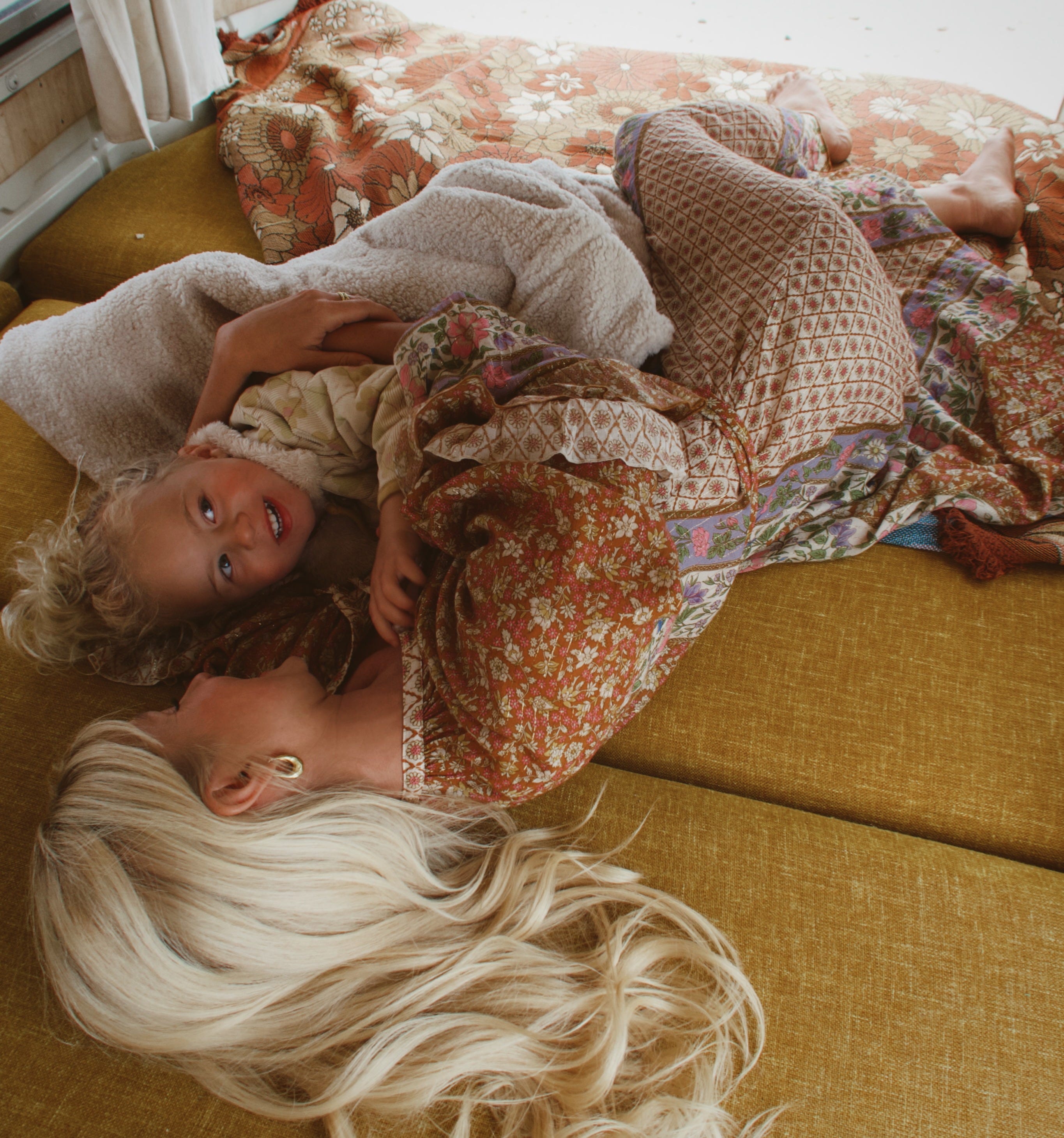
Always assume they are listening and understanding absolutely everything. Words are energy, so is our tone and our emotion. These frequencies deeply impact our little people. A friend recently said, “the things we say out loud cast spells on our life”. I love using this phrase because the kids can understand how it works.
One separates.
One repairs.
In our home we hold strong boundaries, I believe children thrive with boundaries they can trust wont move, but we do it without the punishment. We do this by talking about how all things have good consequences and bad. We always have the opportunity to repair things when we have done something that has caused an unhappy consequence.
For instance, if it’s the way they are talking (speaking unkindly when asking us for something) it will never get the desired result, but the moment they choose kindness… the path changes. If it’s speaking unkindly to each other we let them know it’s not ok, and we use the language, “The consequence of how you just spoke is seeing how upset your brother / sister is right now.” So that they hear it repeated over and over that seeing someone they love upset is a negative consequence.
In our family there is one boundary that when crossed has a consequence of a privilege being removed every time. We try to be thoughtful in choosing one that they care about, but doesn’t enter punishment territory. That line in the sand is intentionally hurting another - there is always a consequence for this (lately this has been the tea before bed which they really really love - being removed). There is opportunity to repair immediately, but the privilege being removed sticks. This boundary has worked really well, and I feel is respected by both of them and really helped them in those early years, when a hit or kick from frustration, or playing out something they’ve experienced, happens. Lets imagine it’s a hit… having the same response every time means that we can stay calm but firm in our reaction. I know exactly what my response is, so I don’t react or yell in the moment. And they know they’ve crossed the line that is a big no-go in our home. They know it before we’ve even said it, and they can reflect on it at bedtime when they don’t get the tea. We can open our arms to the emotion that caused the outburst, but let them know that it’s absolutely not ok, and they will not be having tea before bed (which yes, does often result in tears, and that’s ok).
Discipline looks like sitting beside Pippa or Bobby while holding a boundary they really don’t like, (this can be any boundary) and letting them know that while I know they’re upset, and it won’t change, I’m here for whatever they are feeling.
Sometimes it looks like helping them repair after being unkind to each other instead of immediately assigning villains and victims. If it’s over a toy, the toy might be removed while I give them space to work out how to repair it with the other. If they need my intervention, I generally have them look the other in the eye while I say, “that there is your best friend for life - the Palumbo’s stick together. You choose a way to repair this with them now” - this gives them the autonomy to work out the repair, and the eye contact alone normally has them crack a smile, or maybe I’ll get them to hold hands or give each other a hug before they are allowed to resume play with the toy they fought over. They have control of how they choose to repair it with each other, and once they do the toy returns.
It looks a little like:
“I won’t let you do that,”
while making it clear:
“I’m still here.”
Because ultimately, I don’t want my children’s inner voice to become one of shame and fear.
I want it to become:
“Even when I struggle, I am still worthy of love, guidance and repair.”
Text within this block will maintain its original spacing when published
I want to note here though that this kind of parenting requires me to regulate before I react in the moment. I’m not perfect at it, but this is my goal and what I aim for. And this decision to create clear boundaries has absolutely helped me to stay really soft, open and calm in how I respond, because I already have a plan for that response.
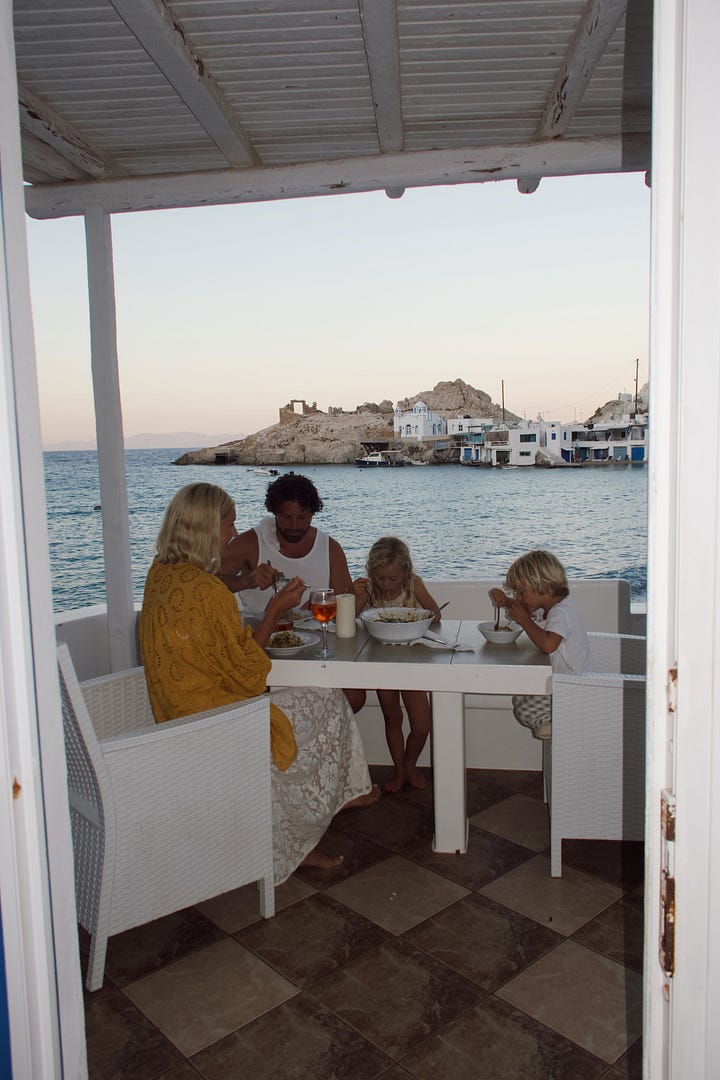
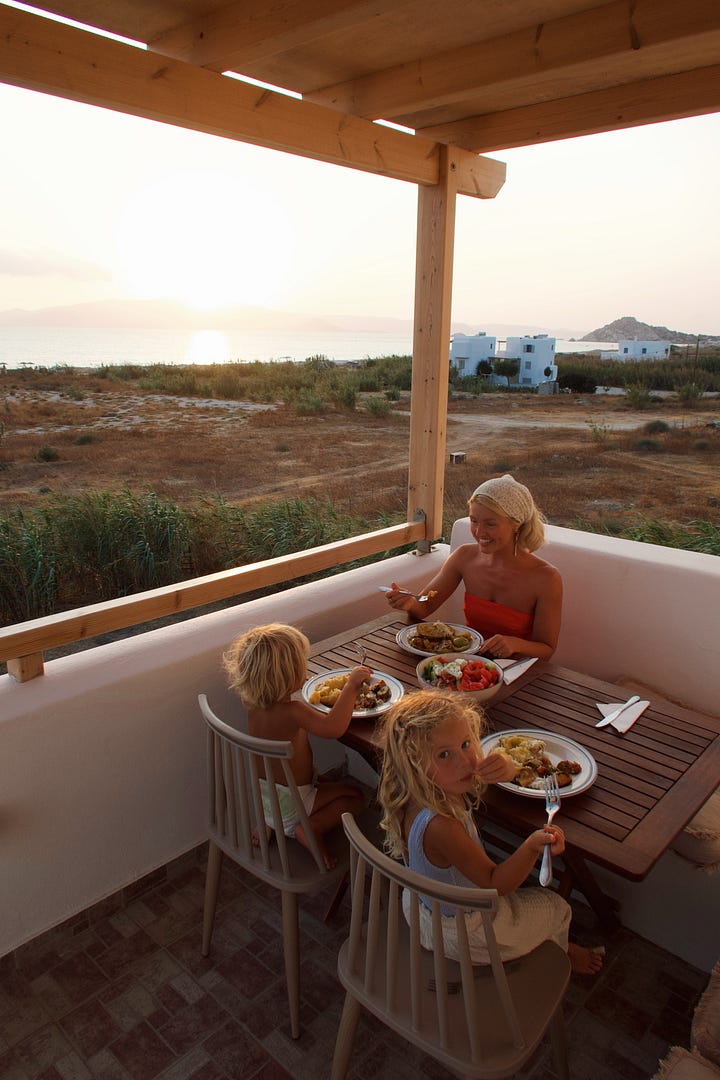
Every night we sit at the table and share a meal. The same meal. Together.
There are no alternate options if someone doesn’t like it. This is dinner, you choose if you want to eat it, or not. There’s no stress. No pressure. But we do make sure there’s a lot of joy and conversation around the table. We begin our family meal time by lighting a candle. This is something they do at school when they sit and eat too, so it’s a ritual the kids really adore. It brings a moment of silence before we all say thanks, for anything our hearts want to say thanks for.
We never use the words, “what do you want to eat?” in regards to breakfast or dinner. Both are cooked meals and everyone eats the same dish. I know some may strongly disagree with me here, but this is what has worked beautifully for us. We give them autonomy in other areas. Not offering choice with our cooked meals takes away any possibility of food related conflict - in fact, the concept hasn’t really occurred to our kids - except for when they have witnessed it with others. And yes, they have come home after witnessing it and tried it out immediately… “Mum, can I just have plain pasta with butter?”. We just explain why we eat what we eat, and we keep the tone of any conversation like this very positive. We explain that their bodies need more than just the plain pasta to grow, and think, and flourish, and then… we tell them that dinner is whatever dinner is, otherwise they don’t have to eat it.
This kind of leads me into my next point…
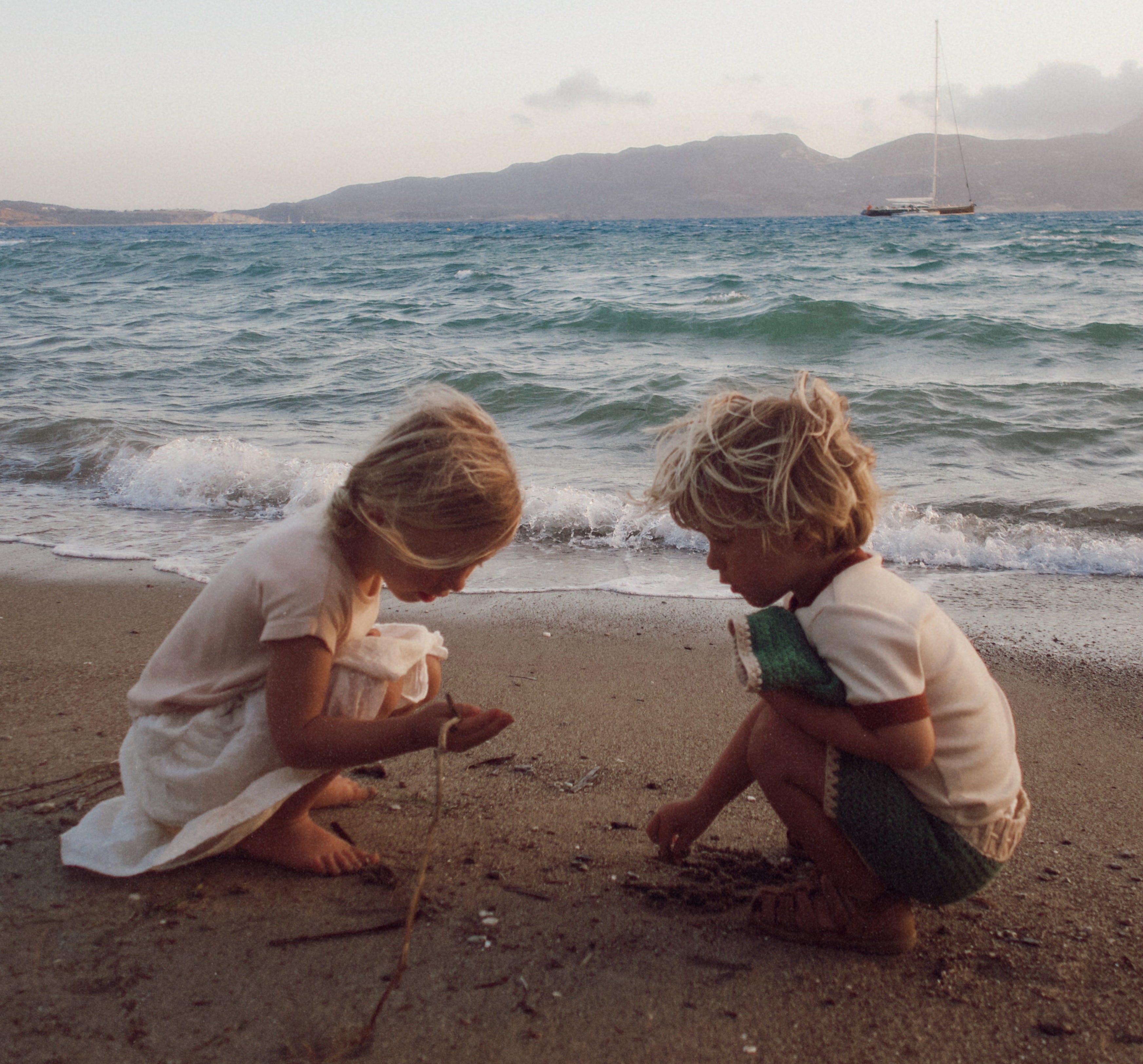
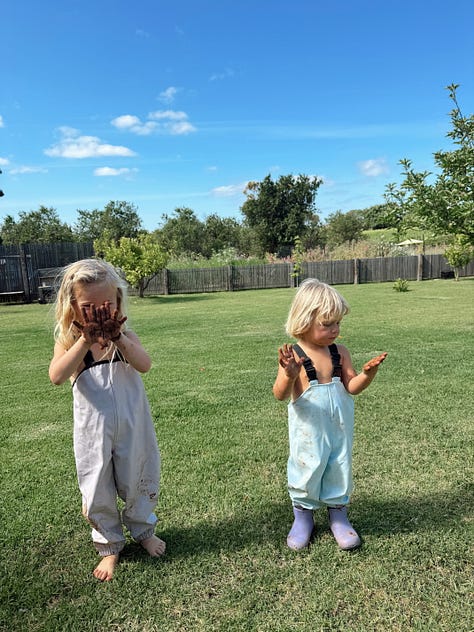
I actively seek out opportunities for boredom, and as a result, I truly believe my kids are really great at being bored. In fact, despite me regularly creating opportunity for boredom, they almost never says the words… “I’m bored.”
I feel like every parent I know who has travelled with their kids comes home commenting something along the lines of, “They played so beautifully with barely anything.”
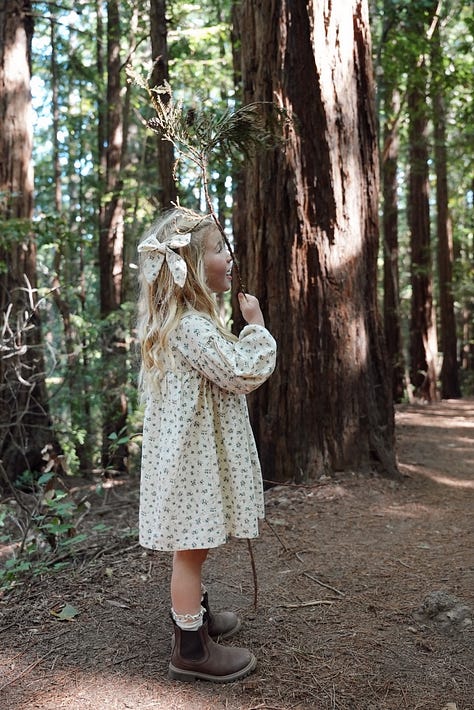
A stick outdoors.
A bowl and spoon from an Airbnb kitchen drawer.
The small amount of toys brought from home (for us it’s the mouse family).
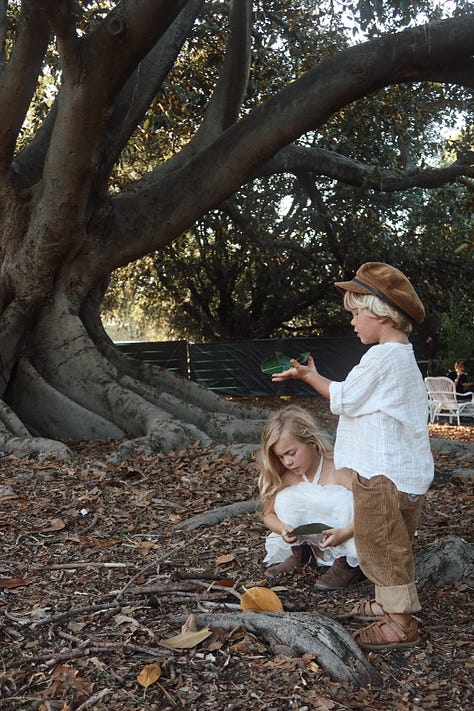
Hours spent making “potions” out of leaves and water.
This is where less choice and boredom go hand in hand. And where slow travel is my constant reset and reminder. It’s easy on holiday, maybe a little harder at home but it can be done, trust me.
At home, if there’s ever too many toys out, I’ve noticed my children disengage with the play space, and I’ve heard the same from other parents.
I don’t think children necessarily need more stimulation.
I think they need more space. More room for imagination to stretch itself. More stillness before entertainment rushes in to fill every gap.
And honestly, I feel adults are exactly the same.
Too many options. Too many tabs open. Too many clothes. Too many notifications. Too many things competing for our attention and fragmenting our minds all day long.
I notice it most when we travel.
Fewer decisions.
Fewer distractions.
And somehow… more presence.
I don’t think happiness always expands with abundance. Boredom allows for creativity and contemplation. Happiness expands with clarity that boredom delivers.
When there are fewer toys out, my children play more deeply.
When fewer books are rotated onto the shelf, they return to favourites again and again.
When fewer activities fill the week, everyone feels calmer.
Less choice seems to create relief.
For nervous systems. For homes. For family life.

Surely every Mumma out there knows this. And while some days it’s a burden, it’s also a beautiful reminder that taking care of ourselves is never selfish. And whenever the energy feels off, I take ten - either a shake it / shimmy it out energy shift, or a slow breather (empty your out breath… the rest will follow) - and walk back in aware that I have the power to shift the energy of the entire house. It’s a superpower if you acknowledge it and use it.
Mothers hold the peace of the home.
For me, this is just a foundational health principal in our home. Pay now, or pay for it later. It’s not just the harm conventionally farmed produce can do, it’s also bang for buck. Organically grown vegetables are drastically more nutrient dense (which I care about for my kids). And when we buy organic, or even better, local organic produce, we vote we our dollar. We increase demand. We support the farmers who are farming organically.
I agree though, it should not be such an expense to eat food that hasn’t been sprayed with cancer causing chemicals, but it is. And it’s not ok. The only way to change this is to educate ourselves and others on why this needs to change in Australia. I won’t do it here, but please do a little reading if this is something you haven’t heard about (or send me a message I can can direct you to some great reasources).
We have also been really open with our kids about why we choose organic produce whenever it is possible. They’ve asked questions, we’ve had lots of conversations about why some people feel it’s necessary to spray crops to farm and make a living, and why we don’t. This means that when we explain that there’s been some spraying at the local playground and to stay off the lawn they know exactly what we are talking about and it’s not a big scary topic (although it is a very sad problem), it’s just a part of the world we live in and we make the best choices we can.
I got my period when I was 9, and I had no idea what was happening to me. Not to be dramatic, but I actually laid down in the shower, thought I might be dying, and cried out for help.
I don’t just want Pippa to know what a period is, I want her to feel completely comfortable about it. Comfortable to talk about. To ask her me or her Dad questions. And I want the exact same for Bobby. There is nothing taboo about it. They both know I bleed, and usually it’s when there’s a full moon. I don’t talk about it as a curse or use any negative language about it. I have explained that many women, including me before I had babies, can experience pain with it, so it can be very uncomfortable.
However, they know that it’s important, and that women’s bodies are incredible and can do incredible things. I try and keep the language around this topic really positive and empowering.
Side note: When Pippa was nearly 3 she discovered some dark chocolate in my bedside drawer. I told her I had a piece on the first day of my bleed, and she asked if she could join me. So we sat in my bed, and we had one piece each while we read a book and she felt so special. Ever since this has been our little ritual, and one day, we’ll do it for her too.
Feelings are welcome. No feelings are too big. Let out the emotion, feel the peace.
We don’t want our kids to suppress their emotions to become “good.” Crying, frustration, overwhelm — these are not bad behaviours to shut down, but natural ways the body releases stress and restores balance. Instead of trying to immediately distract, or silence big feelings, we try to stay close, hold boundaries calmly, and create a safe place for emotions to move through.
This is something I have actively changed in my parenting journey.
When Pippa was a baby I prided myself on being about to entertain or sing away her tears. It took me a beat to discover that I don’t have to entertain away the crying, I can be present for it (when it’s a cry that isn’t related to hunger, a poop, or discomfort). Babies can have big feelings too.
This has helped me to have so much more tolerance, patience and empathy for the big emotions that come in the toddler years and beyond. This is really hard to do when we have been raised with (even the best intended) “you’re ok, stop crying”, or “here, look at this!”.
When I had Bobby, I was able to put this into practice with him as a baby from the very beginning. Listening to his big feelings. And when Pippa experienced the big change of becoming a big sister, she understandably had some big feelings of her own. She was two and didn’t know how to articulate it, but she would climb onto one of our laps and tell us she needed a big cry and she didn’t know why. She did this because she knew she could cry as long as she needed, without anyone trying to ‘fix it’. We were a safe place for her to let the tears out. We both were amazed at how this release of the big feelings helped that transition to be so smooth and loving.
The same happened when we moved house for both kids. Excitement, but also this unexplainable grief (that they wouldn’t have been able to recognize) and sure enough, big unexplained tears. Sometimes we know exactly why they are feeling sad, sometimes we don’t. Whatever the cause, the emotion is welcome. We don’t distract or shut it down.
For me, and for Dom, being able to be present for the tears has been a beautiful experience. It’s one that I can only hope will lead to us always being a safe place to bring big emotions in the years to come.
And here’s my two cents:
It’s slow. There’s anticipation. It can take a week, or even a month to finish a big book. There’s character and plot development. It develops delayed gratification, imagination, storytelling, concentration, emotional connection and the ability to sit inside a world for a while. They have to imagine the house, the forest, the face of the character, the feeling of the moment. Their minds become active participants in the story rather than passive receivers of it.
And maybe most importantly, reading together feels connective. Which is why after dabbling a little with audiobooks (this was just 2 - 3 months when Bobby was a baby, Pip was two, and there were times I needed to facilitate naps at different times and the audiobook was a sure thing to keep Pip happy while I put Bobby down, no regrets!) - I ultimately decided to stop audiobooks (it’s been at least 2 years since we last played one) as I wanted me or Dom (or any family / friends) to be who they were hearing the stories from. I can still remember the absolute joy of being read to as a child, there is such deep connection in those moments. However, if you don’t love reading, or don’t have the time, I think audiobooks serve a great purpose and still engage imagination and all of the things I listed above.
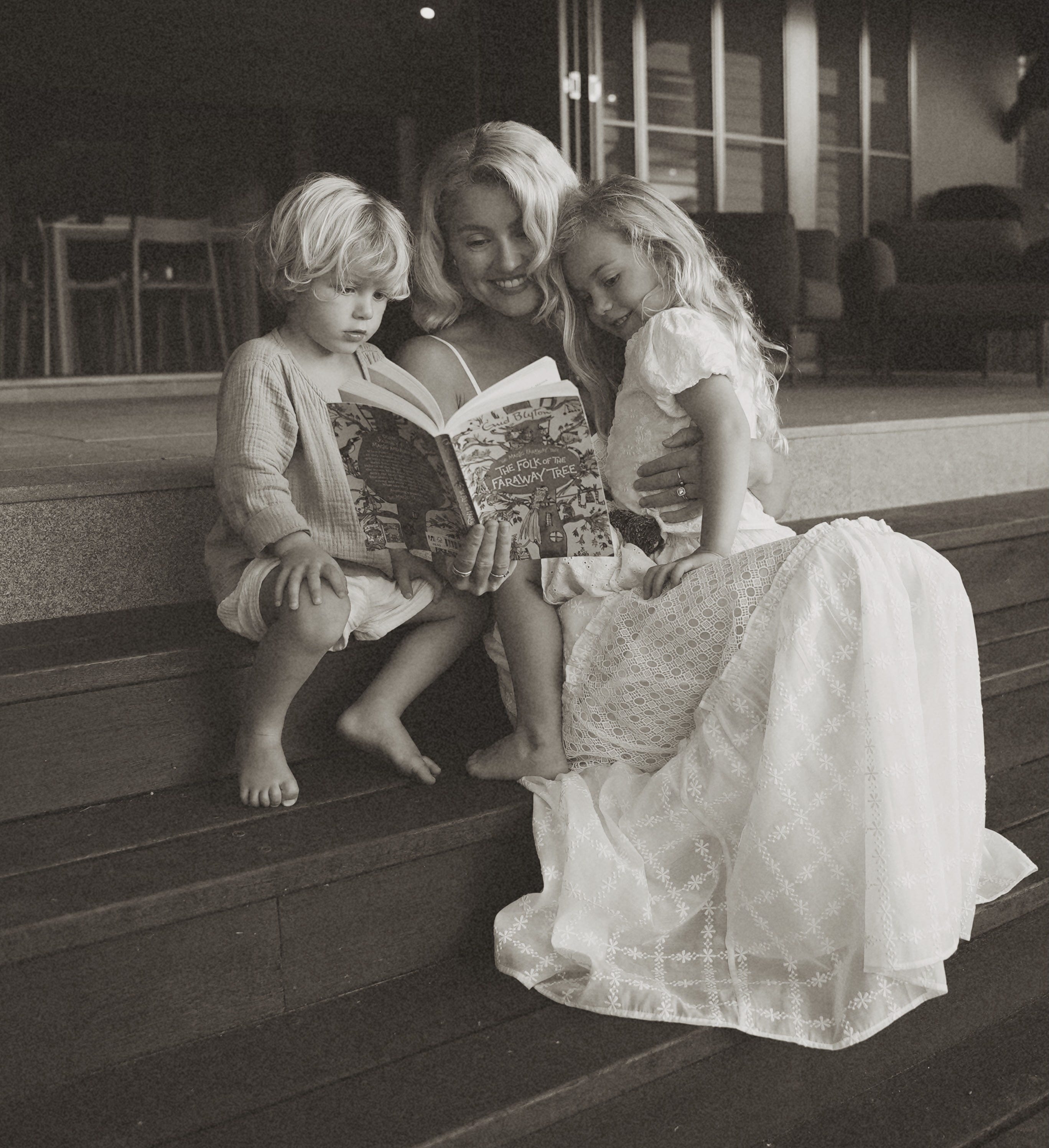
We read a lot. The kids always have a novel on the go, which I read to them a chapter or two at a time. Short books are read regularly too. And almost every night, there’s a made up story told by one of us while laying beside them in bed.
As for screens, we have no TV at home. The kids won’t have any devices. There is no day to day, or even weekly, watching. While I know there may be moments made easier by popping something on for them to watch, I honestly find that life in general is made easier by this overall sacrifice as the kids go about their days without any expectation of being entertained by a screen. Every two months or so we have a family movie night, but we have been quite slow with introducing new movies, sticking to low stimulation, slower old school films like Mary Poppins and The Sound Of Music, and most recently, Heidi (they loved Heidi - the black and white Shirley Temple one and then we did the German version). If it’s ever a TV show on a plane, its something low stimulation like Little Bear, or the original British version of Thomas the Tank Engine.
I know this isn’t for everyone, and whatever works for each family is absolutely ok.
This is just what we do.
Play is everything.
Even ten minutes of really connected play can make such a difference. Getting down on the floor, entering their imaginary world, letting them lead and, for a little while, saying yes to whatever strange storyline they have going on.
Dom is much better at staying in imaginary play for longer than me. He can commit to a character for an impressively long time, while I sometimes find myself mentally unloading the dishwasher halfway through being assigned the role of a bear.
But I truly feel play is one of the greatest ways into our children’s world. It’s where they process things they don’t yet have the words for. They replay moments that frightened or confused them, practise things they’re trying to understand, experiment with being powerful or brave or silly, and work through the enormous business of being small in a big world.
And it creates connection in such a simple way. When we put down whatever we’re doing and genuinely enter their game, I think what they hear underneath it all is: your world matters to me. I like being with you.
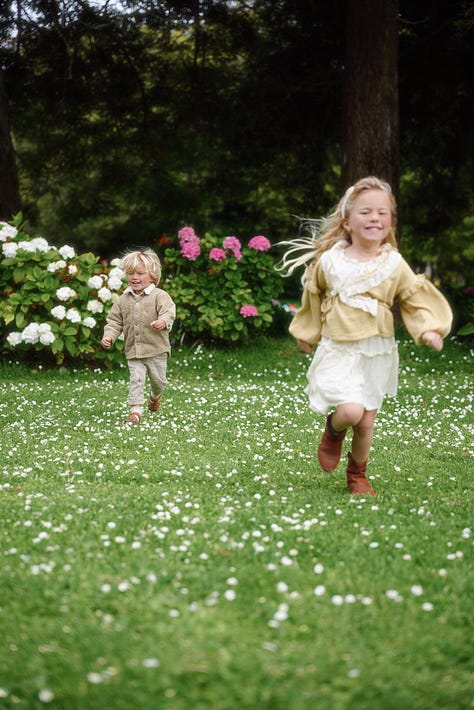
For the past year, I’ve tried to plan at least one day each week where the only real agenda is being in the kids’ world. No catch-ups, no housework (other than cooking which they join me with), no list of things we need to squeeze in. It doesn’t always happen, but when it does, those days have a completely different rhythm to them. We potter. We make things. We go for a slow beach play. We invent games. I follow their ideas.
And almost without fail, everyone seems softer by the end of it. In fact, the whole week feels softer. The only way this kind of day happens for me though, is if I plan it and treat it like a fully booked day. My days fill so fast otherwise.
There’s plenty of research behind play too. Play supports children’s cognitive, social, emotional and language development. It gives them opportunities to practise self-regulation, problem-solving, creativity and navigating relationships. And when parents join in with responsive, child-led play, it can strengthen that sense of connection and security between parent and child.
But I also think play does something important for us.
Adults, especially Mothers, spend so much of our lives being useful. Planning, organising, cleaning, replying, remembering, rushing everyone out the door. Children constantly invite us back into something we’ve largely forgotten: doing something for absolutely no reason other than the joy of doing it.
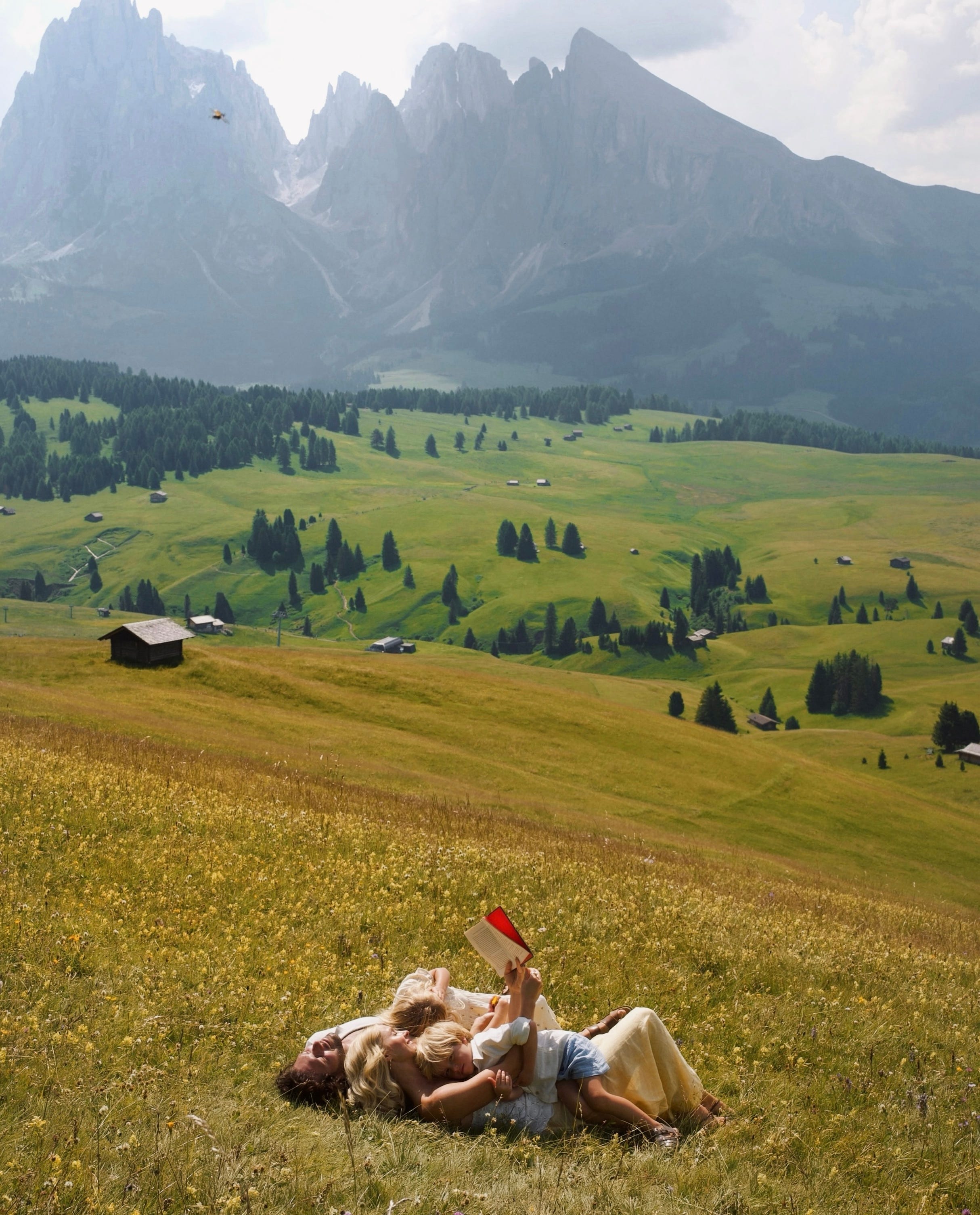
To lie on the grass. Make a tiny house for a fairy. Dance badly around the house. Build something that will be knocked down five minutes later. Pretend, laugh, be ridiculous.
Maybe play isn’t only how children learn to be in the world.
Maybe, every now and then, it’s how they remind us how to be in it too.
If you’ve been left with a thought, something to add, or a question in regards to anything above or anything parenting, please leave it below.
No posts
Comments
Nothing yet. Say the first thing.
Sign in to join the conversation.