
Founded in 1973, Women In Film (WIF) has championed gender equity in the screen industries for over 50 years, driving change through strategic advocacy, career development and industry-leading research. Last year, WIF and e.l.f. Cosmetics launched the e.l.f. Makers program, naming five WIF Fellows as inaugural grant recipients to support their individual filmmaking careers.
Today, we’re getting deep with e.l.f. Maker Claire Brooks, acclaimed filmmaker and Executive Director of the Association of Film Commissioners International. Her work creates a more expansive and equitable space for emerging voices.
This space is for every eye, lip and face! 👁️💄🙂

A Wider Lens with Claire Brooks
Tell us about your role at Association of Film Commissioners International moving from project-level producing to something more systemic? What pulled you toward that shift?
I moved from individual projects to a more systemic way of thinking, a bit by luck and a bit by design. I had been producing on both a project-by-project and slate basis as Head of Films for Homegrown Pictures. Then I branched out on my own as an independent producer and was faced with many of the challenges independent producers face today: a lack of institutional funding in the U.S.; a shrinking pool of equity investors for independent film; a post-pandemic backlog of production and glut of development; and, of course, the slowdown that occurred with our double strikes. The issues I encountered, whether the challenges of monetizing tax incentives or the difficulty of finding crew in regions that feel underexplored, were part of a myriad of systemic challenges facing our industry. When I received the opportunity at AFCI, it felt like a chance to be part of a conversation that could change and improve the landscape for the better, and to operate at more of an ecosystem level.
I truly believe that everywhere on the planet that wants to have a film industry should be able to do exactly that. Film commissions and film offices are the enablers who help ensure that the artists, storytellers, directors, cinematographers, production designers, and other creative voices in their regions are supported, and that the means are being established in their communities for them to practice their crafts. There is also the opportunity for those communities to be put on the map, which I think is a beautiful thing: the sort of cultural-emissary work that each film can do.
So, it is a shift in some ways, but it also feels like a natural development stemming from the very beginning of my career. I have always wanted to have the greatest possible impact and enable the greatest number of productions to occur, whether individually by my own hand or through this new, broader scope.

You’ve talked about expanding AFCI’s membership beyond film commissions to include production companies and service providers. What gaps and challenges were you seeing that made that expansion feel necessary?
Film commissions will always be at the center of what we do. They are the lifeblood of AFCI and the reason for our existence as an association. To best support their work, however, we have to recognize the much larger ecosystem in which they operate. Film commissioners collaborate with production companies, service providers, government agencies, filmmakers, nonprofits, cultural institutions, hotels, and local businesses. All of these stakeholders help determine whether a region can successfully support production. Expanding AFCI’s opportunities for membership recognizes how dynamic this ecosystem is. It also responds to how notoriously opaque our industry can be and how much knowledge remains reserved for insiders.
AFCI is a natural convener of this ecosystem. Film commissioners already sit at the center of that web, directing productions toward the suppliers, service providers, and other partners they need. AFCI can become a kind of Grand Central Station for that network: a hub where these groups find one another, exchange knowledge, and build relationships. What our industry is missing is greater knowledge sharing and visibility. We tend to operate in silos, even though knowledge and trust are among the most valuable currencies in filmmaking.
Film commissions are the connective tissue of this ecosystem, with a unique understanding of how all of these relationships come together to support production. AFCI’s opportunity is to build upon that expertise and convening power, creating stronger connections among commissioners and the many partners who contribute to their success. In doing so, we can strengthen film commissions, the production industry, and the communities they serve.
How does understanding “creative infrastructure” from the inside as a producer change how you think about policy and industry-wide support?
Having been on the side of their “customers,” I can anticipate many of the questions commissioners want to ask producers and studios. I can also recognize the blind spots that producers, studios, and creators may have about film commissions. Because, unless you have worked closely with a film office, you may not fully understand what it does or how valuable that relationship can be.
My personal experience as a producer has taught me that a policy can look good on paper but be difficult to use in practice. For example, a competitive incentive is not only about the headline number. Producers need to understand whether the requirements are clear, the application timeline aligns with production’s, the incentive can be monetized efficiently, the necessary crew and infrastructure exist, and whether someone can help solve problems when circumstances inevitably change.
It’s changed how I view the total infrastructure, the complete environment that allows creative work to happen, from legislation and incentives to crew capacity, locations, permitting, services, and responsive local relationships.
I hope that bringing a producer’s perspective to AFCI helps us connect the sides more effectively. We can give film commissions better insight into how production decisions are actually made while helping producers more fully understand and utilize the extraordinary resources film commissions provide. Ultimately, that allows AFCI to help its members improve conditions on the ground and build stronger, more responsive production ecosystems.
What is a piece of advice you got early on that turned out to be wrong, or that you had to unlearn?
The adage I have had to unlearn is: “Hard work is the key to success.” I still believe deeply in hard work. Figuring out what you are good at and becoming truly excellent at it is incredibly important. But I have learned that hard work alone is not enough to create a dynamic, fruitful, and successful life in this industry.
But filmmaking is a team sport. I have had to recognize that the business, relationship, and dealmaking sides of producing are just as important as the hours spent alone doing the work. Producing requires you to put yourself out there, work a room, call people you do not know, and turn cold introductions into real relationships. None of that is necessarily my first nature, but it may be the part of the work that has generated the greatest amount of opportunity for me. A huge component of building a career in this industry is also, quite frankly, luck. But I believe luck can be manufactured. It is often the product of preparation, timing, relationships, and opportunity.
So long story short: I’ve had to unlearn the idea that hard work is everything. Excellence prepares you for the moment, but relationships, timing, and a willingness to put yourself out there are often what allow that moment to arrive.
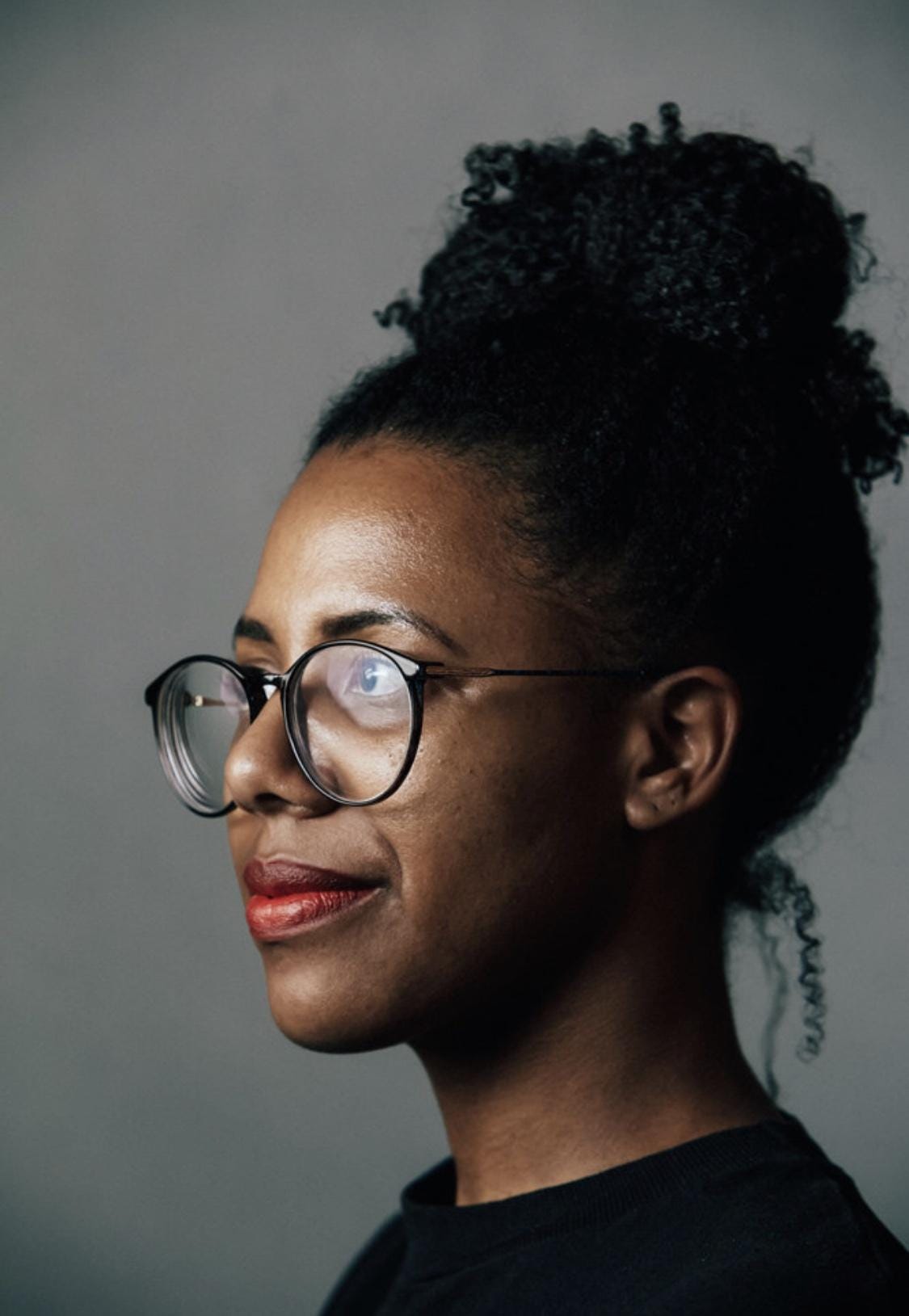
You’re a new mom. Congratulations! How has that transition been? From your perspective, what infrastructure is needed to ensure parents can stay in this industry, especially as so many productions are moving out of California?
Thank you. Becoming a mother has been transformative, exciting, and, at times, thrilling. But it would be a lie if I said it has been easy. It has not been easy. Because the nature of the work can feel diametrically opposed to the stability most parents want, working in the film industry poses real challenges to providing for children. The hours can be long, the schedules unpredictable, and travel jobs are inherently disruptive.
The bigger dream is to address this at a more structural level. What kinds of benefits could be offered through payroll? Could productions provide cash stipends, reimbursements, or discounted childcare through a professional employer organization? When a production enters a region for several months, could it establish a relationship with a trusted local childcare provider and create an option for parents who want or need to bring their children on location? Even helping parents identify reliable local resources would be meaningful.
As a parent, I feel inspired to stop treating mothers, parents, and families as a burden to the production and instead ask how we can keep people happy, supported, and connected to their families. My hope is that a better experience at the personal and family level will improve working conditions, morale, and ultimately the work itself.

Comments
Nothing yet. Say the first thing.
Sign in to join the conversation.