

Summer is winding down, and if you’re anything like me, you’re probably looking forward to getting back into a routine. I love the slower pace of summer, but I also do my best when our days have a little more structure to them.
One of my favorite parts of this summer was taking my oldest to Family Studio at our local visual arts center. It gave us dedicated one-on-one time, but what I appreciated most was how simple the projects were. They didn’t require expensive supplies or elaborate prep. Most of them could easily be recreated at home with materials we already had.
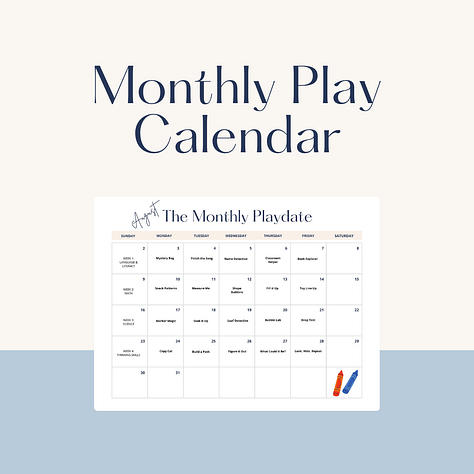
It reminded me why I created the Monthly Playdate in the first place: simple play ideas using everyday materials, toys, and routines to build early learning skills.
As “back-to-school” season rolls around, it’s easy to feel like you should be teaching your toddler letters, numbers, or other academic skills. But your toddler’s most important job right now isn’t memorizing facts.
It’s playing.
Play is how toddlers build the communication, problem-solving, and thinking skills that support future learning.
This month, we’re noticing how early academic skills naturally show up in play:
Week 1: Language & Literacy
Week 2: Math
Week 3: Science
Week 4: Thinking Skills
I hope that these activities help you notice more of the learning that’s already happening!

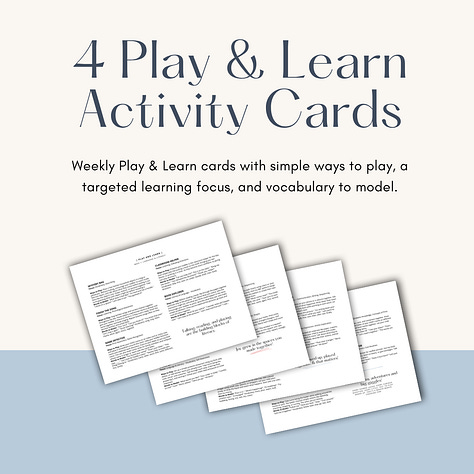
Note: This post may contain gifted items and affiliate links.

If you’ve ever wondered, “Is this a good learning toy?”
Toy MVP answers that question by highlighting one toy each month that supports communication, play, and learning. You’ll see why it stands out and get an easy activity to help you use it during play.
This month’s Toy MVP is a classic toy: Potato Head. I have fond memories of playing with this toy as a child, and I bet many of you do too. There’s something about creating a silly character that makes this toy so fun for toddlers.
But Potato Head isn’t just fun. It’s also a great tool for supporting early learning. From body parts and vocabulary to pretend play and problem solving, this toy opens the door to many opportunities for learning.


WHY IT STANDS OUT:
Encourages body awareness through hands-on play.
Body parts, colors, size, and spatial concepts come up naturally.
Strengthens fine motor skills as children push and pull to put on and take off the pieces.
There’s no “right way” to play, making it perfect for creativity and following your child’s lead.
LEARNING ACTIVITY: BODY PARTS
For a younger toddler that’s just beginning to learn body parts, start with 1–2 body parts. Tell your child what they are and point them out on yourself, your child, and Potato Head.
For example: You’re teaching them “eyes”. Give them a choice of two by holding up both the eyes and the nose. “Show me the eyes?” “You found the eyes!” Then they can put the eyes on with or without your assistance.
Tip: If your child is frustrated by questions, switch to statements instead: “I found the eyes. Let’s put them on.”
For toddlers who are ready for more, talk about what each body part does: “It’s a nose. You smell with your nose.”
Encourage your child to complete familiar phrases by pausing: “I found the…” “I have the…” or “You hear with your…” Wait a few seconds before helping.

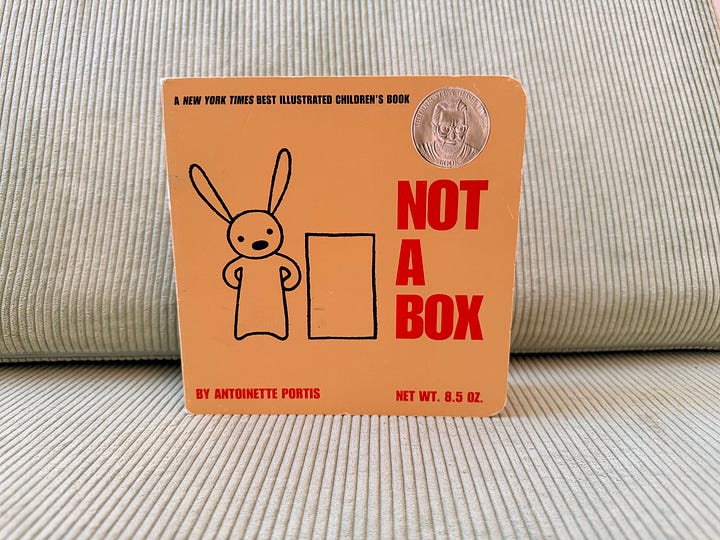
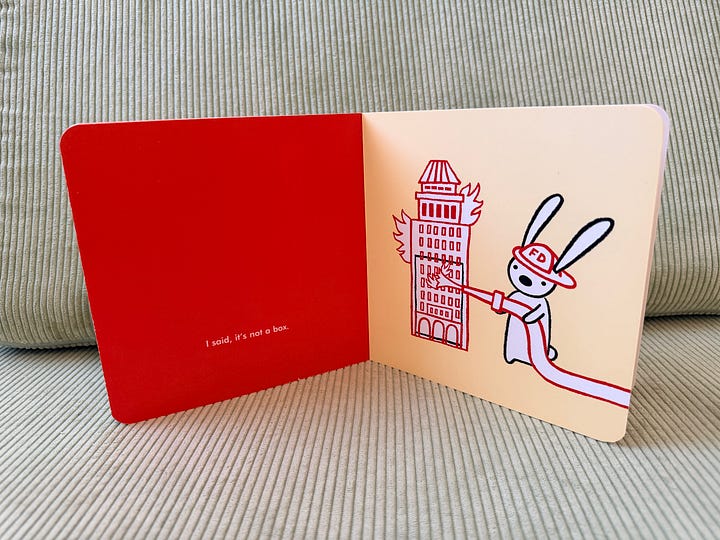
I love books that easily lend themselves to an extension activity, and Not a Box by Antoinette Portis does just that. There’s a reason children are drawn to cardboard boxes. They are open-ended, inviting children to imagine endless possibilities. A box can become a car, a rocket ship, a house, a boat, or anything else they dream up.
This simple story is a great reminder that pretend play starts with ordinary materials and a little imagination. Grab a cardboard box and invite your child to transform it into something new. It’s the perfect book and inside activity for a hot or rainy day.
Comments
Nothing yet. Say the first thing.
Sign in to join the conversation.