
Walk through any toy aisle and you’ll find products that promise to teach your toddler letters, numbers, and colors. It’s easy to wonder if you’re buying the “right” toys or if your child needs the latest “educational” toy to learn.
Here’s something that may surprise you: there are no regulations that determine what can be labeled an educational toy. In many cases, it’s just a marketing term.
The toy itself isn’t what makes it educational.
What makes a toy a great learning tool is what your child can do with it and how you support their play.
As a speech-language pathologist, I don’t look at a toy and ask, “Is this educational?” Instead, I ask, "What could a child do with this toy, and how can I create opportunities for learning?"
Once you know what to look for, you’ll start seeing the learning potential in almost every toy your child already owns.
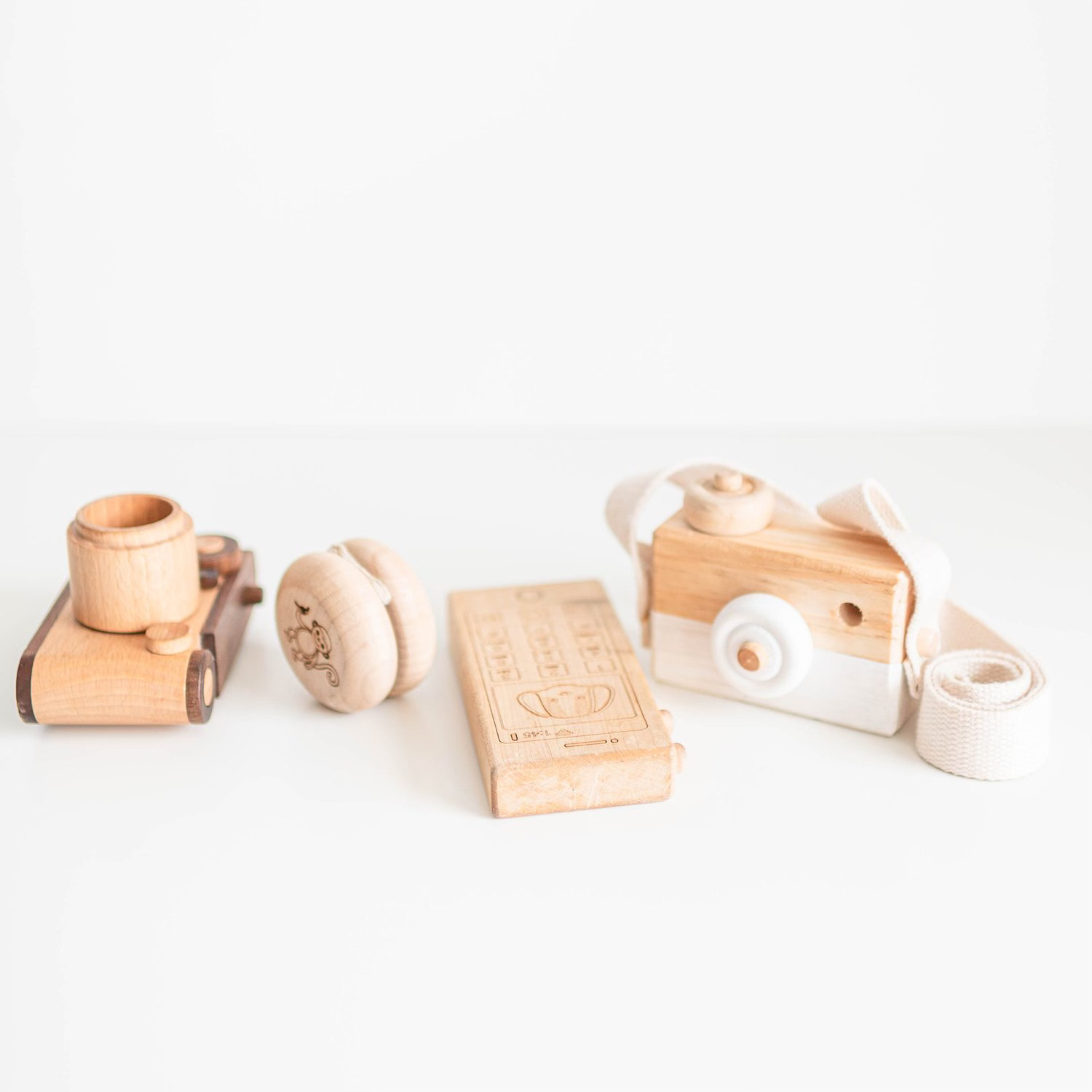
Before thinking about what you want your child to learn, start by observing what they are already doing.
Ask yourself:
What actions does this toy encourage?
What can my child move, build, create, or pretend?
Does this toy invite repetition?
Can my child use this toy in different ways?
The actions your child takes during play are the foundation for learning.
For example, toy animals aren’t just for learning animal names. Your child might make animal sounds, move them around a pretend farm, line them up, sort them by size or type, or pretend to feed them and put them to bed.
Each of these play ideas creates a different learning opportunity. Your child may be practicing language, problem-solving, creativity, early math skills, and/or pretend play, depending on how they choose to interact with the toy.
There’s no one “right” way to play. We’re observing to help us notice the possibilities.
Once you understand what your child can do with a toy, take a closer look at the skills they are already practicing during play.
Children naturally use toys to explore and make sense of the world around them. Your role is not to take over the play, but to join your toddler, notice what they are working on, and offer support that helps them grow.
Ask yourself:
What skills is my child already practicing?
What seems to interest them about this toy?
How can I meet my child where they are and build on what they are already doing?
A single toy can support many different areas of development depending on your child’s age, interests, and stage of learning.
For example, blocks might be used to practice early problem solving as your child figures out how to build a tower that stays standing. They might support language when your child says, “big tower” or “more blocks.” They might support early math skills when your child counts pieces, compares sizes, or notices patterns.
The toy stays the same, but the learning opportunities change as your child grows.
When you meet your child where they are and build on what they are already doing, play becomes a natural opportunity for learning.
When you join in on your toddler’s play, think of yourself as a play partner who adds just enough support to help your child learn and grow.
Start by following your child's lead. Notice what they're interested in and show them you're interested, too. Then add one simple idea that builds on their play.
For example, if your child is building a tower with blocks, you might join by saying:
“You built a tall tower!”
Then, you might extend the play:
“Should we add a bridge?”
If your child is feeding a doll, you might join their idea:
“Baby is hungry.”
Then add a new possibility:
“Should we make some food?”
Language is one of the easiest ways to support learning during play. Rather than asking lots of questions or testing what your child knows, describe what is happening and use words that match the moment.
Over time these repeated interactions help children understand language and use new words themselves. Language is involved in everything we do, from everyday routines to future academic learning, these simple conversations during play have a lasting impact.
It’s not necessary to narrate everything all the time. The goal is to connect with your child and to say what matters.
Just as important as knowing when to join your child’s play is knowing when to step back.
Independent play gives toddlers opportunities to continue to learn in their own way. It also gives them the time they need to practice new skills through repetition.
After you’ve joined the play, modeled language, or introduced a new idea, step back. Allow yourself to just be present, take a sip of coffee, or complete a chore nearby. Observe what your toddler does. They might build on your idea, change it completely, or ignore it altogether. That’s okay. Those choices are part of learning.
Remember, there’s no right way to play! Some of the greatest learning happens when you let your child take the lead.
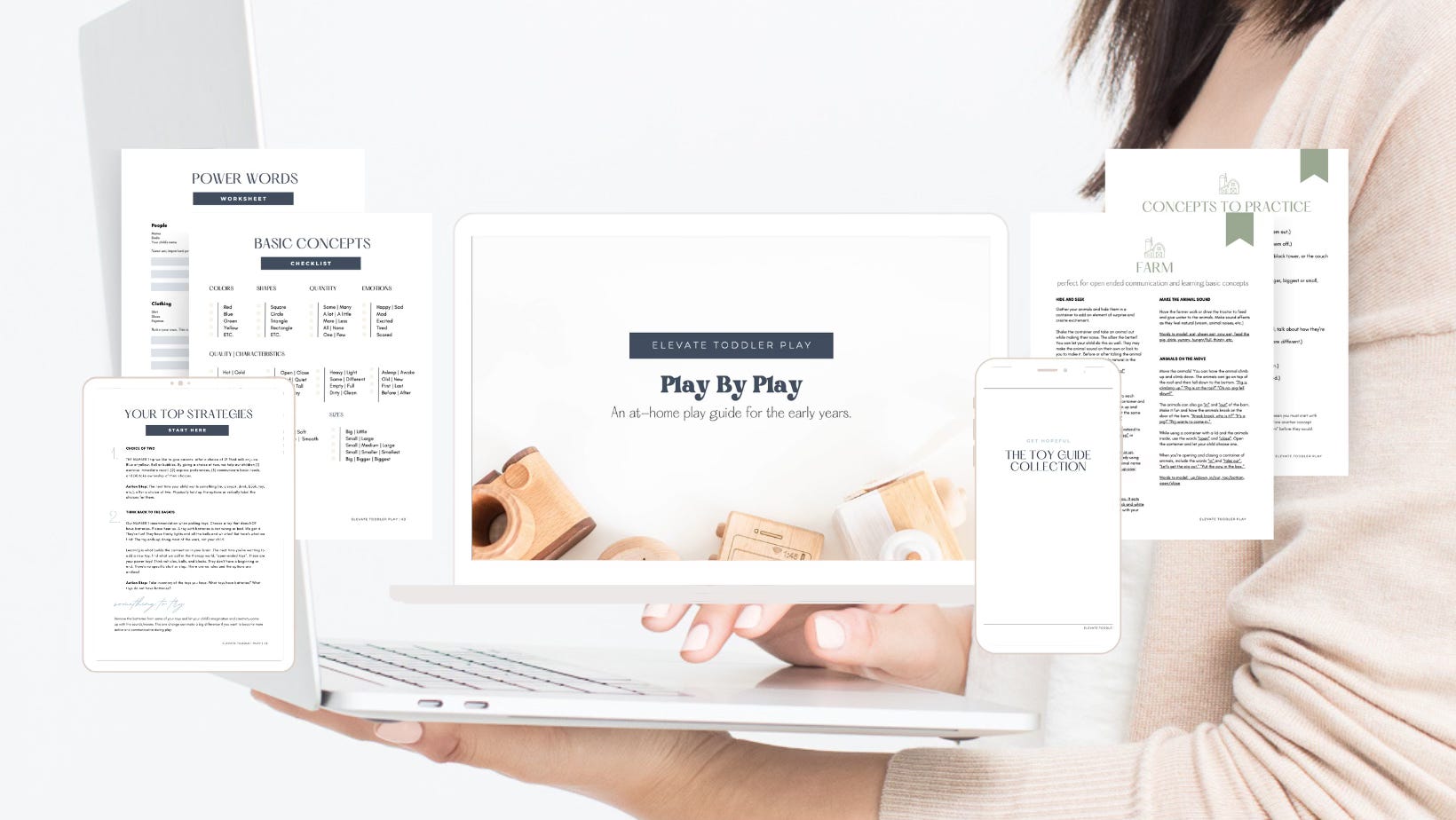
The ideas in this post are the foundation behind the Play Guide.
Created by a speech-language pathologist, the Play Guide walks you through 10 classic toddler toys with practical play prompts, early learning concepts to focus on, and words to model to support communication through play. It also includes strategies you can use with almost any toy, helping you see the learning opportunities in the toys you already have.
To celebrate Elevate Toddler Play’s third birthday, enjoy 20% off throughout August with code 3YEARS.
Comments
Nothing yet. Say the first thing.
Sign in to join the conversation.