
Hey, it’s Rohit. Welcome to my weekly newsletter on elevating your career and enriching your lives.
Last week, I took apart the skills-based hiring trend and where it actually leads. This week, I want to go one step further, into the place where that trend is headed next, and it’s a place most people will walk into feeling relieved instead of worried. That’s exactly the problem.
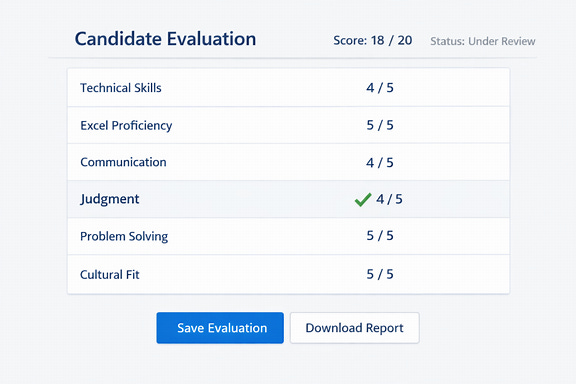
Last week’s piece ended on what sounded like good news. Skills get priced and swapped, but judgment doesn’t. Judgment is the part of you that resists the dashboard. Build that, and you’re safe.
I want to take that back. Not because it was wrong, but because it was incomplete, and the incomplete version is about to get very expensive for a lot of capable people.
Here’s the sentence you’re going to hear more and more over the next two years: We hire for judgment now, not credentials. It sounds like relief. It sounds like the system finally caught up to what smart people have known for decades, that a degree tells you almost nothing about whether someone can actually think. Companies will roll this out as progress. Consultants will sell it as the next evolution of skills-based hiring. And most people will relax, because it sounds like the thing that made them replaceable is finally being replaced by the thing that made them valuable.
Don’t relax yet.
Go back to the basic mechanism from last week. Something becomes priceable the moment it becomes measurable. That’s not a quirk of corporate HR, it’s just how markets work. The instant “judgment” becomes a stated hiring criterion instead of an invisible quality someone senses about you after working alongside you for a year, someone, somewhere, builds a test for it. A situational judgment assessment. A structured case simulation. An AI-scored interview that scores your reasoning against a rubric.
These aren’t hypothetical. Versions of them already exist, and they’re getting sharper fast. The moment judgment becomes a line item, it stops being the thing that can’t be gamed. It becomes the newest thing worth gaming, and the people who are good at performing judgment in a 45-minute assessment window are not always the same people who have it when the stakes are real, and nobody’s watching.
So the honest update to last week’s piece is this. Judgment isn’t a permanent shelter from unbundling. It’s just further down the list. The real question isn’t whether your value can be measured. Eventually, almost everything can be measured, badly. The real question is whether it can be measured cheaply, quickly, and without real stakes. That’s the actual line between what protects you and what doesn’t.
Strip the word “judgment” down to what it’s actually made of, and you get something much less abstract than the word suggests. Judgment is a track record of decisions made under real conditions, where the outcome was uncertain, something was actually at risk, and you didn’t get to simulate it twice before it counted.
That’s expensive to build and expensive to verify. A test can’t replicate it, because a test has no real stakes and no real history. It can only ask you to describe how you’d behave, or drop you into a fictional scenario for forty-five minutes. What it cannot do is show a track record of you actually being right, being wrong, and correcting course, holding a room through a decision nobody wanted to make, or being trusted with something that mattered before anyone had proof you deserved it.
This is why the people who will do well in the next five years aren’t the ones who score well on judgment assessments. It’s the ones who have receipts. Not credentials. Receipts. A specific decision, a specific outcome, a specific moment where someone can say, “I watched them handle that, and here’s what happened.” That’s not fakeable in a scored interview, because it didn’t happen in a scored interview. It happened in your actual working life, and it either exists or it doesn’t.
Here’s the part that connects back to the bigger shift happening right now. As AI gets better at producing competent-sounding answers to almost anything, the market gets flooded with people who can sound like they have judgment. AI can help someone write a sharp-sounding strategic recommendation. It can help them sound decisive in an interview. It cannot hand them a track record. It cannot go back in time and put them in the room five years ago when the decision was real, and the outcome wasn’t guaranteed.
That’s the actual reason human capability gets more valuable as AI advances, not because AI is bad at reasoning, but because AI makes reasoning-flavored output cheap and abundant, which makes verified history the only thing left that’s scarce. Scarcity is what creates value. Not the quality people talk about, but the quality that can’t be reproduced on demand.
Stop optimizing for how you’d score on a judgment assessment if one existed. That’s the same trap as optimizing for the skills dashboard, just one layer deeper. Instead, start deliberately building a track record that has actual witnesses. Take on the decision nobody wants to own. Say the unpopular thing in the room and be right about it publicly, where people remember. Let your name get attached to outcomes, not just responsibilities.
If your career story right now is a list of roles and responsibilities, you’re still describing yourself the way a resume describes you, which is exactly the format that’s about to stop mattering. If your career story is a short list of moments where you were right when it was hard to be right, and people watched it happen, you’re building the thing that can’t be tested for in forty-five minutes, because it was never something you could perform on demand in the first place. It’s something you already did.
The next hiring trend will sell itself as finally rewarding judgment instead of credentials, and it will be half right. What it won’t tell you is that the moment judgment gets named, it starts getting tested, and the people who win won’t be the ones who test well. They’ll be the ones with a track record that was never designed to be tested in the first place.
Thanks for reading Elevate360: Elevating Careers, Enriching Lives! This post is public, so feel free to share it.
Comments
Nothing yet. Say the first thing.
Sign in to join the conversation.