
Hey, it’s Rohit. Welcome to my weekly newsletter on elevating your career and enriching your lives.
In this week’s edition of Elevate360: Elevating Careers, Enriching Lives, we look at the real reason some careers are pulling ahead in the AI era, and it isn't more skill or more certifications. It's a willingness gap, the space between knowing a tool exists and actually letting it change how you work. If you've been putting off AI because you trust your expertise, this one's for you.
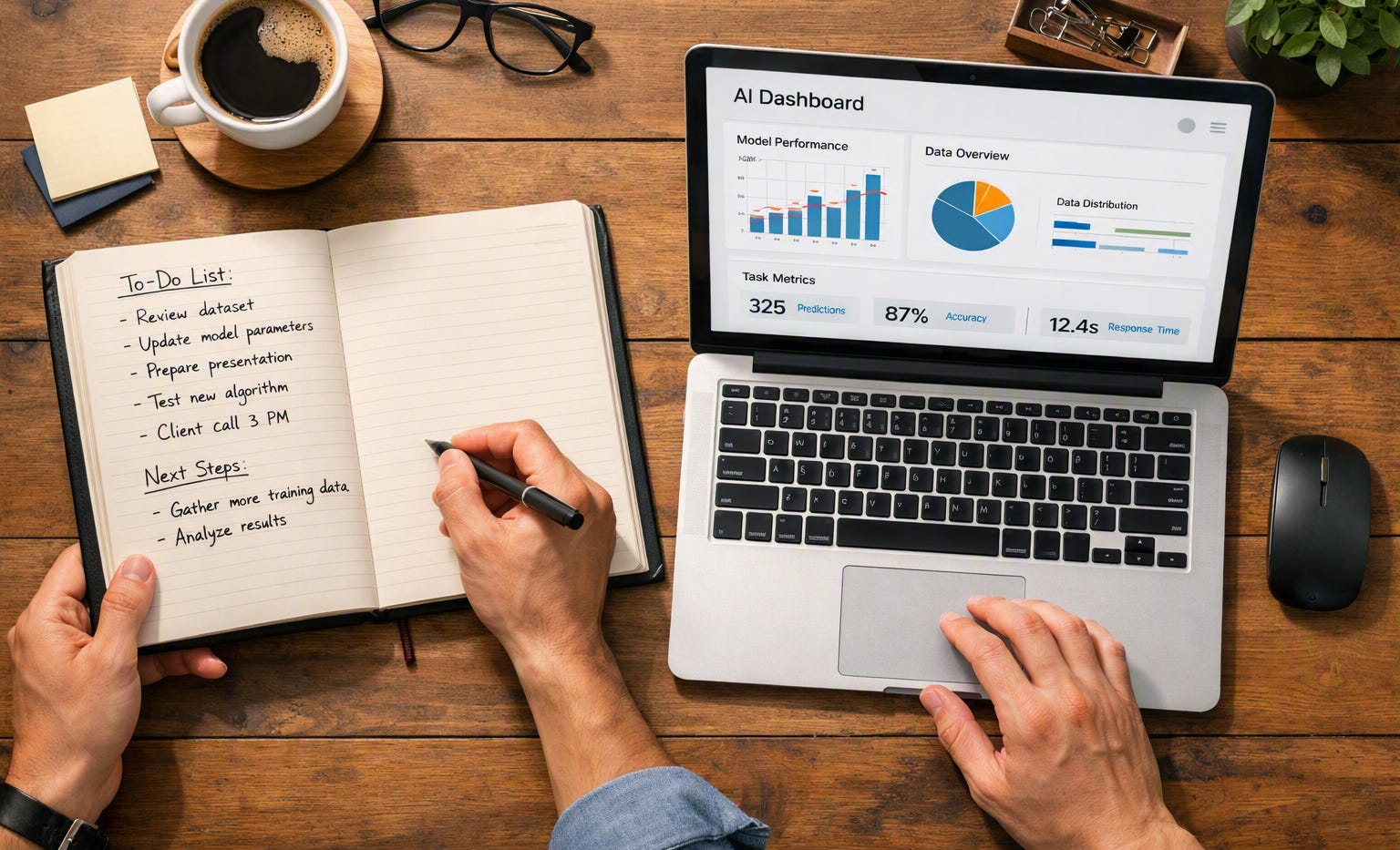
A finance manager I coached last year told me something that stuck with me for months.
“I’ve been doing variance analysis for eleven years. I know this business better than anyone on my team. Why should I bother learning AI tools? I’ll just be teaching a machine to do what I already do well.”
I understood the logic. I also knew it was going to cost him.
Six months later, his junior analyst, two years into the job, was running the same variance reports in a fraction of the time using an AI tool to flag anomalies before he even opened the spreadsheet. He wasn’t smarter. He wasn’t more experienced. He was simply willing to let a tool do the first pass so his judgment could focus on the second.
He noticed. He didn’t say much. But I could see it land.
That’s the story playing out across Indian workplaces right now, and most people are telling it wrong.
Scroll through any career forum or LinkedIn feed, and you’ll find the same anxious question, dressed up in a dozen different ways.
Will AI take my job?
It’s a fair question to feel. But it’s the wrong question to answer, because it assumes AI is the actor and you’re the target. In reality, the replacement isn’t happening between humans and machines. It’s happening between two kinds of professionals.
One kind treats AI as a threat to be avoided, a fad to be waited out, or a task to be delegated to “the tech people.”
The other kind treats it as a colleague that never gets tired, never forgets a pattern, and never minds doing the boring first draft.
The second kind isn’t more talented. They’re more willing.
And willingness, it turns out, is the trait companies are quietly hiring for.
I’ve spent thirty years sitting across the table from people at turning points, students figuring out who they want to become, managers stepping into authority for the first time, executives trying to scale their impact without losing themselves in the process.
If there’s one pattern that has never changed, it’s this: the professionals who struggle aren’t usually the ones who lack skill. They’re the ones who stop updating how they apply it.
AI hasn’t broken that pattern. It has simply made the cost of ignoring it faster and more visible.
Every technology shift in the last century followed the same arc. The typewriter didn’t replace writers. It replaced people who insisted on writing everything by hand after typewriters became standard. The calculator didn’t replace accountants. It replaced the ones who refused to trust anything but a ledger and a pencil. Excel didn’t replace analysts. It replaced the ones who kept doing manual reconciliation years after spreadsheets became the norm.
AI is not a new story. It’s the same story, moving faster than any version before it.
I understand the resistance, because it doesn’t come from laziness. It comes from identity.
For many professionals, expertise is hard-won. It took years to build. Handing part of that work to a tool can feel like admitting the years didn’t matter, or worse, that they’re no longer enough.
But here’s the part that changes the picture. Your expertise isn’t what AI threatens. Your expertise is what makes AI useful.
A tool without judgment behind it produces noise. It can draft a report, but it can’t decide which numbers actually matter to the board. It can suggest a hiring shortlist, but it can’t read the tension in an interview room. It can flag a fraud pattern, but it can’t decide whether the context justifies an exception.
That decision, the one that requires context, consequence, and judgment, is still entirely yours. AI just clears the noise so you can get to it faster.
The professionals losing ground aren’t losing to AI. They’re losing to peers who let AI handle the first ninety percent so their expertise could show up fully in the last ten, the part that actually needed a human.
You don’t have to work in technology for this shift to reach you. It already has.
In healthcare, the professionals pulling ahead aren’t the ones with the most clinical years. They’re the ones combining that clinical judgment with diagnostic and documentation tools that used to eat up half their day.
In manufacturing, engineers who understand predictive maintenance systems are becoming more valuable than those who only understand the machines, because the ones who understand both catch problems before they become costly.
In retail and consumer businesses, analysts who can pair customer intuition with AI-driven personalisation are outperforming those who rely on either instinct alone or dashboards alone.
In financial services, compliance and risk professionals who use intelligent systems to catch what a manual review would miss are becoming the ones trusted with bigger mandates.
None of these are “AI jobs.” They’re the same jobs, done by people who stopped treating the tool as optional.
If you’re a first-time manager, a mid-level professional, or someone eyeing a bigger seat at the table, here is the uncomfortable truth worth sitting with.
The gap that will define your next five years isn’t a knowledge gap. You already know your domain. It’s a willingness gap, the space between knowing a tool exists and actually building it into how you think and work.
That gap is invisible until the moment it isn’t, usually when someone with less experience but more willingness starts moving faster than you, and a decision-maker notices.
The good news is that this gap is entirely within your control. It doesn’t require abandoning what you’ve built. It requires adding one habit to it, treating AI as part of your process rather than a separate project you’ll get to eventually.
Don’t ask which AI job to chase. Ask a better question.
What is the one task in my current role that eats the most time for the least judgment? Start there. Let a tool take the first pass. Spend the time you free up on the part of your job that actually needs your experience, the reading of a room, the weighing of a trade-off, the call that only someone who has been doing this for years would know how to make.
That’s not a technology upgrade. That’s what judgment has always looked like. It’s just faster now.
The professionals who understand that will be the ones writing the next chapter of their careers. The ones who don’t will spend the next few years wondering why the room got smaller.
It didn’t. They just stopped showing up in it fully.
What’s one task in your work right now that a tool could take off your plate, so your judgment could show up where it actually matters? I’d like to hear it.
AI doesn't replace expertise. It replaces the refusal to use it. The professionals pulling ahead aren't smarter; they're just willing to let a tool take the first pass so their judgment can show up where it actually matters.
Thanks for reading Elevate360: Elevating Careers, Enriching Lives! This post is public, so feel free to share it.
Comments
Nothing yet. Say the first thing.
Sign in to join the conversation.