
Hi, friends. Just a little housekeeping today:
This is an essay about making art—where “art” can mean a poem or a painting or, in fact, reality itself. And we all know that the first step in making art is to fill yourself with great art. So, hey! Do you want to come hang out with a bunch of us filling ourselves with great art twice a month? We’re on a break for April, but starting in May, paying subscribers to this Substack will be meeting on Zoom twice a month: once for a deep, slow poetry reading, lectio-divina style (we’re starting with Yeats’s “The Second Coming”), and once to share the poetry and art and stories that have been keeping us alive (from memory if possible, so that we’re filling ourselves with lasting beauty as we go). Two art-filling meetings a month—plus access to the chat, where we gather to discuss books and ideas between sessions—for £10/month or £100/year. More info here.
Also: if you’d rather listen to the essay below than read it, as ever, you’ll find an audio version at the top of the page.
Love,
xx Ellie
Take a look at these paintings.
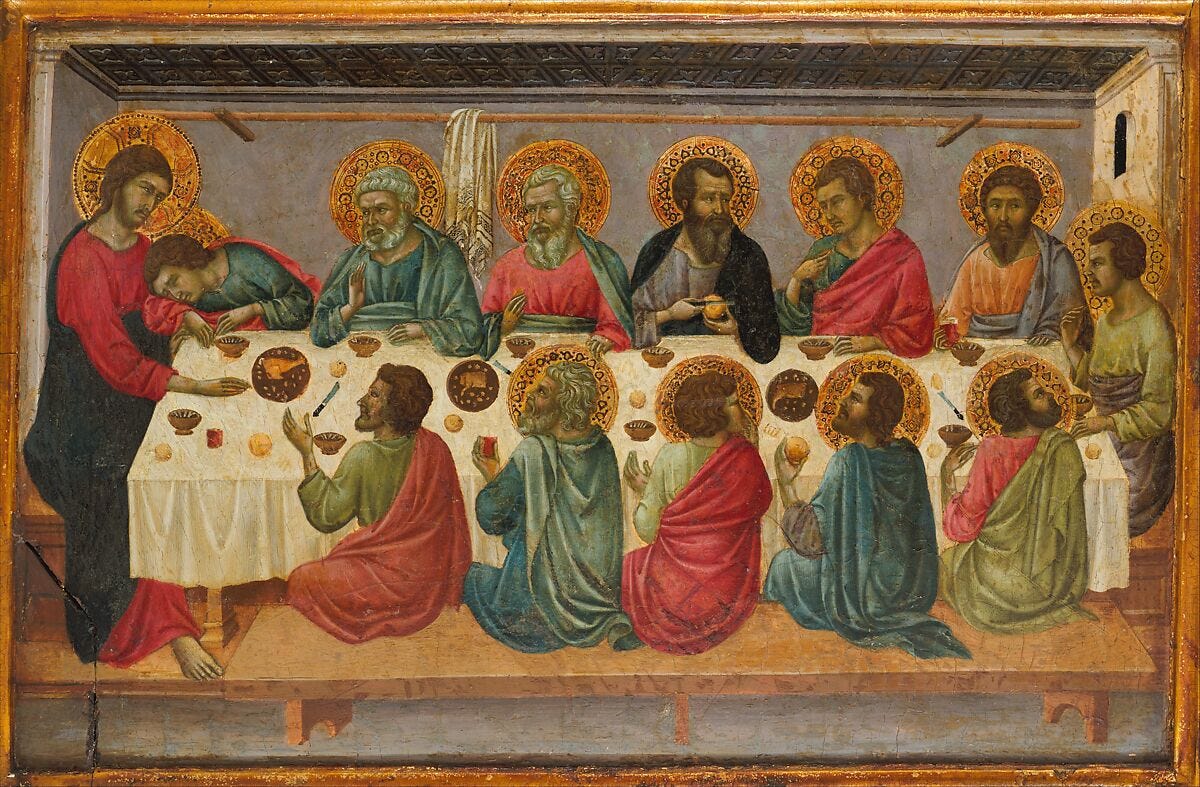
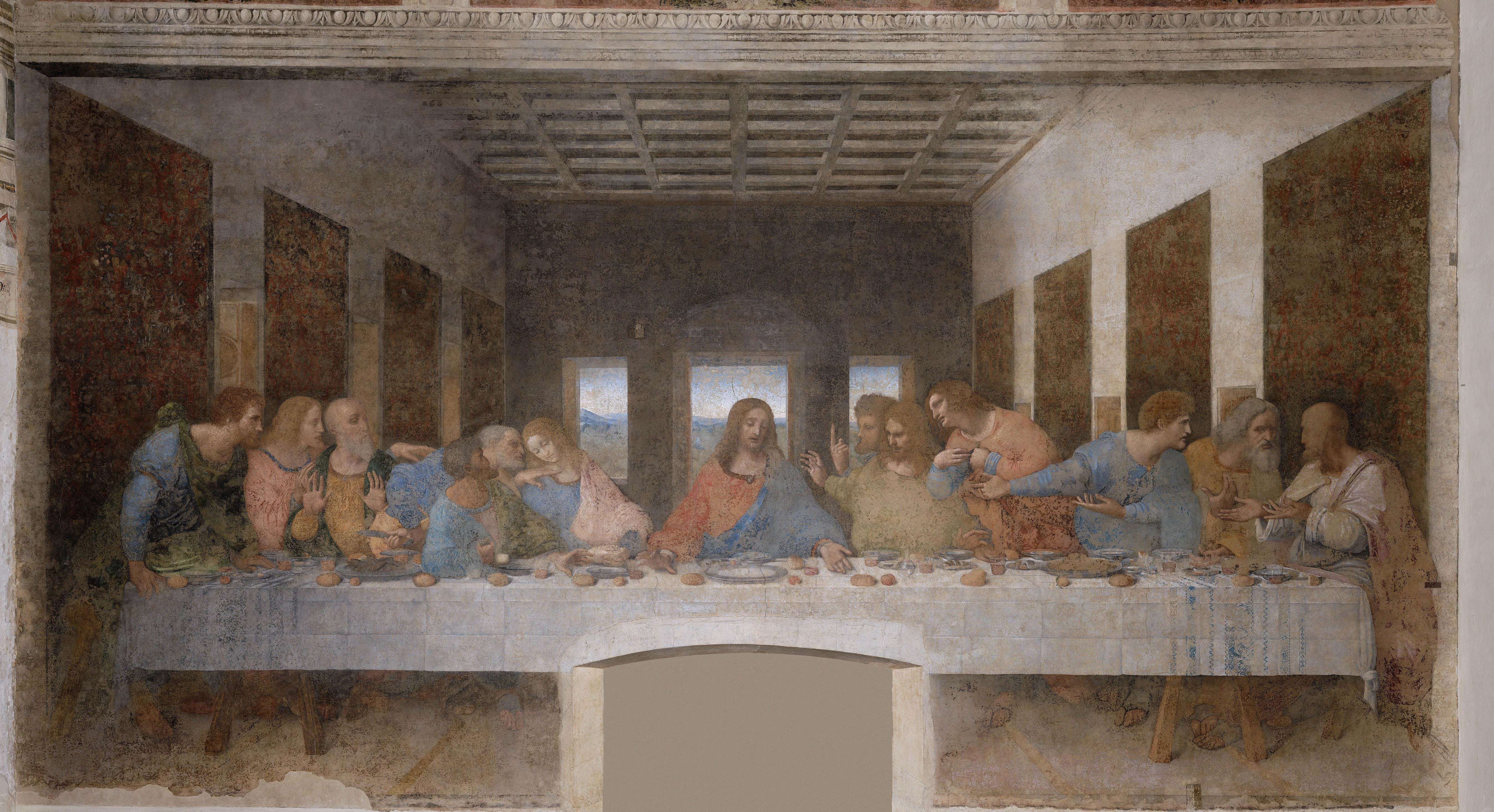
They both depict the same event: the Last Supper. But they position the viewer in very different relationships to it.
When you look at the first picture, you float somewhere outside the scene, but you could equally weave in and out of it. Because there’s no linear perspective, your position is timeless, placeless, and depersonalised. Your point of view doesn’t matter—or rather, doesn’t exist. What matters is Jesus and the apostles, sharing a meal in an unending present moment.
When you look at the second picture, the masterful linear perspective positions you in a single spot: maybe thirty feet from the table, aligned with its dead centre. It tells you where you stand in both space and time, and makes your vantage point—your individual point of view—the organising principle of what’s seen. And by changing the way you see, it also changes the substance of what’s seen. Jesus and the apostles are more human now. Characters. Individual people living in time.
Why the difference? Because the two paintings—the two modes of painting—straddle a revolution in metaphysics. A seismic shift in the way European humans understood the world and their place in it.
And whenever a society’s metaphysics change, its art is already changing too. Humans are already finding new ways to paint and story and sculpt their emerging understanding of reality. And then a funny thing happens: Those paintings and stories and sculptures become the architecture of the new world. They set the parameters of what can be experienced and understood in it. Even now, in 2026, in the last gasps of modernity, I know that the structure and quality of my life are in some way determined by the linear perspective of da Vinci’s Last Supper.
Here’s what I’m not saying: Art reflects metaphysics.
No. Art doesn’t reflect our changing beliefs about the world and our place in it. It creates the world we live into. It draws that world forth.
Art is not a mirror of metaphysics but the praxis of metaphysics. It’s the workshop of human cosmology, where the infinite is summoned and mixed with what’s earthside, in a shareable shape that shows people what kind of world they live in. It’s a practice that births the world.
Or at least, this is what art can be, and was for a very long time. Here’s the twist: In the story of our cultural amnesia about the power and purpose of art, the difference between the two paintings above is a crucial plot point. Because though this second Last Supper’s way of seeing brought us many wonderful things (not least the masterpiece that is this painting), as far as art and cosmology are concerned, it set us on a path to a dead end.
The good news is, we can find our way back from this dead end.
In the next few essays, I’m going to suggest some ways how, in the form of creative tools from the workshop of art-as-cosmology.
If you don’t consider yourself creative, these tools will be designed even and perhaps especially for you. Because that story you’re telling yourself, that you’re not creative, is just a lie that comes from our culture’s broken story about what art is. I know because I used to tell myself the same story, and it did me a whole lot of damage.
I also know because living is creating. Because the world itself is a work of art, and you have always been an artist.
If your experience is anything like mine, these tools might make life feel worth living again.
But before we get to them, we have to understand how we wound up down this dead end, so far from the workshop where our ancestors carved and sketched and storied and sang their worlds into being.
Only 170 years separate the two paintings above, and yet in those 170 years, a new age had been birthed. Ugolino di Nerio painted his Last Supper in the Late Middle Ages. Da Vinci’s version is, of course, a paradigmatic work of the High Renaissance. Whole libraries have been written about the shift from the medieval to the early modern or Renaissance sensibility, but here’s a quick-and-dirty list of some salient points:
In the Middle Ages, European humans tended to think of themselves as part of a world created by and suffused with the presence of God.
By the time da Vinci was painting, he and his peers still understood the world as God’s creation, but they tended not to feel they were part of that creation in quite the same way. They were beginning to occupy a special relationship to creation: set apart. Detached and observing—like the perspective in da Vinci’s painting.
“Observing” being the operative word. When you stand apart from the world—distant—your best way of learning about it is with your eyes. This marked a change. In the Middle Ages, people tended to trust their felt senses to reveal truths about the real-but-invisible parts of the world that lay beyond the material (like the presence of God that suffused everything). But with dawning modernity and its new vantage point of distance, those felt senses and the intuitions that emerged in them became increasingly irrelevant or even suspect. You can’t feel something that’s a long way away. And so increasingly, only what was seen could be believed. Pics or it didn’t happen.
From this detached, observing perspective—and with the help of the many classical texts that were being rediscovered and fueling these changes—humans could now deduce or generate insights and meaning that were not received from God, about life, the universe, and everything.
And it wasn’t only that a human could generate or deduce insights from this detached, visual, intellectualising vantage point. They must. It was the duty of the conscientious human to develop their humanitas—the quality of our species that set us apart from the rest of creation.
And so the human will and reason were increasingly understood as the driving force of life—and life was increasingly bounded to what could be seen and proven in material reality.
There’s a way in which the whole modern world is right there in the visual perspective of da Vinci’s Last Supper: the way it inhabits time, its leveling of the sacred, its detachment, its emphasis on the evidence of the eyes and the authority of the rational, individual human subject.
(And, by the way, this shift wasn’t only playing out in the visual arts. A similar thing was happening in literature, where a new individualist, humanist form was emerging—a form that was primarily concerned with the way a person creates their own fate. Of course, I’m talking about the novel. I’ve got a longer piece on this, linked just below, if you’re interested. But please don’t click away now! I’d love to hang out with you here a bit longer.)
So: At the dawn of modernity, Europeans began to make art that locked us into a more detached and human-centric stance, which increasingly denied the numinous.
Over time, this changed the cultural story about what art was. Art that sealed humans into an increasingly human world also sealed itself off from its metaphysical function. It no longer had to summon the infinite into a shareable shape. It only had to exist for its own sake—for human diversion or gratification. Once the workshop of cosmology, art now became an optional extra, an adornment or leisure activity, and cosmology became the preserve of the new discipline of science.
And just like that, humans lost our most powerful tool for making a world worth living in.
If we step back and take a long view of art, we soon see how very strange these ideas of the last few centuries are. We soon see art’s older and deeper function as a praxis of metaphysics. We see this in the palaeolithic cave painters who made art as part of shamanic ritual—a way to contact otherworlds and bring their insights into this one. We see it in the fact that belief systems from Christianity to Hinduism to indigenous myth cycles are told in stories. We see it in the way even Plato (no lover of art) reached for story to express his most enduring metaphysical insight, the allegory of the cave. And in countless other examples besides. (And to be clear: there were always individual artists and even whole movements working in this vein, this understanding of art as the praxis of metaphysics. It’s the broader cultural attitude towards art as mere adornment that worries me.)
In fact, the cosmological and metaphysical understanding of art is right there in the word “art”. Did you know that this word shares a root with “arthritis”? That in some way deeply embedded in the English language, art is associated with inflammation of the joints?
Both words derive from the Proto-Indo-European root form –ar, which means “to fit together”. So: an artisan is a person who skilfully fits objects together. A body with arthritis is troubled at the joints, the parts that should fit together. And art—as Lewis Hyde shows so brilliantly in Trickster Makes This World—makes the world by fitting the realms together. Through the stories of Greek messenger Hermes, the Yoruba trickster Eshu, Fon cosmology, and much more, Hyde illustrates that the primary job of such artus-workers is to “create the possibility of movement between spheres” via clever work at the places where the realms join.
Or, should join. Because sometimes, the spheres get too separate—and then gods and humans alike are in trouble. The mortal realm plunges into eternal winter; the gods go hungry because humans have stopped making sacrifices. In these moments, the survival of people, gods, and the universe all depend on the artus-workers—the artists and tricksters—who can articulate a new world by joining the realms.
Friends, we’re in one of those moments now. The separation of the realms has become too complete. I don’t need to tell you that we on Earth are in a long winter of the soul.
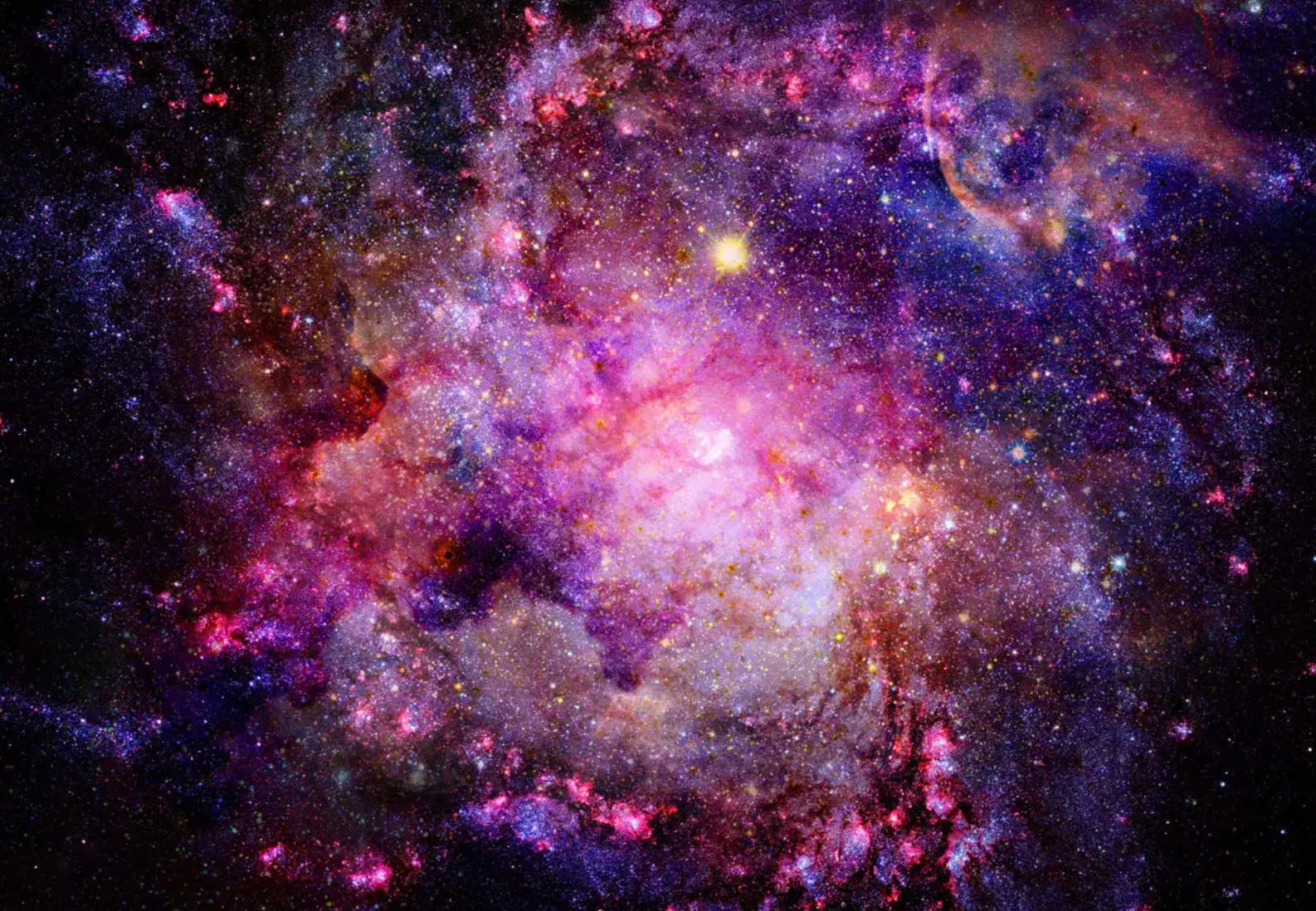
And if all this language of the gods and otherworlds leaves you cold, just replace it with the language of science. With quantum dimensions and the scientifically detected nature of reality. Because the paradigmatic questions of our day—about what consciousness is; whether the universe is fundamentally material or made of something else (and if so, what); the nature of time; how particles can be entangled and mirror each other across gulfs that are light-years wide; and what exactly is going on in all those other quantum dimensions—these are all evidence of the relegated, real-but-invisible parts of our world making themselves known, not just in many of our felt senses (i.e., the senses made suspect at the dawn of modernity) but in our scientific observations too. In so many ways, these questions of our day mark a reversal, or at least a great tempering, of the humanist ideals that came into play in the Renaissance, when da Vinci was positioning us all thirty feet out from the Last Supper, to take a good, stable look at a good, stable world scaled for humans.
So what now?
Now, we must be artus workers, joining the realms. We must make our home again in art as the workshop of cosmology, and use our devoted attention and our craft and our imaginations to birth creative worlds that are worth living in.
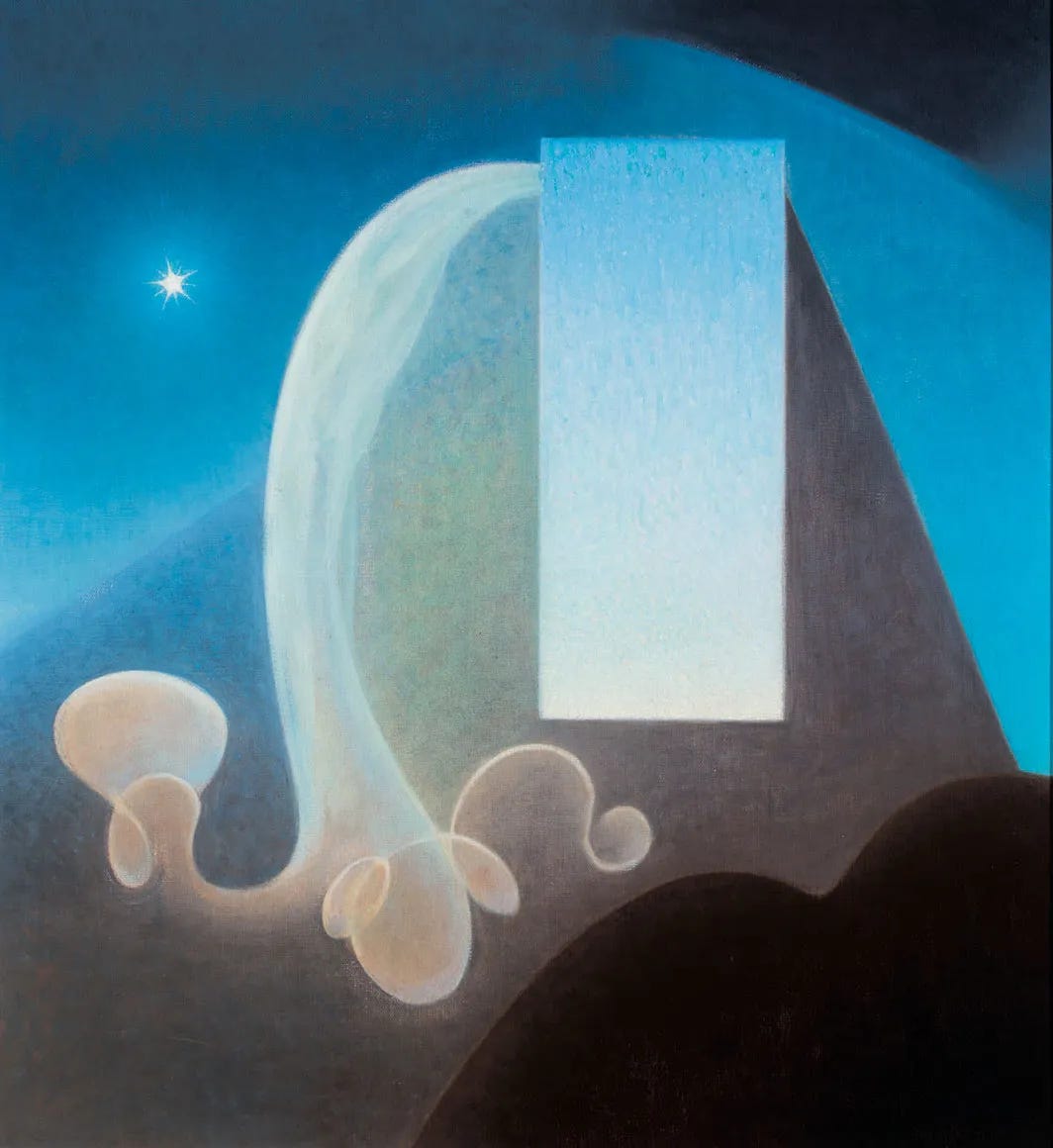
Which probably sounds intimidating. But that sense of intimidation belongs to the last few centuries of unhelpful thinking about art. It’s the bullying, perfectionist voice of cultures where art is an adornment instead of a way of life. Where it has become a place to prove your prowess and earn prestige, rather than a human’s basic way of being.
So how do we recover art as a way of being? How do we become, once more, the artists who make the world, which is itself a work of art?
In the next few essays in this series, I’m going to share some tools for living art in this way. For starters, we’ll look at:
Acting
Playing with form
Putting a frame on it
And more will be revealed.
I hope you’ll come along for the ride.
Comments
Nothing yet. Say the first thing.
Sign in to join the conversation.