
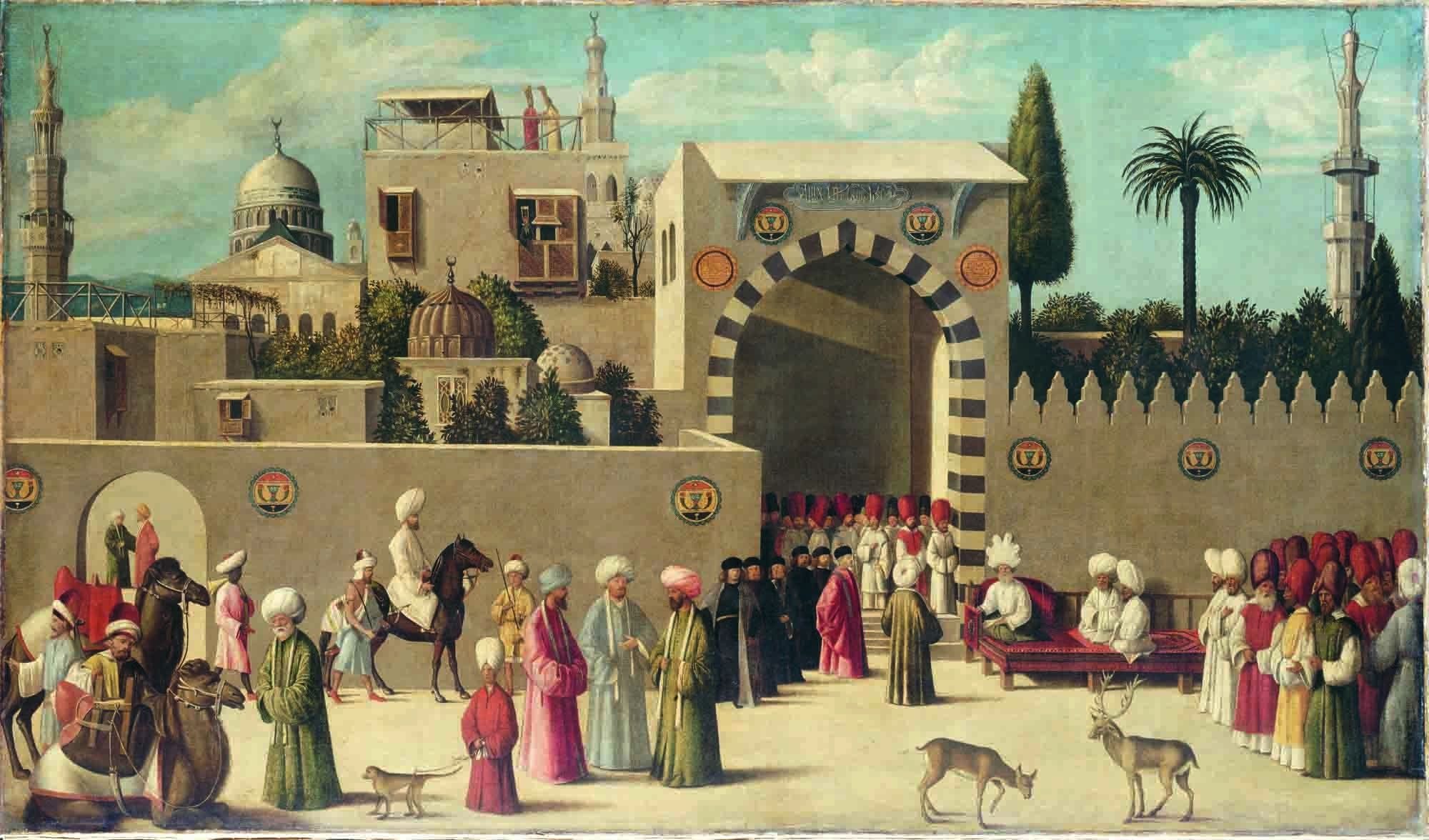
Edward Said’s Orientalism began with a legitimate point: Western scholars, diplomats, writers, and artists often approached the Middle East with assumptions already in place. They could treat “the Orient” as exotic, irrational, backward, despotic, or static, then interpret whatever they found through those categories. The observer brings categories, assumptions, and sometimes political interests to the act of observation.
This is true as far as it goes. But Said and his acolytes went further than that.
Said complained that in Orientalist scholarship, “The West is the spectator, the judge and jury, of every facet of Oriental behavior.” Elsewhere he objected to using “Oriental and Western” as the starting and ending points of analysis because doing so turned the Westerner into one thing and the Oriental into another.
The original problem was that Westerners were making bad judgments about the Middle East, based on stereotypes and false assumptions. But now the fact that Westerners were sitting in judgment was itself part of the indictment. A warning against false Western assumptions had expanded into suspicion of Western standards themselves.
A Western scholar can misunderstand an Arab society by assuming that its institutions should resemble European ones, that its family structures should resemble American ones, or that its conception of the individual should resemble modern liberal individualism. Those really are examples of ethnocentrism. There is no reason every society must organize social life around the same balance between individual and family, religion and state, community and autonomy.
But it does not follow that every standard associated with the West is merely Western. Many principles now expressed in the language of universal human rights received their modern legal formulation in the West. That does not make them merely Western, and it certainly doesn’t mean they are wrong.
When one says that “men and women should have equal legal rights” or “people should not be tortured” or “religious minorities should not be persecuted” or “the state should not imprison people arbitrarily” these are not merely Western opinions being imposed on the world; these have already been accepted by the world as normative.
The modern international human-rights system was built precisely around this distinction.
The Universal Declaration of Human Rights calls itself a “common standard of achievement for all peoples and all nations.” It does not require every culture to become Western. It does claim that human beings possess equal dignity and that certain protections apply regardless of culture.
The 1993 Vienna Declaration made the point even more explicitly. It acknowledged “national and regional particularities” and different historical, cultural, and religious backgrounds, while insisting that human rights are universal and that states remain obligated to protect them regardless of their political, economic, or cultural systems.
Cultures may differ, but universal moral status does not.
The problem with some post-Saidian thinking is that the adjective Western can do too much argumentative work. Once a standard is labeled Western, applying it to the Middle East can begin to look like cultural imperialism before anyone has asked whether the standard itself is actually culture-bound.
That is a version of the genetic fallacy: evaluating an idea by its origin rather than by whether it is true.
Said’s critique was enormously influential in teaching scholars to examine the relationship between knowledge and power. Later postcolonial scholarship expanded that concern through ideas such as essentialism, othering, positionality, and epistemic power. More recently, concern about Islamophobia has added another reason for caution when Westerners criticize Muslim societies.
The upshot is that the validity of the moral judgment can become secondary to questions about who is making it and from what position of power. Power may be a useful subject of analysis, but it cannot determine whether a moral proposition is true. The cumulative effect is to make some judgments suspect before their validity has even been considered.
If a scholar says that a particular religious doctrine contributes to political behavior, the response should be to examine the facts. If the discussion gets sidetracked by questions about essentialism or Orientalism then the question is not being considered: it is in danger of being discarded and the questioner suspected of doing something wrong by even asking such a question.
The same problem appears in moral judgment.
If a government imprisons dissidents, censors newspapers, and tortures political prisoners, calling that authoritarianism is not necessarily imposing Western culture. If women have fewer legal rights than men, describing that as discrimination does not become illegitimate because the society has a different culture. If a religious minority is denied equal citizenship, cultural context can help explain the practice, but it cannot by itself determine whether the practice is just.
At some point, cultural sensitivity can become moral relativism.
The irony is that this can recreate the paternalism that Orientalism was supposed to challenge. There is condescension in saying, “Muslims are backward because they do not live according to our customs.” But there is also condescension in saying, “Muslims need not meet universal moral standards because those standards came from somewhere else.”
If Westerners are held responsible for racism, authoritarianism, religious chauvinism, or political violence while comparable conduct in Middle Eastern societies is primarily explained through colonialism, occupation, humiliation, poverty, or historical trauma, we are not treating everyone equally. We are assigning some people full moral agency and treating others largely as products of circumstance.
The international human-rights system explicitly rejects that distinction. Muslim-majority states were among the countries that voted for the Universal Declaration of Human Rights in 1948, and the 1993 Vienna Declaration reaffirmed that human rights remain universal even while “national and regional particularities” and cultural and religious differences must be taken into account. States remain obligated to protect those rights regardless of their political, economic, or cultural systems.
That is the distinction Said’s intellectual descendants too often blur. The proper corrective to Western ethnocentrism is not to suspend moral judgment across cultures. It is to distinguish genuinely parochial standards from genuinely universal ones—and then have enough respect for other peoples to apply the universal standards to them too.
The contradiction becomes even clearer when the same intellectual framework turns to Israel. Post-Saidian analysis is wary of imposing universal standards on Arab and Muslim societies; yet the same analysts impose standards to the Jewish state that go beyond what is expected from even other Western states. The next essay will examine how the Arab is increasingly contextualized while the Jew is increasingly judged.
No posts
Comments
Nothing yet. Say the first thing.
Sign in to join the conversation.