
There is a moment in every independent woman filmmaker’s journey when she looks around and realizes no one is coming to rescue her film. No studio. No checkbook. No magical “champion” with access. Just her — her story, her grit, her belief, and whatever community she can gather to lift the work into the world.
I learned that truth making Brownsville Bred, the film based on my one-woman show about growing up Puerto Rican in Brownsville, Brooklyn. What began on a small Off-Broadway stage eventually became a novel taught in schools across the country — and then an ultra-independent feature that has now entered the 2026 awards conversation as the only U.S. live-action narrative directed by a Latina to qualify through a 2025 theatrical release.
But the point of sharing that is not to celebrate a milestone.
It’s to say: I didn’t get here because I knew exactly what I was doing. I got here because I learned, adjusted, failed, and kept going.
Here is the advice I wish someone had given me — the kind I hope will help other indie women filmmakers keep going too.
Your story is your superpower — not your barrier.
Women — especially women of color — are far too often told their stories are “too specific,” “too niche,” or “too local.” I absorbed that message for years. But the moment I put my Brownsville life onstage, audiences made it clear: truth that is specific becomes universal.
Students, mothers, children of the diaspora, underdogs — they all saw themselves. Not because they lived my exact experience, but because the emotional truth and detail gave them a place to enter.
Don’t dilute your story trying to make it universal.
Be specific. Specificity is universality.
2. Start with your core — they will carry you forward.
Before distributors took notice, before critics weighed in, before awards committees ever heard our name, the people who lifted Brownsville Bred were the ones who recognized themselves in it.
That’s what I call “the core” — your first circle of believers.
Your neighborhood.
Your culture.
Your artistic family.
Your students, audiences, and early readers.
The people who feel represented — maybe for the first time.
Those are the ones who will talk about your film, share it, defend it, and push it out beyond your reach. I didn’t break into broader audiences because I targeted them — I reached them because my core carried the story to them.
Nurture your core. They will become your voice when yours is tired.
3. Don’t wait for permission. It rarely comes.
Independent filmmaking requires a kind of self-permission that the industry does not teach us to cultivate.
At every stage of Brownsville Bred, I had to become the thing I didn’t yet know how to be:
I wrote it.
I directed it.
I produced it.
I cast it.
I raised the money.
I hired and fired.
I learned post-production.
I learned distribution.
I learned awards strategy.
Not because I wanted control, but because I didn’t have the luxury of waiting for someone else to do it for me.
Build your own greenlight.
You don’t need anyone’s blessing to begin.
4. Prepare for the costs no one tells you about.
Independent women filmmakers are often blindsided by the realities of distribution and awards participation. There are submission fees, screening room fees, publicity costs, travel, press outreach, digital assets, compliance, and visibility spend.
Even with reduced rates for independent films, the cost of being present in the awards ecosystem is significant — and often insurmountable for those of us making work under $1M.
This isn’t a complaint. It’s information I wish someone had shared earlier, because budgeting for visibility matters just as much as budgeting for production.
Every woman filmmaker deserves to understand the landscape so she can plan strategically, set realistic expectations, and advocate for more equitable tiers in the future.
5. Apply for every grant — even when you think you won’t get it.
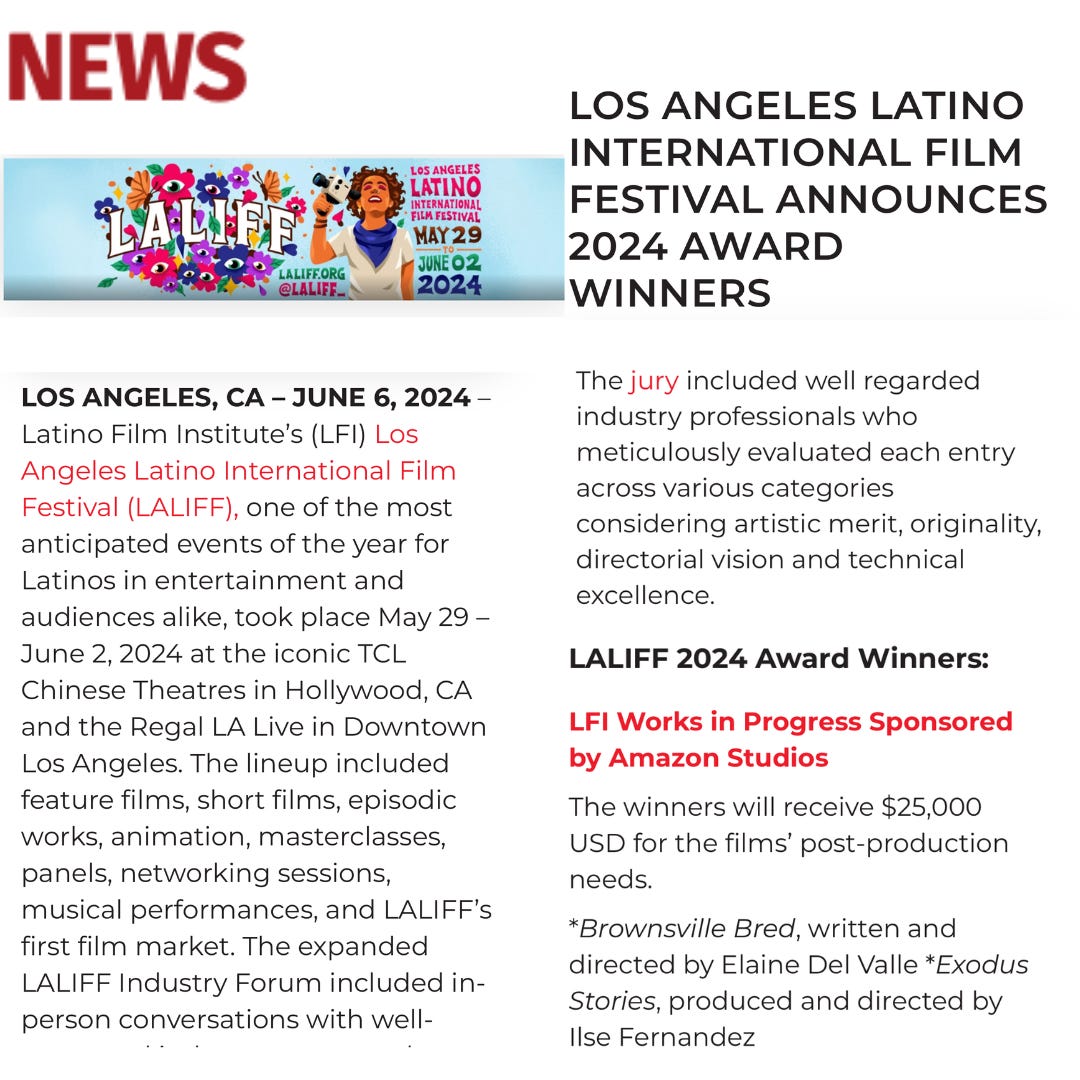
Grants saved Brownsville Bred.
They validated the work when I felt invisible.
They allowed me to finish sections I couldn’t otherwise afford.
They connected me to organizations that later amplified the film.
Not every application resulted in funding — most didn’t — but each one taught me how to talk about my film, sharpened my pitch, and expanded my network.
Grants aren’t just money. They are lifelines. They are legitimacy. They are community.
Apply anyway.
Apply especially when you doubt yourself.
6. Build your film family. You cannot do this alone.
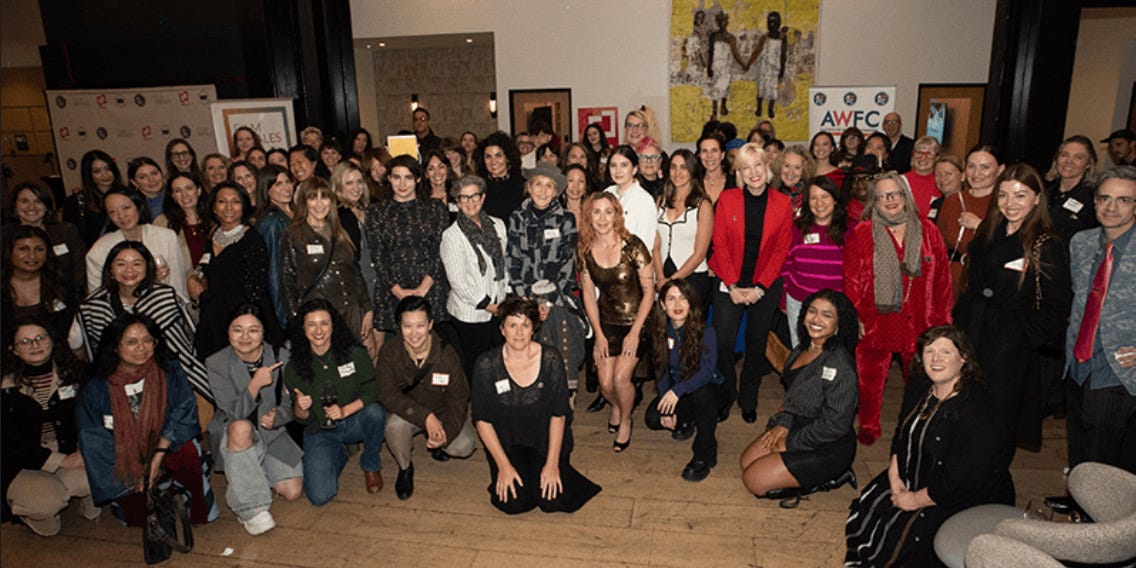
I found my film family in places built intentionally for women:
The Alliance of Women Directors
Women in Media
Film Fatales
Latina and Puerto Rican artistic circles
Educators
And other independent filmmakers who understand the hustle
Your film family becomes the force that carries you through crisis, rewrites, weather disasters, and moments you think the work might break you.
Find the people whose belief in you does not depend on attachments, budgets, or prestige.
7. Your leadership will be tested — step into it.
I didn’t set out to be a leader for Latina filmmakers.
Or a voice for girls from underserved communities.
Or an example of what underrepresented directors can achieve.
But the film demanded it.
The community demanded it.
Young women demanded it.
Leadership isn’t a title we choose; it’s a responsibility we accept. When your film asks you to become a voice for those who feel unseen, step into it with humility and strength.
Your courage will make room for someone else. And remind you to stand up for yourself in places you may have remained silent in before.
8. And finally: Celebrate the fact that you made a film at all.
This industry romanticizes winning — but for indie women filmmakers, the real victory is surviving the journey.
You kept going.
You learned impossible things.
You solved problems no one saw.
You created art anyway.
No award can measure what that costs — or what it means.
Making your film is the triumph.
Everything else is amplification.
A final note from Brownsville
If Brownsville Bred has taught me anything, it is this:
The world will tell you your story is too small.
Tell it anyway.
The world will tell you your film needs permission.
Make it anyway.
The world will tell you it won’t connect.
Watch who connects first — they will change your life.
To every woman filmmaker carving her way through obstacles you didn’t create:
Your story is needed. Your voice is needed. And the film you’re making right now — the one you worry might be too specific, too personal, too modest — is the one someone is waiting to see.
Keep going.
We’re walking beside you.
Comments
Nothing yet. Say the first thing.
Sign in to join the conversation.