
Most people think pitch decks exist for other people.
Executives. Funders. Buyers. Gatekeepers.
But I’ve always built them for myself first—long before anyone asks for one, and often long before anyone is listening.
Throughout this piece, I’ll be referencing real examples from The System, a one-hour procedural drama I sold to CBS in 2020. That project was written about publicly in the trades, (Read the Deadline Article here) which makes it something I can share openly here as a concrete example of how I build and think through my decks.
I’ve just finished writing a new series pitch deck—one I’m deeply proud of—but because that project isn’t public yet, I won’t be sharing it here. Instead, The System allows me to show the mechanics, the thinking, and the structure behind my process without compromising current work.
Because a pitch deck isn’t just a sales tool.
It’s a mirror.
A commitment.
A declaration that the story already exists.
And over time, I’ve learned this: a strong deck doesn’t just communicate outward—it clarifies inward. If it doesn’t do both, it isn’t finished.
One important distinction upfront: the pitch deck is not the pitch.
The deck is the thinking tool that gets you ready to pitch. It sharpens language, clarifies intention, and helps you hold the entire series in your head at once.
Its job is not to perform.
Its job is to prepare you to.
To the outside world, a pitch deck answers questions people don’t always say out loud:
Do you understand your own project?
Do you know who it’s for?
Can you articulate tone, scope, and intention?
Can this idea sustain multiple seasons—or years?
A good deck quietly signals competence. It says: this creator has thought beyond the idea stage. This isn’t just a concept—it’s a vision with legs.
Clarity travels. Even when you’re early. Even when you’re unknown.
The more important work happens internally.
A pitch deck forces decisions. It turns instinct into language and impulse into structure. It exposes gaps before the world points them out. Sometimes it even reveals whether a project is ready to be written at all.
I’ve had strong ideas that failed the test of the deck—and I’m grateful they did. Because once I tried to articulate them fully, I could see where the engine didn’t hold or where the story wasn’t yet honest enough to sustain itself.
Sometimes the deck comes before the script.
Sometimes the deck reveals the script.
Either way, once it exists, the project stops floating.
It becomes real.
A series deck has a different job than a feature deck.
It isn’t asking, Would you watch this?
It’s asking, Would you live here for years?
That means the deck has to do something deceptively hard: tell a complete story and prove longevity at the same time.
The sections below aren’t marketing materials.
They’re tests.
I’ll be referencing real examples from my pitch deck for The System throughout.
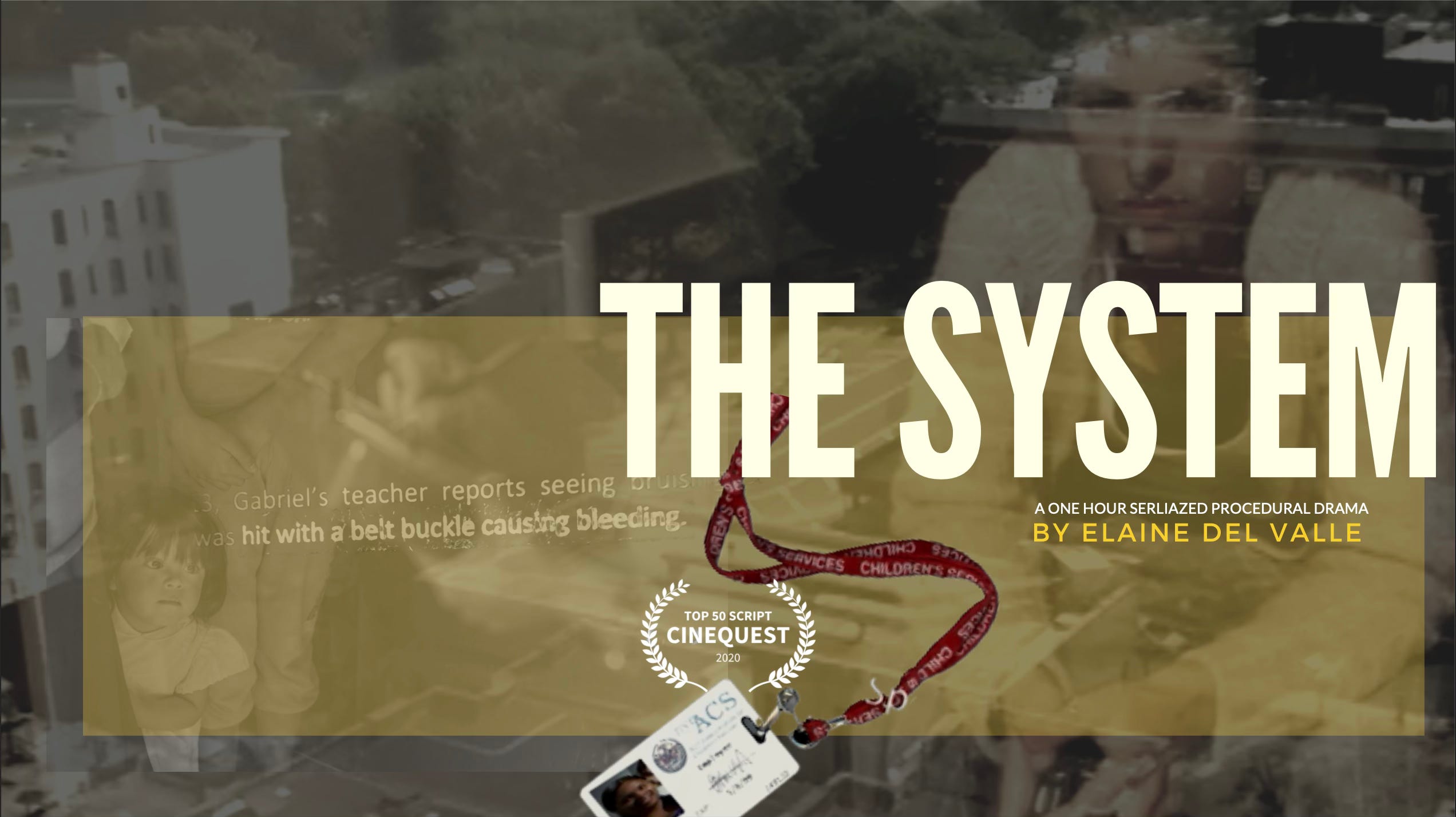
The cover page does more work than people realize.
It should include:
The title
What the show is (one-hour drama, half-hour comedy, procedural, etc.)
Your name as creator
A tagline
But more than that—it should set tone.
I treat the cover like a poster or an opening title sequence. It’s an image. It’s typography. It’s a moment.
If someone only sees the cover, they should already feel something.
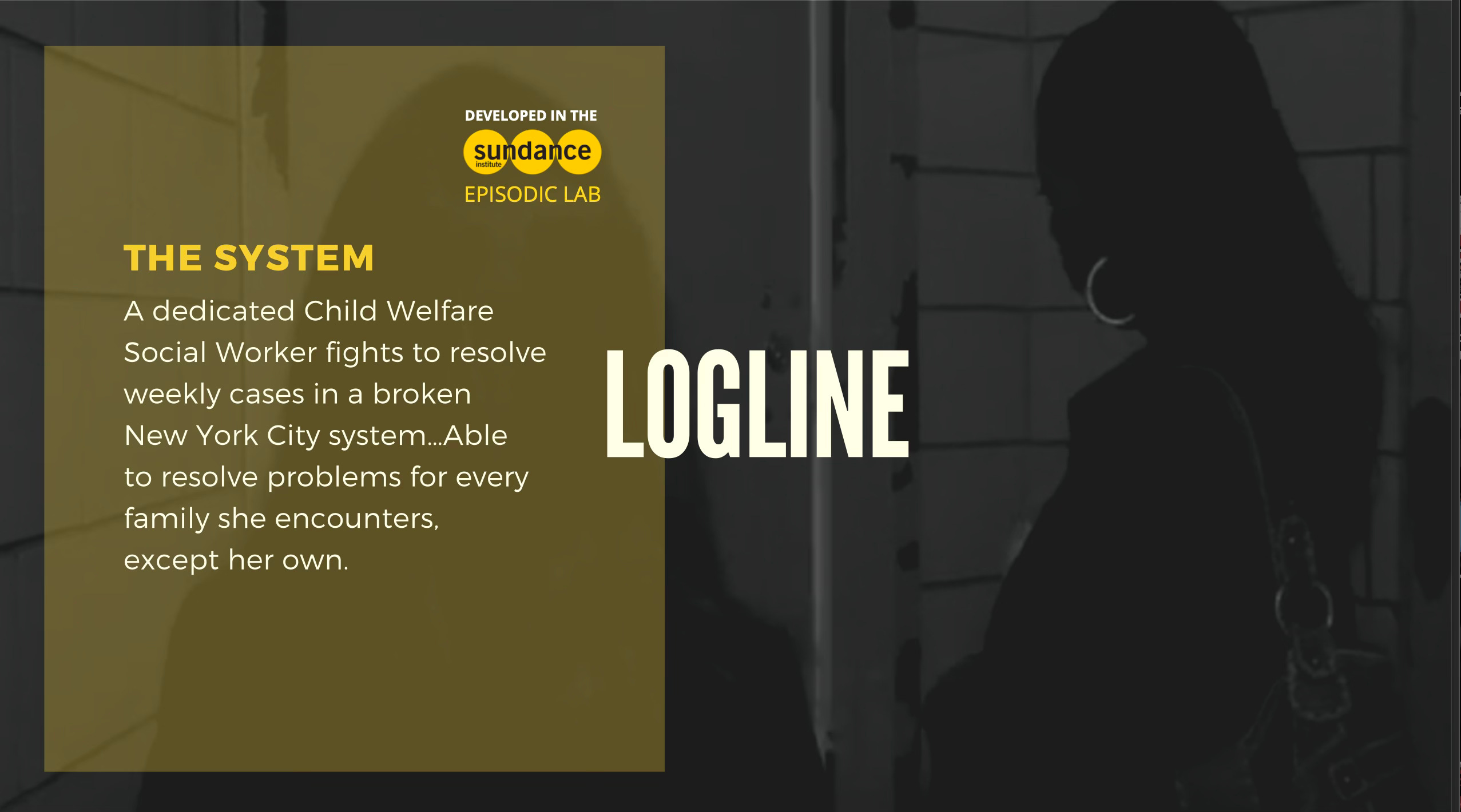
The logline isn’t marketing copy.
It’s not a vibe.
In one or two sentences, it answers:
Who is this about?
What do they want?
What’s in the way?
Why does this series only work because of that tension?
If I can’t articulate this clearly, I don’t move forward. The logline becomes the spine of the deck—everything else either supports it or reveals where I’m still unclear.
The logline also has to live inside every episode for seasons to come.
This page is the why behind the work.
Not the plot.
Not the format.
The reason this story refused to leave you alone.
What lived in your body before it lived on the page?
What personal, cultural, or emotional lens shapes the way this story can only be told by you?
This section establishes authorship of intention.
And here’s the industry reality: if the series moves forward, an experienced showrunner may be brought on. That’s common. That’s pragmatic.
This page does something else—it establishes creative ownership. It ensures that even as the project grows, you remain essential to its DNA.
This is where you stop selling—and start revealing.
Your protagonist gets their own space.
I include:
A photo of an actor I see in the role (not a headshot—an image that holds mood)
A description that reveals backstory, contradiction, and internal clockwork
We need to understand why we’ll want to watch this person forever.
If the show is a two-hander, that second character gets their own page.
If it’s an ensemble, supporting characters can share one.
Every character must apply pressure, reveal something about the lead, and earn their place in the engine.
The pilot is not a tease.
It’s a demonstration.
I walk the episode scene by scene, focusing on cause and effect. Every beat escalates conflict. Every choice complicates the character’s life.
I’m a firm believer in ending dramas with a true holy sht* moment. That ending isn’t decoration—it’s a promise.
If you’re saving your best move for episode two, don’t.
There is no episode two if the pilot doesn’t do its job.
This is where you prove the series has legs.
I include 6–10 episode springboards—tight paragraphs that show consequence, not summary.
Ask yourself:
What breaks next?
What truth can’t be taken back?
The logline should still be alive inside every episode.
Comps aren’t about imitation.
They’re about translation.
For The System pilot, I used a small set of successful series to clarify tone, scope, and engine—shows that helped communicate how the series should feel without over-explaining it.
These comps spoke to structure, moral tension, and character contradiction inside institutional worlds.
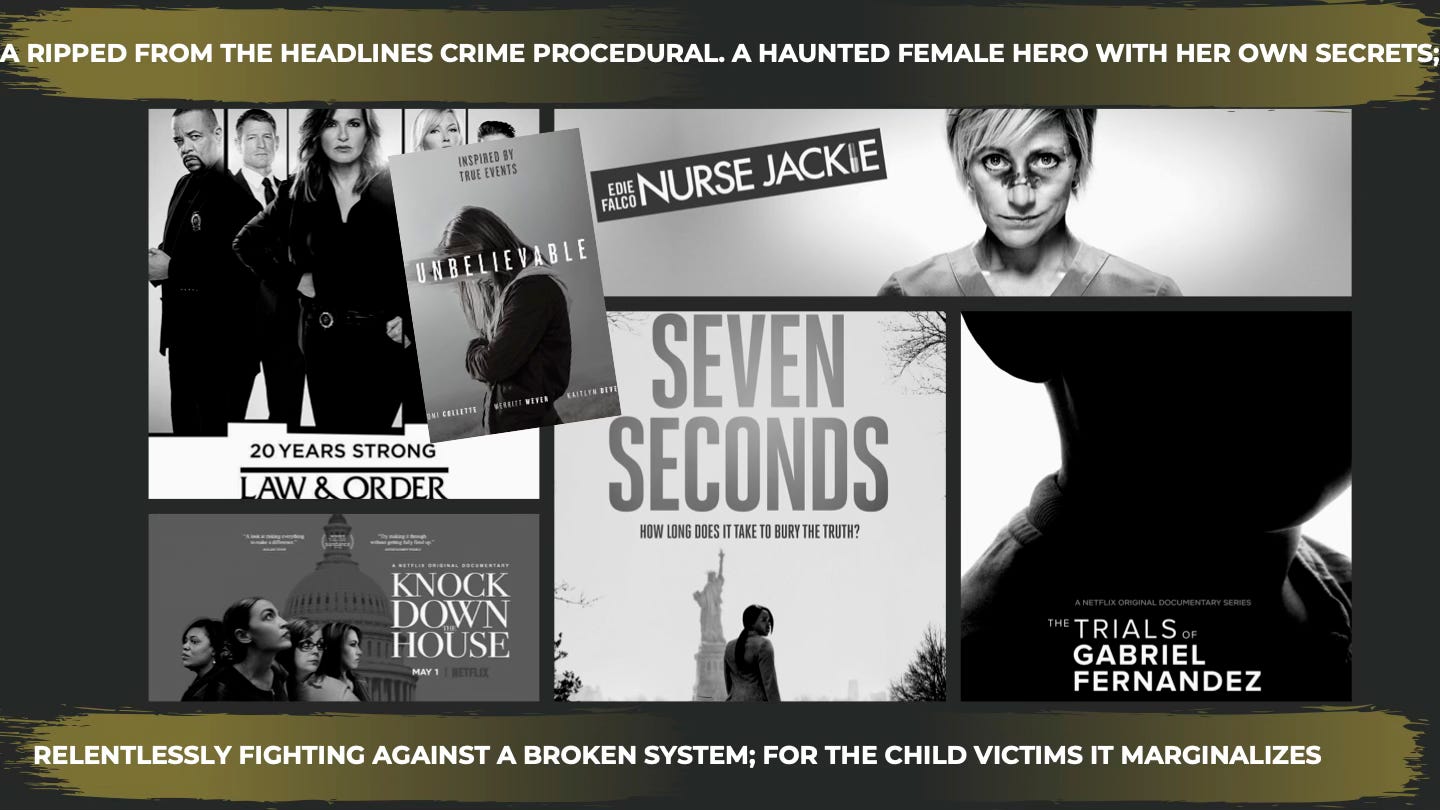
Good comps ground ambition. They reassure buyers. They help your original idea arrive fully formed.
Most series don’t become profitable until season three.
This section is brief but critical. You’re articulating trajectory—how the world expands, how characters evolve or corrode, and why the idea doesn’t exhaust itself after its first promise.
Longevity isn’t accidental.
It’s designed.
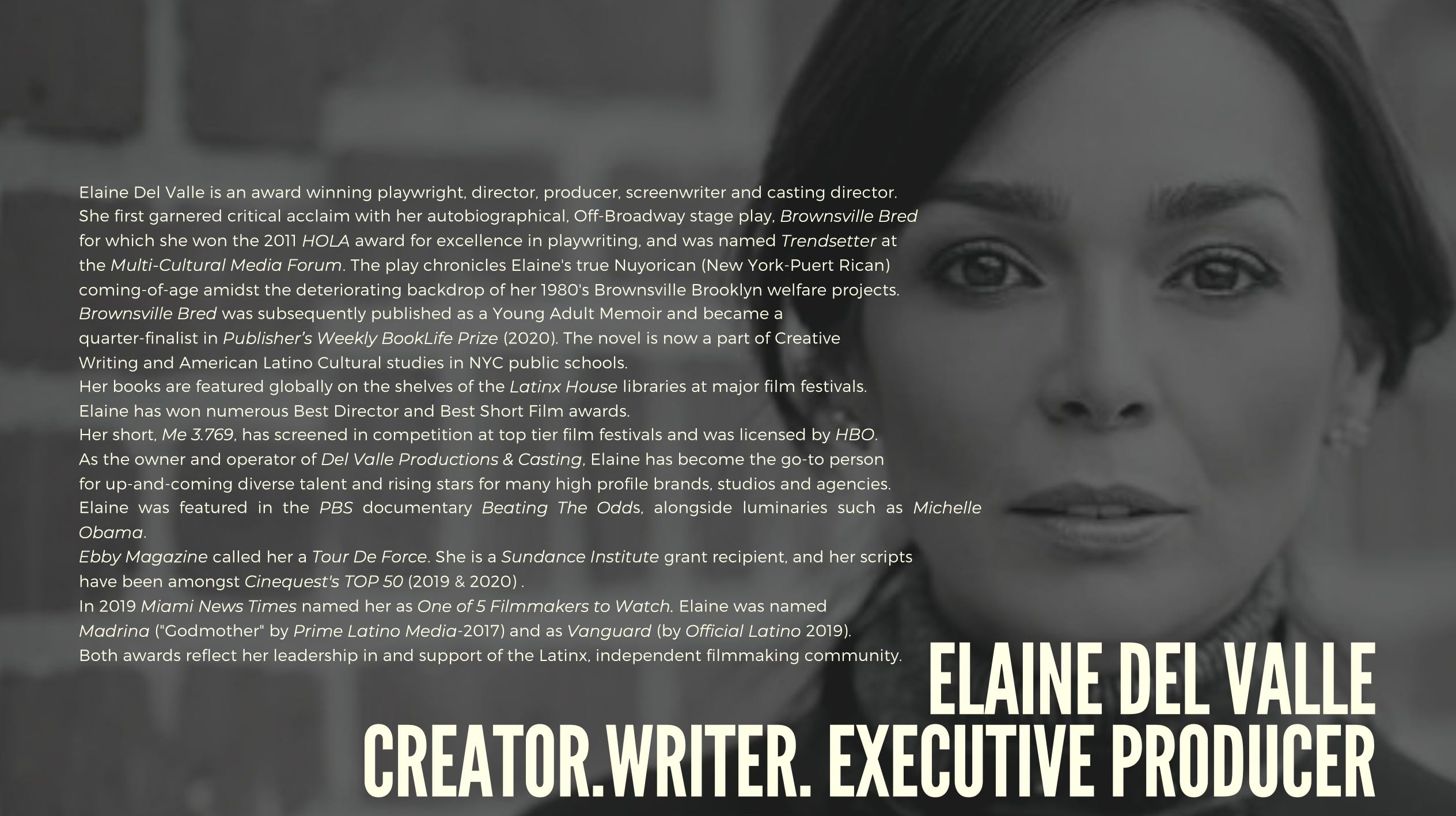
This isn’t a résumé.
It’s a credibility statement.
Buyers don’t just invest in ideas.
They invest in people.
Choose highlights that inspire confidence—not volume.
End with clarity.
Include contact info and representation.
Don’t make anyone hunt for how to reach you.
One of the clearest examples of this came with The System.
I wrote it while taking an episodic course through Sundance Collab. The deck was internal—I wasn’t attaching talent. I was trying to see the show clearly.
As I worked, a woman came to mind—an actress I’d met years earlier through auditions. I knew her work. I knew her character. I knew her soul.
So I put her face on the cover. Not as strategy. As inspiration.
When I finished, I texted her.
She replied: Can I read it?
Then she championed it.
That pilot became the first one I ever sold. CBS bought it. They paid me to write it.
The show evolved in development—as all shows do. But the engine held. The spine held.
In the end, The System was bought by CBS in 2020—but the pilot was never filmed.
Four years later, in 2024, I read that HBO was developing a new series—ironically also titled The System—focused on the social worker system.
(Read the Variety Article here)
I didn’t feel bitterness. I felt recognition.
The questions were real. The urgency remained. Only the timing shifted.
What did move forward was the work.
The momentum from that sale allowed me to keep choosing authorship—to reinvest in myself and eventually make my independent feature, Brownsville Bred. A different story, a different form, but born from the same insistence on clarity and ownership.
Revisiting the deck now, I’m struck by how clearly the series still speaks.
Even if no one reads it tomorrow, it still matters—because once you’ve written it, you stop asking whether the story is worth pursuing.
You already know the answer.
If you’re curious where the work has led since then, you can follow me on Instagram @elainedelvalledirector.
And my independently made feature film Brownsville Bred is available on demand on Prime Video and Apple TV.
Thanks for reading. Subscribe for free to receive new posts and support my work.
Comments
Nothing yet. Say the first thing.
Sign in to join the conversation.