
You know that feeling when you open Netflix?
You spend forty-five minutes scrolling. You watch three trailers. Read a few reviews. Ask someone for recommendations. Scroll some more.
Finally, you pick a movie.
And ten minutes later, you’re wondering if you should have watched something else. Most of us have experienced it.
Now imagine that same uncertainty, except instead of choosing a movie, you’re choosing how your home will look, function, and feel for the next ten years.
The difference?
With Netflix, you lose forty-five minutes. With your home, you could lose lakhs.
And that’s exactly where most homeowners find themselves today.
A decade ago, homeowners had limited sources of inspiration.
Today, inspiration is everywhere.
Pinterest boards.
Instagram saves.
YouTube home tours.
Interior design blogs.
Friends’ homes.
Family recommendations.
At first glance, this sounds like a good thing. More options should make decisions easier.
But something interesting has happened.
The more options people have, the harder it has become to make decisions. Instead of creating confidence, endless inspiration often creates confusion. Because every new idea introduces another question.
And another decision.
And another doubt.
Most homeowners assume they need an interior designer because they need design.
Beautiful colors, Modern furniture, Stylish materials, Eye-catching spaces.
But after spending years working with homeowners, I’ve realized that’s rarely the real problem.
The real problem is clarity. Because sooner or later, every project reaches a point where homeowners start asking questions like:
Should the kitchen be open or closed?
Should we choose laminate, acrylic, veneer, or glass?
Is home automation worth the investment?
Should we spend more on materials or save for future upgrades?
Will this trend still look good five years from now?
These aren’t design questions. They’re decision questions.
And that’s where most people get stuck.
Every home project starts with excitement.
Then reality arrives.
Hundreds of choices.
Dozens of recommendations.
Conflicting opinions.
Endless comparisons.
Over time, the excitement starts turning into exhaustion.
Psychologists call this decision fatigue.
The mental burden that comes from making too many choices over an extended period and home interiors are one of the biggest decision-heavy projects most people will ever undertake.
By the time homeowners reach the final stages, many aren’t choosing what’s best. They’re simply choosing whatever helps them stop deciding.
That’s a dangerous place to be when you’re investing significant time, money, and emotion into your home.
This is where I believe our industry has a blind spot.
Many designers focus on presenting options. Very few focus on helping clients make decisions.
There’s a difference.
Presenting options creates more choices. Guiding decisions creates clarity.
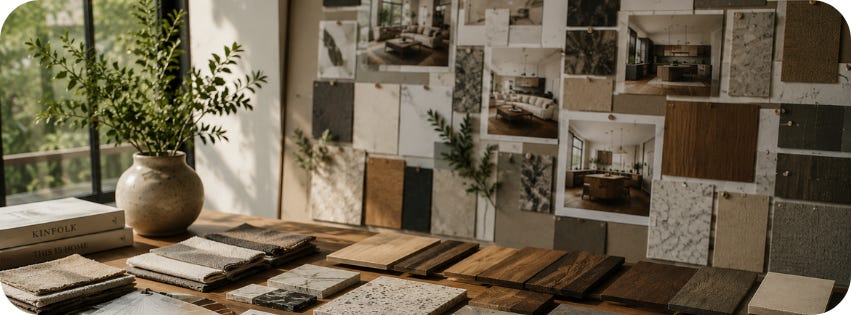
A designer can show twenty material samples. But that doesn’t necessarily help a homeowner choose the right one.
A designer can create stunning renders. But that doesn’t automatically help a family understand the long-term consequences of their choices.
The ability to design is important.
The ability to simplify complexity is even more valuable
The best designers I’ve worked alongside aren’t necessarily the ones producing the flashiest visuals.
They’re the ones helping people think clearly. They help families prioritize what truly matters. They explain trade-offs. They identify risks before they become expensive mistakes. They challenge decisions when necessary and most importantly, they provide confidence.
Because every design decision comes with consequences, Not just financial consequences.
But consequences related to:
Functionality
Maintenance
Comfort
Durability
Daily convenience
Long-term satisfaction
A beautiful decision that doesn’t fit a family’s lifestyle eventually becomes a bad decision. No matter how good it looks on Instagram.
When homeowners choose a material, they’re not simply selecting a finish.
They’re choosing future maintenance. When they choose a layout, they’re choosing how they will move through their home every day. When they choose storage solutions, they’re deciding how organized their lives can realistically be.
Design isn’t just visual.
Design shapes behavior.
And that’s why every design decision deserves careful thought. Because, what looks good on Day One may become frustrating by Year Three.
Looking back, the most successful projects I’ve been part of weren’t necessarily the ones with the largest budgets.
They were the projects where decisions were made intentionally.
Where homeowners understood why choices were being made, Where every investment aligned with a larger goal, Where clarity replaced confusion.
Those homes often perform better over time because they’re built around real lifestyles rather than temporary trends.
And that’s ultimately what great design should achieve.
As our industry evolves, I believe the conversation needs to shift.
From aesthetics to outcomes, From trends to lifestyles, From showing possibilities to creating clarity.
And most importantly:
From selling designs to guiding decisions.
Because beautiful homes are created by good design but, exceptional homes are created by good decisions, and helping people make those decisions is where the true value of an interior designer lies.
If you’re planning a home, don’t just look for someone who can make your space look beautiful.
Look for someone who can help you make better decisions.
Because long after the trends fade, the decisions remain.
No posts
Comments
Nothing yet. Say the first thing.
Sign in to join the conversation.