
In my last article, I explored why insight feels so powerful, how a single moment in play can shift a player’s inner landscape. This time, I want to ask where those moments actually come from.
Insight doesn’t arrive because a character explains something profound or because a cutscene spells out a moral lesson. Insight emerges when a game hands us an emotional problem we cannot instantly resolve, when we’re asked to sit with discomfort, contradiction, or consequences that echo louder than expected.
As Oliver & Bartsch (2011) write: “Eudaimonic appreciation arises when entertainment invites us to engage with meaning, morality, or the human condition.”
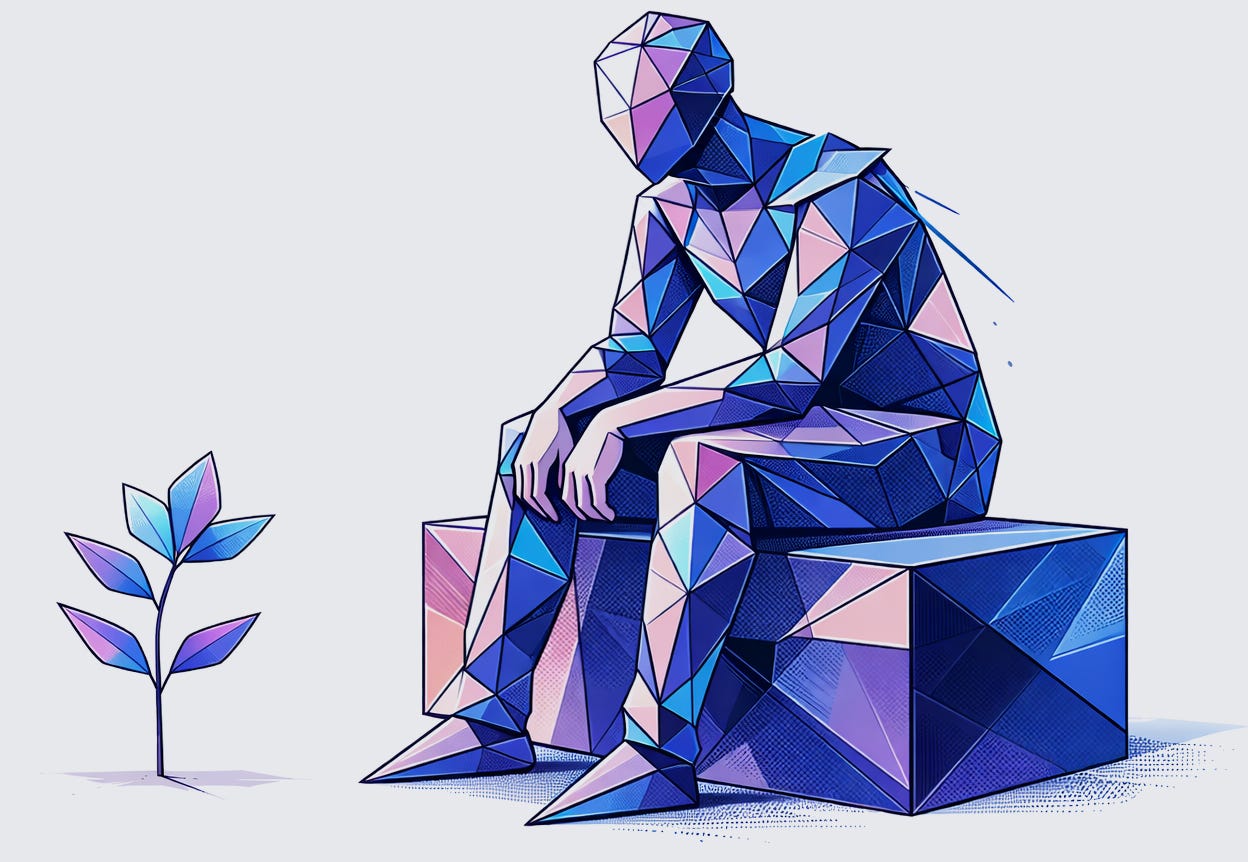
Games can create that invitation not only through narrative, but through interaction, through mechanics, agency, and the quiet space around consequences. Across research, these moments tend to arise from three emotional pathways:
Cognitive tension
Social resonance
Self-transcendence
Let’s explore how games use these forces not to entertain us more, but to help us understand more.
Leon Festinger defined cognitive dissonance as: “The discomfort that arises from holding two inconsistent cognitions at once.” Festinger (1957)
Most games protect us from this feeling. But the ones that create insight do the opposite, they trust us enough not to resolve the tension for us.
(note: ahead examples include spoilers)
In Shadow of the Colossus you’re told exactly what to do: find the colossus, climb it, strike its weak point. It’s a textbook power fantasy, a puzzle, a boss fight, a test of skill.
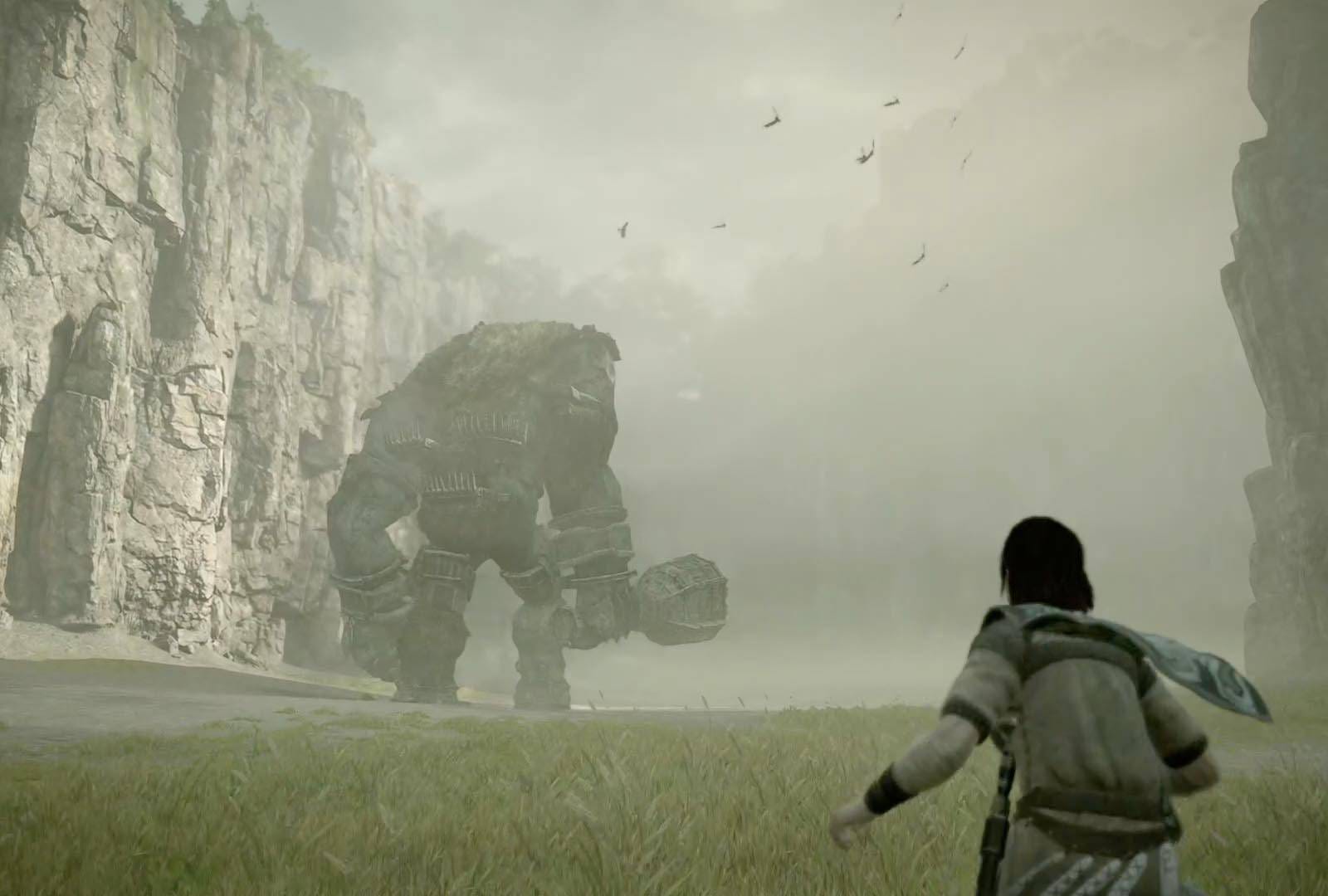
And when you finally reach the top and drive the sword down, it feels like mastery. You solved the mechanic. You did what the game asked of you.
But then everything changes, instantly: The creature doesn’t roar in rage. It doesn’t lash out. It lets out a sound that feels wrong for a victory moment. A sound closer to pain. Or sorrow.
The camera lingers. The light drains from the sky. Wander collapses as if the act itself has taken something from him. And this towering being, who never hated you, never even struck you in anger, falls like an ancient animal who didn’t understand why it had to die.
The game never tells you you’ve done something wrong. But the atmosphere makes you feel it.
What began as a moment of competence quietly transforms into a moment of grief, and that emotional contradiction becomes the source of insight: You fulfilled the mechanic, but you might have violated something human.
You are left with two truths:
You succeeded.
You might have done something terrible.
Oliver & Bartsch describe these blended emotions as “The process through which mixed emotions yield meaning.”
The game doesn’t explain anything. It simply reflects your action back at you and trusts you to feel the weight of it.
Assassin’s Creed Odyssey - Its climactic moment should have been extraordinary: you stand across from your sibling, your family, and the game asks you to choose.
Forgive them or kill them.
Love or justice.
Hope or fear.
For a brief heartbeat, it feels like the world is holding its breath. The music softens. The air tightens. This could be the kind of choice that lodges itself under your ribs, a moment you carry with you long after the credits.
But the moment never deepens, because the game rushes to protect you from discomfort.
If you forgive them: They reform instantly, as if years of manipulation, trauma, and violence resolve in a single cutscene. The family reunites, the harmony restored and there is no emotional cost.
If you kill them: Characters immediately reassure you that you did what you had to do. It was necessary. It was justified.
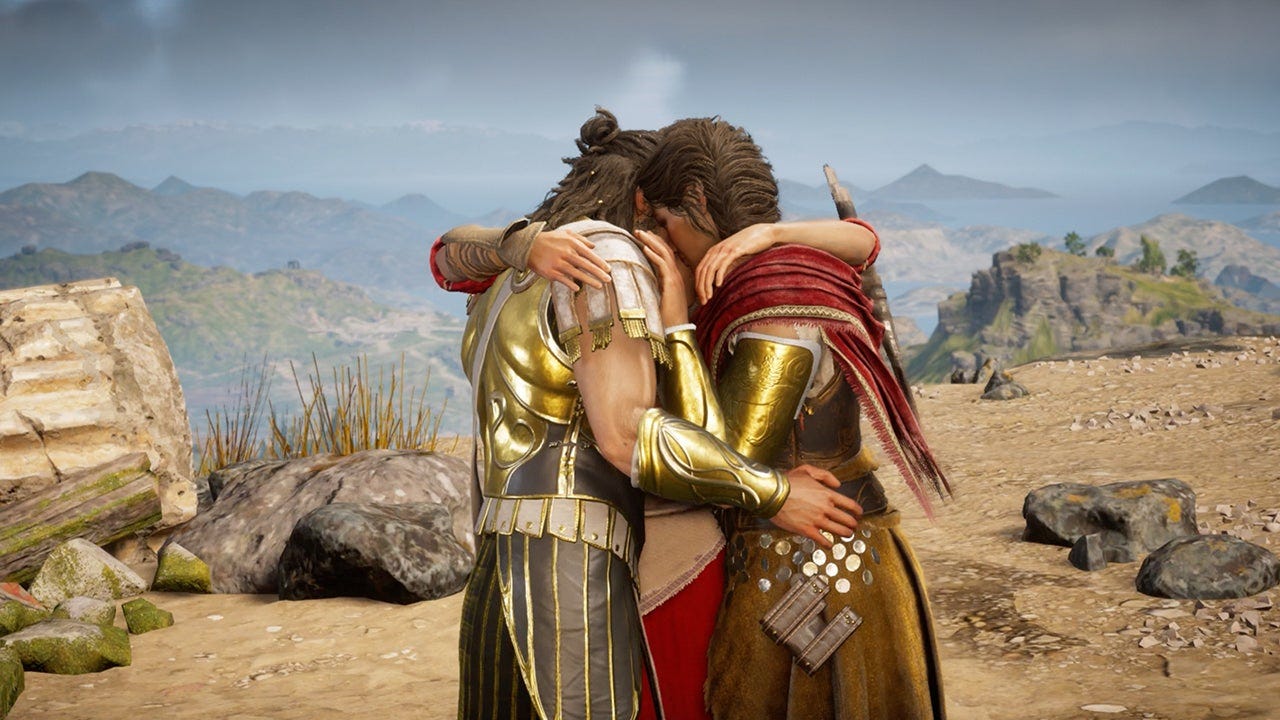
You’re absolved before doubt has a chance to take shape. And so the emotional tension collapses. No grief. No long, quiet walk afterward. No moment where the world feels heavier because of what you chose. Nothing the player must metabolize.
It’s a reminder that a choice alone doesn’t create insight. Insight comes from the space after the choice, the silence where reflection is supposed to grow.
Odyssey had all the ingredients for a meaningful dissonance, the kind that could have carved itself into memory. But instead, it clears the sky before the storm can break.
As Vorderer & Reinecke (2015) note: “Eudaimonic engagement requires unresolved affective states that prompt reflection.” Odyssey doesn’t allow those states to exist and the insight dissolves before it can form.
Insight is not triggered by choice. It is triggered by the absence of narrative reassurance.
Some insights don’t come from moral puzzles but from connection, from feeling responsible for someone who only exists inside the game’s fiction.
Psychologists call this self–other overlap (Aron et al., 1991): a moment when another being’s experience becomes part of your own.
Life Is Strange never pits you against simple moral binaries. Instead, it asks you to choose between two forms of care, two forms of loss.
When your decisions hurt someone you love, the game doesn’t fade to black. It lets you see the pain on their face. It lets silence do the talking. One player said: “I kept thinking for days whether my decision made me a bad person.”
This isn’t about branching choices. It’s about emotional agency, a rare moment when a system feels like a mirror, not a machine.
There is a moment in The Last of Us Part II that made me put the controller down.
I’ve always believed that people make sense once you understand their context, their fears, their values, their wounds. That matters deeply to me. And yet, in moments of emotion, even the best intentions can narrow our perspective.
When the game shifted and forced me to play as Abby, I resisted. Ellie felt familiar, anchored in my existing emotional map. Abby felt like an intruder.
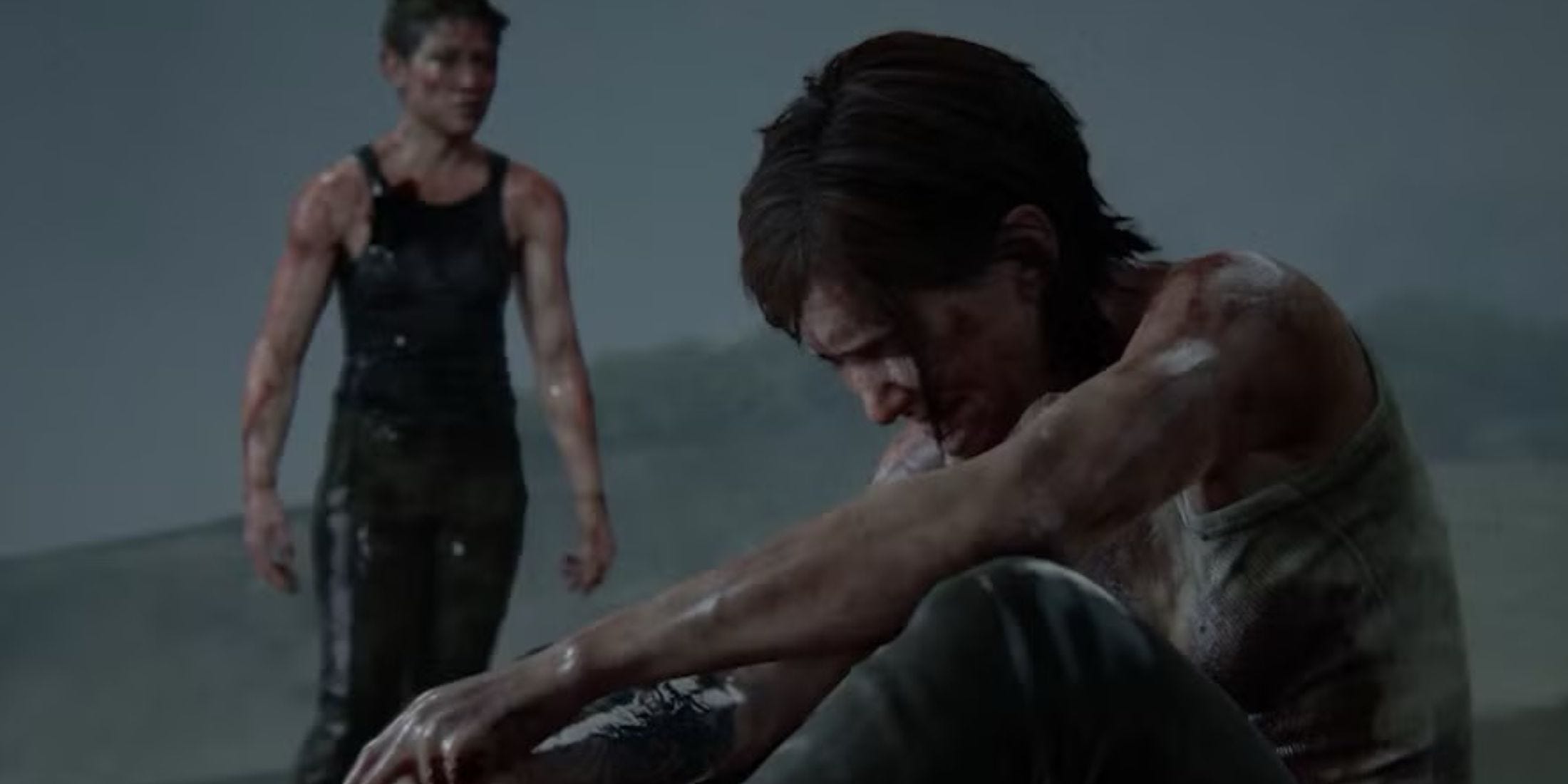
But slowly, something remarkable happened: When I realized Ellie and Abby weren’t opposites. They were parallels, two people shaped by pain, loyalty, and love, surviving the only way they knew how.
I wasn’t comparing characters anymore. I was comparing perspectives.
The game never lectured me. It simply gave me enough of someone else’s context for empathy to become inevitable.
There is a small, easily overlooked story in Guild Wars 2, an NPC quietly mourning her sister. No quest marker blinking with urgency. No sweeping soundtrack. Just a woman sitting with a grief the world has already moved past.
She talks to you softly, almost apologetically, as if she doesn’t want to inconvenience you with her pain. She tells you how she still speaks to her sister sometimes, out of habit, or hope, or the kind of love that refuses to end just because a life did. It’s the kind of detail you only notice if you’re really listening.
Most players walk past her. Why wouldn’t they? The game doesn’t insist on meaning here. But for one player, who had lost their own sister, this small moment became something entirely different. They wrote: “After reliving my grief all over again in this moment, I pushed through it and felt closer to closure.”
Not because the game commanded an emotion. Not because a cutscene demanded tears. But because, for a brief moment, fiction brushed against something unbearably real and the boundary between world and player blurred.
No dramatic scoring. No cathartic monologue. No narrative fireworks.
Just resonance, the kind Hartmut Rosa (2018) describes as “a living, responsive relationship between self and world.”
And here’s the quiet truth designers often forget: Not every player will feel this. But the ones who can, will feel it deeply.
Because when a moment touches on something nearly universal - grief, family, love, loss - a player’s own life can flow into the cracks of the narrative. Meaning arises not because the game contains it, but because the player brings it.
Insight grows in that intersection where design creates space, and the player fills it with something human.
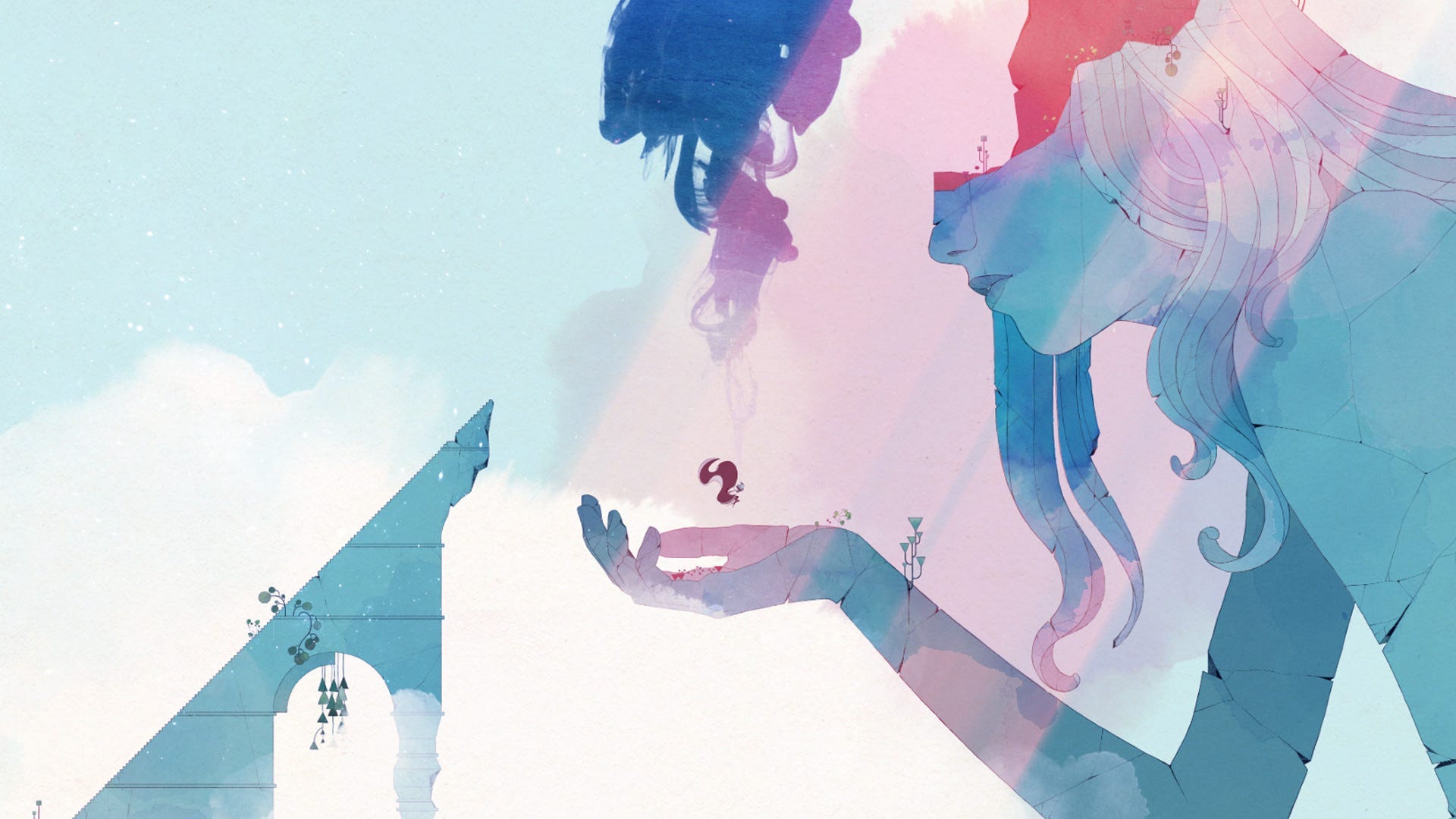
Jonathan Haidt calls elevation: “The uplifting feeling triggered by witnessing moral beauty.” Games can evoke this not through speeches, but through systems of symbolism, color, rhythm, and silence.
GRIS never tells you what the protagonist feels. It lets you feel with her. Colors fade when she is broken. Movement constricts with fear. The world rebuilds itself as she heals. And then there is that moment when breath, color, and sound return. Not triumph, relief. A reminder that healing is not victory, but acceptance.
Hellblade doesn’t explain psychosis. It embodies it: voices whispering contradictory fears, visual distortions tightening the space around you, a world that feels like it is watching. One player said: “The music during his sacrifice still evokes sadness in me now.”
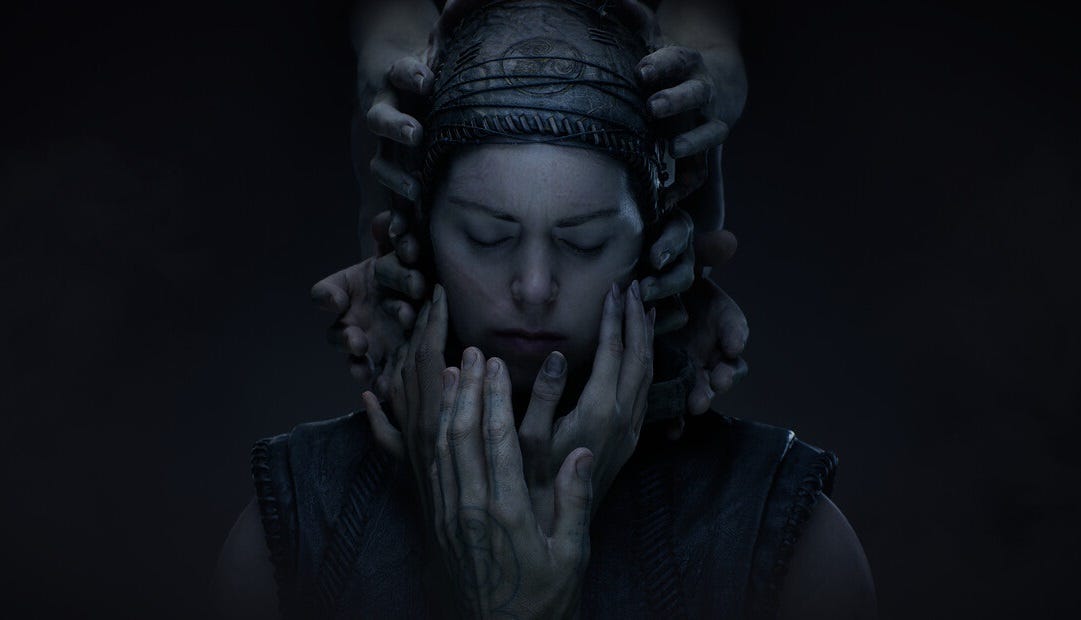
This is not understanding through information. It is understanding through experience.
When players experience insight whether through moral tension, empathy, or self-transcendence something very specific happens in the brain. It shifts into what neuroscientists call the default mode network (DMN), a constellation of regions including the medial prefrontal cortex, posterior cingulate cortex, and hippocampus.
This network activates when we:
reflect on who we are
revisit important memories
integrate emotions
make sense of our actions
consider what matters to us
Essentially, the DMN is the brain’s storytelling system, the part that turns experience into identity.
And here’s the fascinating part: Games activate this network more powerfully than passive media.
Why?
Because insight in games isn’t something you watch. It’s something you cause.
When you slay a creature that never hated you, or hurt someone you meant to protect, or inhabit the viewpoint of a character you thought you despised… You’re not just absorbing a narrative. You’re integrating an autobiographical event.
Your brain treats these moments as:
your choices
your consequences
your emotional contradictions
The hippocampus stores them like memories. The medial PFC evaluates them against your values. The PCC links them into your sense of self.
This is why certain scenes linger for days, months, or years. Not because a game told you what to feel, but because your brain worked to understand itself through the experience. “Meaning is simply emotion woven into memory.” Joseph LeDoux
Moments of tension, resonance, and moral discomfort are processed as meaningful, not merely memorable. They activate networks involved in:
autobiographical meaning-making
emotional regulation
moral reasoning
self-evaluation
In other words: We transform gameplay into self-understanding because the brain is wired to integrate experience into identity. Insight isn’t a poetic metaphor. It’s a neural process.
And when a game gives us the right combination of agency, emotion, and consequence the brain treats play as lived experience.
Game insight isn’t accidental. It emerges when certain design conditions quietly align:
Emotional tension isn’t resolved too quickly
Players must regulate their own discomfort
The world responds like something alive
Space, silence, is left for internal processing
Mechanics support, rather than contradict, the emotional truth
As Bopp et al. (2016) found: “It wasn’t fun, but it stayed with me.” Insight is sticky. It lingers. It shapes memory.
And as Ryan & Deci (2001) write: “Human beings have an innate tendency toward growth and integration.”
Games tap into this instinct more naturally than any other medium, because they do not just tell us who we are. They let us discover it through action.
Insight doesn’t belong only to dramatic games or tragic narratives. It can live inside a crafting loop, a city builder, a companion moment, a single silent animation.
It appears whenever a game trusts players enough to let meaning form in the gaps in the tension, in the aftermath, in the breath between action and understanding.
Insight is where play stops being performance and becomes reflection. Where games stop being something we consume and become something that changes us.
I’d truly love to hear your own moments of insight in games.
References
Comments
Nothing yet. Say the first thing.
Sign in to join the conversation.