
Prologue
The Irgun—Etzel to those who know—is a dirty word to some, a terrorist stain smeared across Israel’s birth certificate by critics who’d rather see Zionism as a sin than a shield. They’ll tell you the Jewish state rose from extremism’s ashes, its foundations wet with blood, its legitimacy a perpetual question mark. The Irgun’s name gets weaponized to bash Israel’s existence, a convenient club for those who’d erase it if they could. But strip away the rhetoric, and the story shifts. This wasn’t some fevered ideologue’s fantasy—it was forged in the 1929 massacres, when Jewish families were ripped apart, when the world yawned as babies’ skulls met stone. David Raziel, the man who’d steer the Irgun, didn’t start with a bomb in his hand. He was a scholar who watched his people bleed and said: enough. His life isn’t about justifying terror—it’s about what happens when survival’s your only card. That same desperate fight flared again on October 7, 2023, a brutal reminder that history doesn’t sleep.
Raziel’s story is Israel’s story—gritty, bloody, and unbowed.
The story of David Raziel is the story of Jewish existence in Israel.
Introduction
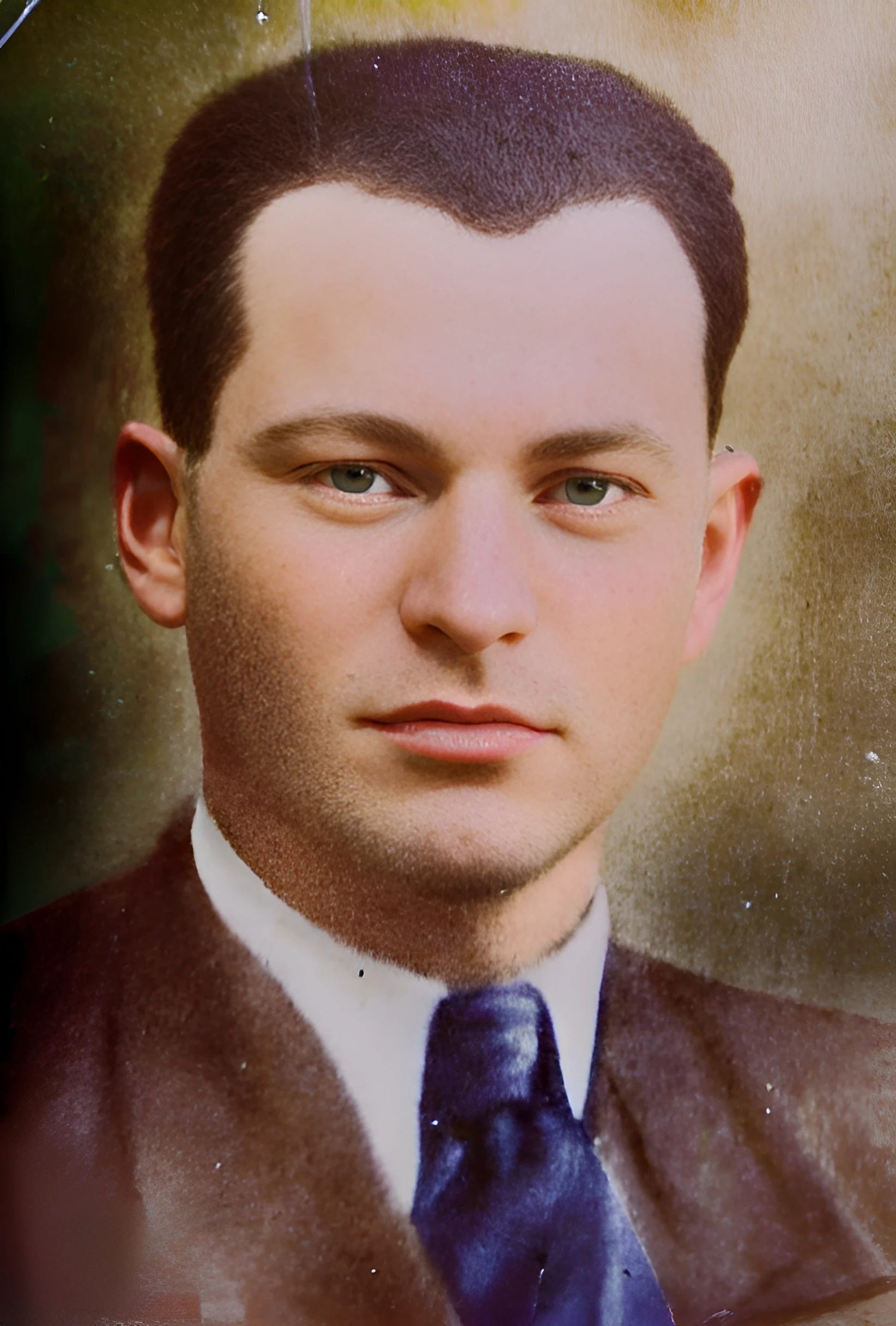
David Raziel was born on December 19, 1910, in Smarhon, a speck of a town in the Russian Empire (now Belarus), to Mordechai and Bluma Rozenson, a family steeped in faith. His father, a yeshiva-trained man, ditched the rabbinate to teach Hebrew in Palestine. In 1914, with World War I looming, they packed up—David, three; his sister Esther, two—and landed in Tel Aviv. It didn’t last. The Ottomans, pegging them as Russian nationals, expelled them within months. For eight years, they roamed Russia’s chaos—war, revolution, famine, civil war—before clawing their way back to Palestine in 1922.
He ended his life at the age of 30, on May 20, 1941, when a German bomb shredded Raziel’s car in Iraq, snuffing out a life too fierce to fade quietly. He was called a terrorist by some for leading the Irgun, a hero by others for shielding Jews when no one else would. He was neither, not fully—just a man shaped by betrayal and butchery, killed in a war bigger than his homeland. This isn’t a clean morality play. It’s a fighter’s tale, rough edges and all.
Blood and Innocence Lost
August 1929 was a slaughterhouse. In Hebron, Arab mobs, whipped into a frenzy by lies about Jews eyeing the Al-Aqsa Mosque, ran wild. Sixty-seven Jews died—babies smashed against walls, their heads caving in; mothers knifed beside their cribs, their screams swallowed by the chaos. Safed offered no sanctuary—18 butchered, kids gutted and torched as their houses burned. Across Palestine, 133 Jews were dead, over 300 maimed—a ledger of agony that’s more than statistics, it’s a scar. Raziel, 19, was at Yeshivat Mercaz HaRav in Jerusalem, studying under Rabbi Abraham Isaac Kook, a giant of religious Zionism. When the riots hit, he joined the Haganah (defense in Hebrew), the paramilitary organization of the Jews who lived in Israel. Sent to gather Hebron’s corpses—some he’d met days before—he saw the price of standing still. It broke him. The scholar’s quill dropped; a rifle took its place.
The British Mandate bosses barely blinked—some arrests, a toothless inquiry, then nothing. The Haganah clung to havlaga—restraint—like it was holy to let your own die. Raziel didn’t buy it. He’d seen the blood, the shattered infants, and knew: no cavalry was coming.
Forging the Irgun
By 1931, Raziel wasn’t alone. The Irgun broke from the Haganah, ignited by Avraham Tehomi and fueled by Ze’ev Jabotinsky’s blunt logic: a Jewish state wouldn’t be begged for—it’d be taken. Raziel climbed fast—Jerusalem commander by 1937, Irgun chief by 1938. His crew, a few thousand deep, ran on scavenged guns, jury-rigged explosives, and sheer will. He pulled in Avraham Stern (Yair), a pal from Hebrew University and Jabotinsky’s El Al student clique. Together, they penned The Pistol, the first Hebrew firearm manual—signed “D. and A.”—a blueprint for readiness. Under Raziel, the Irgun wasn’t some sloppy gang. Shaped by Jabotinsky’s Betar movement, it thrived on discipline, training, and hitting first.
The violence didn’t pause after ’29. The early ’30s bled slow—two Jews dead here, five there. Then the Arab Revolt of 1936–1939 turned it torrential: over 400 Jews killed. Villages raided, buses blasted, farmers picked off in their fields. The British stripped Jews of weapons while Arab attackers walked free. For Raziel, this wasn’t theory—it was war.
The Market Strikes
November 1937: the Irgun hit back. Bombs tore through Arab markets—Jerusalem, Haifa, Jaffa. Dozens, maybe more, killed; the tally’s murky. It was savage, no question. Before that? July saw 13 Jews ambushed in Jerusalem; September, a Safed family carved up in their beds. The British nabbed Irgun men but let Arab violence slide.
Raziel wasn’t a mad dog. He translated military texts, sparred with rabbis over Torah. But he saw the odds—Jews outnumbered ten to one—and knew attackers had to feel pain. The market strikes were grim, civilians dead in the blast. Ethical? Not a chance. Effective? For a moment—Arab assaults dipped. In that inferno, it was his only play.
A Truce with the Devil
World War II crashed in 1939, flipping the board. The British, who’d jailed Raziel in May for the bombings, freed him in October as Hitler’s shadow grew. Raziel chose: truce with the Brits, target the Nazis—“the arch-enemy of our people and all mankind.” It split the Irgun—Stern bolted, forming Lehi to keep pounding the British. Raziel, channeling Jabotinsky’s cold clarity, pegged Hitler as the true beast. He shelved the Palestine scrap to swing at the Reich.
The Iraq Gambit
May 1941: Raziel’s final roll was mad. Iraq’s pro-Nazi Rashid Ali rebelled, endangering British oil and plotting with the Mufti Haj Amin al-Husseini, Hitler’s Palestinian ally in Baghdad. The Brits, desperate, tapped the Irgun. Raziel and three others, including Ya’akov Meridor, signed on—sabotage refineries, maybe snatch the Mufti. Raziel knew the stakes—97% chance of death—and went anyway. “For Israel’s revival, I go,” he told Meridor in the car near Habbaniyah. On May 20, a Luftwaffe bomb hit. Raziel and a British officer were dust. Meridor lived to tell of losing a man who lived his words: “After me.”
Buried in Iraq, his remains wandered—Cyprus in 1955, Jerusalem’s Mount Herzl in 1961. No rest, even cold.
The Legacy
Raziel’s ghost hangs heavy, and the past won’t let go. October 7, 2023, ripped the veil off again—Hamas slashing through Gaza’s border, 1,200 Israelis dead in a day of gore. In Sderot, Be’eri, Kfar Aza, families burned alive, babies shot in cribs, their bodies left to rot. At the Nova festival, kids danced until bullets cut them down—hundreds gone, blood in the dirt. Hamas led, but Palestinian civilians followed, looting corpses, spitting on the dead, cheering like it was victory day.
Flash back to 1929: Raziel saw it in Hebron—67 Jews slaughtered, mobs rejoicing as babies’ heads met stone. The British stood idle then; the UN mutters platitudes now. Raziel answered with the Irgun—market bombs, blood on his hands. Right? No. Inevitable? Look at Hebron and decide.
October 7 echoes 1929—133 dead then, 1,200 now, the same annihilating rage. Critics wield Raziel’s legacy to damn Israel as terror’s child. They’re half-true. It was born in terror—not dealt, but suffered. The Irgun was a roar against oblivion; Israel’s fight today is its reverberation.
Epilogue
Raziel wasn’t a saint—just a man with a gun facing a mob with blades. His legacy isn’t a monument to shine—it’s a shattered mirror, showing the same horrors across a century. Hebron’s babies and Nova’s dancers bleed into one, their deaths asking: what do you do when the world wants you erased? Slam Israel’s war if you must—call it cruel, call it too much. But first, walk October 7’s ashes. Face a mother holding her child’s corpse. Tell her your answer. Tell her why she should wait for the next round.
Introduction
The world doesn’t trip into chaos—it’s kicked there. I’ve written before about Israel, about David Raziel and the Irgun, about how the British Mandate in 1929 let Jews die to keep the Middle East’s gears grinding. That wasn’t a fluke; it’s the playbook. October 7, 2023, ripped the veil off: Israel’s borders smashed, kibbutzim ablaze, not by chance but by design—disorder as a weapon for the puppet masters. The same hands tug strings in Ukraine, where a CIA coup lit a war that festers for profit. They flood Europe and the US with migrants, cracking nations apart while elites grin from their penthouses. And they scapegoat the Jews, pinning their own wreckage on Zionism. This isn’t coincidence—it’s the Cabal, a machine gorging on division, war, and the grind of human lives.
Israel: A Pawn in the Deep State’s Playbook
Start with Israel. October 7 wasn’t just Hamas—it was a collapse orchestrated by those who stood aside. Netanyahu’s government, lashed to Washington’s leash, left the south naked. Why? Because blood fuels escalation, keeps the war engine roaring, and binds Israel as the world’s perpetual firing line. The British Mandate ran the same dirty trick: Jews slaughtered in Hebron, 1929, because halting it might rattle Arab oil or imperial blueprints. Today, it’s the deep state—Washington, NATO, the NGOs—who let Hamas pounce, banking on the carnage to tighten Israel’s chains. Sovereignty? A lie. Israel’s a pawn, its people cannon fodder, its wars penned by men who’ve never smelled cordite.
The Ukraine Crisis: A CIA Coup and a Nazi Stain
Now Ukraine. Scrap the myth of a “people’s revolt” in 2014. That was a CIA takedown, surgical and ruthless, to oust Viktor Yanukovych’s pro-Russia regime. Elected, messy, but in the way—so they axed him. The enforcers? The Azov Battalion, far-right brutes with swastikas in their skin and a Nazi streak that’s not a footnote but a flare. The West didn’t just shrug—it bankrolled the coup, armed it, and slapped “freedom” on the box. Russia hit back—Crimea seized, Donbas a killing field. The war didn’t flare in 2022; it was torched eight years prior, a slow bleed to mire Moscow in muck.
When peace glimmered in March 2022—Ukraine and Russia a heartbeat from terms—Boris Johnson, the Cabal’s courier, snuffed it. Ukraine’s negotiator, David Arakhamia, spilled it: Russian pullout for Ukrainian neutrality was on the table. Johnson barked no, Zelensky snapped to heel, and the body bags piled up. Why? Because the deep state—Washington, London, Brussels—needs Russia gutted, Ukraine be damned. It’s the Mandate’s shadow: lives traded for leverage, a nation made a slaughterhouse because the Cabal decrees it.
Mass Immigration: Palestine’s Echoes Redux
Cut the haze with cold fact. From 1922 to 1946, Palestine’s Arab population doubled—not a baby boom, but a human tide. Don’t swallow the line that Britain waved them in with open arms. The magnet was Jewish toil—Zionists who took a wasteland Mark Twain called “blistering, naked, treeless” and forged life from it. Swamps drained, deserts greened, Tel Aviv born from sand. Haifa’s port buzzed with trade. This wasn’t colonial wizardry—it was Jewish blood, coin, and spine, etched in British ledgers that couldn’t dodge the truth. Jobs erupted—farms, factories, building sites—and Arabs from Egypt, Syria, and beyond swarmed to snatch them. The British didn’t spark this fire; they milked it, then choked it with the 1939 White Paper, slashing Jewish immigration as Hitler’s ovens glowed. Arab inflows? No cap. The hypocrisy stinks.
History, not hot air. Jewish grit lit the fuse, and the Arab surge trailed it. Ring a bell? Then, as now, mass movement redraws the map while the powerful tweak the spigot for their own ends.
The Modern Parallel: Biden’s Border Flood
Jump to now. Under Biden, the US southern border’s a free-for-all. The stats gut you: 2.5 million migrants nabbed and loosed to melt into the shadows; 60,000 refugees dumped in 2023, the fattest haul since Obama’s bow; 813,000 gliding through CBP One from January 2023 to August 2024; and a parole racket flying 30,000 a month from Cuba, Venezuela, Nicaragua, and Haiti—until fraud sank it in August 2024. Millions, not a trickle, flooding in under one man’s reign. Chaos is too soft a word.
This isn’t a snafu—it’s a ploy, run by the Cabal, because that’s what they are. Mass immigration’s no glitch; it’s the plan. Like the Mandate juggled Palestine’s numbers—stifling Jewish arrivals while Arab ranks ballooned to keep tensions simmering—today’s elites swamp nations to split them. In the US, this deluge swamps cities, fans resentment, and cloaks the real hustle. Fixes? Anathema to their grip. Crisis is their lifeblood.
Trump’s Defiance: A Threat to the Machine
Enter Trump, the spanner in the works. In 2025, he pushed to kill Ukraine’s grinder—Russian exit, Ukrainian neutrality, a deal with teeth. But Zelensky, the CIA’s mouthpiece, yammers for Crimea and beyond, a delusion Russia won’t bite. EU suits clutch their sanctions, piety veiling wrecking. Trump spots the drop: a forever war could drag NATO into Russia’s jaws. Yet the Cabal stonewalls—peace doesn’t shift F-35s or bloat bases. It’s Raziel’s spirit: a man bucking a beast that fattens on blood, smashed by a system wedded to the grind.
The Thread of Control: A Global Cabal
Link the threads. Israel’s mayhem, blessed by DC, twins Ukraine’s—ignited by a CIA coup, stretched by Johnson’s meddling—both nations chips in a grander scheme. Immigration remolds Europe and the US like it did Palestine, a calculated unraveling. Trump’s peace shots, spiked by Zelensky and the desk jockeys, mirror the Mandate’s sellout of its charges. This isn’t fluke—it’s the Leviathan, Hobbes’ brute off the leash. In 1929, it let Hebron bleed for imperial math. In 2014, it sicced Nazi-tinged Azov on Ukraine to taunt the bear. It floods borders to kneecap nations and thwarts Trump because he dares call it out.
The Scapegoat: Blaming Zionism
Then the sleight of hand: the fall guy. When the stink gets too thick, they don’t fess up—they finger the Jews. Zionism, they snarl, is the devil in the details, a cheap bogeyman for a world too idle to probe. It’s an ancient dodge, and it’s live again. David Raziel saw it clear—a religious soul, steeped in Torah, who turned warrior after the 1929 riots gutted his illusions. He didn’t just fight; he led the Irgun with a faith that made it a duty to shield his people from a Mandate that left them prey. They bombed the King David Hotel not for thrills but because the British were choking their lifeline. Branded terrorists then, slandered now, their echo rings in Israel’s rap as global villain for daring to survive. October 7, 2023, wasn’t just a breach—it was the yield of a world order that breeds havoc and shifts blame.
Raziel’s no footnote. A scholar turned militant, he split with Avraham Stern over a truce with Britain in World War II, teaming up to fight Nazis—a call that showed he could weigh threats and bend without breaking. He died in Iraq, 1941, on a British mission, blown apart by a German bomb—proof he’d pay the ultimate price to defy the real monsters. The Cabal paints him and his kind as the problem, not the pawns they were, twisting their stand into a smear to dodge the mirror. Here’s the alert: they rig the ruin—wars, migrations—then tag Zionism, the Jews, anybody but the suits in the shadows. Raziel cut through that lie, steering the Irgun against a stacked deck because truth demanded it.
Today, that fog blinds us to the culprits: globalist elites, spooks, NGOs yanking the cords. The Irgun’s name is muddied, Israel’s cause trashed, all to cloak the Cabal. Wake up. Spot the con. Only then does their hold slip—and the truth slashes deep.
Stop Playing Along
This isn’t a lament—it’s a gauntlet. The Cabal’s no specter; it’s flesh and bone—governments, think tanks, tycoons—glutting on disorder. Call it. In Israel, demand why defenses crumbled. In Ukraine, ask who fueled the coup. In Europe, ask who flung the gates wide. The answers burn, but they’re there—in wires, leaks, graves.
Raziel fought with bombs because he had to—a believer turned soldier, dead at 30 for a cause bigger than himself. Trump fights with deals because he reads the game. We fight with clarity—because we must. Hebron’s butchery, Ukraine’s toll, October 7’s nightmare—they’re not loose ends. They’re the cost of a beast we can choke, if we quit acting like it’s not real.
Introduction
Zionism isn’t a footnote in history—it’s a roar, a defiant scream from a people who’d been hunted, hounded, and humiliated for centuries. It’s not some colonialist plot hatched in smoky parlors; it’s the Jewish answer to a global wave of self-determination that ripped through the 19th and early 20th centuries. Italians forged a nation. Germans forged a nation. Empires—Ottoman, Austro-Hungarian—cracked and crumbled as peoples demanded their own soil, their own voice. Zionism was no different: a demand for a Jewish homeland, a refuge from a world that had turned Jew-hatred into an art form.
The Furnace of Antisemitism
To grasp Zionism, you’ve got to stare into the furnace that birthed it: antisemitism, raw and relentless. The late 1800s were a blood-soaked nightmare for Jews. In Russia, pogroms tore through Jewish shtetls—1881 alone saw hundreds of villages razed, families butchered, women raped, all while the Tsar’s police looked the other way. Thousands died, tens of thousands fled. In “civilized” France, the Dreyfus Affair (1894) saw a Jewish officer framed for treason, his innocence drowned out by mobs howling “Death to the Jews.” Assimilation? A fairy tale. Safety in exile? A delusion. The message was carved in corpses: Jews needed their own land, because no one else would protect them.
A Longing Etched in Prayer
Zionism didn’t spring from nowhere—it’s woven into the Jewish soul. For 2,000 years, Jews prayed for Jerusalem. Open a Siddur, and it’s there: pleas for Zion’s restoration. Every Passover ends with “Next year in Jerusalem.” Yom Kippur’s liturgy aches for Israel’s redemption. This wasn’t nostalgia—it was survival, a lifeline through exile, pogroms, and betrayal. Zionism took that ancient ache and forged it into a modern movement, a chance to stand tall after millennia on their knees.
Herzl’s Vision, Kook’s Faith
Theodor Herzl, the father of modern Zionism, wasn’t a rabbi—he was a journalist, a secular realist who saw the Jewish state as the only shield against annihilation. His 1896 manifesto, Der Judenstaat, wasn’t poetry; it was a blueprint, born from watching the Dreyfus trial unravel Europe’s mask of tolerance. But don’t erase the religious Zionists—men like Rabbi Abraham Isaac Kook, who saw every step back to Israel as a divine unfolding, a plow in the dirt as a prayer fulfilled. David Raziel, steeped in faith at Kook’s Yeshivat Mercaz HaRav, carried that sacred fire into battle—not just a fighter, but a believer who saw the gun as a tool of redemption. Secular dreamers and holy visionaries, side by side, building a nation from ash and hope.
Balfour: Influence, Not Conspiracy
The Balfour Declaration of 1917—Britain’s pledge for a “national home for the Jewish people” in Palestine—was no Rothschild puppet show. Yes, Lord Walter Rothschild was a Zionist heavyweight, and the declaration landed in his inbox. But the idea that he twisted Britain’s arm is a lazy antisemitic trope. Chaim Weizmann, a chemist whose wartime acetone production fueled British munitions, lobbied with brains, not blackmail. The declaration was a win for a movement of farmers, thinkers, and fighters—not a banking cabal. Facts over fiction, always.
The Irgun: Warriors, Not Thugs
The Irgun, the paramilitary force in pre-state Israel, weren’t saints—they were soldiers in a brutal war for survival. Formed in the 1930s, their spark was the 1929 massacres: Arab mobs in Hebron and Safed slaughtering 133 Jews—children hacked apart, synagogues torched—while British Mandate forces twiddled their thumbs. The Irgun hit back, hard. Bombings, raids, the 1946 King David Hotel attack—yes, they were ruthless. But they targeted British military sites, not markets or buses, and they warned civilians to flee. Their goal? A state, not a bloodbath. Under David Raziel’s command, they weren’t a rabble—he co-authored The Pistol, a Hebrew firearms manual, hammering discipline into his ranks. In 1939, he even paused the fight against Britain, striking a truce to join the Allies against Nazi Germany—a move that split his own group but proved his eyes were on the real enemy.
The Lie That Won’t Die: Irgun vs. Hamas and the PLO
And now, the festering lie that makes my blood boil: the claim that the Irgun, Hamas, and the PLO are cut from the same cloth. To peddle this equivalence isn’t just sloppy—it’s a moral crime, a deliberate smear on history’s face. Let’s rip it apart, fact by fact, until there’s nothing left for the liars to cling to.
The Irgun: A Fight for Existence
The Irgun rose from the ashes of 1929, when Jewish blood stained the streets and no one came to help. Their violence—think King David, 91 dead—was a strike at British colonial overlords who’d promised a homeland then reneged. They called ahead, urging evacuation; the British ignored it. When Israel was born in 1948, the Irgun disbanded, their job done. Their aim was a nation, not a genocide. Context: a people who’d just lost six million to the Holocaust, facing Arab armies vowing “drive the Jews into the sea.” Desperate? Yes. Indiscriminate? No.
Hamas: A Creed of Destruction
Hamas, founded in 1987, is a different beast. Their charter doesn’t whisper coexistence—it screams annihilation: “Israel will exist until Islam obliterates it.” Their resume? Suicide bombings in Tel Aviv cafes, rockets raining on Sderot schools, and the October 7, 2023, massacre—1,200 Israelis slaughtered, women raped, babies burned in their cribs. This wasn’t strategy; it was sadism. Every peace deal—Oslo, Camp David—spat back with terror. Their goal isn’t a state beside Israel; it’s a graveyard where Israel stood.
The PLO: Rejectionism’s Poster Child
The PLO, under Yasser Arafat, wrote the book on terror. From the 1960s: plane hijackings, the 1972 Munich Olympics massacre—11 Israeli athletes butchered. They rejected the 1947 UN partition—two states, one Arab, one Jewish—choosing war instead. After 1967 and 1973, lost wars they started, they turned to bombs and intifadas. Given Gaza and the West Bank in 1993 via Oslo, they built tunnels, not schools. Arafat walked away from a 2000 deal offering 97% of their demands. Why? Because accepting Israel’s existence was never the plan.
The Arab Refusal: A Century of No
This isn’t just about groups—it’s about a mindset. In 1929, Hebron’s Jews weren’t occupiers; they’d lived there for centuries. The massacre wasn’t resistance—it was hate. In 1947, the Arab League said no to a Jewish state, launching a war that birthed the Nakba they lament. Five Arab armies attacked in 1948, promising annihilation. Fast-forward: Hamas’s rockets, Hezbollah’s barrages, October 7’s carnage—1,200 dead, 250 kidnapped. A century of refusal, drenched in blood, rejecting every chance for peace.
The Verdict: Arsonists vs. Builders
The Irgun fought to build a home after pogroms and gas chambers; Hamas and the PLO fight to raze one. The Irgun stopped when Israel stood; Hamas and the PLO thrive on chaos, their violence a religion, not a tactic. Compare them? You might as well equate the firefighter with the pyromaniac, the surgeon with the executioner. It’s not just wrong—it’s obscene, a lie so flimsy it collapses under its own weight.
The Final Word
Zionism isn’t the monster here. It’s a people saying “enough” to centuries of slaughter—from Kishinev’s pogroms to Auschwitz’s ovens, from Hebron’s hacked bodies to October 7’s charred remains. It’s secular grit and sacred hope, a nation clawed from history’s jaws. To the fools who equate the Irgun with Hamas and the PLO, I say: choke on your own ignorance. The facts bury you—every pogrom, every massacre, every rejected olive branch. Zionism stands. Israel endures. Your lie? It’s dust.
Introduction
David Raziel wasn’t born with a rifle in his hands. He came into the world on December 19, 1910, in Smarhon, a forgotten dot in Lithuania under the Russian Empire’s sprawl, to a family rooted in faith. His father, Mordechai, a yeshiva man, chose teaching Hebrew in Palestine over a rabbi’s robes. In 1914, when Raziel was three, they fled to Ottoman Palestine, only to be flung back into Russia’s chaos by World War I, wandering for eight years before clawing their way to Tel Aviv in 1922. His early life was hushed—Torah study, the murmur of Jerusalem’s stones. At Yeshivat Mercaz HaRav, he learned under Rabbi Abraham Isaac Kook, a giant of religious Zionism who welded faith to the dream of a reclaimed land. Raziel could’ve been a scholar, parsing texts in quiet halls. But history doesn’t coddle the meek.
In 1929, at 19, studying beneath Kook’s fierce gaze, he saw Hebron and Safed become abattoirs—133 Jews hacked apart, children torn from mothers, synagogues razed—while British Mandate forces, those hollow guardians, watched or abetted. Raziel didn’t just hear about it; he gathered the broken bodies in Hebron, some faces he’d known days before. That was it. The scholar’s ink dried; a gun filled his grip. Not because he lusted for blood, but because the price of peace was Jewish corpses—and he’d be damned if he paid it again.
He joined the Haganah, then, chafing at its caution, co-founded the Irgun in 1931—a militia forged in rage and dread, the dread of erasure. He rose to command it, hitting British posts and Arab fighters with a vengeance as ancient as exile itself. He wasn’t flawless; the Arab Revolt saw his reprisals kill civilians, a bitter scar. But his aim never wavered: survival, dignity, a Jewish foothold. In 1939, as World War II ignited, he declared a truce with Britain, turning his men toward Hitler—the devourer of Jews and worlds. It fractured the Irgun; Avraham Stern split off, forming Lehi to bleed the British dry. Raziel stood his ground, eyes locked on the Nazi abyss. On May 20, 1941, in Iraq, on a British-led mission to choke pro-Nazi oil lines, a German bomb ripped through his car. He was 30. His bones roamed—buried in Iraq, shifted to Cyprus, finally anchored on Mount Herzl in 1961. A restless grave for a man who never rested.
This trilogy—"The Man Who Fought Back," "The Leviathan’s Game: From Palestine to Ukraine, the Cabal’s Endless War," and "The Zionist Movement: A Quest for Survival Against a World Drenched in Blood"—has hacked a brutal trail through history: from Raziel’s stand to the Cabal’s frigid plots, to Zionism’s roots in ash and hope. Here, we seal the loop—not to tidy a tale, but to hammer home a truth: David Raziel’s life is Jewish existence in Israel.
The Thread of Resilience
Cast your mind to "The Man Who Fought Back." Raziel’s arc was the Jewish fight in miniature—scholar to soldier, not by fancy but by fate. The British, with their 1917 Balfour pledge of a Jewish home, flipped by 1929, banning Jewish weapons as Arab blades flashed free. Betrayal wasn’t new to Raziel; it was a Jewish birthright, from Rome’s boots to Kishinev’s cinders. His Irgun wasn’t some spit-shined legion; it was a guttural roar against oblivion, a pledge that Jews wouldn’t kneel to slaughter. His war was close, raw—a lone man spitting in the face of a world that yawned at Jewish pyres.
The Leviathan’s Game
Then "The Leviathan’s Game" tore the veil off the Cabal—those bloodless string-pullers who bend nations like toys. From the Mandate’s two-faced dance to Ukraine’s mire and migrant waves, they trade in control, feast on power. They let Hebron bleed in 1929 for a chit on their board; they watched October 7, 2023, to chain Israel tight. But Raziel was their glitch. He didn’t swing for their profits or their maps. He fought for a scrap of dirt where Jews could stand unbowed—a cause too messy, too alive, for their dead-eyed game.
The Zionist Movement
Finally, "The Zionist Movement" bared the marrow of it. Zionism didn’t spawn in some tycoon’s den. It rose from Kishinev’s ash, where 49 Jews were carved up in 1903 as police smirked; from Treblinka’s wails; from the Seder’s vow: “Next year in Jerusalem.” It was the work of the crushed, the hunted, the stubborn—secular and sacred, leftist and devout, knit not by intrigue but by a shared gash. Raziel was that spirit: not a Cabal’s piece, but a people’s son who’d taken enough.
Zionism: The Anti-Cabal
Torch the myth now: Zionism as the Cabal’s pet? It’s laughable. The Cabal breeds splits—nations clawing each other, chaos for coin. Zionism is glue—a people strewn across earth, babbling every tongue, yet clutching one mad vision. The Cabal grabs power; Zionism fights to breathe. The Cabal skulks; Zionism strides out, flag up, intent bare. Raziel didn’t die in Iraq for a magnate’s purse—he died because the Jewish tomorrow begged it.
History proves it. The First Zionist Congress in 1897 wasn’t a hushed deal; it was Theodor Herzl’s loud shout, a scribbler jolted by Dreyfus’s shame. The pioneers of the 1900s weren’t fat cats—they were fevered peasants staking their marrow on a swamp. The 1948 war wasn’t bankrolled by shadow gold but won by survivors with rusting guns, some still scarred by Auschwitz’s ink. Flip to the Cabal’s hand: the 1939 White Paper, slamming Zion’s gates as Hitler’s furnaces glowed; post-war embargoes, throttling Israel’s crib. If Zionism were their pet, they’d have fed it better.
Raziel saw the lie. His Irgun struck British bases when the Haganah balked, bombing not for kicks but for liberty. He wasn’t their dog—he was their dread. In that, he echoed Zionism’s real rhythm: no more prey, a fist to the jaws that would swallow Jews whole.
The Emotional Echo
What’s it mean, here at the trilogy’s edge? Raziel’s legacy isn’t a plaque—it’s Israel’s heartbeat. His battle rings in every stone of that land. The Jews who outran the Czar’s mobs, outlasted the Holocaust, outfought five armies in 1948—they were all Raziel, named or not. They forged a nation not because it was simple, but because it was the only way to be.
Today, Israel endures—scarred, bruised, alive. Its cities hum: Tel Aviv’s din, Jerusalem’s hush. Its edges bristle with sentries who know the price of slack. Its people—spawn of survivors, heirs of outcasts—bear Raziel’s spark. They root vines in old sand; they chant in a tongue pulled from the grave. When rockets hit, as on October 7, 2023, they don’t scatter—they clash, weep, rise. That’s no Cabal’s trophy. That’s a people’s.
Closing the Circle
David Raziel fell at 30, a light doused too fast. But his tale didn’t fade in Iraq’s grit. It thrives in Israel’s earth, its soul, its refusal to break. This trilogy kicked off with a man, stretched to a world of schemes, and honed to a movement carved in blood and dreams. Raziel ties it: a Jew who saw his kin’s agony and roared, “No more.”
Zionism isn’t a scheme—it’s a pact, held against odds that’d snap most peoples. It’s the Cabal’s foil, the heat of a home retaken. Raziel’s mark is every Jew who pictured Zion, every grip on a rifle or a spade to birth it. His story is Jewish life in Israel: torn, fierce, here.
Remember David Raziel. Not as a cold bust, but as a gust—keen, relentless, soft in its care. Honor him by knowing Zionism: not a shade, but a blaze. The fight he waged, the hope he bled for, still glows—in every breath Israel draws, every stride its people take to a dawn he shaped. That’s Zionism’s true fire. That’s the soul of a nation that won’t vanish.
No posts
Comments
Nothing yet. Say the first thing.
Sign in to join the conversation.