
Those of you who know me can spot my fashion colors anywhere. I’m the one wearing earth tone beige, olive, terracotta, and brown. Black is also my go-to color, especially when working out, but I digress. Earth tones evoke the muted tones of nature. It’s easy to blend a sage green with a deep brown, colors I see in the forests. I find the bright blues, reds, and yellows visually noisy. I enjoy the bright colors of male bird plumage, but I’m with the female birds, toned down and not noticed minimalist fashion. A blend that is flattering and yet not in your face. However, mixing earth tones with a bold color can also enhance your look, just as a bright flower can brighten the surrounding soil. When hiking in the woods during deer season, I wear a bright orange vest. Sometimes you want to be seen. I’m not a deer, I’m just a frolicking naturalist!
Similar to both predator and prey, I normally prefer to be camouflaged. Hidden and harder to find than Waldo. I feel calm and safe. Snails and slugs make big fashion statements with their normally muted colors. You might ask, what about the bright banana slug? Actually, their yellow color blends in with the yellow foliage and serves as a warning color against predators who find their slimy taste rather unappetizing. They can also shift colors to brown or tan.
I want to focus on Monadenia fidelis, the Pacific sideband snail, native to the Pacific Northwest.
Let’s breakdown its scientific name: Greek mono=one or single, aden=gland. (one gland). Latin fidelis=faithful or loyal. I think of it as my single gland faithful friend. We all need one.
First discovered by J.E. Grey in 1834. Look for this snail from Alaska to California. Road Trip! Monadenia fidelis; often found in winter under moss, bark, and logs. This species, and its several subspecies, occurs along the Pacific coast from southeastern Alaska to northern California. They are large land snails (31-38mm wide by 20-27mm high).
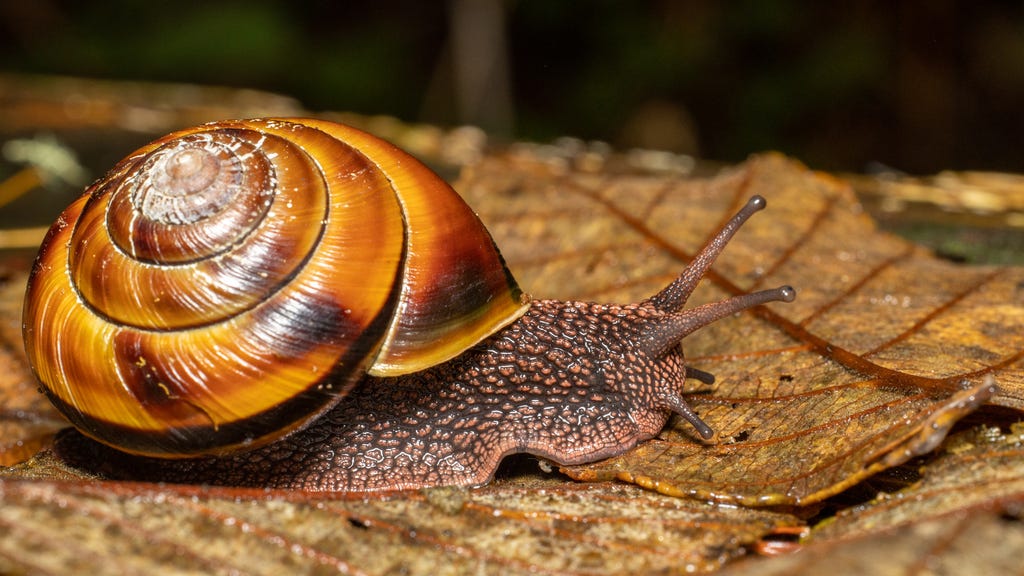
https://www.inaturalist.org/photos/239808629
Attribution© Jeff Ward
The sideband snail has perfect earth tone reddish brown colors. The shell is brown and cinnamon in color with dark bands. There are variations of color patterns, often seen as darker tones. Its body is pinkish brown with some darker versions. Again, I love their fashion choices. I also love their food choices which not only include lichen and fungi but also sword ferns. They are also gourmet l’escargot for other critters such as raccoons, rodents, birds, and beetles.
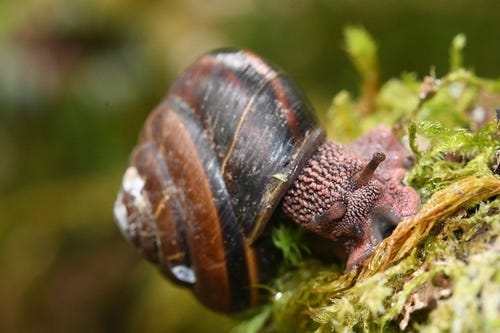
https://www.inaturalist.org/photos/129884128
Attribution © Kate McKeown
M. fidelis like most land snails are hermaphrodites (are both male and female) and exchange sperm with a partner so both their eggs are fertilized by different sperm. Sex guarantees species diversity.
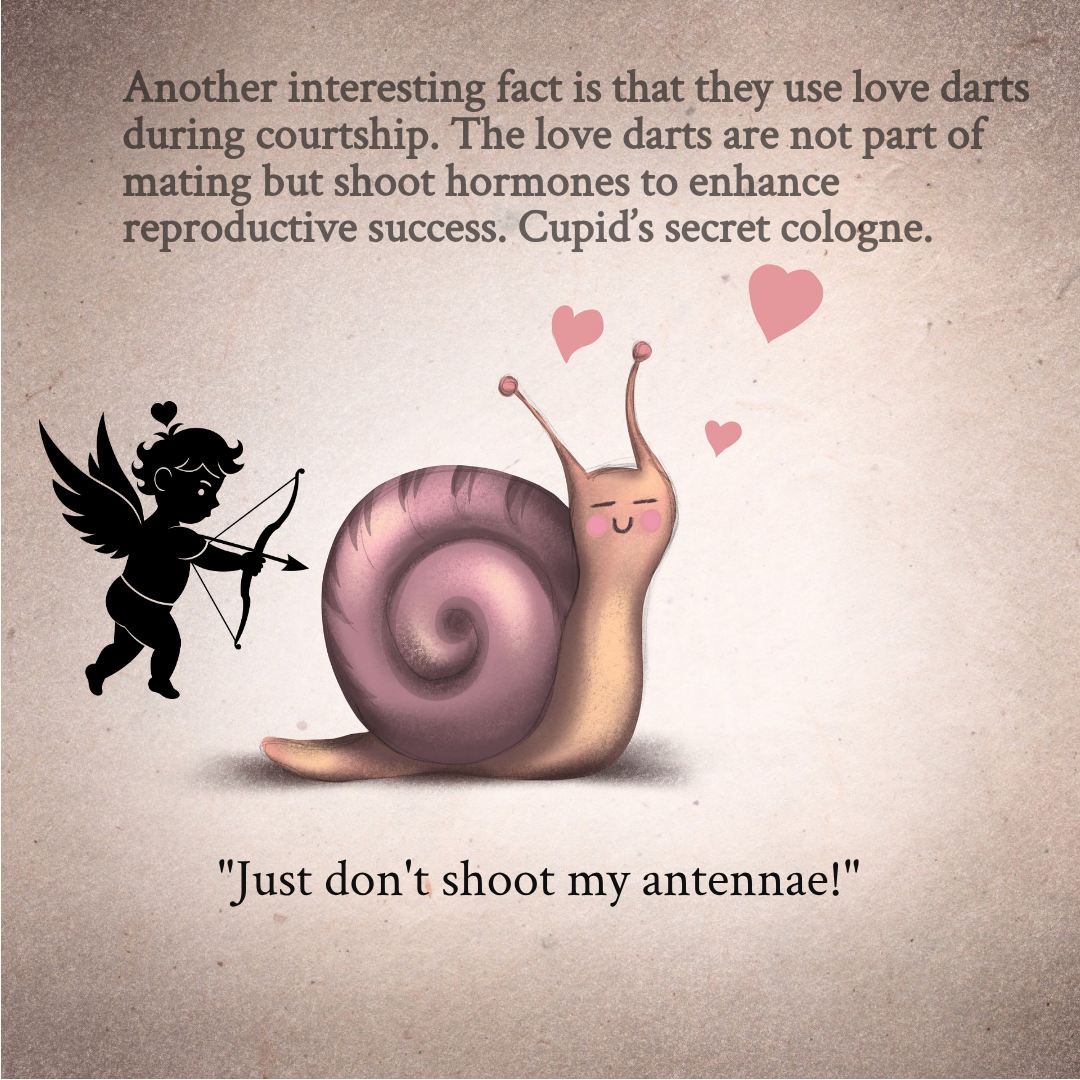
Silly art by Me (Eva Gordon)
On your next Pacific Northwest hike, check under logs and leaf litter for the impressive Pacific sideband, the area’s biggest native land snail. And the premier dresser that features natural, earthy hues reminiscent of a forest.
Sources:
http://10000thingsofthepnw.com/2023/09/01/monadenia-fidelis-pacific-sideband-snail/
https://nisquallylandtrust.org/natures-cupid-the-pacific-sideband-snail/
https://en.wikipedia.org/wiki/Monadenia_fidelis
https://www.inaturalist.org/taxa/62803-Monadenia-fidelis
No posts
Comments
Nothing yet. Say the first thing.
Sign in to join the conversation.