
Hello and welcome to new subscribers. I write about technology’s impact on us humans and our beleaguered planet and I’m hugely grateful to all who read, share, or comment on The Egg. Please consider becoming a subscriber if you’re not one already. It’s free(!) and really helps to support my work.
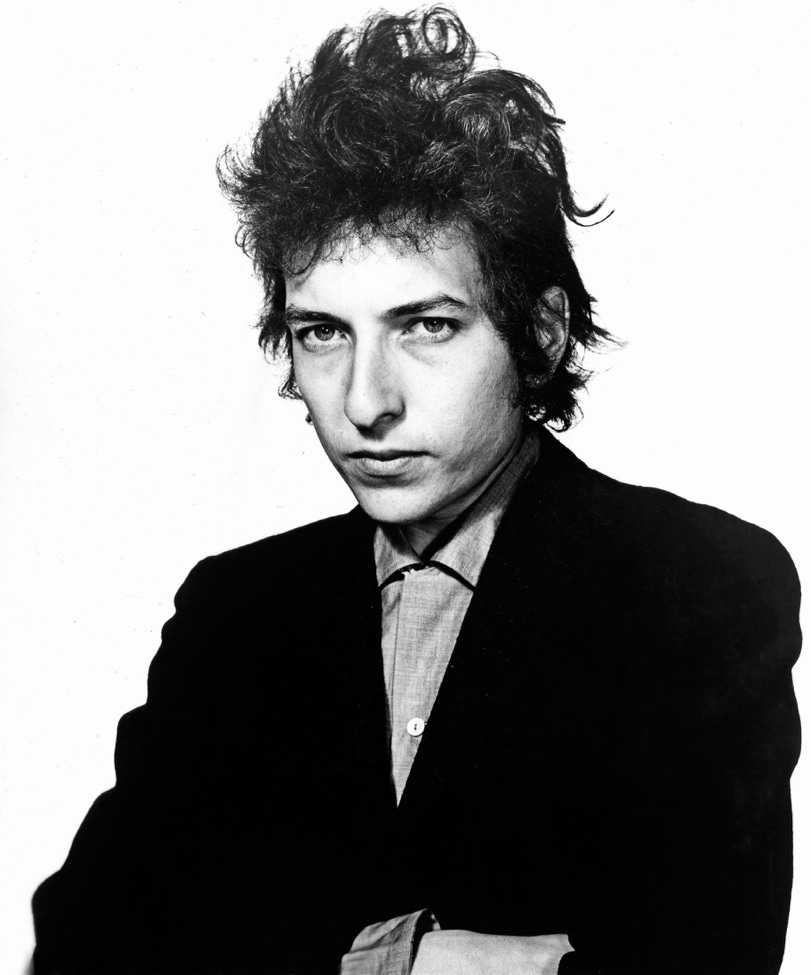
In 1897, the American inventor Thaddeus Cahill patented the Telharmonium, an early version of the electric organ and the world’s first electronic musical instrument. In the 128 years since, the use of new technology to make, record, and transmit music has often proved controversial. In the 1940s, for example, at a time when musicians made most of their income from live performances, the American Federation of Musicians went on strike to protest the playing of recorded music over the radio. In the 1960s, Bob Dylan was famously derided by folk music purists for going electric. In the 1970s, the growing popularity of analog synthesizers was denounced by many as an affront to creativity and craftsmanship.
Now we find ourselves in the 2020s and generative artificial intelligence (GenAI) is the new kid on the technological block. It’s tempting to see GenAI as just another innovation stirring up the same old controversies, and yet something seems radically different. Suddenly, we’re not just talking about computer programs that can automatically clean up an audio track or tweak the pitch of someone’s voice. Now we’re talking about quickly and effortlessly generating new content, including entire songs, albums, or even the soundtrack for a full-length film. The new threat of GenAI was enough to inspire over two-hundred artists from Aerosmith to Nicki Minaj to issue an open letter last year that warned in part:
…AI poses enormous threats to our ability to protect our privacy, our identities, our music and our livelihoods. Some of the biggest and most powerful companies are, without permission, using our work to train AI models. These efforts are directly aimed at replacing the work of human artists… Unchecked, AI will set in motion a race to the bottom that will degrade the value of our work and prevent us from being fairly compensated for it.
How bad could such a race to the bottom be? Is “musician” about to become a job from a bygone era, like stagecoach driver or lamplighter?
To assess this fear, first consider how you can now become an instant songwriter, musician, and producer by using GenAI programs like Suno and Udio. You write a simple text prompt describing your song’s style, mood, subject matter, etc., then you click “create,” and then voila! You’ve got a whole new song complete with intro, verses, choruses, a bridge, an instrumental break, an outro—the whole nine yards. In a matter of seconds!
No lessons. No practicing. No calluses. No sacrifices. No frustrations. No aha moments.
Does this sound like cheating? Would it bother you if someone made a song with one of these programs and then published it under a pseudonym together with an AI-generated photograph of the “artist”? Or what if they pretended to be an entire band and put out whole albums, and got millions of suckers to stream their music?
It’s already happening.
Back in June a “band” called The Velvet Sundown (TVS) suddenly popped up on Spotify and released two albums within weeks of one another. The group’s authenticity was immediately challenged in both social and professional media due to promo pictures that were obviously AI-generated, and due to a lack of any evidence the band actually existed. Nonetheless, despite its rather soulless sound (a blend of southern rock and Sixties protest music), the band attracted 1.4 million monthly listeners during its brief heyday. The creator remains anonymous but eventually acknowledged on social media that TVS is “a synthetic music project guided by human creative direction, and composed, voiced, and visualized with the support of artificial intelligence.” Fortunately, the world has been spared any new releases since July and TVS’s monthly listener count has since plummeted.
More disturbing is Breaking Rust, an AI-generated country “musician” who recently gained notoriety by hitting No. 1 on Billboard’s Country Digital Song Sales chart with “Walk My Walk,” a stomping, manly ballad with bad lyrics (“You can kick rocks if you don’t like how I talk/I’ma keep on talking and walk my walk”). As of this writing, “he” has 5.5 million streams and 2.9 million monthly listeners on Spotify.
Similarly alarming is that Spotify designates Breaking Rust as a “verified artist,” and yet not only is he AI-generated but there is no independent confirmation that his named creator, allegedly someone named Aubierre Rivaldo Taylor, is real either.
In short, the market is now being inundated by anonymous and talentless people trying to get in on the action. The French streaming service, Deezer, reported in September that it was receiving over 30,000 fully AI-generated tracks every day—more than 28% of the total daily delivery!
And Breaking Rust isn’t even the first AI “artist” to chart. That distinction goes to “singer” Xania Monet who has made it onto five Billboard charts since September, including Hot Gospel Songs with “Let Go, Let God” and Adult R&B Airplay with “How Was I Supposed to Know?” Unlike The Velvet Sundown or Breaking Rust, at least we know the human creator behind the ruse. That would be Telisha “Nikki” Jones, an entrepreneur and poet from a small town in Mississippi. To her credit, Jones imbues her confection with lyrics written by her—but that’s where the human talent stops. She uploads the lyrics to Suno and the AI takes it from there.

“Xania is an extension of me, so I look at her as a real person,” Jones told CBS in an recent interview. Jones is taking this fantasy all the way to the bank. As of last week, her creation’s five-song catalog has generated an estimated $52,000 in revenue and Jones recently signed a recording deal with Hallwood Media reportedly worth up to $3 million.
“What Nikki has done with Xania Monet really represents the future of music,” says Danny Jacobson, the head of A&R at Hallwood. “It shows that taste and instinct have always mattered more than technical dexterity, and we’re now seeing that play out in real time.”
If you feel like you’ve just entered the eighth circle of hell, you’re not alone. These projects have been widely panned across the professional music industry. Rap artist Baby Tate’s reaction was typical. “This is not creativity,” she said of Jones and her AI creation. “This is covetousness. Those who lack real talent everywhere will look at this example and think that they, too, deserve a space next to the incredible minds that make up the music industry.” She added that the consideration of such “artists” on Billboard’s charts was a “slap in the face to every creative in the world.”
Ed Newton-Rex, who is both a composer and the founder of an AI ethics non-profit, would seem to agree. “This is exactly what artists have been worried about, it’s theft dressed up as competition,” he says. “AI companies steal artists’ work to build their products, then flood the market with knockoffs, meaning less money goes to human musicians.”
This is why the three largest record companies in the world—Universal Music Group (UMG), Warner, and Sony—sued Suno and Udio in June of last year. The labels alleged that AI music generators were committing massive copyright infringement in training their models, profiting off the outputs, and thereby devaluing the human-created work that is the lifeblood of the companies. While most of this litigation is still pending, a major deal between UMG and Udio was just announced at the end of October in which the two companies would “collaborate on an innovative, new commercial music creation, consumption and streaming experience.”
Details are yet to be announced but the basic terms of the deal are that:
participating artists will be compensated for allowing Udio to use their work, both in the training of Udio’s AI model and for the model’s outputs
a new Udio platform based on the terms of the settlement will be released next year
users’ interaction with Udio will become subscription-based and allow them to customize, stream, and share AI-generated music on the new platform
Most notably: users will not be able to export AI-generated work to other streaming platforms
Newton-Rex calls the settlement “a win for musicians everywhere.” He writes that confining Udio-generated tracks to what the agreement calls the “walled garden” of the Udio platform is of particular importance: “Keeping this AI music within a walled garden will stop it unfairly competing on other platforms, protecting human musicians and making it more likely that people who don’t want to listen to AI music—people like me—don’t find it in our playlists against our will.” In short, the settlement offers “a beacon of hope” that “human creativity may yet be protected.”
Others are less sanguine. The Music Artists Coalition (MAC), an advocacy group that includes dozens of top tier artists, issued a statement emphasizing the need for much more detail, especially given past experience. “Every technological advance offers opportunity, but we have to make sure it doesn’t come at the expense of the people who actually create the music—artists and songwriters,” said Irving Azoff, board member and founder of MAC. “We’ve seen this before—everyone talks about ‘partnership,’ but artists end up on the sidelines with scraps. Artists must have creative control, fair compensation and clarity about deals being done based on their catalogs.”
At this time there are far more questions than answers, and not only about the details of the UMG-Udio deal. UMG’s ongoing legal action against the other major song generator, Suno, was unaffected by the settlement. And the outcome of Sony and Warner’s actions against both Udio and Suno remain to be seen.
But beyond the legal universe, more profound questions linger as GenAI challenges our most basic beliefs about aesthetics and good taste. As I was researching this piece, I couldn’t help but keep asking myself: Why would anyone want to make an AI-generated music in the first place (other than to make a quick buck)? And why would anyone want to listen to it?
To be clear, I’m not talking about the legitimate uses of AI as a creative tool for actual artists. I’m not talking about using advanced technology in the creation of samples and loops, or the augmentation of audio tracks, or the many other interesting things AI can do in the realm of sound editing and design.
What I’m talking about is why on earth anyone would want to listen to a song by The Velvet Sundown, or Breaking Rust, or Xania Monet, especially after learning that it’s AI-generated? Who are these paying customers Udio expects to show up within their new walled garden? Am I missing something?
To find out, I gave both Udio and Suno a test drive. Taking inspiration from my previous article on the anti-tech writer, Paul Kingsnorth, I typed the following prompt into each: “Make a 1960s folk song about smashing your smartphone with a hammer.” Each program dutifully generated a couple of three-chord songs featuring acoustic guitars and backwoodsy vocals. To get some idea of how these AI wonders stand up against a real folk song, consider this comparison of first verses:
Break the Glass (Udio)
In a world of screens where whispers fade away,
I took my metal hammer, and I chose my day.
With a breath of chaos, the silence took its flight,
Each pixel shattering echoes of relentless light.
Mr. Tambourine Man (Bob Dylan)
Though I know that evenin’s empire has returned into sand
Vanished from my hand
Left me blindly here to stand but still not sleeping
My weariness amazes me, I’m branded on my feet
I have no one to meet
And the ancient empty street’s too dead for dreaming
The accompanying music compares similarly. The AI songs are competent, yet something is clearly lacking. They’re no match for the real thing and that’s hardly a surprise. By the time Dylan wrote “Mr. Tambourine Man” he had grown up in Minnesota, moved to New York City, changed his name, recorded four albums, made love to Joan Baez and smoked weed with The Beatles. In other words, he had lived for twenty-three years as a real human being having real human experiences. GenAI has no clue what that’s like. It just spits out chords, melodies, lyrics and whatnot based on statistically mimicking the patterns of the human music it was trained on. It’s an impressive technological feat, but is it anything the world really needs or wants? The negative reaction against AI-generated music invading the streaming services suggests the answer is “no.” If this junk has to exist at all then let’s at least keep it within its own “garden” and behind some very high walls.
Comments
Nothing yet. Say the first thing.
Sign in to join the conversation.