
Finally, it’s 06/27 07/18 07/20 08/15 08/22, which means Superimposer is available to the public. It’s a complete re-imagination, from the ground up, of distortion from a purely digital perspective - in this alternate universe there’s no overdrive/distortion/fuzz to model, so instead, audio data is rearranged in a specific mathematical way that superimposes waveforms onto themselves.
As many original inventions are, the initial concept was pretty simple. But the results are pretty damn interesting:
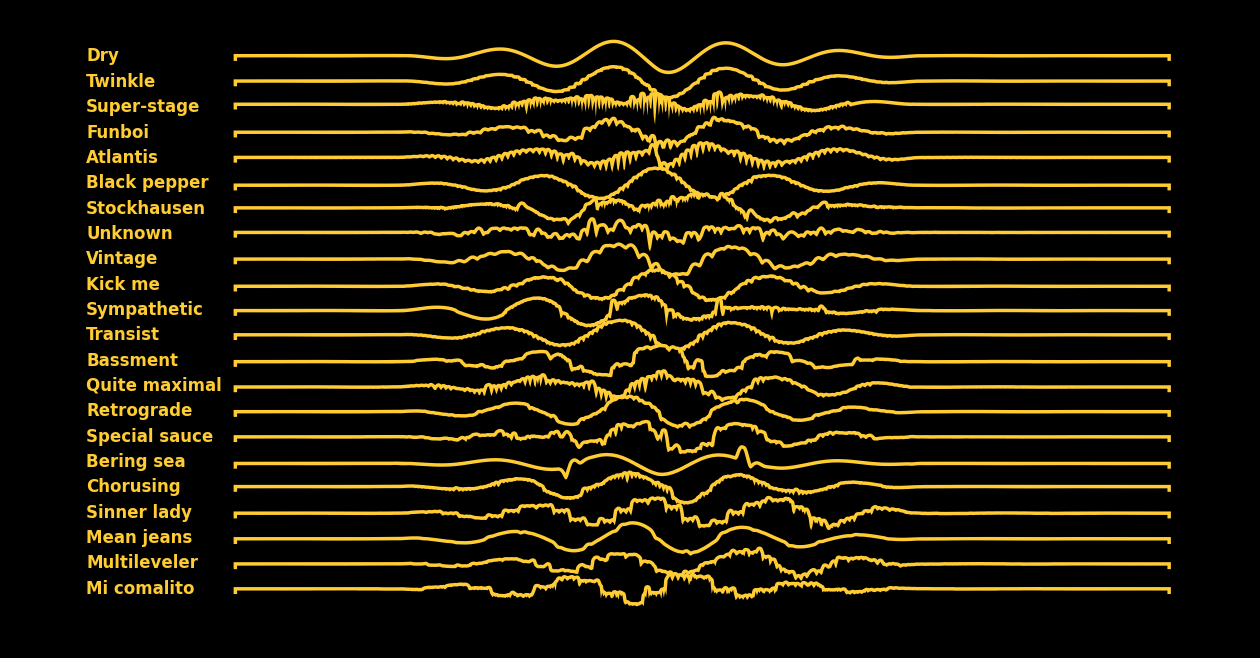
The effect is applied in up to three stages in the Superimposer plugin, but even with one, waveforms are transformed quite dramatically, and you can definitely hear it. The best way I have to describe it is “alien amplifier”, or maybe “digital spice”, a little bit like a ring modulator or bit crusher but also quite distinct.
I tend to be pretty heavy-handed with effects in my own music (surprising, I know), but Superimposer can substitute virtually any application of overdrive/distortion/fuzz, from subtle soft clipping on guitar to completely mangled bass/drums. It can also augment any of these effects too - and I especially enjoy running guitar → fuzz → Superimposer.
Something Superimposer can do that those other effects can’t: automating and sweeping through the parameters creates a very cool pitch-shifting effect, to the point that I considered releasing it with an oscillator (maybe in the future?), and due to the elusive frequency-dependence of the sound, certain settings with certain inputs can create a beating tremolo-like effect.
To be honest, as was the case with Poltergeist, I don’t quite understand 100% how the effect works. One day, I hope to release the math/code publicly, so that greater minds can figure it out and maybe expand its capabilities. But for now, we’ll all just need to accept that it’s a bit of a mystery.
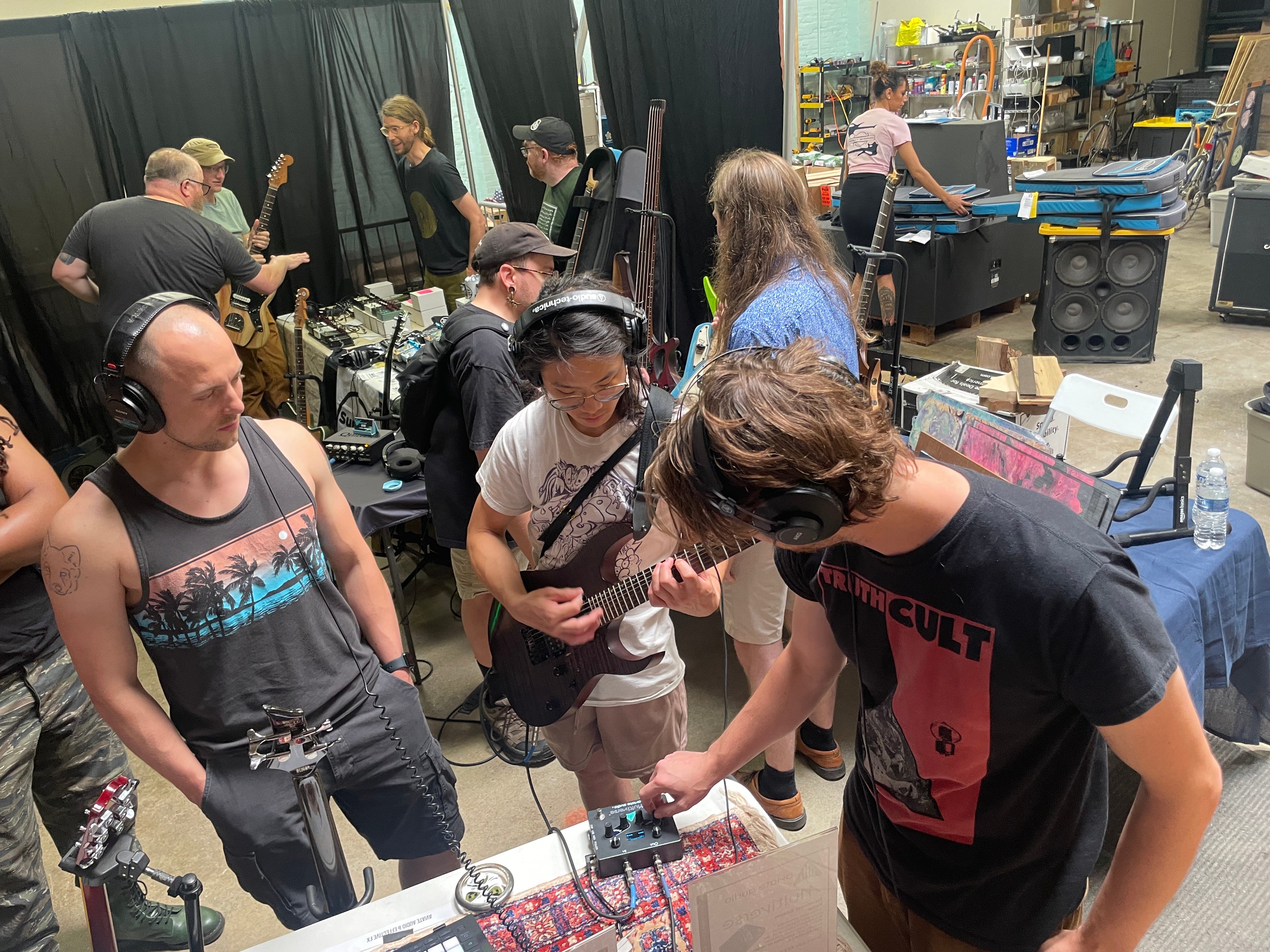
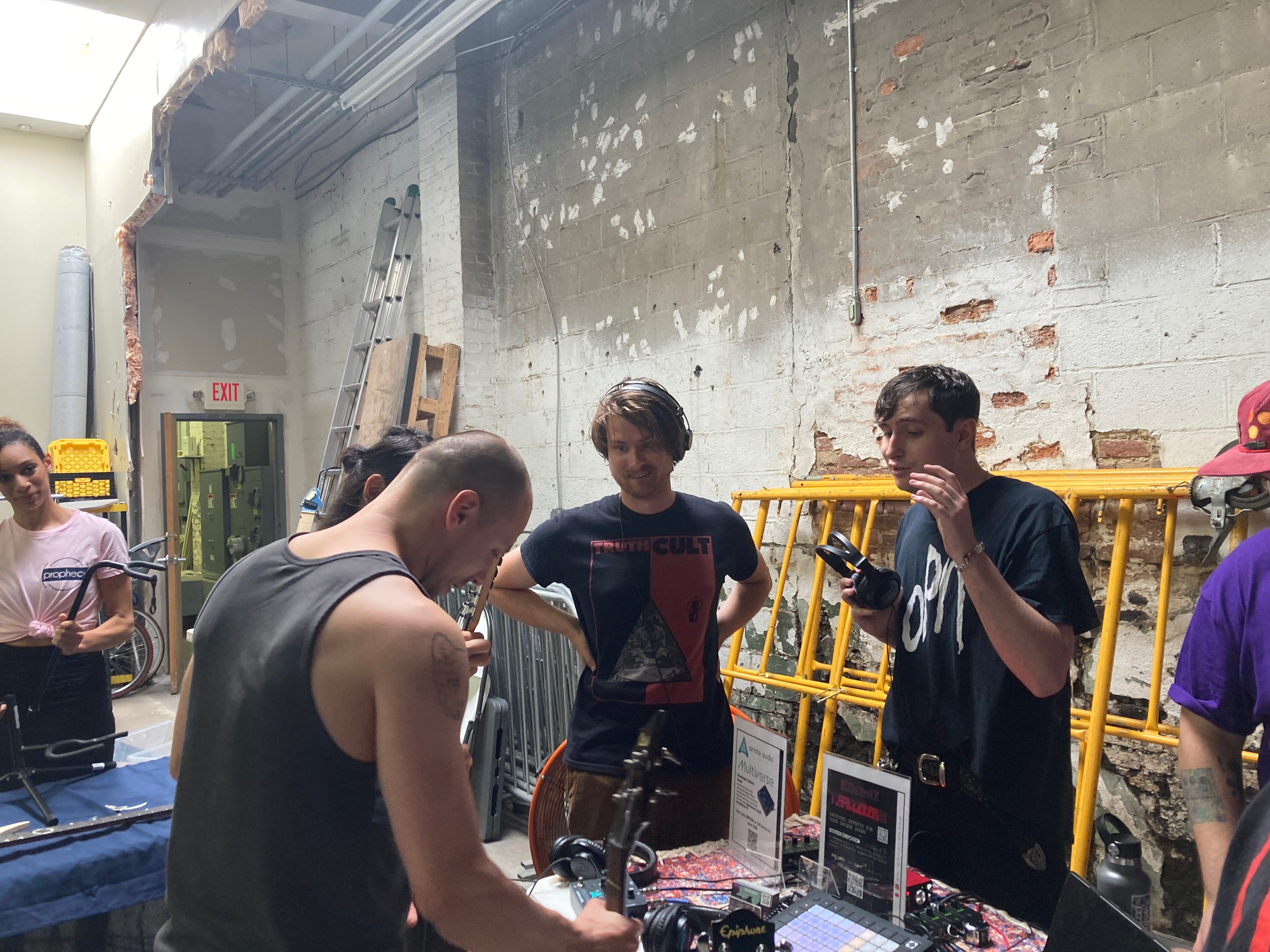
If you happened to have been at the Baltimore Pedal Expo in June, you would have seen me and Isaak Mertz at the Metro Gallery, showing off Superimposer as both a plugin and a patch on the Multiverse programmable guitar pedal.
Despite being in the very back, without any visual display to draw people in, and a complete lack of experience selling music equipment at expos, we made tons of pre-sales (who got access early). Several of these sales were to people waiting to try out the pedals next to us, who struck up conversations out of boredom rather than immediate interest.
How was this possible? The sound itself. Many people became, suddenly, very interested as soon as they were able to hear and interact with Superimposer.
I unfortunately have always struggled with self-doubt; I don’t always believe that people actually want new audio effects, wouldn’t buy something unless it was familiar, repackaged in a nice interface, and endorsed by someone famous. But now I’ve seen that, actually, people do want something new: they just need to hear it first.
So, if you haven’t already, take a listen yourself, and consider buying Superimposer. I do this by myself, and 90% of the purchase price directly supports me and the mission to create as many mathematically and sonically new audio effects as possible.
Tread bravely!
No posts
Comments
Nothing yet. Say the first thing.
Sign in to join the conversation.