
Hi there! As I’m writing this newsletter, there’s a big heatwave in the Netherlands. It’s a good motivational reminder to continue our work tackling climate change as effectively as possible. Luckily, there’s lots of exciting projects and news to report on.
But before you dive in, consider sharing this newsletter with your connections working on climate change, the environment, and EA. If you enjoy reading this, so might they!
Share Effective Environmentalism
Some of our highlights of last month include:
🌦 Better weather forecasts with AI can improve the conditions of hundreds of millions of farmers in low and middle-income countries for only a small cost. (See below.)
💀 The end of lead: We have come a long way to end lead pollution in the developed world, and doing the same in the rest of the world might not be difficult (published in Works in Progress).
☢ The bad science behind expensive nuclear: a scientifically weak model is driving nuclear energy to be unreasonably expensive (also published in Works in Progress).
♨ How geothermal energy works, and why we don’t use it more. Despite being a huge energy source, it only provides 0.3% of the world’s electricity. The potential is big, but its growth is hampered by long payback times, regulatory approval procedures, and weak government support. (Hannah Ritchie, Sustainability by Numbers)
🇪🇺 Accelerating clean power in Europe through planning and contracting mechanisms; a new report by the Clean Air Task Force.
And below are some of our favourite opportunities. If you’re not applying yourself, please forward these to connections who might be interested!
👩💼 Ambitious Impact and The School for Moral Ambition are recruiting participants for their Founding to Give program: launch a high-growth company to donate to high-impact charities. You don’t need a team or an idea to join, and they don’t take equity.
💸 Ambitious Impact is also open for expressions of interest for their grantmaking program: a 7-week training course to equip philanthropists with the skills they need to set up their giving for maximum impact.
(We can especially endorse this opportunity, because we just received funding from one of their funding circles! 🎉)
In effective environmentalism, we often talk about the most effective ways to stop global warming. In the long-term, reducing the emissions of greenhouse gases is simply the most straight-forward and effective way to reduce climate damages. At the same time, we need to adapt to reduce the near-term damage from climate change.1
Last weekend I was at EAG London: a global get-together of people using evidence and careful reasoning to make the world a better place, cost-effectively. One talk that sparked my interest was Michael Kremer’s talk on Innovation, economics, and effective altruism. Don’t let the title fool you, because prof. Kremer spent his full hour talking about nothing other than weather forecasting. I can’t blame him: I agree that AI-enabled weather forecasting will be one of the biggest assets in successful climate adaptation. Let me explain why:
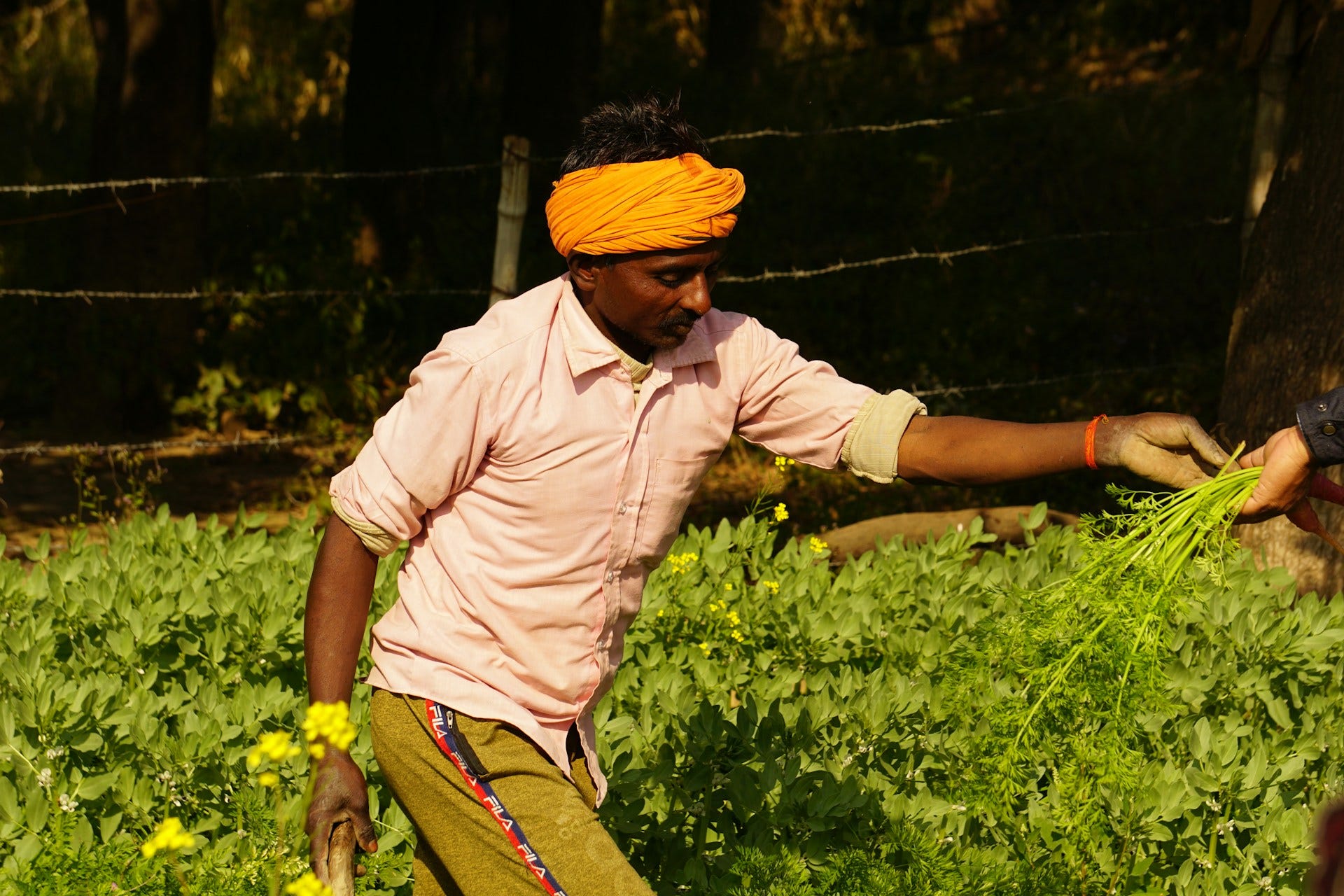
Small-scale farmers are among the most vulnerable people to climate change.
There are more than a billion people in smallholder farming families.2
They produce more than 30% of the world’s food.About 1 in 10 people face hunger, in part because of climate change.
Climate change is making the weather less predictable and more severe. For farmers, it’s crucial to know when the rainy season starts and ends.
Artificial intelligence has become very good at forecasting the weather. AI models require much less computational power and often lead to better results. Google’s new weather forecasting model, released late last year, was almost always better at regular forecasts and predicting extreme weather than the previous best model.
Smallholder farmers would benefit from increased access to timely, relevant, and accurate weather forecasts, as confirmed by empirical studies. Farmer incomes rise significantly because of better yields.
Predicting the weather is really cheap, and so is sending simple customised SMS or push messages to farmers. One study even estimated a 100-to-1 benefit-to-cost ratio.
A recent initiative, AIM for Scale, is a global collaboration focused on generating and disseminating weather forecasts to the millions of farmers that need them in low and middle-income countries. If you want to become just as excited about their work as I am, check out their work. Or watch prof. Kremer’s talk yourself:
Organisational updates
🍖 Rethink Priorities has released a database of sources investigating interventions to reduce meat and animal product consumption.
🦋 Giving Green has started researching cost-effective strategies for biodiversity conservation.3
🧭 The Navigation Fund has announced 9 awards for impactful projects run by departing federal public servants in the US.
News articles
🦘 How to get the best bang for your climate buck. (The Age)
🧊 Mirrors in space and underwater curtains: can technology buy us enough time to save the Arctic ice caps? (The Guardian)
🐧 The first cultivated meat product (quail) has been approved in Australia. (FoodNavigator)4
🇨🇳 China’s CO₂ emissions have started falling — is this finally the peak? (NewScientist).
🏛 The ‘eco-right’ is growing: a small number of conservative climate groups know how to sell renewable energy to conservative lawmakers. (Chronicle of Philanthropy)
EA forum posts
⚖ Should EAs pay more attention to Climate Tipping Points? AMOC Collapse as a Case Study. (Rebecca Frank)
📔 Summary of John Halstead's Book-Length Report on Existential Risks From Climate Change. (Bentham’s Bulldog)
💻 Our website: more info about effective environmental action.
♥ The world’s most effective climate charities
Career resources:
👩💼 Impactful climate job openings, vetted by Probably Good
👩💼 Impactful climate job openings, vetted by 80,000 Hours
🖊 Add yourself to our talent directory
Join the LinkedIn group
Suggest content for this newsletter
There are about 570 million farms in the world, of which about 84% are smallholders (<2 ha) (Lowder et al., 2016). For there to be 1 billion people in smallholder farming families, the average household size needs to be larger than 1.75, which is the case for most rural and low-income regions.
Disclosure: the newsletter author is also the main researcher working on that project.
Of course, we wanted to use a quail emoji for this headline. But alas, there isn’t a quail emoji. We defend our choice for the penguin because both quails and penguins are funky birds.
No posts
Comments
Nothing yet. Say the first thing.
Sign in to join the conversation.