
Our family has experienced no small amount of theft over the past few years.
Many years ago, Jan’s parents built a home near us, on our property. They did this to be near their many grandchildren and it was a wonderful thing. However, the home where they raised their family was in a small town in West Virginia. It was well kept, in a well-traveled neighborhood. They went back and forth to that home to visit with family in the area.
However, during one period of absence it was taken over by ‘squatters,’ who stole everything of value and used drugs in the home, leaving needles all about. It was filthy and had to be refurbished at great cost. Many treasured items were sold. The home was in a nice little neighborhood, near a grade-school. It wasn’t on some remote, isolated rode. It was not expected.
There were suspicions as to who had done it, but there was no consequence for their actions.
My great aunt was divorced. She lived many years with her sister who later passed away. Subsequently she lived in government housing. Later in life, as she became infirm, she hired a mother and daughter to help her. She insisted that she could trust them to help her. They did. They fed her poorly and used her debit card for expensive meals and to tens of thousands of dollars. Local police and adult protective services were contacted. They knew who did it. As far as I know, they were never charged.
Mission accomplished.
Of course, theft from seniors comes in many forms, including online scams/identity theft. They don’t always understand what’s happening and are anxious and easily manipulated by wicked men and women.

My son’s car was stolen in Nashville, TN. Taken for a joy-ride overnight, it was wrecked and badly damaged. It took weeks to be repaired, adversely impacting his own work-life and finances. There were apparently teens doing this routinely in the area.
No charges, no convictions. No compensation.
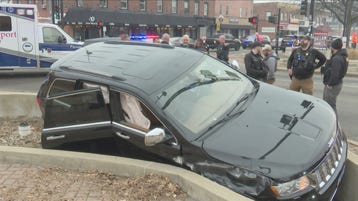
But some kids had an AWESOME story to tell.
My father passed away some years ago and my mother has been in assisted living. The home was unoccupied as we tried, futilely I can no see, to clean it and rescue those things worth keeping. (Those who have faced this know the struggle.)
Along the way it, too, was burglarized. And recently we have hired a company to help with the clean-out. Despite the presence of workers, each night someone has broken back into the home (which has no current power and thus no security system). They have done so by damaging windows, etc.
Multiple calls to police later, including discussion with a detective, and it continues. Again, a nice neighborhood, well traveled. But in a town where the mentally ill, the addicted and the criminal seem to roam the streets in the day, and night, with impunity and with no hope in sight.
I suppose, as I watch the news, I wonder more and more why we find theft so acceptable.
In large cities, grocery stores and pharmacies leave high crime areas because the level of theft makes them impossible to sustain. (Grocery stores have pretty narrow profit margins after all.)
Prosecutors decide that if it’s less than $1000 stolen, it’s just not worth pursuing or prosecuting.
Then, those areas are decried for being ‘food deserts,’ or ‘pharmacy deserts.’
‘What can we do? These people need those stores! Why don’t the companies care?’
They do care. But the system doesn’t.
The greater culture in the west increasingly has decided that theft is just one of those things we accept. Maybe it’s seen as ‘no big deal,’ since those who are being victimized ‘can afford it.’ Maybe we just think that some people, who are not financially successful, just deserve to steal things because it seems to favor equality.
I’m sure there are other excuses.
But theft is still theft. And it can be devastating. It causes financial distress to those afflicted. It means that the things they worked to have are taken from them with no compensation. It means that things of emotional and sentimental value are gone forever.
Theft causes hardship and inconvenience. A car stolen may mean that a person cannot take their family members to the doctor, or get themselves to work until it is replaced at high cost (and often with a lower quality vehicle). On the American frontier, a stolen horse might mean the owner could not survive. That’s likely why it was sometimes punished by death.
Theft leaves one feeling unsafe and insecure. It means that the safe places, whether vehicle or home, or no longer sacred but compromised. ‘When will they come back? Will they harm us when they do? Will it go from theft to robbery?’
As I alluded above, theft is far more than things stolen. It’s identity stolen. It’s online accounts hacked. It’s hospital electronic medical records subject to ransom-ware, so that the hospital is effectively shut down until it’s solved or the ransom paid.
Theft is Medicare and Medicaid fraud that depletes money meant for the sick and injured. It’s money defrauded from fake nursing homes and rehab centers, non-existent day-care centers, government leaders and non-profit owners and all the rest.
I don’t know if this is true, but I suspect that theft is a gateway crime. Much like laws that punish people for breaking windows in a city like New York (years ago at least), it seems that prosecuting theft aggressively might reduce robbery, or assault, or murder by slowing the transition to those crimes.
A crime must, once again, become costly to the perpetrator.
I’m not criminologist. I’m not in law enforcement.
But from what I’ve seen and experienced, something has to change. Because it’s all getting steadily worse.
No posts
Comments
Nothing yet. Say the first thing.
Sign in to join the conversation.