
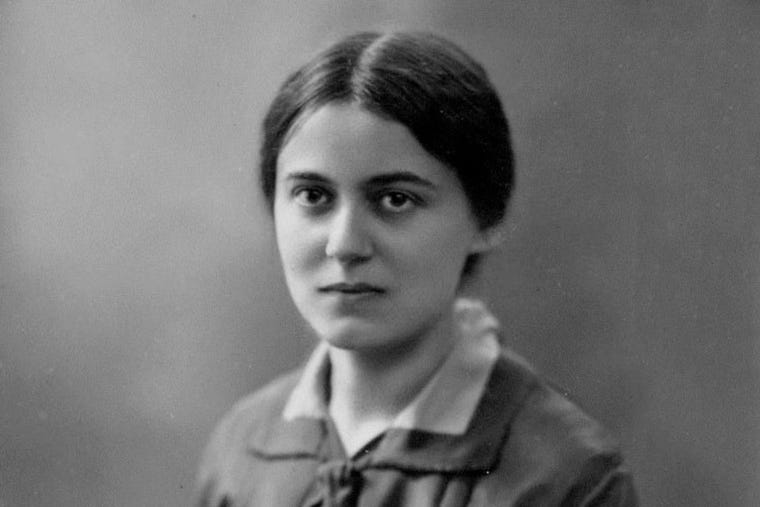
For St. Edith Stein, divine beauty is “the ultimate ground or cause of everything that is beautiful” and the remedy to the emptiness and superficiality of a world that seeks beauty without recourse to God.
This is according to Elizabeth Mitchell, author of the 2025 book St. Edith Stein’s Aesthetic: Beauty and Sanctity, Masterpiece of the Divine Artist — a seminal work on the Jewish convert to Catholicism who became a Carmelite nun, took the name St. Teresa Benedicta of the Cross, and died a martyr at Auschwitz in 1942. Stein was canonized by Pope St. John Paul II in 1998.
Stein saw God as “the Eternal Artist, the Divine Artist” who is “always creating, always shaping, always perfecting His creation,” Mitchell explains in this Aug. 11 interview with the Register. She also discusses the saint’s conversion, how her life and teaching can help us understand suffering, and what practical lessons artists, writers and everyday believers can learn from her heroic life today.
Mitchell, who wrote her doctorate on Stein, currently serves as principal of Trinity Academy, a private Catholic school in Pewaukee, Wisconsin.
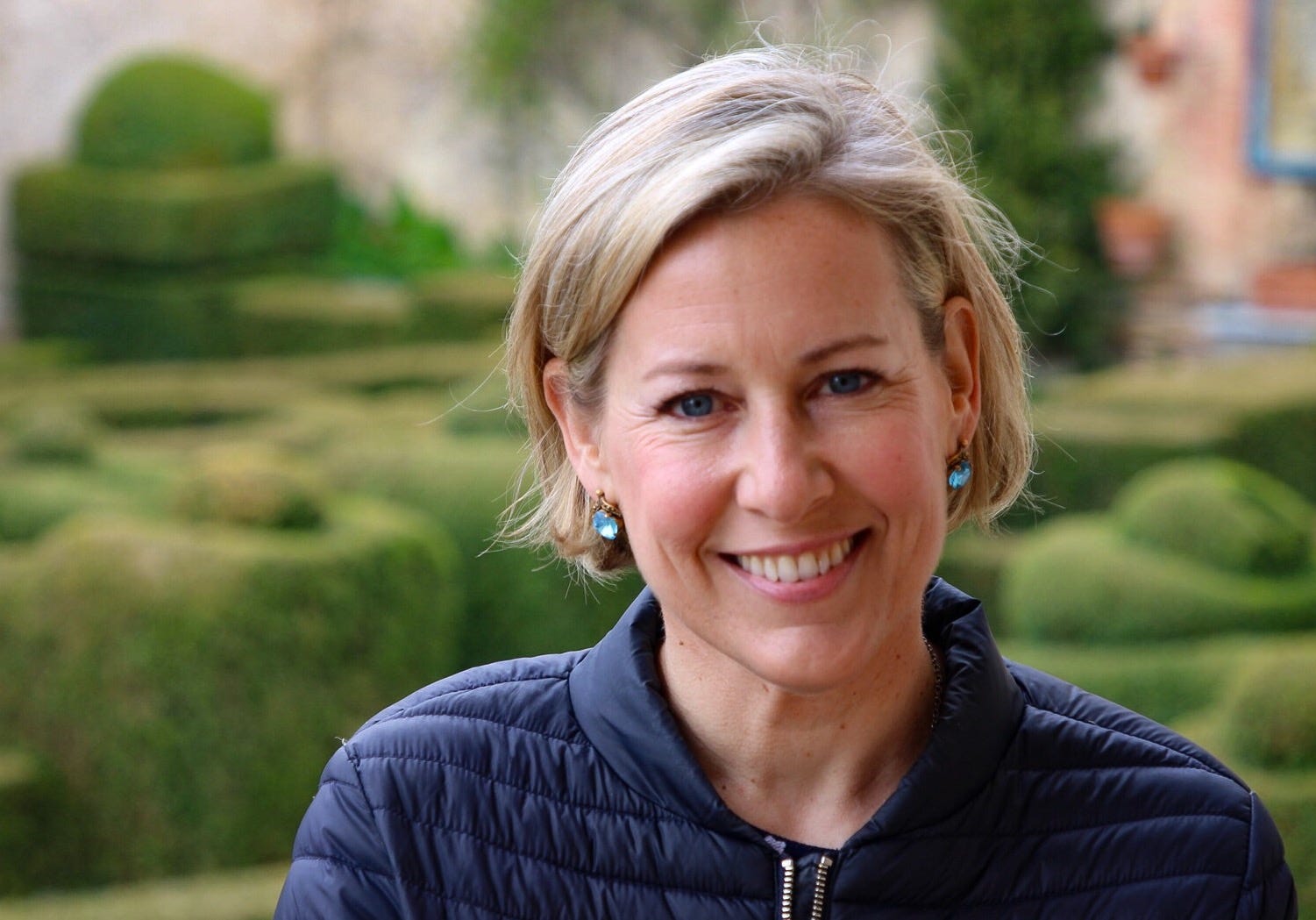
Dr. Mitchell, what first drew you to St. Edith Stein, and why did you want to write a book about her understanding of beauty?
I have learned through my own friendship with St. Edith that, as a member of the communion of saints, she intercedes for people and can, through God’s providence, become present to them in surprising ways. I believe it’s not too much to say that if you are reading this interview right now and are wondering why it came across your path, God may be using this encounter with Edith Stein — through her intercession — to draw you toward something specific. It could be a deeper friendship with her, her intercession in a particular need, or perhaps, like me, a project she is helping you toward through her prayers before God. When I sat in St. Peter’s Square at her canonization in 1998, I had zero idea that I would come to know her better. Yet she had other plans! She says firmly [in her book Finite and Eternal Being]: “What did not lie in my plan lay in God’s plan.”
The threads of her aesthetic are woven throughout her various works. Her papers were scattered, due to the evacuations and bombings of World War II. My book is a synthesis of her life’s work on the subject.
How did Edith Stein understand beauty, and how is it different from how people often think about beauty today?
Again, your question gets to the essentials. Beauty is an obsession in today’s culture. We chase it and desire to possess it in a myriad of forms. The sleek iPhone, the perfect selfie. But these manifestations of beauty are superficial, and they leave us empty. They purport to fulfill us and satisfy us. But they do not. Why not? Because true beauty leads us to its source; it is not an end in itself; it is an attribute of God. He is Beauty. Expressions of true beauty attract us because they are a glimmer of the absolute, eternal, divine, unfathomable Beauty of God. God is Beauty, Truth and Goodness. A smile, a warm word of encouragement, a landscape, a symphony, are expressions of something deeper, something Divine. They are revelations of their archetype: the Divine Archetype.
Stein is so bold to assert, in her final work — The Science of the Cross, which lay open on her desk on the day she was arrested — “all genuine art is revelation, and all artistic creation is sacred service.”
And insofar as we feel joy in beauty, we are human. “Only a human being,” she explains [in Finite and Eternal Being], “but not an irrational animal, finds joy in beauty.” We experience this encounter as something which touches and moves our soul to respond.
How were Stein’s ideas on beauty, truth and goodness formed, and how can they be applied to a culture that often separates beauty from truth and goodness?
Continue reading the rest of this interview at www.ncregister.com
Comments
Nothing yet. Say the first thing.
Sign in to join the conversation.