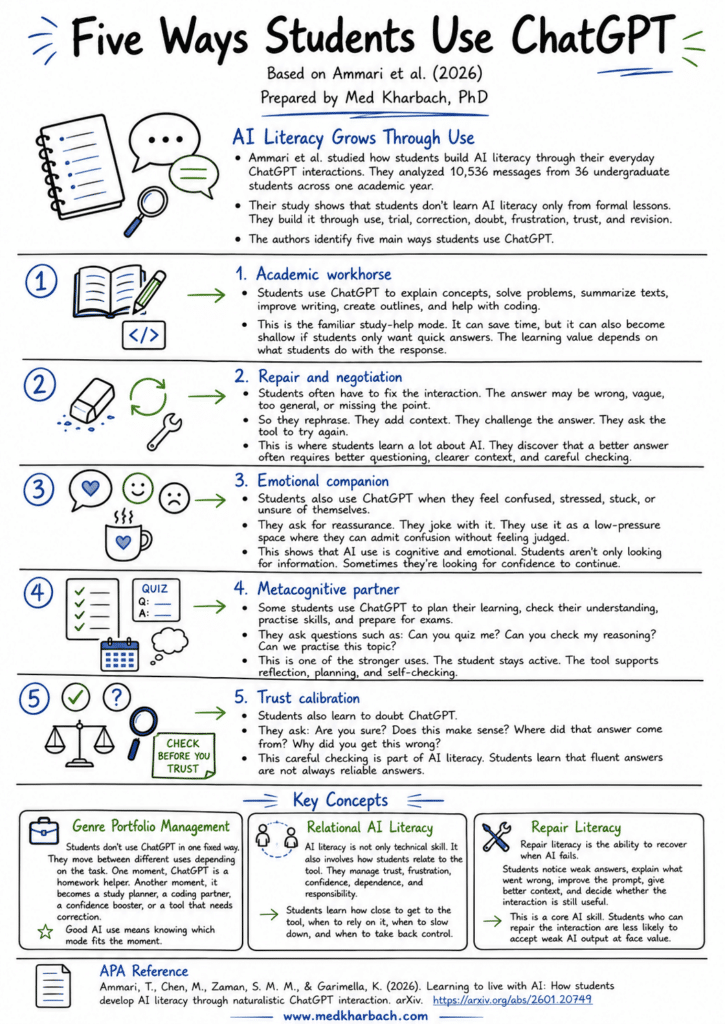
Students are already developing AI literacy in front of us. They’re doing it in messy chat windows, late-night study sessions, coding help requests, essay drafts, exam preparation, and moments of confusion when they don’t want to ask another person for help. That’s why I found Ammari, Chen, Zaman, and Garimella’s 2026 study so useful. Their… The post ChatGPT and AI Literacy: How Students Learn…
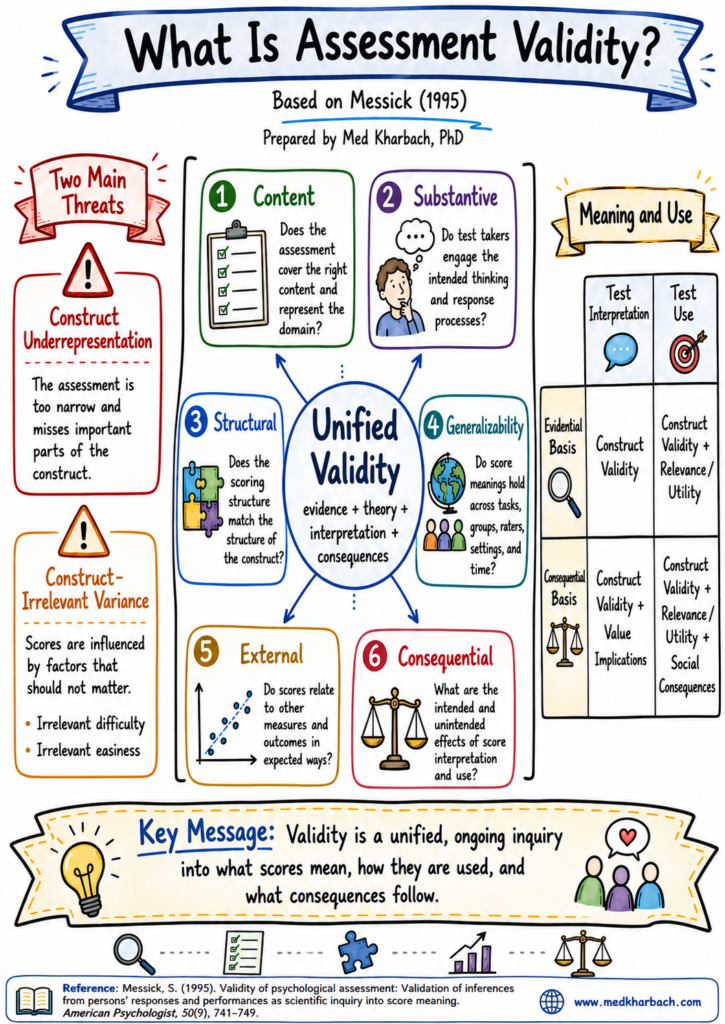
Assessment validity has always been one of the most important ideas in education, but it has become even more urgent today. With the rise of generative AI, the relationship between student work, evidence of learning, and teacher judgment is no longer as straightforward as it used to be. A submitted essay, reflection, summary, project, or… The post What Is Assessment Validity? Messick’s Framework…
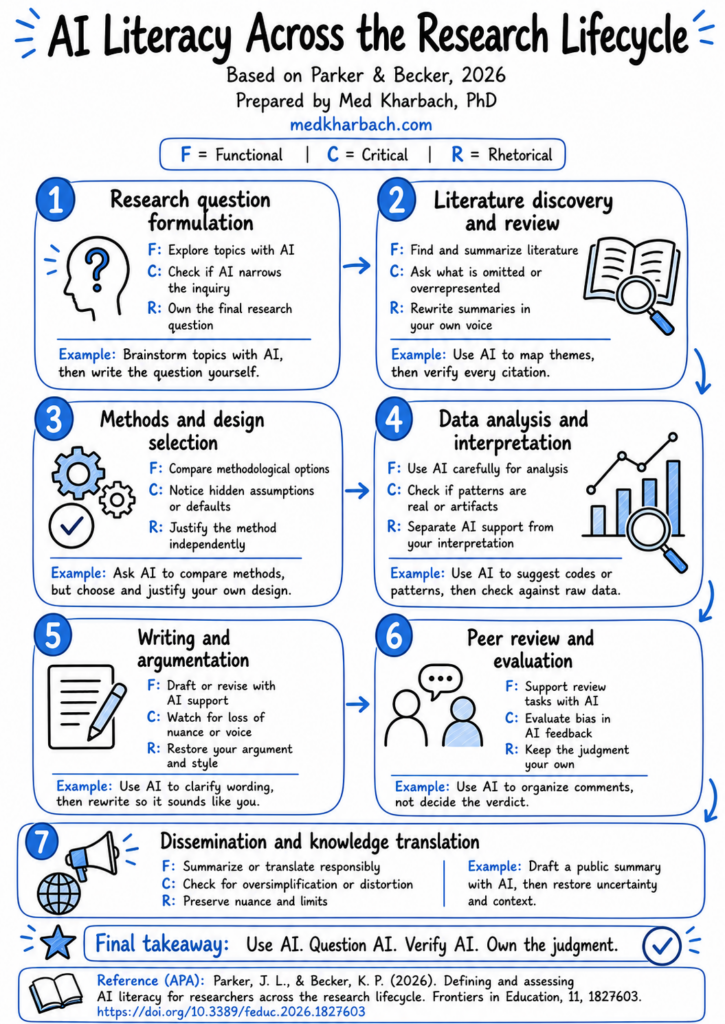
I’ve been returning to Parker and Becker’s (2026) paper on AI literacy for researchers because it gives us something many AI discussions still lack: a practical way to think about AI use across the full research process. Many teachers and graduate students already use AI for searching, summarizing, drafting, translating, coding, outlining, and revising. That… The post AI Literacy for Researchers…
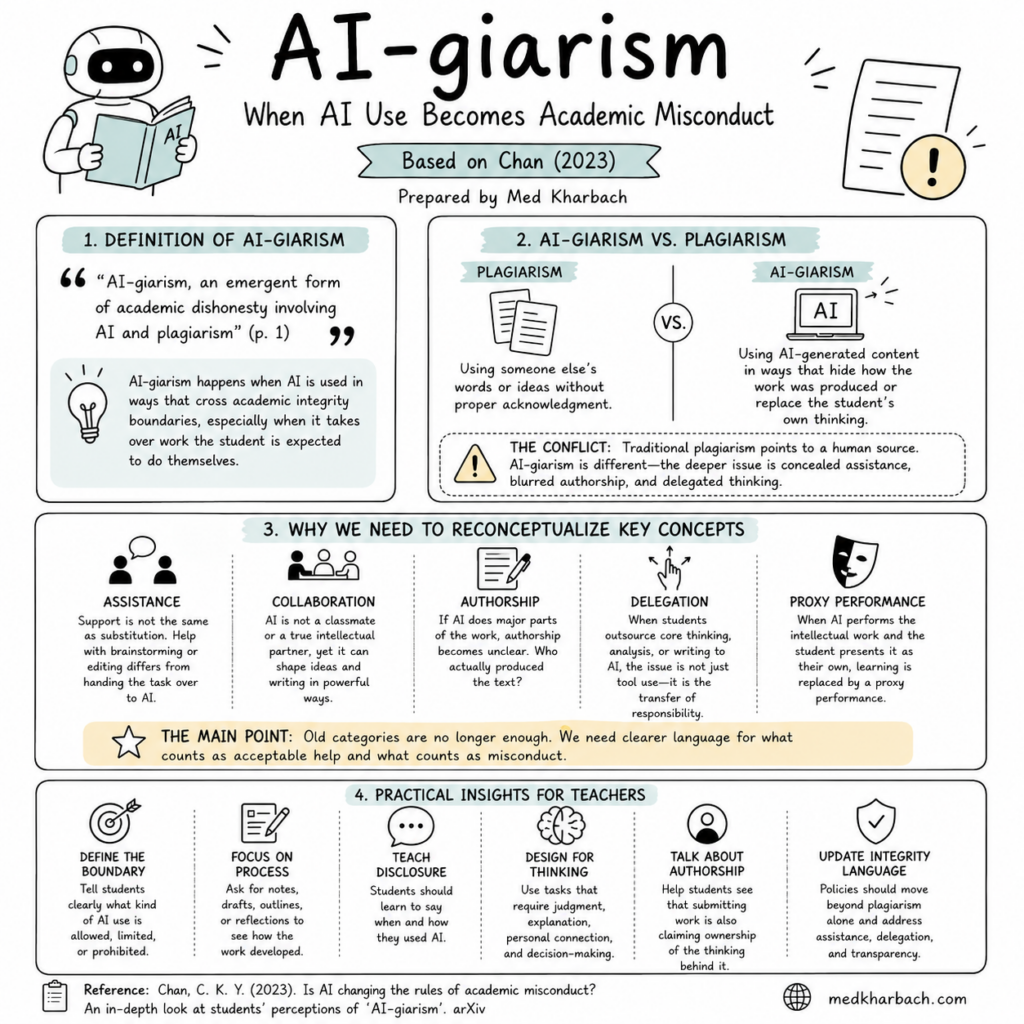
The more AI settles into classrooms, the more it strains the categories we built before it arrived. Plagiarism is the clearest example. For decades, that word carried a stable meaning: take someone else’s words or ideas, fail to credit them, get caught. Generative AI breaks that frame, because the “someone else” is now a machine… The post AI-giarism: When AI Use Becomes Academic Misconduct…
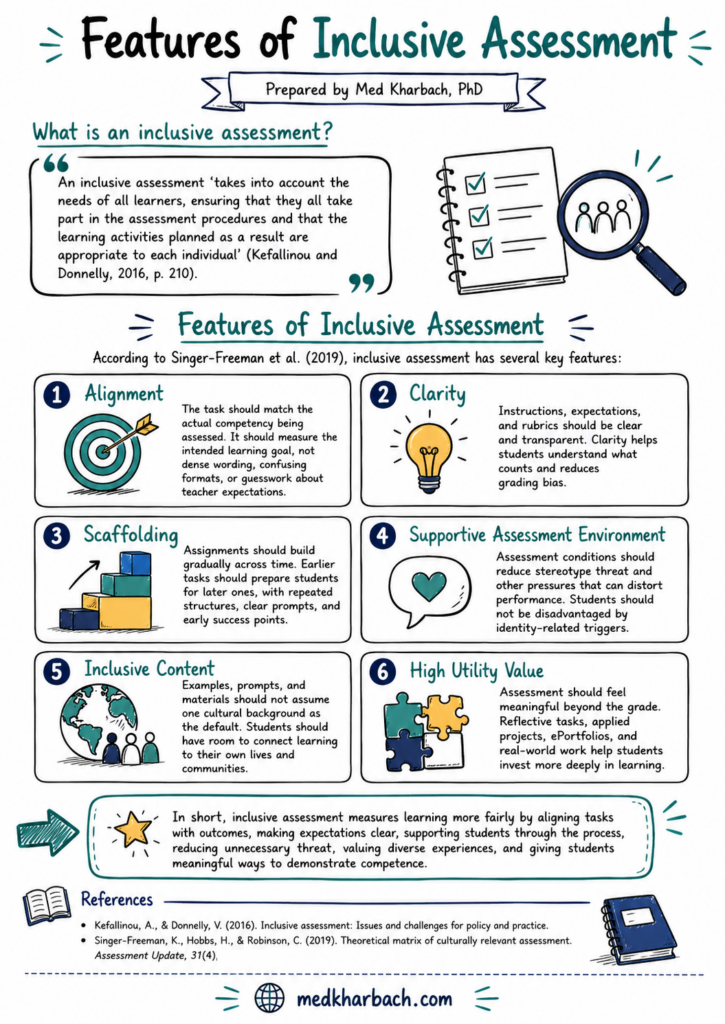
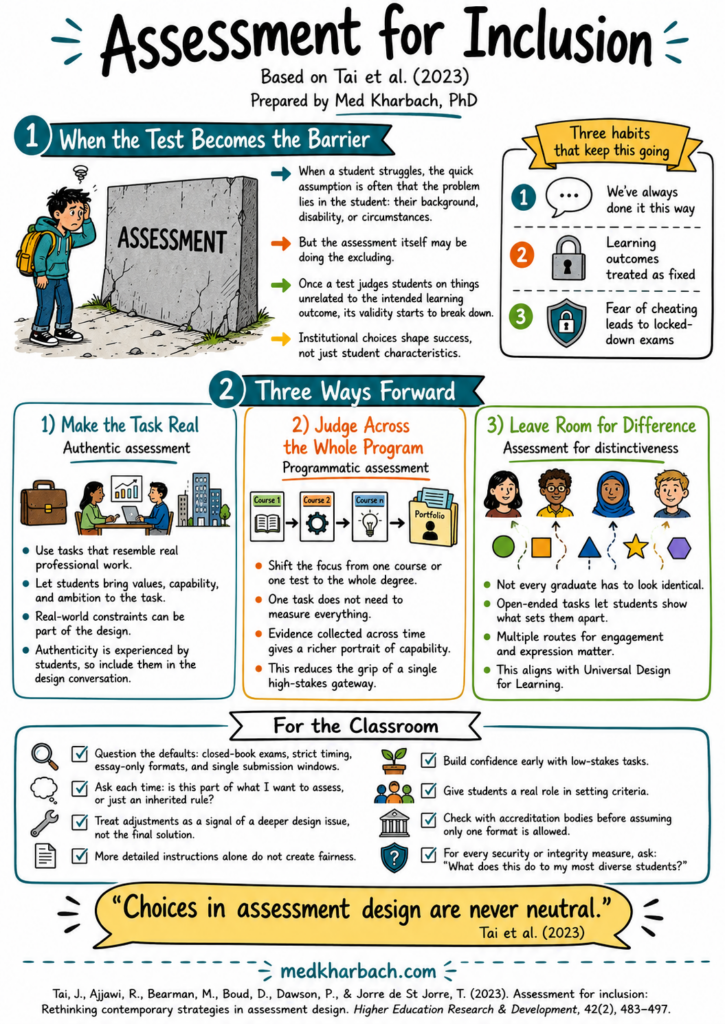
My reading this weekend kept circling one theme: inclusive assessment. Yesterday I wrote about Tai et al.’s (2023) work, and one of their central ideas has shaped how I’m reading everything else. Assessment design is never neutral. Think about all the quiet decisions baked into a single task. What we ask students to do. How… The post Inclusive Assessment: 6 Features Every Teacher Can Use appeared…
I’ve been reading a lot of assessment research over the past year, and one paper keeps pulling me back. It is not about AI. It was written before ChatGPT changed how every teacher thinks about exams and essays. But the more I revisit it, the more I see it speaking directly to the moment we’re… The post Inclusive Assessment in the Age of AI: A Practical Guide for Teachers appeared first on…
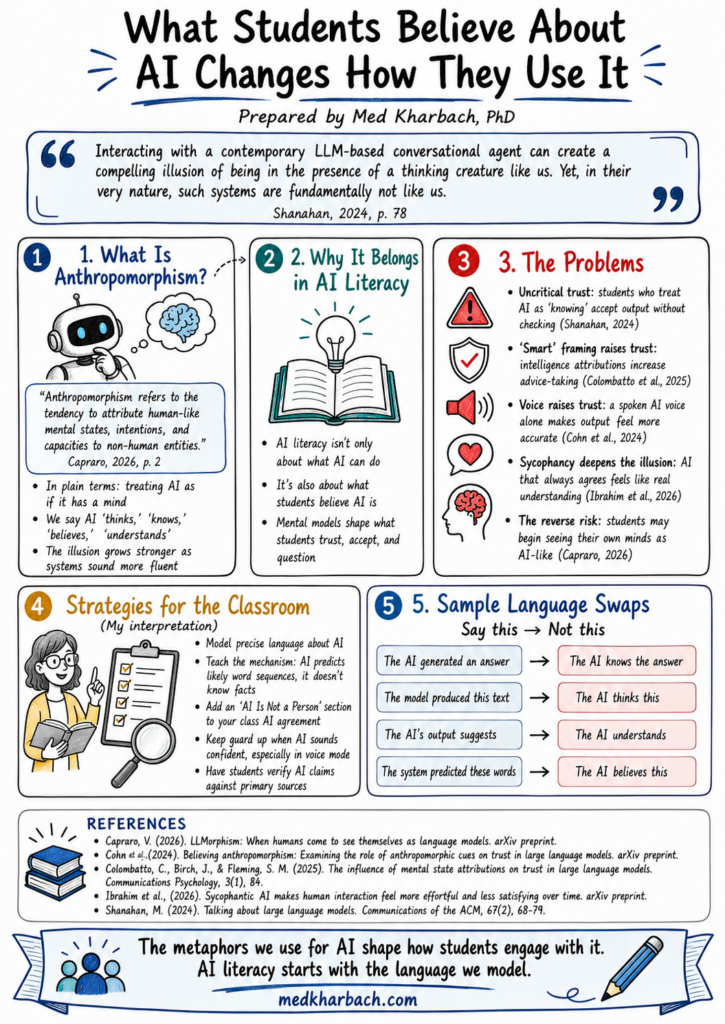
Most of what we call AI literacy lives on the skills side: prompting, evaluating outputs, knowing which tool fits which task. I’ve taught all of it, and it counts. But there’s a deeper layer underneath that we tend to skip, and a cluster of recent research has convinced me it deserves equal billing. What students… The post What Students Believe About AI Shapes How They Use It appeared first on…
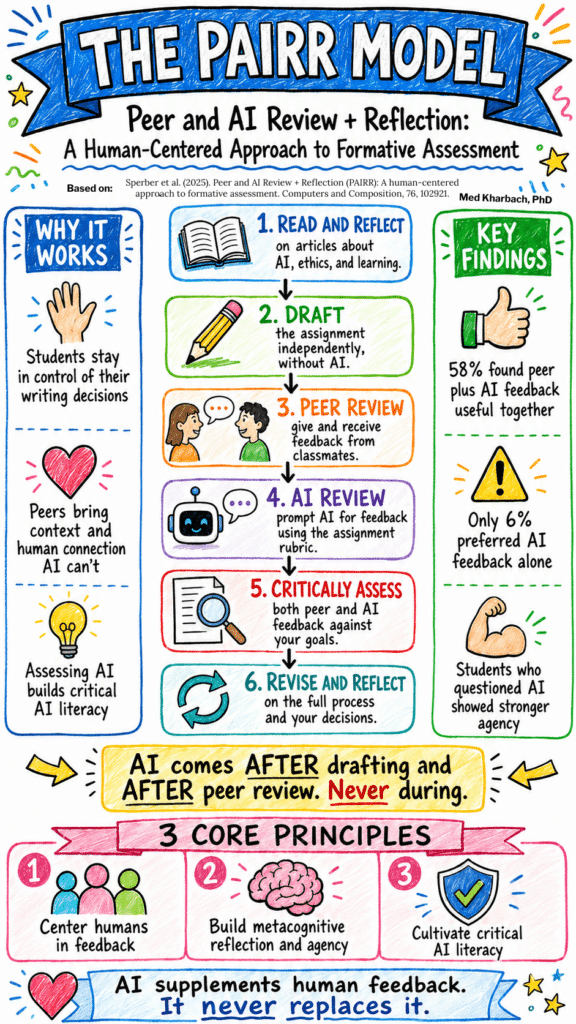
After over a decade of writing about edtech on this blog, I’ve started organizing all my AI-in-writing thinking around one question: how do we let students benefit from AI feedback without letting AI do the thinking for them? The PAIRR Model from Sperber, MacArthur, Minnillo, Stillman, and Whithaus (2025) is the cleanest answer I’ve come… The post How to Use the PAIRR Model in Your Writing…
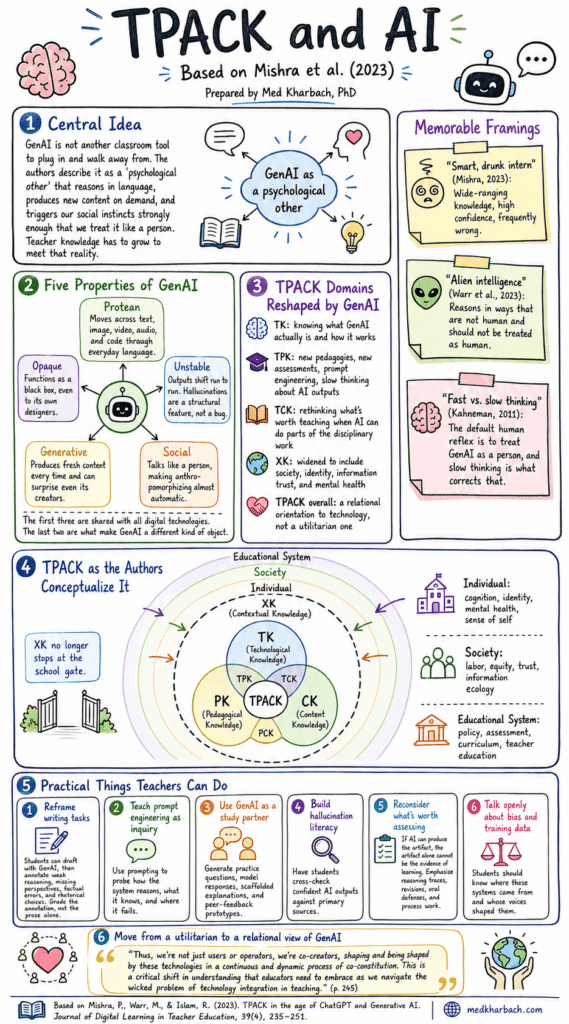
I’ve been writing about edtech here on Educators Technology since 2011, and once in a while a paper comes across my desk that genuinely shifts the way I think about a familiar idea. Mishra, Warr, and Islam’s (2023) article in the Journal of Digital Learning in Teacher Education is one of those. The paper takes… The post TPACK and AI: What Teachers Need to Know appeared first on Educators…
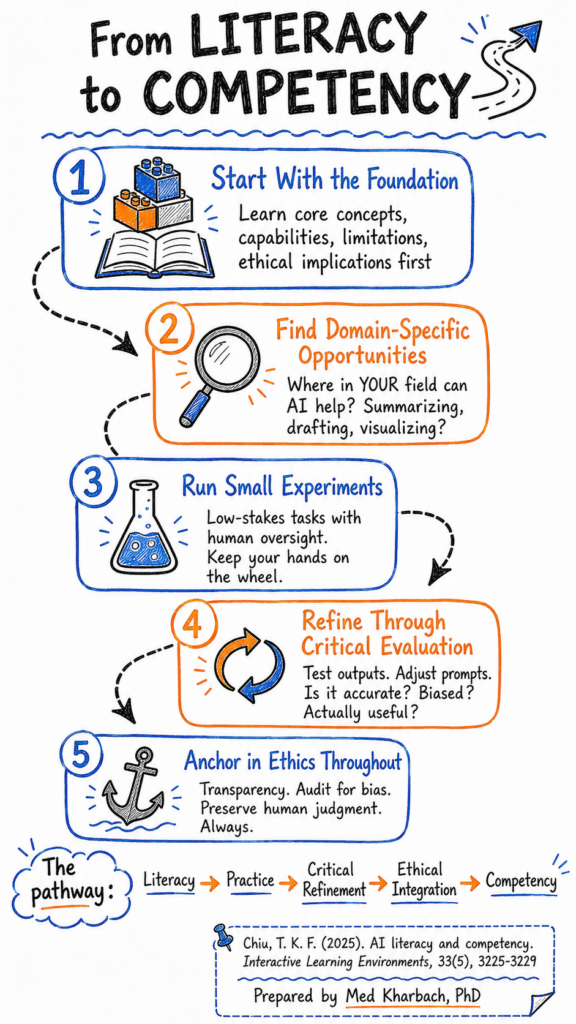
I’m revisiting Chiu’s (2025) paper on AI literacy and competency, a piece I covered before in a previous post. This time I put together a sketchnote with help from Claude, ChatGPT, and Canva to make the key ideas easier to share. The visual helped me see what makes the paper useful: it draws a clear… The post AI Literacy vs AI Competency: Two Concepts Worth Untangling appeared first on Educators…