Education Bookcast is a podcast principally for teachers and parents who would like to know more about education. We cover one education-related book or article each episode, going over the key points, placing it in context, and making connections with other ideas, topics, and authors. Topics include psychology, philosophy, history, and economics of education; pedagogy and teaching methods; neurology and cognitive science; and schools and school systems in historical and international…
There are around 7000 languages in the world, and we know so little about them. On my new podcast, Panglot World Languages, I speak with a guest about 1 new language per week. We get into both the social side (the language community, history, how the interviewee feels about the language etc) and the linguistic side (unusual ways of expression, untranslatable words etc) of each language. See you…
Hello everyone, I have not been recording podcast episodes for over a year. This is because I started a company this year, Panglot Labs Ltd, and I've had to put all my energy into it. This looks like it will continue for at least the medium term, so I've decided to formally state that I'm not going to be adding new material to the podcast regularly anymore for the foreseeable future. At Panglot…
In order to understand learning, we need to understand the result of learning - expertise. This is much easier to approach in so-called "kind" domains, such as chess, where the rules are fixed and all information is available. However, there exist more "wicked" domains than this, such as tennis (where your opponent changes each match) or stock market investment (where the world is different each…
There has been a ton of research on how experts see things differently than novices. (Like, with their eyes.) Everything from where they look, how long they focus for, and their use of peripheral vision, to their ability to anticipate what is going to happen through picking up subtle visual patterns. In this episode, I summarise and discuss this research. Enjoy the episode.
Mindset was the first thing I spoke about on this podcast. I even did a separate episode going into the controversies surrounding replication of Carol Dweck's original work. Then there were stress mindsets, introduced by Kelly McGonigal in her book The Upside of Stress. (I happen to have also covered a book by her twin sister Jane, Reality is Broken , about applying the motivational principles…
I haven't spoken on the podcast yet about my personal experience learning dancing. At university, I took part in dancesport, which is competitive ballroom and latin dancing; and in the last few years I have been learning to dance tango. I am struck by the differences in philosophies, skill sets, values, and learning cultures between these dance styles, so I wanted to share my experience with you.…
This is my first ever attempt at a VIDEO podcast. If you just listen to the audio, you should be fine. This was a video produced for the STEM MAD conference in Melbourne in October 2023. Unfortunately I couldn't attend the conference, so I made this video to introduce the panel discussion on the role of generative AI in education. Enjoy the episode.
This is a quick review of where I am now after 150 episodes and just short of 8 years of Education Bookcast. Thanks for all of your support! Feel free to leave a review of the podcast, or, if you wish, support me on https://www.buymeacoffee.com/edubookcast . Enjoy the episode.
Since I've now reached episode 150, I've decided to do something I've never done before - discuss a fiction book. (This episode contains spoilers.) A Wizard of Earthsea is a fantasy novel from 1968, a time when the genre was still not very well-developed. Ursula Le Guin deliberately wanted to contravene some trends she saw in the existing genre, including the main characters being fair-skinned,…
A lot of the classic expertise research, especially the research about deliberate practice and the "10,000 hour rule", is inspired by K. Anders Ericcson's study of violinists at the Berlin Conservatory. However, we have seen before how misleading sampling a particular culture and generalising the findings over the whole of humanity can be. Thankfully, Lucy Green's How Popular Musicians Learn gives…
Any teacher in a Western cultural context knows that classroom behaviour is the most challenging part of the job. A lot of the time, it seems like crowd control is the main issue, and "teaching" is secondary. Unfortunately, teacher training courses don't do a good job of preparing teachers for this reality, with behaviour management rarely instructed at all. Bill Rogers has been helping teachers…
Dr Guy Emerson (a.k.a Guy Karavengleman) is a computational linguist working at the Cambridge University Computer Laboratory. In this episode, we discuss issues surrounding LLMs such as ChatGPT, GPT-3, GPT-4, and Google Bard. Guy is concerned about misinterpretations of what the technology does and is capable of. As a computational linguist, he works on language models with a focus on semantics…
In the second part of this two-part episode about lessons learned from my time working in the education technology sector, I wanted to share a very significant quantitative finding to improve learning: what I call the "90% rule". Desirable difficulties is a concept that many know about and try to apply to teaching situations, but there is a question of how difficult one should make things. Surely…
I've now been working as a data scientist in educational technology for over four years. In that time I've thought a lot about various educational concepts within edtech, and I want to share some of what I've learnt. In the first part of this two-part episode, I want to talk about what I call the Fundamental Duality of Educational Materials. The Fundamental Duality is that we use our content to…
This is the second part of the message for my friend Guy about becoming a better lecturer. In this part, I go over 27 practical techniques and tips for improving lecturing (as well as improving the way homework exercises are designed), referring to the principles and theory outlined in the previous part to explain how and why these work. To be completely honest some of the suggestions are more…
Another in the series of "really long voice notes from Staś". My friend Guy is a lecturer in natural language processing. He asked me if I could give him some tips about how to lecture better, so I told him I would record a podcast episode about it. I've divided the episode into two parts. In this first part, before we speak about practical things to do, I will discuss what the basic aims are, and…
Benjamin Bloom is best known for Bloom's Taxonomy, a scheme for categorising ways of thinking about or interacting with learning content on a scale from less to more sophisticated. However, the project he led investigating the lifelong development of expertise should be much more famous. The book's full title makes it feel as though it was published in 1685 rather than 1985: The dramatic findings…
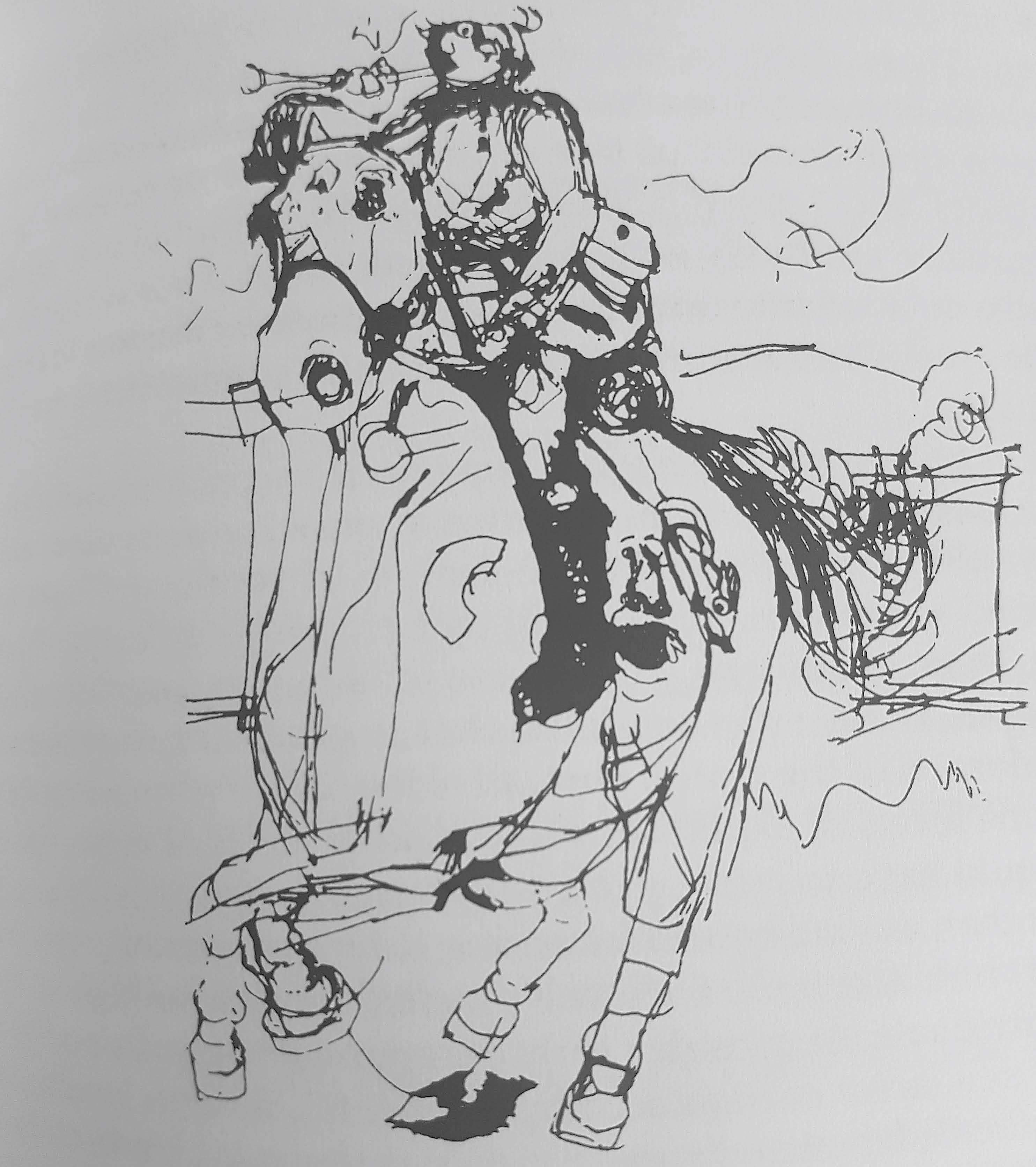
Cover image: horse and rider by Nadia, age 5. The nature of talent is something that I dealt with near the beginning of the existence of Education Bookcast, reviewing books like Genius Explained, Outliers, The Talent Code, and Bounce. The general consensus was that talent is an illusion - people simply get better at things through exposure and practice. My confidence in this assertion was shaken…
Season 2 of the Pedagogue-Cast is here! The Pedagogue-Cast is a separate podcast project I share with Justin Matthys, founder of Maths Pathway. We discuss the kinds of questions that teachers might have about good practice which touch on cognitive science, making sure both to make the most of the research findings while also making it practical for use in the classroom. In this new season, Justin…
After my last episode on behaviourism, cognitivism, and constructivism ("A Message for Zoë"), I heard back from Zoë herself, and also heard from Malin Tväråna, an education researcher in Sweden. I decided that it was worth recording an episode relating what I heard from them, and my thoughts about it. Enjoy the episode. ### REFERENCES Miłosz, Czesław (1953): The Captive Mind . Radford, Luis…
My friend Zoë (hi Zoë!) is taking a course on learning design. In it, she heard about Behaviourism, Cognitivism, and Constructivism, and while she said that she found it confusing, her main takeaway is that "you need a bit of each". I recorded this episode to help her have a clearer sense of what these three words really mean, and that "a bit of each" is emphatically not the right message. I…
In the previous recording, I was speaking about political economy using the example of prison gangs, taken from David Skarbek's book Social Order of the Underworld. In this recording, I give the example of 18th-century Atlantic pirates, as discussed in Peter Leeson's The Invisible Hook. (It's a pun on Adam Smith's "invisible hand of the market".) We may have an image of pirates as fearsome, but…
Please be advised that this episode contains mentions of violence and may be unsuitable for some listeners. I'd like to flesh out what I've been saying before about the power of economic analysis in explaining people's actions. Whereas when we normally think about motivation we think in terms of psychology, economists naturally think in terms of incentives. This kind of thinking is generally…
Education Bookcast released its first episode on the 1st of January 2016. I'd like to take this opportunity to talk about some of the big things that I think I've learned in that time. I speak about: Psychology is overrated - the replication crisis and the bias in cultural sampling, and therefore the importance of anthropological evidence; Psychology is underrated - how amazing the field of…
This is the second episode concerning self-related beliefs taken from chapters of The Cambridge Handbook of Motivation and Learning. Here I talk about self-efficacy, which concerns how much you believe that you can do something specific, e.g. solve a particular kind of maths problem. Self-esteem, self-concept, self-efficacy - it's easy to get confused with so many "self-words" flying around. There…
Among the huge academic tomes that I've been ploughing through recently is The Cambridge Handbook of Motivation and Learning. I've long felt that my understanding of motivation is superficial and incomplete, and I wondered whether motivation was understood at all by anybody in the academic literature, or whether remained a mysterious and convoluted problem. The Handbook has shown me that there is…
In this interview, I have the honour to speak with Professor Christian Lebiere, researcher in cognitive architecture, co-author of The Atomic Components of Thought , and one of the main developers of the ACT-R architecture. We talk on a range of topics relating to cognitive architecture, cognitive modelling, and psychology. My questions are listed below, by theme. A note on cover art: this is a…
I have recently discovered the field of cognitive architecture. I have been reading around the area for the last couple of months, and I would like to introduce it to my audience. It's an area of study with incredible achievements which revitalises my belief in psychology as a field, but which for some reason is not at all well known, even in education circles where it deserves to be known to all…
One of the patrons of the podcast wrote to me on the forum that while I have covered the research on learning to read in a fair amount of detail, I'm yet to speak about learning to write, and he would really like to know more about this since he teaches writing day to day. I happen to have been reading Cambridge Handbook on Expertise and Expert Performance edited by the late great K. Anders…
In this episode, I have Judith Millecker on as a guest. Judith is the author of the Philosocats series of books, which aims to help children ages 4-10 to engage in philosophy. It is an outgrowth of her work running philosophy for children sessions in London. We discuss her most recent book, social and emotional learning, critical thinking, and how pedagogy might vary by domain. Enjoy the episode.
I was reading the Cambridge Handbook of Expertise and Expert Performance edited by K. Anders Ericsson yesterday, and after going through a chapter on medical experts, something struck me about the nature of expertise, automaticity, and Kahnemann and Tversky's System 1 vs. System 2 (also known as dual-process theory , popularised by their book Thinking, Fast and Slow ), which joined together what I…
I now have a new podcast, the Pedagogue-Cast! Together with Justin Matthys, co-founder of Australian education technology company Maths Pathway, we discuss how education research can be applied in the classroom. It's designed to be an easier listen for busy teachers, with a more immediate practical takeaway. Website: https://thepedagoguecast.com.au/ Spotify:…
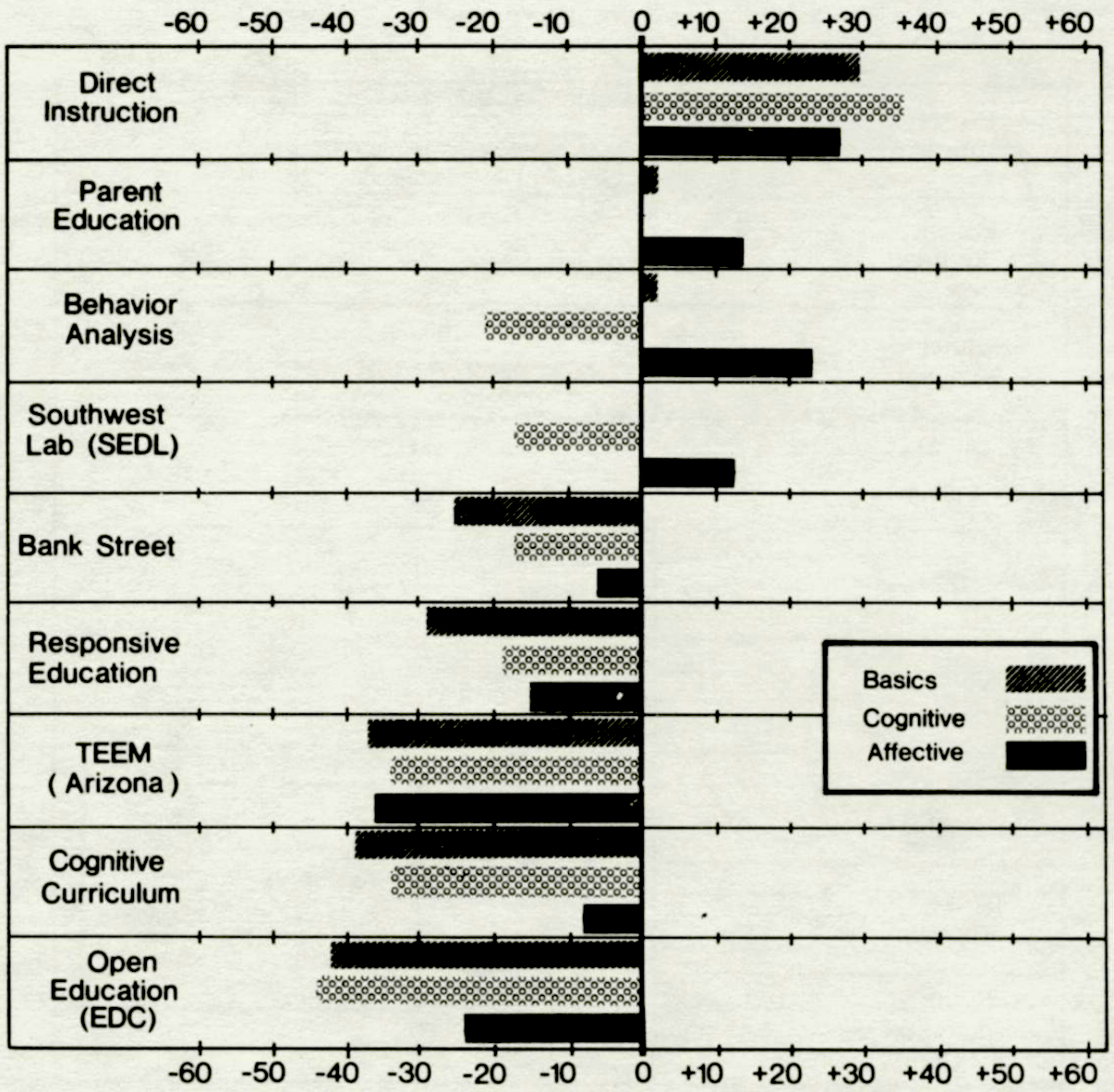
In this part of the episode, I will discuss the evidence for the effectiveness of Direct Instruction, drawing from Project Follow Through, but also from 50 years of studies that have been published since. Enjoy the episode. *** REFERENCES The Direct Instruction Follow Through Model: Design and Outcomes by Siegfried Engelmann, Wesley Becker, Douglas Carnine, and Russel Gersten (1988) No Simple…
I've spent a lot of time on the podcast so far discussing discovery learning, but not had any episodes explicitly dedicated to what might be considered its antithesis, Direct Instruction. In this episode I finally get round to this worthy topic. First of all, uppercase "Direct Instruction", or DI for short, should be distinguished from lowercase "direct instruction". The latter refers to explicit…
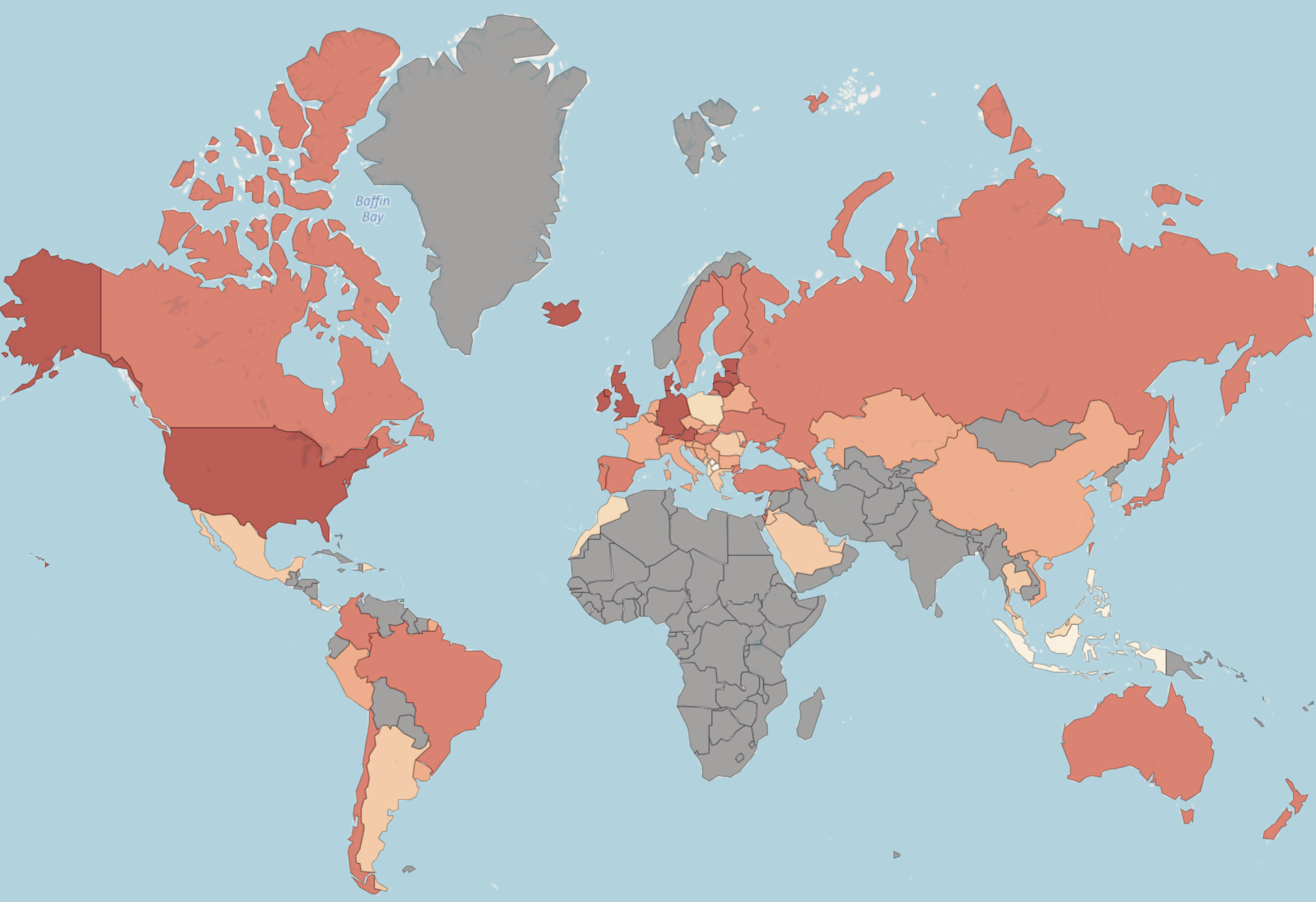
[By the way, the cover image is of the proportion of children in different countries who have a growth mindset (darker red is more). The data was taken from PISA 2019 and I constructed the image using Python. Grey countries are those for which I didn't have data.] I was initially a huge supporter and admirer of Carol Dweck's work on fixed vs. growth mindset. The very first episode of the podcast…
I stumbled across a fascinating paper looking into how children conceptualise the world around them. Mental Models of the Earth: A Study of Conceptual Change in Childhood shares an experiment where children were asked questions about the shape of the Earth, and the authors found six (!) different mental models that the children had: rectangular, disc-shaped, spherical, flattened sphere, hollow…
You can now support Education Bookcast and join the community forum, where we discuss all things education. Visit https://www.buymeacoffee.com/edubookcast to learn more.
This episode has such huge implications that I didn't know what to call it. Efficiency and Innovation in Transfer , the actual name of the book chapter, seemed far too dry to put across the fundamental shifts in thinking about pedagogy, assessment, education research design, and cognitive theory that this article suggests (at least to me). The authors suggest that the current literature on…
I wanted to talk a bit about some areas in which my thinking about education has improved with the addition of nuance, and about the ways in which thinking can be more nuanced. Desirable difficulty - a case where quantification and the awareness of countervailing forces / costs improved my initial, flawed understanding. Cognitive load theory - a case where I was so enamoured with the power of the…
A listener of the podcast by the name of Malin Tväråna (senior lecturer at Uppsala University's Department of Education) requested in a review of the podcast that I cover this book, and so here it is! Ference Marton is a professor of Education at Göteburg University. His big idea is about discernment of important features of a situation (what he calls "critical aspects") being a (the?) key element…
"Are you left-brained or right-brained?" Brain lateralisation has been known about in neuroscience since the early days, but it has been a taboo over the past few decades since pop science sources distorted the literature and made the topic disreputable. Neuroscientists could detect differences between the hemispheres in different activities, but they were having trouble understanding the big…
Dr Rasmus Koss Hartmann is an associate professor at Copenhagen Business School and author of the article that I covered in the first part of this episode, entitled Towards an Untrepreneurial Economy: the Entrepreneurship Industry and the Veblenian Entrepreneur. In this interview we spoke about where he got the idea, the damage that Veblenian entrepreneurship can do to the economy, urban myths…
Entrepreneurship is an important part of a thriving economy, and entrepreneurship education is intended to make sure that those who have the potential to succeed in this way have the resources and knowledge to do so. But the opportunity for innovation, being one's own boss, and making money are not the only reasons that people become entrepreneurs. Some do so to fulfil a kind of fantasy, or simply…
I picked up The Cambridge Handbook of the Learning Sciences hoping for a longer term project of enrichment from a volume published by one of the most prestigious universities in the world. However, it only took reading the introduction by editor R. Keith Sawyer to see that this book is suffused with ideological stances commonly supported and even dogmatically preached in educational circles, whose…
How the Brain Learns is one of the first books I bought about education, all the way back in summer of 2014. It sat on my shelf for seven years before I finally got round to reading it. Now, with the benefit of knowledge gained from so many years of investigation, it is much less impressive to me than it would have been when I started. After introducing some basics of brain anatomy, the author…
In my episode on Stuart Ritchie's Intelligence: All that Matters I spoke about IQ and intelligence, after a long silence on this issue. In Hive Mind, we get a look at how IQ affects the fate of entire nations, rather than just the individuals living in them. Jones' argument rests on data showing that IQ correlates positively with patience, win-win thinking, productivity in teams, supporting "good"…
This is the second part of the episode on the book Multiple Faces of Attachment - Cultural Variations on a Fundamental Human Need. In this section, we will look at three societies - the Beng (Ivory Coast), Nso (Cameroon), and Makassar (Sulawesi) - to see how children are brought up there, and the extent to which Attachment Theory as it is currently formulated makes sense within these example…
The title of this episode might ruffle some feathers. Attachment Theory is developmental psychology's shining star, the theory with the greatest predictive success, and one which has become popular among child psychiatrists. You can now hear it spoken about wherever child psychology is the main topic, and it has become something of a buzzword. Could this scientific theory really be "cultural…
Which country was the first ever to have universal, free, compulsory education? Zero points if you said "Prussia". The correct answer is the Aztec empire, almost four centuries before the oft-cited German state. I happened to find out this bizarre fact from an aside in a YouTube video, and decided to look into it. If this isn't an independent societal data point on the development of education,…
I realised I missed something, and I kicked myself. For a while I've been toying with the idea that learning occurs in two stages, which can be mapped between cognitive science and neuroscience: Exposure to new material -> neuronal connections Practice and repetition -> myelination ...with elaboration (e.g. relating one piece of information to another) being a practice that involves both stages.…