
Thanks to our Presenting Sponsors Hire Education, Tuck Advisors, and Cooley, for making Edtech Insiders possible.


Pierre Dubuc is the Co-Founder and CEO of OpenClassrooms, a global education-to-employment platform that partners with organizations worldwide to provide online learning programs and DOL-approved apprenticeships. A recognized leader in workforce development, he was nominated by the French-American Foundation among the 2020 Young Leaders and decorated by the French government for his commitment to expanding professional opportunity.
America does not have a shortage of talent. It has a shortage of imagination in how talent is recognized, developed, and hired.
For years, the workforce conversation has been framed in familiar terms: employers cannot find the people they need, workers do not have the right skills, and education providers must do a better job preparing people for the jobs of the future. There is truth in that framing, but it misses the larger issue.
The deeper problem is not simply that workers lack skills. It is that too many employers still rely on outdated ways of identifying readiness. They say they value skills, but often hire for proxies. They say they want adaptability, but screen for pedigree. They say they need talent, but expect the market to deliver polished candidates with minimal training, minimal investment, and minimal risk.
That is not just a skills gap. It is a hiring model problem.
If we are serious about solving it, we need to stop treating education, hiring, and workforce development as separate conversations. We need stronger bridges between learning and earning. We need systems that help employers hire for potential, develop talent in context, and create more credible pathways into good jobs. That is why apprenticeship deserves a much more central place in the American workforce conversation.
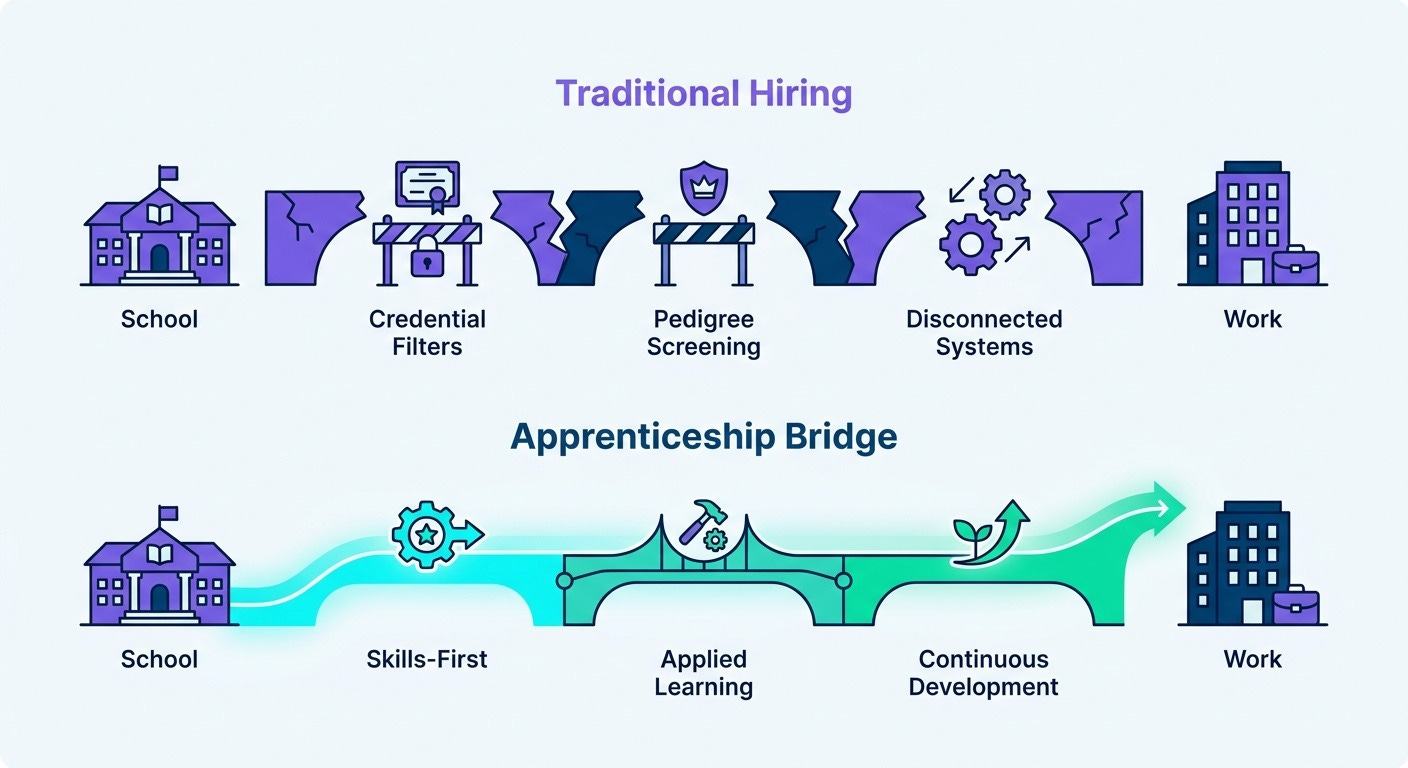
The macroeconomic picture is pulling in two directions at once. On one hand, nearly seven out of ten (69%) American employers report difficulty filling open roles (source), especially in fast-changing technical sectors. On the other hand, the labor market remains stubbornly hard to enter for non-traditional candidates.
The contradiction is everywhere. Employers say they cannot find talent, yet candidates are screened out for lacking experience they could only have gained by already being hired. Companies say they want durable skills and agility, yet many still rely on filters that reward conventional credentials, polished résumés, and prior access more than actual capability. Leaders talk about mobility and opportunity, yet the path from education to employment remains fragmented, expensive, and uneven.
The result is a labor market that fails both sides. Employers spend months searching for people who look “ready,” while capable workers remain locked out because they have not yet had the chance to prove themselves. In sector after sector, the problem is not that potential is missing. The problem is that our systems are bad at turning potential into proof.
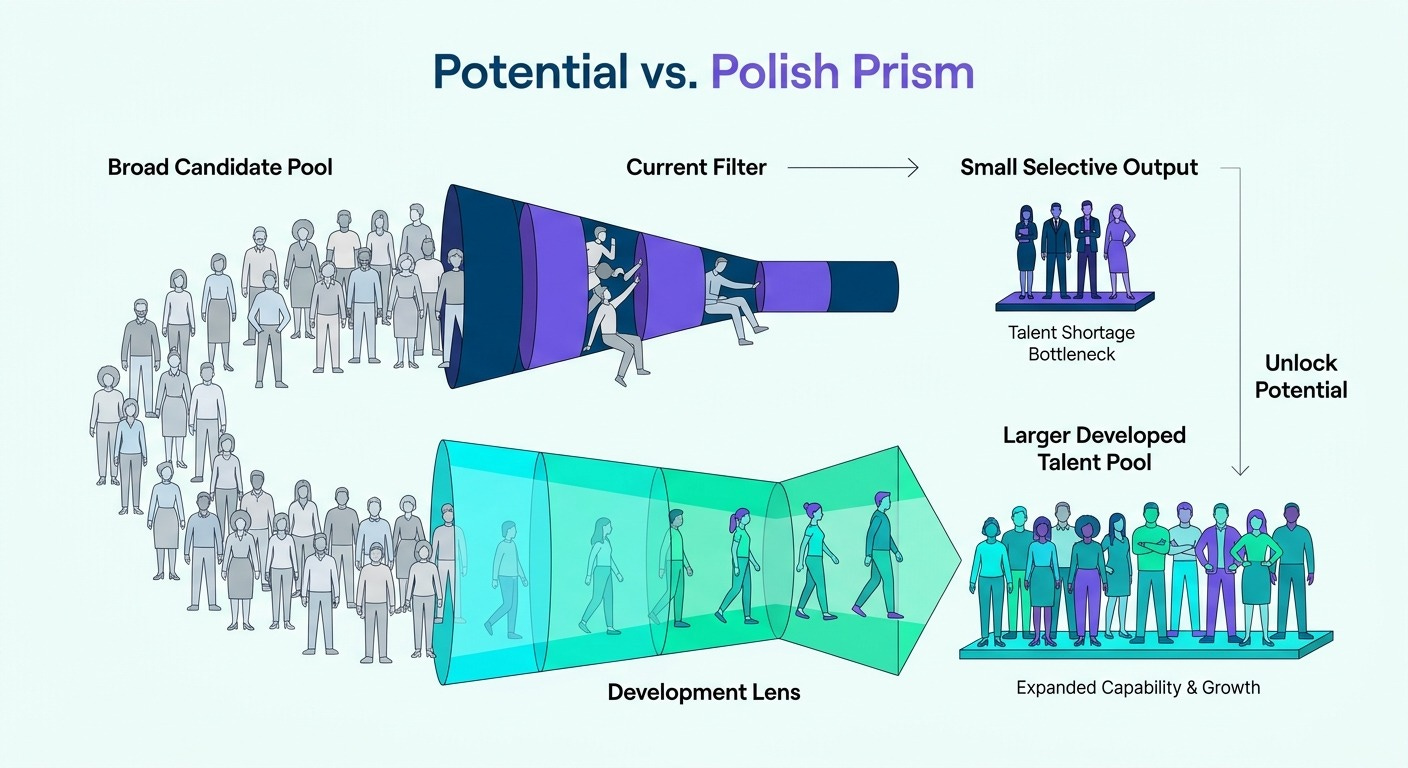
That is especially visible in fast-changing fields, where roles evolve quickly and yesterday’s ideal candidate profile is already outdated. In those environments, waiting for the flawless hire is not rigor. It is avoidance dressed up as rigor.
One of the most encouraging shifts in recent years has been the rise of skills-first hiring. Major employers and state governments have removed bachelor’s degree requirements from many job descriptions. At its best, that reflects an overdue recognition: talent is more broadly distributed than opportunity, and capability cannot be reduced to a diploma, a brand-name institution, or a narrow career history.
But skills-first hiring has a credibility problem when it remains more branding than practice. Research from Harvard Business School and the Burning Glass Institute shows that the actual percentage of skills-first hires has barely budged. Removing one barrier from a job posting is not the same as redesigning how people are sourced, assessed, onboarded, supported, and promoted.
That is where the conversation often falls apart. We ask education providers to produce fully job-ready candidates for roles that are constantly changing. We ask employers to broaden access without giving them better tools to reduce hiring risk. And we ask learners to navigate a maze of tuition, credentials, unpaid signaling, and disconnected systems before they can access meaningful opportunity.
The issue is not that skills-first hiring is the wrong idea. The issue is that skills-first hiring needs infrastructure.
Apprenticeship is that infrastructure.
Apprenticeship is still too often treated as if it belongs to another era, associated mainly with the trades or with workforce systems sitting adjacent to the “real” higher education and talent economy. That is exactly backwards.
In many ways, apprenticeship is one of the most modern responses we have to the modern hiring problem because it addresses the failures that define today’s labor market:
Hiring for potential over polish: it gives employers a structured way to evaluate baseline aptitude, work habits, and behavioral alignment rather than relying on pedigree.
Contextual competence: it lets people build capability through real, production-level work rather than simulated classroom readiness.
Objective readiness signals: it replaces vague résumé claims with demonstrated performance in context.
In other words, apprenticeship narrows the gap between education and employment. It gives learners paid access to opportunity instead of asking them to take on more cost and risk before they can begin. It gives employers a practical way to build talent instead of endlessly searching for perfect-fit candidates who may not exist. And it produces a much stronger signal of readiness because people are learning by doing.
This is why apprenticeship should not be discussed only as a social good, though it can absolutely expand mobility and access. It should also be understood as a business solution. When done well, apprenticeship is not charity. It is talent strategy.
What makes this moment especially important is that apprenticeship is no longer confined to an “alternative pathway” category. The boundaries between workforce training, employment, and recognized higher education are beginning to shift.
In California, OpenClassrooms is now authorized to grant degrees, with Texas still pending. That matters not only as a regulatory milestone, but as evidence that work-based pathways can also carry recognized academic legitimacy.
For too long, workforce systems and higher education systems have been treated as if they occupy separate lanes: one for employability, one for legitimacy; one for practical skills, one for recognized credentials. But if apprenticeship pathways can combine paid work, structured learning, and degree outcomes, that old divide starts to break down.
And it should. The future of talent development should not force people to choose between earning and learning, practical experience and credible credentials, or economic mobility and educational quality. The strongest models increasingly combine those things instead of separating them.
This becomes even more urgent in an economy shaped by AI. As roles evolve more quickly, the shelf life of technical skills gets shorter. PwC’s Global AI Study suggests that AI is reconfiguring job roles across knowledge sectors. Employers need people who can adapt, learn continuously, and build competence in motion. That makes static models of preparation less useful.
If work is changing in real time, then preparation for work cannot remain detached from work itself. We need systems that help people learn while contributing, build capability while solving real problems, and receive feedback in environments that resemble the jobs they are preparing for.
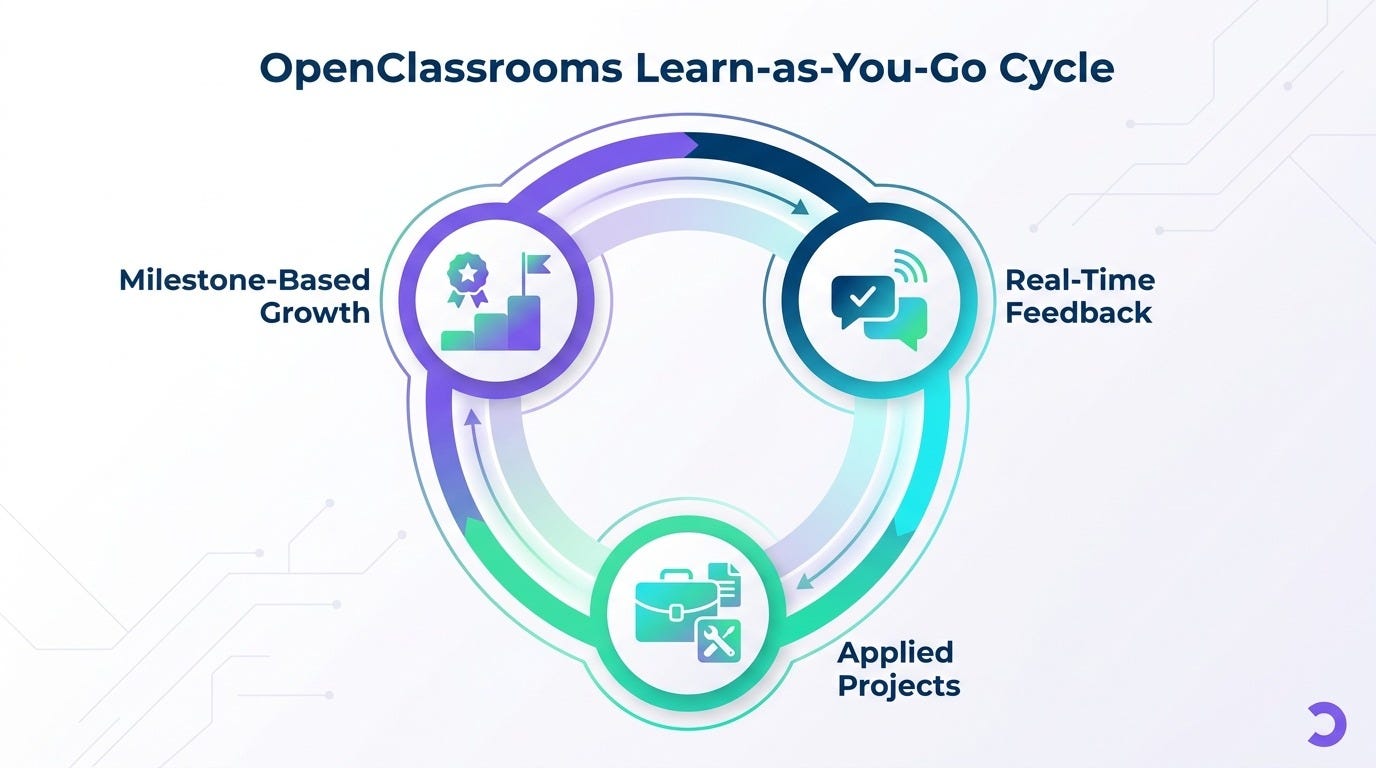
That is where apprenticeship has a structural advantage. It is not built on the assumption that education happens first and productive work happens later. It is built on the idea that learning and contribution can reinforce one another. That is a much better fit for an economy in which no one is ever really “finished” learning.
Of course, apprenticeship is not automatically effective just because the label sounds good. Like any model, its value depends on execution.
If apprenticeship is going to scale meaningfully in the United States, several things have to be true. First, it must be rooted in real employer demand. Programs work best when they are anchored in actual roles, actual business needs, and real employer commitment to participate in talent development.
Second, the learning model must be rigorous. Apprenticeship is not about throwing people into jobs and hoping they figure it out. It requires clear skill milestones, intentional progression, strong support, and measurable outcomes.
Third, management matters. Apprenticeship is not only a curriculum challenge; it is a leadership challenge. Learners need feedback, coaching, and clear expectations. Managers need practical ways to develop people, not just evaluate them.
Fourth, incentives matter. Many employers need help de-risking the initial investment. The best long-term models are sustainable, but early adoption often depends on public, philanthropic, or workforce funding that makes participation more realistic.
These are not side issues. They are the point. If we want employers to stop complaining about talent shortages and start building talent more intentionally, we need systems that make that shift practical.
We do. But that is not the hardest problem.
The harder problem is whether we are willing to change the systems that decide who gets seen as talented in the first place. For too long, we have defined readiness as something people must prove before opportunity is extended to them. In reality, readiness is often built through opportunity, not before it. People become more capable by doing real work, under real expectations, with real support.
That is what apprenticeship gets right. It does not assume talent arrives fully formed. It assumes talent can be developed.
And at a moment when employers say they need adaptability, workers need clearer pathways, and the economy demands continuous learning, that is not a marginal insight. It is a central one.
America does have a skills challenge. But more fundamentally, it has a systems challenge, a transition challenge, and a bridge challenge. Bridges do not appear on their own. They are built because people decide they matter.
If we want a labor market that is more dynamic, more inclusive, and more honest about how talent actually develops, then we need to stop asking whether people are perfectly job-ready before they begin. We need to build models that let people earn while they learn, prove themselves while they grow, and access opportunity through demonstrated capability rather than inherited advantage.
The future of work will not be shaped by who talks most about skills. It will be shaped by who finally builds better ways to turn potential into opportunity.
Thanks for reading! Support our work by becoming a paid subscriber, or email info@edtechinsiders.org to learn more about partnerships and sponsorships.
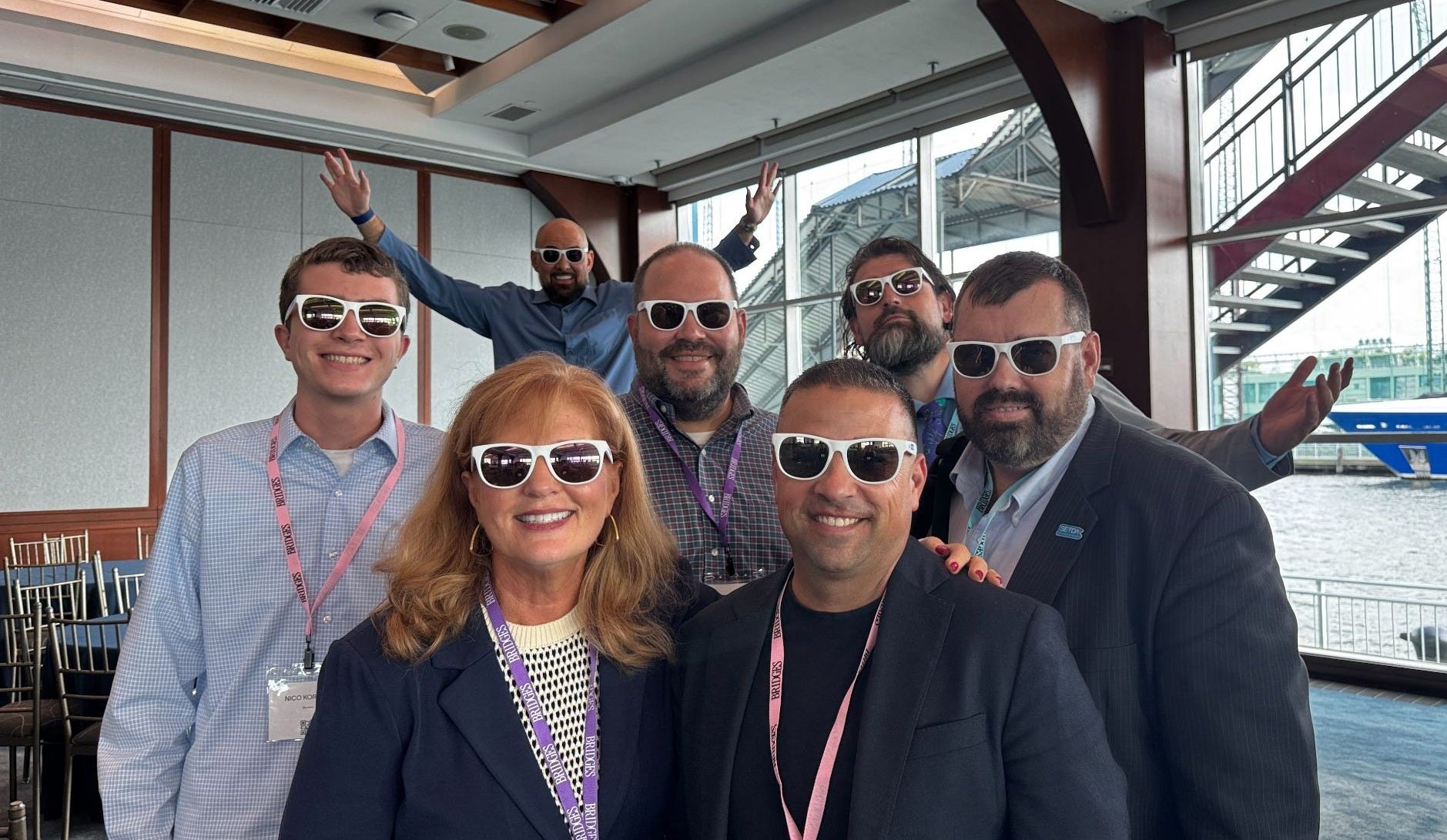
This summer, New York City has been THE city of champions. In June, the Knicks won their first NBA championship in 53 years, and then in July FIFA crowned Spain as the World Cup champions. So what about edtech champions? Last week, the inaugural BRIDGES AI Summit kicked off at Chelsea Pier 60 with a room filled with leaders across K12, Higher Education, and GovTech more broadly.
Edtech Insiders had a front row seat as this conference flipped the normal ratio of founders-to-system leaders from 4:1 to 1:4. With Jenn Womble and Jacob Kantor helping to organize the Starbridge-backed event, the room was filled with Superintendents, CTOs, and system leaders.
Key takeaways from both panels and informal sessions included:
Education leaders are culling the tools used across schools, universities, and systems in hopes of creating streamlined, coherent, and integrated teaching & learning experiences. While screen time is getting a lot of the airtime, the biggest concern amongst attendees is that the proliferation of edtech tools in COVID and then with AI undermined instructional alignment and rigor. Going forward, education leaders hope to go deeper with fewer learning tools that align to system-wide goals.
With this quest for depth, systems are much more oriented to organizations that can invest in implementation and customization aligned to the unique needs of staff and students. One participant shared “It’s ironic that edtech companies are pitching personalization but their product roll-out is one-size fits all.” The other push for partnership is that fact that AI is leading to product changes at a much faster clip. System leaders want to be a part of shaping the roadmap and also the roll-out.
Overall, leaders expressed caution about AI, especially in student facing contexts. A simple frame would be:
Red light: student facing AI. Leaders are concerned about both learning and safety.
Yellow light: teacher-facing AI. Leaders want to ensure that new tools are aligned with system-wide best practices and instructional strategies.
Green light: administrative AI. Leaders are genuinely excited to generate bureaucratic lift and greater efficiency on the back-office side.
Don’t lead with AI: Leaders also emphasized that if companies lead with AI as their value-prop, then they are turning off their end customers.
A big point of contention was the prevalence of bottoms-up, freemium adoption of AI tools. CTOs warned that when teachers are encouraged to adopt tools directly, companies are alienating district leaders who have to deal with the consequences — whether that is cognitive offloading, cybersecurity risk, or data privacy violations. CTOs also lamented to-down superintendent sales, as often IT is the last to know. A frank panel of CTOs warned that the IT leadership can be an implementation partner or a real roadblock, so companies should consider carefully how they enter school systems.
The final takeaways is a theme we’ve been covering for quite some time. It’s not about the tech, it’s about outcomes for students. Generally speaking, system leaders expressed skepticism about company-produced research. They favor pilots that show real impact in their own context, followed by referrals from education leaders that they trust.
We’re excited for next summer, when the champions of edtech reconvene for Bridges 2.0!!
OpenAI is inviting university students to apply for its first Campus Leads program, a global initiative focused on building student communities around ChatGPT and Codex. Selected students will help organize campus events, share AI resources, and connect peers with OpenAI’s tools, expanding the company’s efforts to make universities a key part of its AI ecosystem.
Coursera is investing $100 million in LearnVector, a new AI education company founded by Coursera co-founder and chairman Andrew Ng. The startup aims to use AI agents to provide personalized, one-on-one learning and help workers develop new skills as AI reshapes the workforce—marking a major bet on AI expanding rather than replacing the market for online learning.
A new Washington Post opinion piece argues that the growing backlash against education technology risks oversimplifying a much more complicated question: how technology should be used in schools. Rather than abandoning edtech altogether, the piece calls for a more thoughtful approach centered on students and focused on distinguishing between tools that genuinely support learning and those that create distraction or harm.
TIME and Statista have released their 2026 ranking of the World’s Top EdTech Companies, highlighting 500 organizations across the global education technology landscape.

Julie Young is the Founding CEO of Florida Virtual School (FLVS), where she helped pioneer online public education and expand access to millions of learners. She later founded ASU Prep Digital and is the author of Say Yes: How Virtual Became Reality, continuing to shape the future of student-centered learning.
How Florida Virtual School grew from a small pilot into a global model for virtual education.
Why putting students and not systems at the center changes everything about school design.
Lessons for driving innovation within public education while earning trust and support.
How ASU Prep Digital is blurring the lines between K-12 and higher education.
Why AI should be a catalyst for redesigning education, not simply automating existing practices.
Thanks for reading! Support our work by becoming a paid subscriber, or email info@edtechinsiders.org to learn more about partnerships and sponsorships.
Comments
Nothing yet. Say the first thing.
Sign in to join the conversation.