
One of the most common questions in the XRP community is also one of the most misunderstood. Ripple has spent more than a decade signing partnerships with banks, payment providers, financial institutions, and even central banks around the world, yet many people still ask why those same partners are not all using XRP to settle transactions today. Some assume this means XRP has failed to gain adoption, but that conclusion ignores how financial infrastructure is actually deployed. Large monetary systems are never replaced overnight because they evolve through carefully planned stages that prioritize stability over speed.
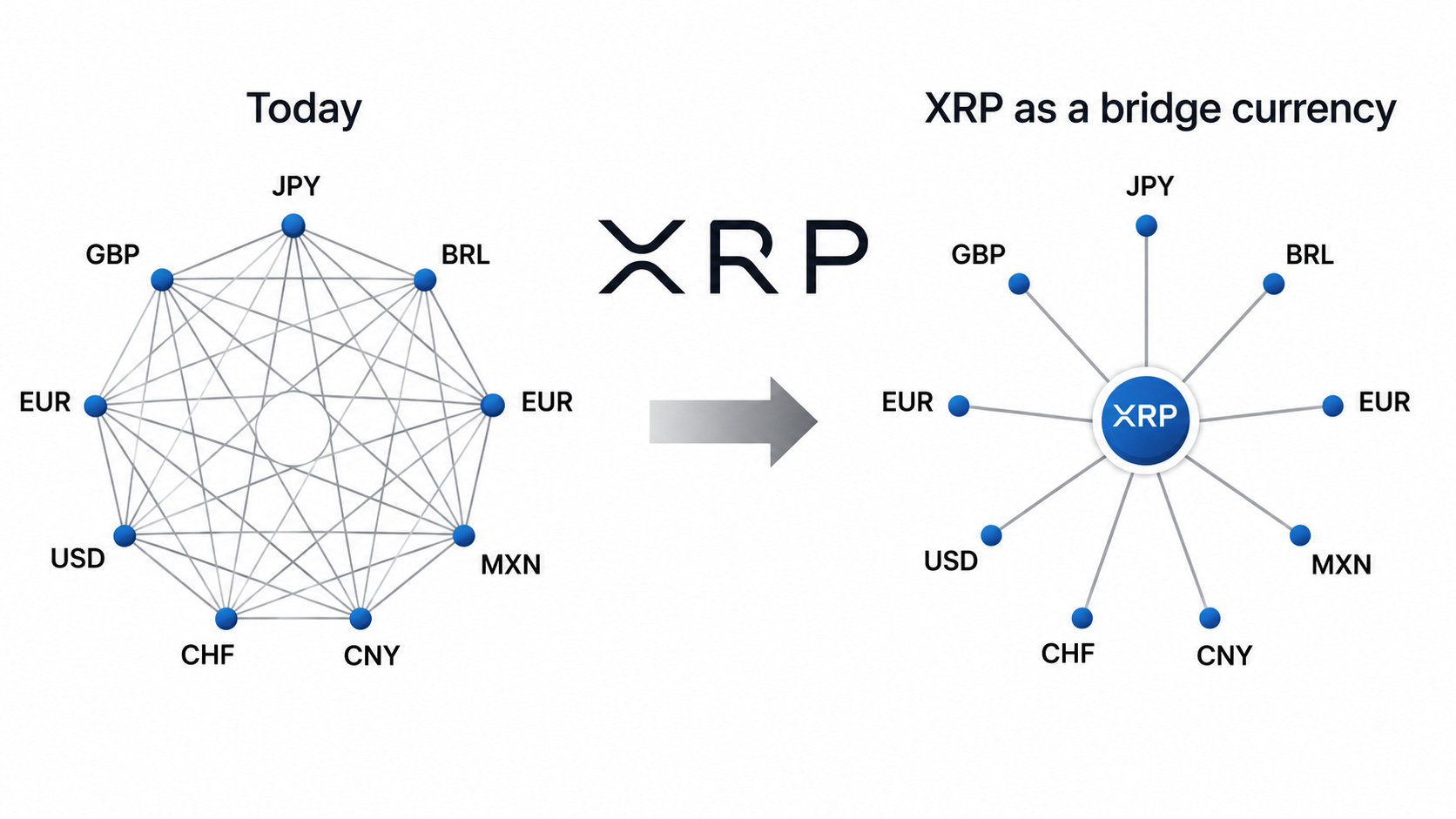
The first stage was never XRP adoption. Ripple’s priority was building the infrastructure capable of supporting institutional settlement on a global scale. Every major financial network began with infrastructure before usage. SWIFT first established its messaging network, Visa built its payment rails, and Fedwire created its settlement infrastructure before becoming critical components of the financial system. Ripple followed the same approach by developing the XRP Ledger, a blockchain specifically engineered to move value quickly, securely, and at extremely low cost while maintaining continuous availability. The objective was not to attract retail speculation but to create infrastructure capable of supporting institutional transactions measured in billions and eventually trillions of dollars.
Financial institutions cannot simply move critical payment flows onto technology that has never been tested under real-world conditions. Banks operate under strict regulatory requirements, central banks oversee monetary stability, and payment providers cannot tolerate prolonged outages or unpredictable settlement. Before any institution considers using a new settlement asset, it must first know that the underlying network has demonstrated years of reliable performance. Infrastructure always comes before adoption because confidence cannot exist without operational history.
Once the infrastructure had been established, Ripple shifted its attention toward institutional integration. This explains why the company spent years announcing partnerships instead of immediately pushing every institution toward XRP settlement. Those partnerships were not designed to force instant adoption of the digital asset. Their purpose was to integrate Ripple’s technology into existing financial systems, establish relationships with the organizations responsible for moving money across borders, and demonstrate that the technology could operate alongside the current financial architecture without disrupting existing operations.
This distinction is often overlooked because many investors assume that every Ripple partnership automatically translates into XRP usage. That has never been Ripple’s strategy. Financial institutions adopt new technology gradually because regulatory approval, compliance requirements, internal testing, liquidity considerations, and operational risk all influence deployment decisions. Trust cannot be accelerated simply because a superior technology exists. Institutions need years of successful implementation before expanding their use cases, especially when those systems support international payments involving enormous amounts of capital.
The final stage depends on a much larger transformation taking place across global finance. Tokenization is gradually moving financial assets onto blockchain networks, allowing currencies, government bonds, equities, commodities, real estate, and countless other assets to exist in digital form. While the industry remains in its early stages, governments, financial institutions, and infrastructure providers are increasingly investing in tokenized markets because digital settlement offers significant improvements in efficiency, transparency, and automation compared with traditional financial systems.
As tokenization expands, settlement becomes the critical challenge. Representing assets digitally is only one part of the equation because those assets must still move between institutions quickly, securely, and at scale. Not every blockchain is capable of performing that role. Institutional settlement requires predictable transaction finality, deep liquidity, low operating costs, regulatory compatibility, continuous uptime, and the ability to process enormous transaction volumes without compromising performance. Only a limited number of blockchain networks have been designed with those requirements in mind.
This is where Ripple’s long-term strategy begins to make sense. Rather than waiting for tokenization to become mainstream before building infrastructure, the company spent years developing the XRP Ledger, integrating its technology into financial institutions, expanding liquidity, and establishing relationships throughout the financial sector. If tokenized finance continues growing over the coming decade, Ripple does not need to begin preparing at that point because much of the preparation has already been completed.
Forcing banks to adopt a digital asset before they trust the infrastructure would have dramatically slowed adoption. Ripple lowered the barrier to entry by allowing institutions to integrate its technology first while leaving XRP as an optional settlement asset. Once trust, liquidity, and regulation matured, the transition to on-demand liquidity became significantly easier because the institutional relationship already existed.
🔒 Continue reading to discover:
Why tokenization changes everything for XRP.
Why only a handful of blockchains can settle tokenized assets at institutional scale.
Why Ripple spent years building infrastructure before pushing XRP.
The final stage of Ripple’s strategy that most investors still overlook.
Comments
Nothing yet. Say the first thing.
Sign in to join the conversation.