

A New Scroll of LA Jewish News
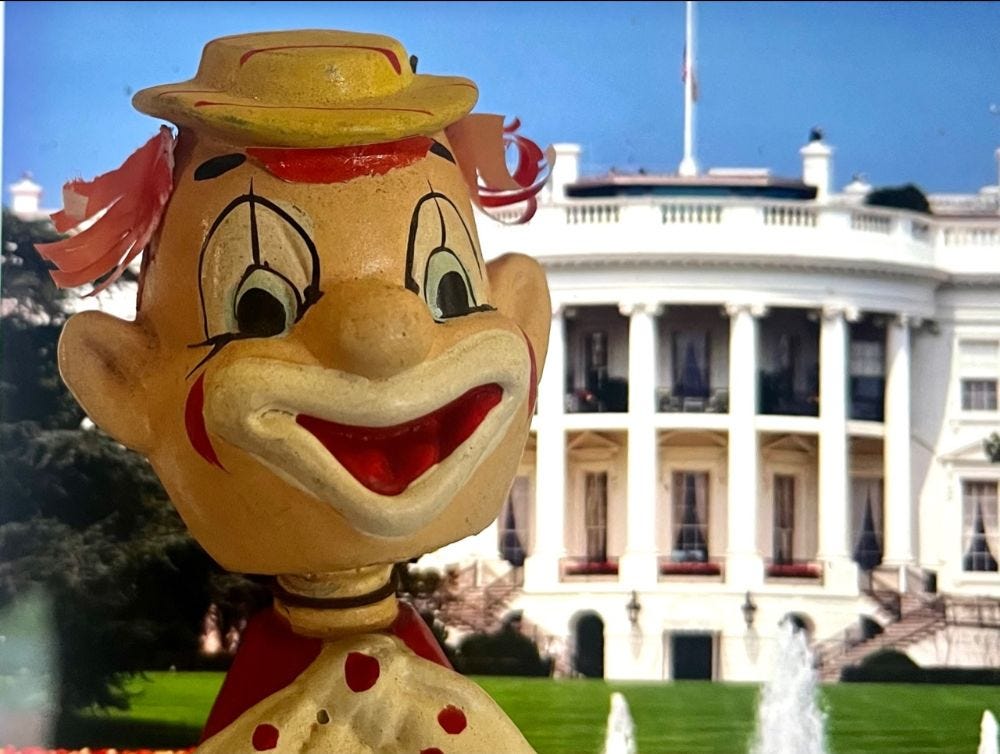
Capitol Clown EJR
Folks,
The state of the union between the Purim story and Washington is strong! Danger is up, and the promise of joy a distant hope. In each, things are turned topsy-turvy, and evil decrees abound to excise, and even kill.The country of each is ruled by a clown/king, and a sinister, power-mad advisor. Sexual intrigue is part of both stories. Wise Jews promote ways to defeat the clown, and women work to undo the evil decrees. In each case, the oppressed find ways to defend themselves. Though the end to the Purim story is known, the final chapter of the Washington story is unknown. Will November bring a day to merry, merry be?
Can you bring a little Purim joy to MegilLA? Your paid subscription is needed to erase the severe decree, and help continue the unrolling of the scroll. If you have not paid in a year or so, please become a paid subscriber today.
Shabbat shalom.
Happy Purim!
Edmon J. Rodman
////\/\\\\
////\/\\\\

Edmon J. Rodman
The Purim carnival, a yearly event with roots in 15th century Italy, continues to flourish in Los Angeles by keeping up with the times.
This year’s celebrations, held at different venues around the city, include elements that both connect the carnival to traditional aspects of Purim, as well as today’s pop culture, and contemporary needs.
Purim, celebrated beginning the evening of March 2, the 14th of the Jewish month of Adar, until nightfall on March 3, commemorates the salvation of the Jewish people from a genocidal plot in ancient Persia, as told in the Book of Esther.
The holiday is observed by feasting, fasting, dressing in costumes, giving gifts to friends and to the poor called mishloach manot, and reading the Megillah.
Purim carnivals around LA, re-interpret and expand many of these traditions.
Hamakom’s Purim Carnival in West Hills in addition to a costume contest, rides and food, includes a donation collection to support Newborns in Need, The SOVA food pantry, as well as a general collection of new and gently used clothing for all ages, and yarn for knitting or crocheting. They are also holding a blood drive that day.
The J-Pop Joy Level Up: Adar Edition at Sinai Temple, a play on area’s K-Pop, Korean popular music, includes along with the usual games and face painting, a “paw patrol carousel” named for a popular children’s show on Nickelodeon.
“The “Frozen” Purim carnival at Temple Akiba in Culver City includes crafts, a wine garden and before the carnival begins, a Purim Shpiel, a creative and often humorous retelling of the Purim story.
Stephen Wise Temple’s carnival called “Wise in Wonderland” invites families “to journey through a whimsical world inspired by the magic, creativity, and joy of Purim.”
Today’s Purim carnivals are not the first to punch the relevancy ticket.
In 1929, LA’s Jewish community organized its first city-wide Purim Carnival, which the B’nai B’rith Messenger called the “the first if its kind ever staged in the West.” Held in the “Shrine Temple,” (Shrine Auditorium) of which many Jews were members, the event was organized by the city’s Central Jewish Community.
Admission tickets were shaped like hamantaschen and cost .75 in advance, and a buck at the door.
Drawing from theater and film, a Purim Pageant was added to the program. “The rich splendor of the Persian Court, the bitter malice of a ruthless Haman, the crowning of a beautiful Esther, and the mourning of Jewish cities . . . these and many other tremendous scenes will be recreated in brilliant, colorful pageantry for the Jews of Los Angeles,” said a second Messenger article promoting the carnival.
As for food, “Jewish housewives will preside at beautiful refreshment counters where traditional Purim goodies, crowned by real home-made hamantaschen, will be served.” There was a dance orchestra, and guests were urged to come in costumes, “Preferably, the graceful flowing garments of Biblical Times.”
How they managed to Foxtrot, or Tango in those flowing robes is not mentioned.
////\/\\\\
Edmon J. Rodman
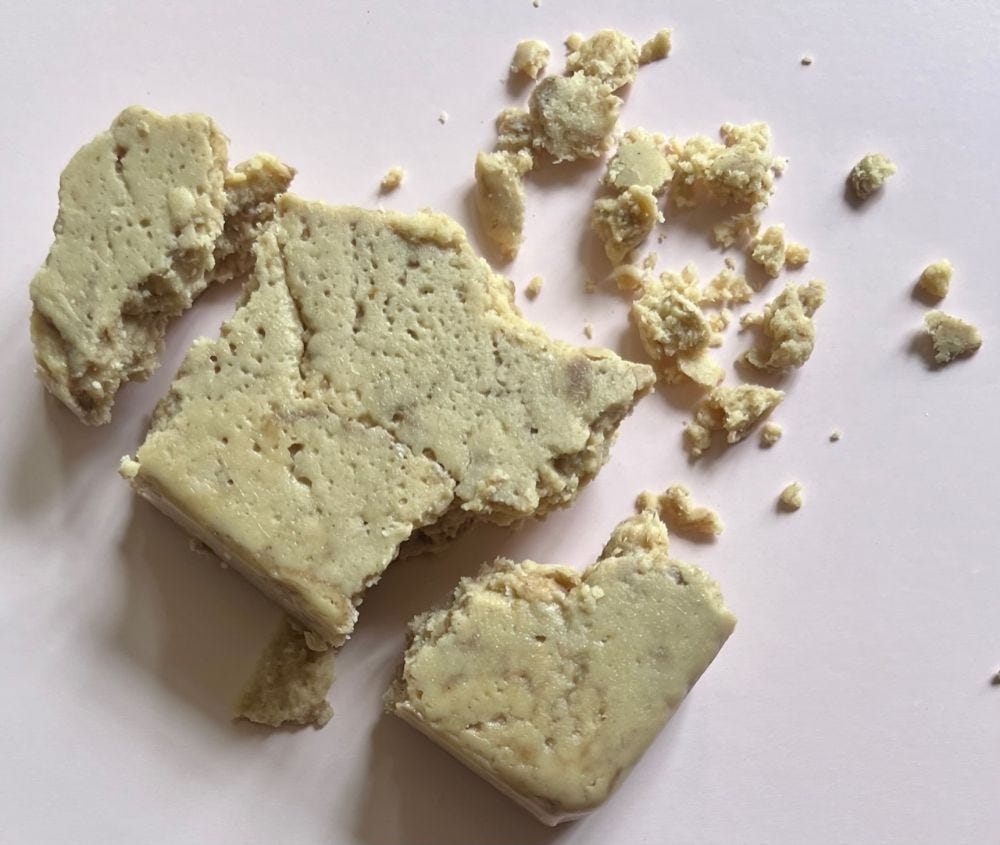
It was a cold February night, and my wife Brenda needed halva. Not to eat, at least not immediately, but to crumble onto a batch of hamantaschen that had just come out of the oven.
“Where can we get some halva?” she asked offhandedly, in way that partners ask when they are dragging you into something.
Like other aspects of my recent experiences with Purim, the search for halva was filled with discovering what was hiding behind a mask of memory.
Now, in some sections of LA, finding late night halva might not be difficult, but on the western edge of Koreatown where we live, the middle eastern sesame-based treat is not a an easily found item, even in daytime.
If you crave kimchi, our local market has you covered, with refrigerator cabinets filled with every kind. If you need sesame oil, Korean markets have gallons, in cans and bottles, or sesame seeds, every size package. But as for halva they have gornisht.
Western Kosher, a few miles west, carried it, I recalled, but that was closed. Consulting my phone, I found that Ralphs markets stocked it, but I doubted if the location nearest to us, which specialized in Latino products and flavors, had any.
Continuing my search, I typed “halva near me,” into my phone and found that surprisingly it could be ordered from Target and Pavilions, but not available on the shelf.
What I needed was a Halva-Finder, some clever app, that would hone-in on every last package of halva, be it marbled, chocolate-covered, or plain within a mile or two of my home.
Short of that, I consulted AI, and was given these tidbits of advice: “Check the Kosher Section: In larger standard grocery stores like
Ralphs, halva is often located in the kosher or international aisle.”
Ah, yes, the international aisle. On a windy February night, the aisle with its promise of exotic canned delicacies from relaxing lands, called to me…halva was only steps away.
AI also suggested that local delis, places like Canter’s Deli and Langer’s “often sell Joyva or house halva right at the register or in the bakery section.”
Of course, turbaned Joyva guy was my old friend. My mother used to keep him, like a captive flavor-genie, in our refrigerator. It was through him, he with a grin-shaped mustache and no mouth, that I first tasted and learned to love, the crumbly, odd-flavored treat.
Sweet, but not like Sugar-Frosted Flakes or Trix, and a bit bitter, halva was an unexpected flavor from childhood fulfilling the wish for a bit of the “different” to our otherwise suburban Jewish home.
Taking AI’s advice, off to Ralphs we went; the one that we refer to as the “Kosher Ralphs,” on La Brea and Third. There, on the kosher aisle, we found a small tub of marbled halva for $11, and several varieties of Joyva. Yet, the desired “plain” was out of stock.
There was one container perched on top of the shelf. Could it be the one? I reached up and brought it to eye level
“Chocolate covered raspberry rings,” was what the label said.
Where to go next?
In the quiet of the late-night market, like a TV commercial where the company’s mascot grins and begins to speak, I heard the Joyva genie whisper, “Canter’s.”
Late night at Canter’s, even in midweek is always so telling as to people’s cravings. On one side, customers are intensely picking sweets at the bakery counter, and at the deli side, sours.
In the midst of all this choosing, the Joyva genie could be faintly heard, but not clearly enough to be located. Turning to the deli counter, I thought I found him. Stacked up next to a large jar or kosher dills, was a stack stretch-wrapped deli-made plain halva.
Relieved to find the object of our desire, and eager to end our quest, we chose a small piece, and were directed by the counterman to pay for it at the check-out register.
In the quiet of the exchange, a small still voice softly called. “Here I am. The answer to your wish.”
As I took the receipt, I looked aside. Less than an arm’s length from the counter, in a small display box, were small packages of the genie’s halva, just like the ones my mom kept in the fridge.
“Another time,” I said to Brenda, as we walked towards the door.
////\/\\\\
////\/\\\\
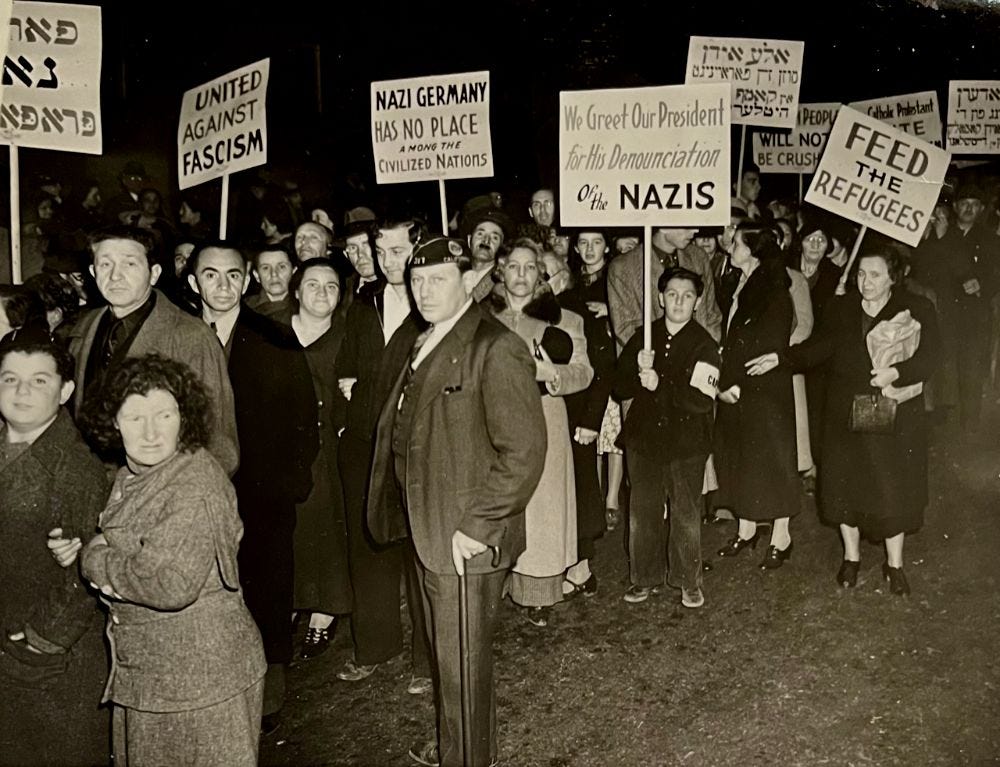
LA Jews marched and protested, as the Purim-like story of resistance to the planned genocide of the Jewish people, reappeared in the years leading up to WWII.
On November of 1938, more than three years before the U.S. declared war on Germany, 10-15 thousand Jews and those sympathetic to their cause marched and rallied in Boyle Heights calling for President Roosevelt and America to end doing business with Germany.
“We Greet the President for His Denounciation [sic] of the NAZIS,” said one protest sign shown in the archive photo. “All Jewish should be united in Battle,” said another in Yiddish.
“The free-swinging stride, the level gaze and chin-up posture that come with being American and ‘feeling that way’ characterized” those who participated in the parade and mass meeting against Germany’s treatment of Jewish people, said a wire service caption that accompanied the photo.
“As they marched, they called for the downfall of Hitler, boycott of German goods, and cheered President Franklin D. Roosevelt and Mayor Fletcher Bowron,” the caption continued.
After the parade, said an article in the LA Times, groups met within the Breed Street Synagogue and on the street outside to hear speakers “denounce the Nazi atrocities and to pledge a mass struggle for life, liberty and security for Jewish people.”
*The Rodman Archive of Los Angeles Jewish History is a collection of approximately 2000 objects, photos, clothing, art, books, recordings, and ephemera relating to the lives and endeavors of Jewish Angelenos between 1850 and 1980.
////\/\\\\
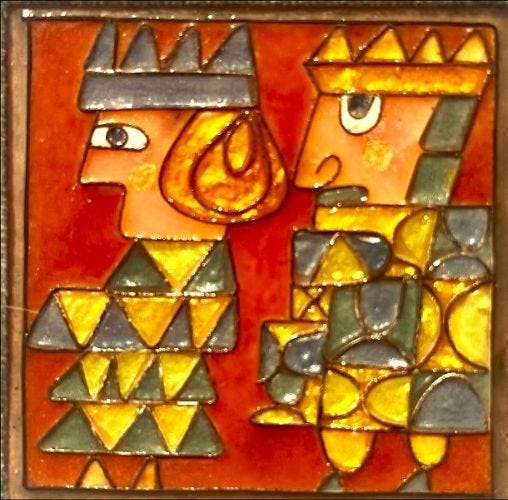
“King and Queen,” Evelyn Ackerman 1968-69, Ackerman Estate
At Purim, when our imaginations are filled with exotic kings and queens, heroes and villains, a local museum unexpectedly connects us to such visions.
“Material Curiosity by Design: Evelyn & Jerome Ackerman” at the Craft Contemporary though May 10, explores the prolific careers of midcentury designers Evelyn and Jerome Ackerman in dialogue with select works by three contemporary artists.
Born and trained in Detroit, Michigan, the Ackermans moved to Los Angeles in the early 1950s, where they set up their studio. Through their work, and marketing acumen, they managed to successfully bridge their art training with commercial sensibilities.
Over fifty years, they designed a diverse body of work ranging from colorful mosaics and wall hangings to graceful ceramics and wood carvings.
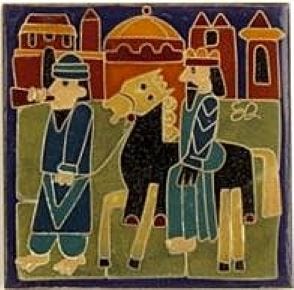
Though not noted in the show’s wall text, the Ackermans were Jewish, and several of Evelyn’s pieces explored biblical themes. In 1984-85 she created “Stories from the Bible,” (not part of the show, but part of the Smithsonian Museum Art Collection) a set of 40 cloisonne copper squares that included a scene from the Book of Esther.
Depicting the kind of reversal that still brightens us today, the once powerful but defeated Haman leads his adversary, a horse-riding triumphant Mordechai through the streets of Shushan.
////\/\\\\
Comments
Nothing yet. Say the first thing.
Sign in to join the conversation.