

Tony Wakeham’s crowd want you to judge his draft of the same MOU better than Andrew Furey’s try.
That is literally all they want from you.
All they wanted from the talks was to get something that looked good enough to say they did a teensy bit better than Andrew Furey.
Understand that and you understand just exactly how narrow, limited, and tactical the thinking was that led us all to this place not even a year after voters tossed out the crowd who gave us the first draft of this MOU and three or four months after talks started on this revision.
People who treat this MOU as a whole new creature are fools or think you are. Behind all this media coverage is what we have described here before as a conceit. There’s an unspoken understanding among news media and politicians and the talking heads that some things are okay to talk about and others are off the table, including the fact there is such an understanding.
Kayfabe is a word someone taught me this week in an opinion column about American politics. Merriam-Webster defines kayfabe - don’t ask for the pronunciation - as “the tacit agreement between professional wrestlers and their fans to pretend that overtly staged wrestling events, stories, characters, etc., are genuine.” There is a huge amount of that kyfabe business in Monday’s event as there has been through pretty well all of what goes on here since 2003.
Never forget it.
Tony’s speech Monday spent a lot of time slagging the 2024 draft of the MOU he is now trying to sell. “We are finally replacing the notorious 1969 Churchill Falls deal and the 2024 MOU with a new deal that will guarantee us more power, more value and more transmission.”
That sets a very low bar and Tony still couldn’t clear it. After all, at the heart of both the 2024 and 2026 drafts of the same MOU is the continuation of the fundamentals of “notorious” 1969 agreement including the super-cheap pricing of about two and a half cents a kilowatt hour on average for 51 years. That’s only one measly cent above the 1969 contract price adjusted for inflation and only 14 years shy of the identical 65-year term as the 1969 deal HQ originally demanded in 2024.
Alex Bill wrote a great piece for AllNL’s Wednesday edition comparing Wakeham’s announcement to the MOU review recommendations. Alex gave Tony a passing grade. Out of three clear or implicit recommendations, Alex credits Tony with following four of them, partially following three, and rejecting only two.
Unfortunately, Alex’s bullets on transmission give the Wakeham MOU credit where there was actually a failure or a rejection. One bullet Alex admits isn’t connected to the MOU at all and on another he misses the panel’s report that links export transmission - which NL does not get under this MOU - to serious financial gain, which this MOU also doesn’t get. What we have instead is a substitute of some consolation cash from HQ from their exports. We are closed off from exporting electricity ourselves and what vaguely looks to some like export is actually controlled fully by Quebec. NALCOR has already shut down or is starting to wind up its marketing arm, according to one rumour that was circulating before this deal appeared.
Likewise, on the recommendation about Indigenous involvement, Alex generously gives the government full marks but in the process has to ignore Innu Grand Chief Jodie Ashini’s comments and the attitude they convey. And on the business of having a strategy, something Alex gives Wakeham full marks for, he misses the point. The review panel clearly criticised the original deal for its lack of a strategy at all, which led to all of the deals shortfalls. Wakeham had no strategy, either.
Wakeham rejected all of the advice and merely asked if Quebec might let him have a wee bit more. He took only what they allowed, which is not the result of an actual strategy or tactics. It is just simply repeating the mistake Furey made and that both Furey and wakeham were warned against repeatedly by many.
Strategy implies goals, objectives, and measurable results. It comes from an understanding of issues, problems, challenges, and the relationships among moving bits and pieces of a very large and complex situation. Getting a deal is not a strategy. A deal would be an element of a strategy to hit a larger target.
What was the larger target here? What was the larger goal?
You cannot answer that question because no one from the local government in Newfoundland and Labrador told you what they wanted to get. Chrstine Frechette could tell you what Quebec got. Ditto Mark Carney for Ottawa. Tony Wakeham didn’t. Tony did not tell you because his crowd did not have any idea beyond “Get a deal,” which was Andrew Furey’s only idea. It’s not a strategy, by the way, in case you missed that earlier.
Tony Wakeham’s Three Bit-Mores is just a variation of “Get a deal,” and as you will no doubt hear in the days and weeks ahead, this MOU is as troubled as earlier drafts. We’ll start going a bit down into the details Monday coming, like the problems with the more money thing, for one, as well as the power allocations.
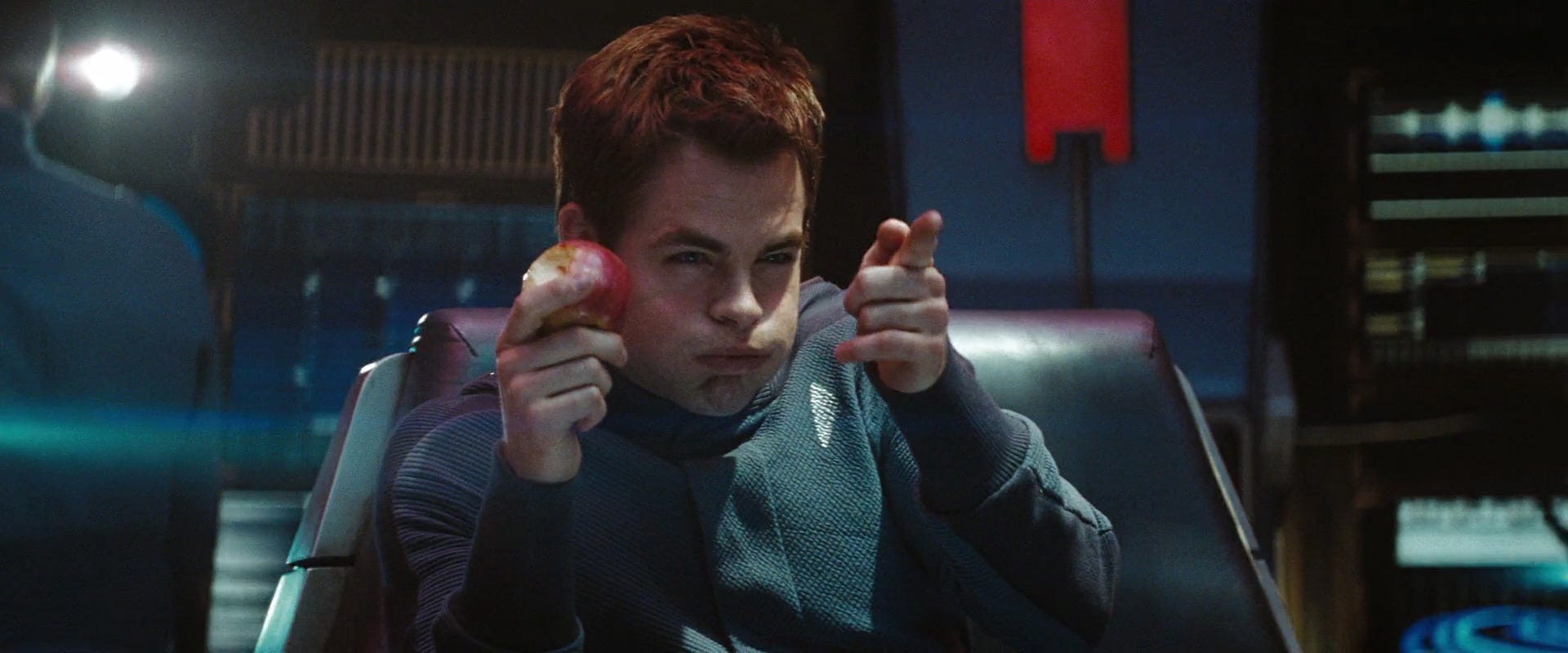
At the end of this first week after yet another draft of a memorandum of understanding with Quebec to continue the 1969 deal on the same principles, with some tweaks to the details, let’s round things out by understanding why this draft is no better really than the one before.
To understand, we need to ask Jim Kirk.
This latest set of non-binding agreements on Churchill Falls might look superficially better than the ones before, but they are bad for Newfoundland and Labrador because no one involved understood the lesson of the Kobayashi Maru.
They trapped themselves inside the no-win situation.
Sort of.
On the face of it, the now famous training scenario from Wrath of Khan, reworked in the J.J. Abrams Star Trek movie is about the supposed no-win situation. It is a test of character, so the script tells us, when faced with what seems to be a set of impossible or unacceptable choices. There are no good ones.
The actual lesson of the Kobayashi Maru is not in the test, though, but what Jim Kirk did in both movies.
It’s the same lesson to take away from another movie, Darkest Hour. Anthony McCarten’s account of the early days of the Second World War, centred on Winston Churchill, is one of the finest presentations of an actual historical episode that manages to capture the great subtlety and nuanced reality in which people lived at the time. It was a real choice and a hard choice with powerful arguments on one side and supposedly none on the other, which is the way the British went.
Hang on.
Two different stories but with the same message?
With the British scrambling to pull as many soldiers off French and Belgian beaches as possible in the face of the German onslaught in 1940, the British were beaten. By any reasonable measure and all sense, defeated. Peace was not only the logical choice. It was one that had great sympathy within Cabinet in Britain and within the leading elements of British society, including the King. The solution they thought was best would be to cut a deal with the Germans and then face them after a crash re-armament.
Jim Kirk refused to accept the assumptions of the test.
That is the lesson of the Kobayashi Maru.
He changed the rules.
Winston Churchill - not a fictional character at all - simply refused to accept defeat. He refused to accept the assumptions of a very real test, particularly the conventional view of what was happening and the best thing to do next.
Winston ignored the “rules” of conventional wisdom and the popular choice. His act of blind determination argued against all options except carrying on the fight. Better to go down swinging than cower in fear. Better to risk death than live under an oppressor’s boot.
Another movie - War Games - also tells you that the only way to win is not to play the game. That’s just a variation of not accepting what appears to be the situation facing you or what everyone thinks is the problem and answer. It the same as media training or debating when you learn never to accept the premise of the question.
Same thing.
Change the situation.
Early Monday morning someone sent me a message about how the last couple of provincial governments have been faced with a stark choice. Some variation of an agreement with Quebec was the only thing to do. When you had a deep financial crisis - ever-growing spending on things like health care - and these guys from Quebec showed up with cash, you take the cash, no matter the details and the other costs.
That is 100 percent the view of the leading elements of our society and has been for most of the last decade or more. None of those people understand the lesson of the Kobayashi Maru, let alone Newfoundland and Labrador literally a century ago or any time since.
The answer is not accept situations we created but to change the situation. Fix the financial crisis. Change spending. Don’t accept the premise, the frame, or the assumptions that create the supposedly no-win situation or that make the popular idea seem like the best choice.
That is the answer to making a deal with Quebec.
Don’t.
At least, don’t in a situation in which you assume Quebec must be anything except a customer. If HQ wants to buy electricity, then let ‘em take what you don’t want and pay fair market price for it.
Change the things you can change to make your situation better. Don’t just let things happen, accept a poor situation, and shrug at a shitty outcome. Or pretend that the stuff on your plate is steak and not…well… you know, which is what first the Red Team and now the Blue Team are doing.
If you start with the assumptions that Quebec is the only customer and that Quebec has some sort of natural or unquestionable right to a share of Churchill Falls, then you have already accepted the box inside which you must work. There are other assumptions that go with that as well, by the way, which is that we cannot do anything different, that we are incapable, or that we are powerless.
With those assumptions, we make a very limited and limiting box in which Quebec has all the power. Quebec has all the power not because objectively they do but only because our assumptions give them control.
It’s the same box others from Newfoundland and Labrador have worked in and come to the same answer. But that doesn’t make it objectively true. Others actually rejected Quebec bullying and bull-headedness before, in times when they had more power objectively and relatively than they do now. When we were weaker compared to know. That just means that - like all the folks who took the Kobayashi Maru and accepted the no-win situation - the last two crowds failed the real test.
The answer to their problem is something else.
What was it Kirk said?
“I changed the conditions of the test.”
Andrew Furey didn’t. The result was the chaotic mess he signed in 2024.
Monday’s column said Tony Wakeham said yes to way less. He did. In comparison to realistic outcomes, he fell way short of the mark. Tony Wakeham said yes to less measured against his own commitments. Money, power (ironically, not energy), transmission, a referendum, artificial timelines. Every. Single. Thing. Tony Wakeham said he would not do? He did.
The result is that we have a new draft of a non-binding agreement with Quebec to let them keep the sweetheart deal from 1969 with some minor tweaks. Same deal basically as ‘69 or ‘24 but this one is covered in a sloppy coat of blue paint slapped on over the red of the last one. The paint job is so hasty some of the red bits leak through. John Hogan says this MOU is not as good as the one he had some connection to, even though they are almost identical.
Kayfabe.
And Deputy Premier Barry Petten is telling people that if they loved the first draft, they’ll really love this second one ‘cause it is the same, basically, but blue.
Believe people when they show you who they are.
Comments
Nothing yet. Say the first thing.
Sign in to join the conversation.