
Ownership and Rights
The essence of ownership is control. Labels implying otherwise are incidental. So the base question is this: how is ownership established? In the jungle, a question of ownership is settled by the existence of a superior physical force. At a given time and given place, an animal owns all of the territory that it has the physical capacity to control, including all other animals with less physical ability. In a pack situation, the pack leader is the ultimate owner.
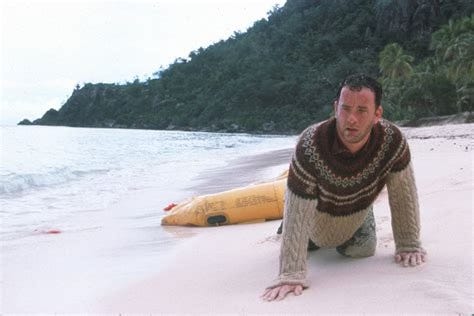
To sharpen focus upon the issue, let us now leave the jungle stage and imagine one individual human being emerging from the sea onto a deserted island. Of course, the question of ownership does not arise. The totality of personal preference is in one mind and one mind directs the actions of one body.
There then emerges from the sea a second individual, volitional, i.e., with personal preferences.
In the jungle, a question of ownership is answered by physical force. There is no volition, no choice. Volition adds a dimension: options. The two individuals can engage in physical combat until one or both are dead. One can establish physical superiority and the other can either obey or avoid physical contact if the circumstances afford the opportunity. That is, if the island is large enough and suited to evasion. If not, the individual who has not established physical superiority is back to the first two options, death or obedience/subordination. Another option is one individual may voluntarily choose to obey the other without first being intimidated by force.
Or they both can, by peaceful resolution of conflicting personal preferences, exist socially without either of them initiating force upon the other.
Suppose the evasion scenario has taken place. The physically superior individual may claim to own the entire island, but the existence of the other individual opposing his personal preferences belies this claim. As in the jungle, he owns only that which he can control, and he cannot control all of the island, nor can he control the other individual. So the other individual owns part of the island. At any given time, which part is owned by the other depends upon the actions of the physically superior, but at all times, at least some part of the island can be owned by the individual who does not possess physical superiority. This situation constitutes shifting ownership. Neither individual owns the entire island because neither can exercise control over all of it.

Whenever the physically superior individual leaves one area and attempts to control a different area, he automatically relinquishes objective claim of the area vacated. It may be said that the two individuals own the island collectively. It may be said, but saying this does not erase the relationship between ownership and control, nor does it erase the fact that collective ownership means no ownership. If two individuals are said to have equal ownership of a given property, disagreement as to action regarding the property results in zero. Where there is no action, there is no control. There is no natural law that says that a particular individual must own a particular property for a specific time. There are many arrangements that may be made to accommodate many situations, however in the final analysis ownership and control are synonymous and a single mind is the ultimate director at any given time.
The jungle-type existence described above can continue or the physically stronger, being volitional, may decide that the actions he is taking are not in his own best interest. He concludes that he can never really control, i.e., own, the entire island and that his time and energy would be of more value if used in gathering food and building shelter. So he stakes out a claim, either physically or mentally, encompassing a territory of dimensions corresponding to his ability to control. Naturally, the other individual then owns the remainder of the island. Such is the birth of the concept, private property, as it is one step removed from the law of the jungle.

At this point, the private property idea is strictly a one-sided affair as decided by the physically superior. This individual successfully directs his actions and accomplishes much. He builds a shelter and gathers and stores a substantial amount of food. Then one day he thinks of something he would like to have, but this thing is located beyond his territory. He has no fear of the other individual, so he sets out to get it. Returning some time later, he finds that his store of food is gone. The other individual has come while he was away and carried it off.
He valued his store of food more highly than the thing he’d gone after, so he lost in the exchange. Yet, he valued both and preferred to have both. The question is, how to have both? Answer: by making an agreement with the other individual, one that is conducive to this end. Property lines are defined and rules of conduct are agreed upon to accomplish this goal. Such is the birth of the concept, individual rights. Individual rights - one step removed. Each owns and each controls his own property. They trade and each prospers from this social action. Then one day, there emerges from the sea a third individual. Again, the same fundamental options are available, plus a few more. Since it is established that each of the first two individuals agree that value is derived from a social existence based on the concept of individual rights and private property, it might be assumed that these two individuals would combine their physical force, if necessary, to preserve this relationship. Thus they could exclude or include the third individual in respect of mutual personal preferences.
This might be assumed, but volition can negate arbitrary assumptions. The third individual might choose to combine his physical strength with either of the first two and take over the property and/or life of the other. They could also accept “majority rule”, which is regression to jungle existence. This circles back to the “no ownership” situation with the actual controller and owner hidden behind the abstract, majority. After the “majority rule” decision, the survivors, or “victors”, might again talk about individual rights, but these words then serve only to self-delude.

One might ask: Where did these two island individuals each get a right to this property in the first place? Since no one can produce an original deed to Earth, it is often argued that the Earth belongs to all. The question not addressed is that since “all” is an abstract, how is “collective ownership” going to work in practice? It doesn’t, because “owned by all” is an illusion. Nevertheless, many subscribe to this illusion and presume to build a social structure upon it. This is where many theories of “natural rights” are usually offered in eternal arguments about what those “natural rights” are. They ignore the individual and ask the wrong questions. The defining question is: How are rights established?
Rights are established by individual choice— the choice to cooperate rather than conquer. I’m quite sure that the idea of rights being left up to individual choice rather than being “natural rights” is a terrifying thought to those who believe in “inalienable rights”, but that’s the way it is— an ongoing and ever-present responsibility to choose a course of action compatible with the end consciously desired. This fact does not present a problem. However, denying it does.
Rights are but means to an end and can be validated or invalidated only in this context. In the preceding illustration, we have assumed the desired end to be social cooperation and peaceful trade. As rights are means to an end, a right refers to action. Since rights refer to actions, the term, rights, has definitive meaning only in reference to an entity with the capacity to act, i.e., an individual human being. Declarations such as “society’s rights vs. individual rights”, “rights retained by the people”, “state’s rights”, “minority rights”, and all the other claimed “abstract rights” are god-concept illusions that actually deny the concept, rights. These abstract rights are posited for the purpose of self-delusion and to “justify” force and rule. In an official governmental system where “rights” are a matter of feelings and force, is it any wonder that instead of the concept, rights, being a means to peacefully resolve conflicting differences, “rights” are the source of conflict? (Yes, reality mentally reversed, again.)
No posts
Comments
Nothing yet. Say the first thing.
Sign in to join the conversation.