
2026 YTD return: +328.51%
After the drama of the Situational Awareness unwind, markets delivered a strong week. The S&P 500 and Dow set new record closes early in the week as the tech comeback continued, and risk appetite broadened despite a steady flow of geopolitical noise.
Iran remained the dominant macro variable. The week opened with the S&P 500 surging as oil slid on renewed Iran talks, after both President Trump and Treasury Secretary Bessent suggested a deal to reopen the Strait of Hormuz could come within days. No agreement materialized. Instead, Iranian state media published a draft plan with restrictive conditions for ship traffic through Hormuz, sending Brent up 3.8% to $82.49 on Thursday, though prices still ended the week down roughly 8% on deal optimism. The pattern is now familiar: markets rally on any hint of de-escalation, retrace on setbacks, and the oil market swings several percent per headline. For AI infrastructure investors the Iran variable matters primarily through the inflation and rates channel, and this week it net-supported risk assets.
The jobs report sealed the dovish narrative. The US economy lost 23,000 jobs in July against expectations of an 83,000 gain, while unemployment held at 4.1%. Counterintuitively, equities rallied on the weak print because investors interpreted it as removing Fed rate-hike risk, with the Nasdaq and tech leading and Nvidia gaining 11.6% on the week. Bad news for the labor market was good news for long-duration AI assets.
Palantir led a potential B2B software comeback. The standout of earnings season: Palantir reported Q2 revenue of $1.94 billion, up 93% year over year, with US commercial revenue surging 149% to $764 million. The stock rallied 30% in a single session, its strongest day in two years, and the squeeze inflicted roughly $3 billion in mark-to-market losses on short sellers. Coming days after Microsoft’s own 25% post-earnings bounce, the read-through is important: after nine months of derating in high-multiple software, the market is again willing to pay for demonstrated AI monetization. Karp attributed the acceleration to “AI sovereignty” demand, as enterprises seek to deploy AI without handing their data to frontier labs. If enterprise software is genuinely converting AI adoption into revenue at this pace, the demand side of the compute buildout remains intact, which is directly supportive of our infrastructure thesis.
Michael Burry moved to the other side of our trade. In an August 6 Substack post, Burry disclosed short positions in Nebius at $211.77 and Oracle at $144.63, calling the trades “a bit like shooting fish in a barrel”. He chose a direct equity short on Nebius because put implied volatility exceeded 100%, and his core argument is that AI infrastructure companies depreciate GPUs too slowly, potentially overstating Oracle’s earnings by 26 to 27% by 2028. Nebius closed near $187 after the disclosure, with earnings due August 12 providing a near-term catalyst, while the stock remains up 137% year to date against $8.4 billion of long-term debt and $25 billion in capex guidance. Fresh off the Situational Awareness lesson, we would simply note that shorting a stock that can move 30% in a day cuts both ways: unlevered longs can survive being early; shorts often cannot.
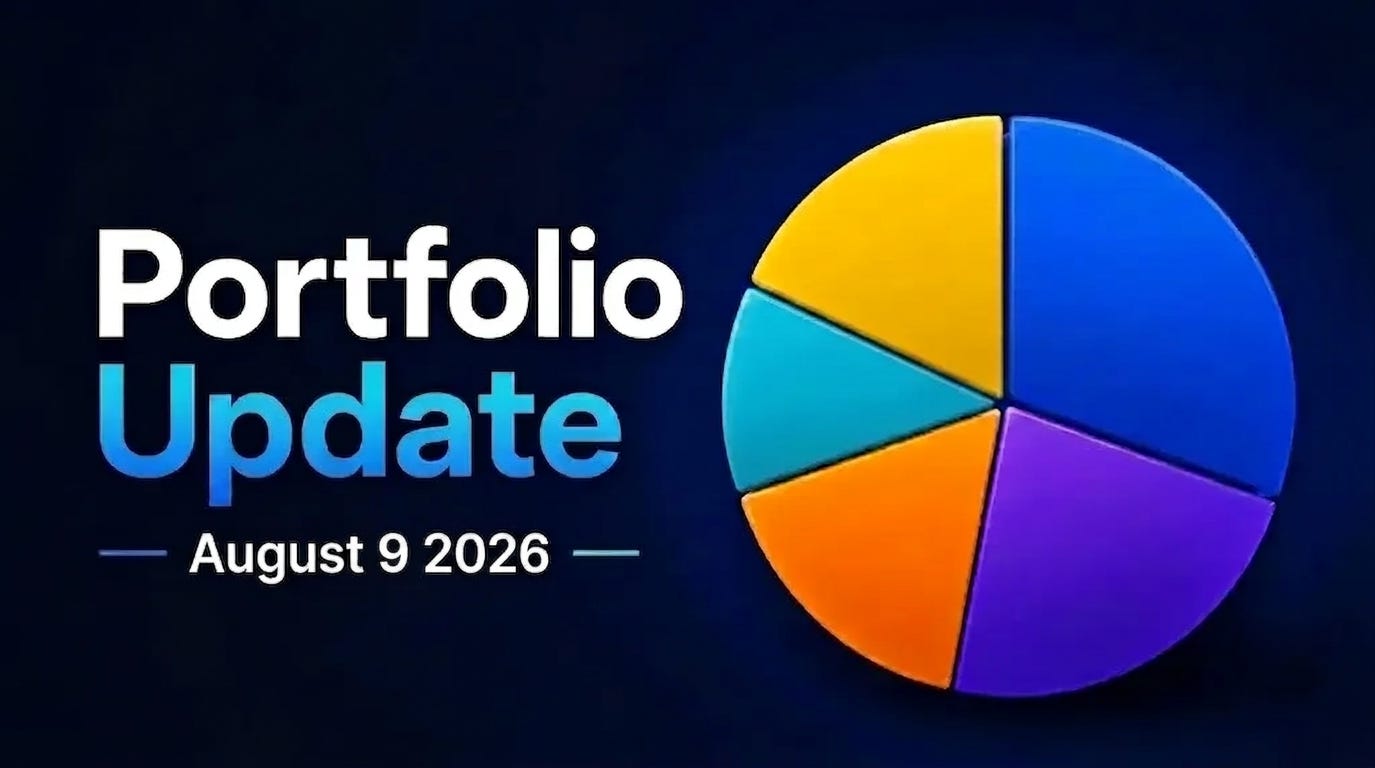
As of Friday’s market close, our portfolio allocations were as follows:
Comments
Nothing yet. Say the first thing.
Sign in to join the conversation.