
📅 If you’re going to Edtech Week, ping me on the Whova app! I’ll be facilitating and speaking at a few events. Ed3 DAO is also co-hosting an Edtech Week mixer. RSVP here!
Dear Educators & Friends,
Among the sea of AI products designed for education, Google’s NotebookLM has inspired me to pick up my digital pen this week. This tool offers features that go beyond simply regurgitating information—it makes you feel like AI is “reasoning” through content. It’s no wonder NotebookLM is going viral among students.
Let’s take a closer look at NotebookLM and why it feels like the promise of AI is finally materializing.
NotebookLM can generate a realistic, engaging podcast between two hosts about the content you upload.
Yes, the fact that the conversation sounds real is super cool. But what’s astounding is that the discussion delves deeply into every nuanced piece of your content, making analogies and references beyond the text that are fairly relevant. Google’s AI processes the text, applying and analyzing (two critical levels in Bloom’s Taxonomy) the information. It even reiterates points out of sequence.
For example, I used it to create a podcast based on one of my previous posts, “The Chilling Truth About Teachers,” and I was quite pleased. It managed to extract and highlight the nuanced points I made in an engaging and conversational way. I felt…so heard 😍.
0:00
-11:51
NotebookLM can generate timelines, FAQs, and briefing docs. All of these documents hit on points that go beyond regurgitation of the text - they make references to smart analogies to make “sense” of it all. They also cite the texts you’ve uploaded with exact quotes and page numbers.
NotebookLM has a study guide feature. I haven’t seen a better product out there that synthesizes the information and actually asks deep, meaningful questions to help students grasp the essence of the text.
Lastly, there’s a chat feature that allows you to continue the conversation beyond the texts you’ve uploaded. If this feature is powered by Gemini, there may be some limitations that emerge with more usage, but it’s a solid start.
🚩 I’ve been pretty adamant about the assertion that AI cannot make “meaning”. Interacting with this tool *almost* convinced me, until… the more I used GoogleLM, the more it started to add context that wasn’t in the text and making content leaps that weren’t entirely accurate. For example, I tried generating a podcast using this issue you’re currently reading and it added so much context about NotebookLM and Google’s own talking points that it veered away from the content I uploaded and started talking about personalized tutoring. So while I am incredibly impressed by what NotebookLM can do, I still don’t think it makes meaning in the nuanced ways humans do.
Teachers frequently use Bloom’s Taxonomy to audit student cognitive skills through assignments. But with this new tool, it might become hard to differentiate between what students know and what they’re simply regurgitating from NotebookLM’s analysis. It handles the type of thinking we typically ask students to do in subjects like History, Literature, and Science. This was already an assertion I made about AI almost a year ago, but this tool wraps it in a bow.
So how does this affect the assignments we give students? Perhaps more importantly, if we have such a powerful tool at our disposal…is it time for Bloom’s part two?
I’ve imagined multiple futures for AI in education, and this scenario was definitely one of them. I just didn’t anticipate how quickly we’d arrive here. It feels like we’ve moved beyond simple substitution and augmentation to a point where we’ll need to rethink task design and create entirely new ways to engage students in learning.
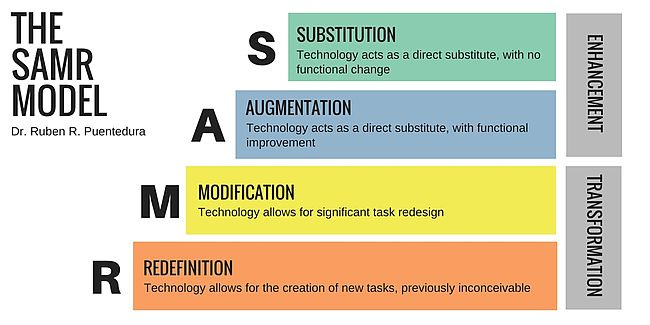
If AI can handle the high-level thinking, should we be asking students to engage in even higher-level thinking? Instead of having them synthesize and analyze a text, should we ask them to evaluate what AI “thinks” about the content? Should Bloom’s Taxonomy evolve to include new levels, like metacognition and innovation? What’s Bloom’s 2.0?
Should Bloom’s Taxonomy evolve to include new levels, like metacognition and innovation?
Here are some preliminary thoughts—but there’s a lot more to unpack, so I’ll revisit in the future.
Early Childhood & Elementary
For the same reasons we emphasize foundational skills in Numeracy and Literacy, even with calculators and transcription tools readily available, we’ll want to maintain the core levels of Bloom’s in early education. We might need to limit access to this kind of AI tech in Elementary unless it’s used to support understanding from the ground up. Given that many children are already struggling to master the fundamentals, perhaps teachers and parents could leverage products like NotebookLM to guide personalized learning pathways for Literacy and Numeracy, and also to craft project-based learning experiences and plan for emergent curriculum. What we absolutely don’t want is for young students to lose their self-governance and ability to critically think because AI can do it for them.
Middle, High School, & Higher Ed
This is where we’ll see the most significant shifts. With increased student autonomy, access to technology, and a focus on preparing for the workforce, these grade levels are primed for NotebookLM. If AI is handling the analytical heavy lifting, what should students focus on? How will educators develop rigorous assignments and assessments?
So far, the best, most obvious answer, is skills-based learning. If students are using AI, how might we we layer Durable Skills onto Bloom’s Taxonomy and prioritize competency-based learning through performance-based tasks? How might we evaluate depth of understanding on a more refined level than Bloom’s and incorporate metacognition and innovation into our learning experiences?
The Mastery Transcript Consortium (MTC) and Educational Testing Service (ETS) recently partnered to explore skills-based learning assessments—perhaps this is a natural extension. But if they’re reading this, I hope they’re prepared to extend expectations for student work-force readiness. With tools like NotebookLM (especially as they get better), the work we’ll be expected to produce will become more cognitively complex.
Considering the capabilities of new AI tools like NotebookLM and OpenAI’s Strawberry, as well as the race toward Artificial General Intelligence, the promise of AI for transforming education is really manifesting. Although this journey will continue to be volatile and difficult to digest for many learning institutions, there’s no stopping it now.
Thanks for reading.
Warmly yours,
Vriti Saraf
I’m Vriti and I lead two organizations in service of education. Ed3 DAO upskills educators learning on emerging technologies through research-based pedagogies. k20 Educators builds metaverse worlds for learning.
Comments
Nothing yet. Say the first thing.
Sign in to join the conversation.