
There is a fashionable argument doing the rounds: reshored manufacturing will be highly automated, automation means few jobs, therefore the jobs metric — the KPI that has organised investment promotion for four decades — is obsolete. The mechanics are correct. The conclusion is not. And we know this because Europe has already run the experiment.
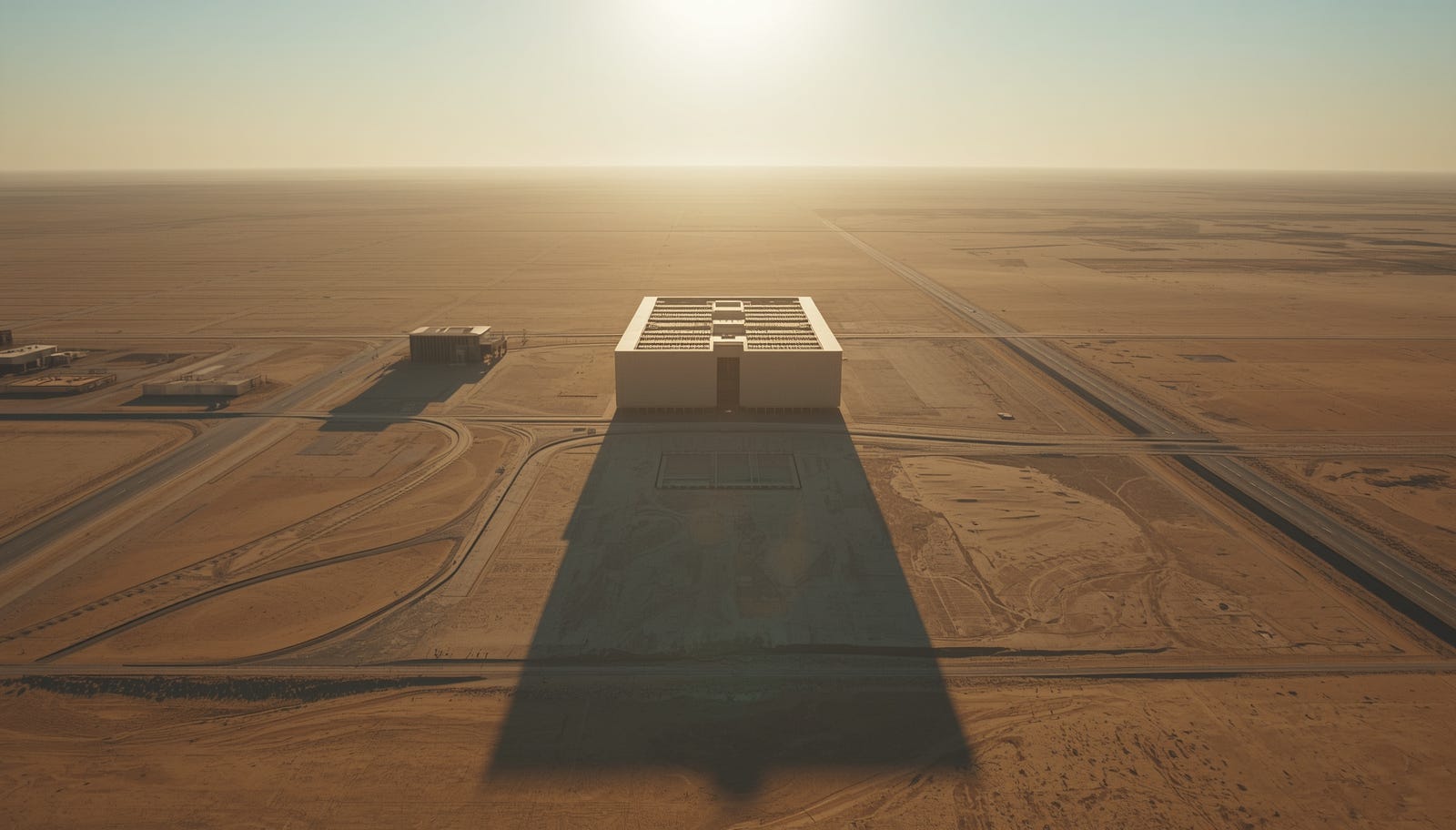
Italy’s Cassa per il Mezzogiorno, established in 1950 and wound up in 1984, was for three decades the largest regional development programme in Western Europe. From 1957 its incentive architecture rewarded precisely what today’s reformers celebrate: large, capital-intensive plants — steelworks and heavy engineering at Taranto, refineries at Porto Torres. They were enormously expensive, frequently produced goods nobody wanted, and employed very little local labour. Italians gave them a name that should hang over every “beyond jobs” panel: cattedrali nel deserto. Cathedrals in the desert. Capital arrived. Development did not. The lesson was not that headcount is a crude metric — it is that investment which never reaches household income never anchors.
The second cautionary tale is what happens when you swap headcount for “economic value”. Ireland ran that one too. In July 2016 the Central Statistics Office restated Irish 2015 GDP growth at 26.3%, up from an initial 7.8% — a figure Paul Krugman dismissed as leprechaun economics, driven by roughly €300bn of relocated intellectual property and aircraft-leasing assets rather than anything an Irish household could feel. The distortion was severe enough that Ireland had to build a parallel statistic, modified gross national income (GNI*), simply to see its own economy: in 2024 GDP stood at €533bn against a GNI* of about €312bn.
That gap is the warning. GVA and “economic value” can be booked, shifted and inverted across borders. A payroll cannot. A job is the hardest FDI metric to fake, which is exactly why ministers, auditors and voters trust it. Replace it with strategic value and ecosystem contribution and you don’t get sophistication — you get vague partnerships, no-outcome conferences, and claims nobody can falsify three years later.
None of which means the critics have the arithmetic wrong. TSMC’s Arizona programme is the sharpest available illustration: against the $165bn committed as of 2025, TSMC Arizona’s own president put direct employment at roughly 12,000 once all facilities are running — about $14m of capital per direct job. The commitment has since risen to $265bn without a corresponding jobs revision. But look at how Arizona sells it. The Greater Phoenix Economic Council’s 2024 analysis of the first three fabs leads with $1.4bn in tax revenue over thirteen years and $9.3bn in direct and indirect personal income. Even the most capital-intensive project in modern economic development is being justified in household-transmission terms. The jobs number shrank. The jobs logic — payroll, local spending, tax base — did all the work.
So the defensible position is not “jobs are obsolete” but “headcount alone is insufficient”. Three adjustments, none radical:
Measure payroll, not positions. Eight hundred jobs at €35,000 and two hundred at €140,000 are the same wage bill with very different community footprints. Total compensation transmitted locally is auditable and automation-proof.
Weight by development stage. In labour-surplus economies — India, Indonesia, much of Africa — headcount remains exactly the right KPI, because absorbing workers is the development problem. In labour-scarce Central Europe, fiscal yield per hectare and supplier localisation rates matter more. The single global playbook was always a fiction.
Keep every replacement metric falsifiable. If it cannot be audited three years after the incentive cheque clears, it is not a KPI. It is marketing.
The jobs metric survived for forty years not because IPAs lacked imagination, but because it is the one number that connects a boardroom decision to a family’s rent. Retire it carelessly, and we will build cathedrals in the desert again — this time with better renderings.
No posts
Comments
Nothing yet. Say the first thing.
Sign in to join the conversation.