
We’ve curated the most valuable insights, trends, and strategies you need to stay on top of your game in e-commerce. Whether you're looking to optimize conversions, explore new growth tactics, or leverage the latest AI tools, this digest has everything you need to fuel your business growth. Dive into this week’s must-read content and take your e-commerce strategy to the next level!
Let’s start!

Access exclusive, high-paying remote AI training roles with flexible hours. No prior AI experience required.
E-commerce Data & Catalog Specialist - $40 - $50/hour
E-commerce Simulation Expert - $40 - $50/hour
Management Consultant - $154 - $210/hour
Project Management Specialist - $63 - $119/hour

Visual consistency plays a crucial role in building trust in ecommerce, where customers rely entirely on what they see. When product pages, ads, emails, and social content all share a cohesive visual identity, shoppers feel more confident that they are buying from a reliable brand. In contrast, inconsistent imagery can create hesitation, weaken credibility, and make purchase decisions more difficult. As brands grow, maintaining this consistency becomes increasingly challenging, but AI can help by generating new visuals that preserve a unified brand identity across every customer touchpoint.
Three key takeaways
Consistent visuals across product pages, marketing campaigns, and social channels reinforce trust and reduce customer hesitation during the buying journey.
Brand consistency is not about making every image identical—it is about creating a recognizable visual language that strengthens brand perception over time.
AI can help brands scale content creation while preserving a cohesive visual identity, ensuring new products and campaigns feel like part of the same brand story.

Permanent promotions may seem like an effective way to drive ecommerce sales, but over time they can hurt profitability and weaken a brand. When customers expect constant discounts, they delay purchases until the next sale, making full-price transactions increasingly rare. Frequent promotions also reduce the perceived value of products and erode trust, as shoppers begin to question whether discounts are genuinely special. Instead of relying on endless price cuts, businesses can build long-term growth by focusing on exclusive offers, personalized experiences, loyalty programs, and customer value, using promotions strategically rather than continuously.
Three key takeaways
Constant discounts train customers to wait for sales, reducing full-price purchases, shrinking margins, and weakening brand perception.
Replace broad promotions with higher-value strategies such as product bundles, limited editions, personalized offers, and loyalty programs that reward customers without devaluing products.
Measure success through long-term indicators like net margin, average order value outside promotional periods, customer retention, and brand perception rather than short-term sales spikes.
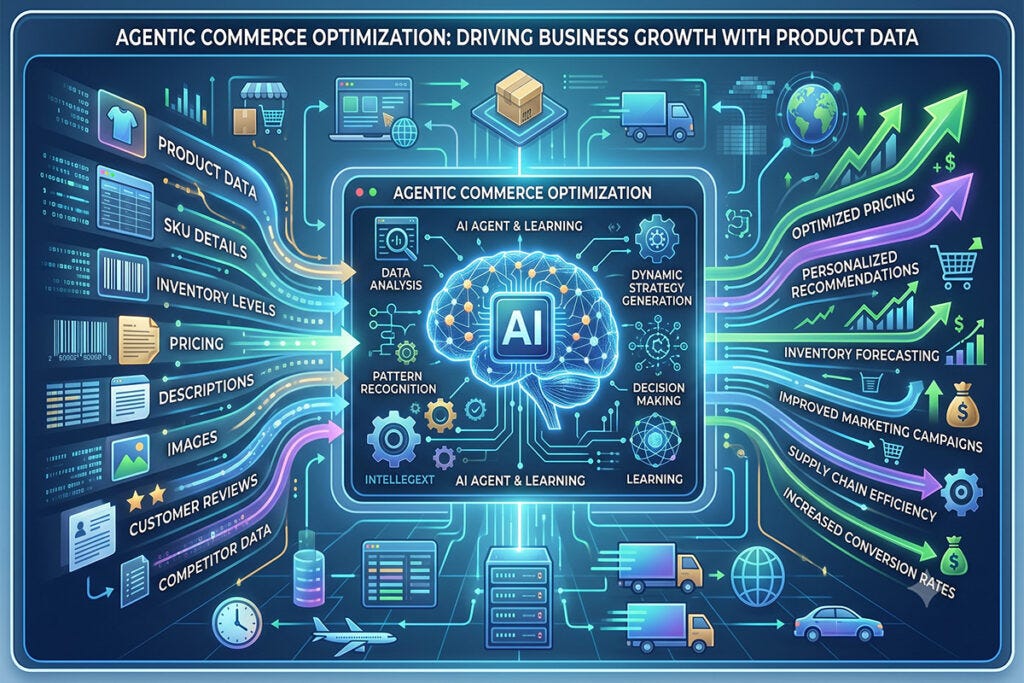
The article explains that AI is becoming a new “decision layer” in ecommerce, changing how shoppers discover products before they ever visit a marketplace or retailer. Instead of relying solely on search results, consumers are increasingly using AI assistants to research, compare, and shortlist products. For marketplace sellers, this means success will depend less on traditional search optimization and more on providing rich, accurate product data, strong trust signals, and compelling content that AI systems can understand and recommend. While AI is reshaping discovery, trust, reviews, and marketplace reputation remain critical factors in the final purchasing decision.
Three key takeaways
AI is becoming the first step in product discovery, so sellers need structured product data, detailed attributes, high-quality content, and accurate inventory to remain visible in AI-generated recommendations.
Trust still drives conversions. Customer reviews, seller reputation, recognizable brands, and reliable marketplace infrastructure continue to influence purchasing decisions even when AI recommends products.
Marketplace sellers should prepare for AI-driven commerce by optimizing product information, maintaining competitive pricing, and strengthening trust signals rather than relying solely on traditional SEO or marketplace search rankings.

Between June 2025 and June 2026, the average cost-per-click (CPC) on Google Ads increased by 15% across European ecommerce campaigns, while return on ad spend (ROAS) fell by more than 40%. Based on Channable's analysis of €1.38 billion in verified ad spend from over 10,000 advertisers, the findings show that brands are paying significantly more for traffic but generating lower returns. The report suggests that success now depends less on increasing budgets and more on optimizing product feeds, campaign structure, and product data—especially ahead of the competitive Q4 shopping season.
Three key takeaways
Google Ads CPC rose 15% year over year, while ROAS dropped 43% for Standard Shopping campaigns and 46% for Performance Max, highlighting growing pressure on advertising profitability.
The benchmark analyzed €1.38 billion in verified Google Ads spend across more than 10,000 European ecommerce advertisers, making it one of the largest datasets of its kind.
Rather than simply increasing ad budgets, retailers are encouraged to improve product feed quality, optimize campaign structure, and prepare strategically for Q4, when ad spend is nearly 48% higher than in Q1 and competition is at its peak.

Social media is increasingly bringing shoppers from their screens back to physical stores. According to new research from EY and Public First, 4.3 million people in the UK have visited an independent shop after discovering it on TikTok, while 6.1 million have visited a local café or restaurant through the platform. The trend spans multiple generations and is helping small businesses compete with larger retailers by driving both online engagement and in-store sales. With more than 300,000 small businesses now selling on TikTok Shop and live shopping continuing to grow, social commerce is becoming an important driver of local retail.
Three key takeaways
TikTok is boosting footfall as well as ecommerce, with millions of consumers visiting independent shops, cafés, and restaurants after discovering them on the platform.
More than 300,000 small businesses sell through TikTok Shop, LIVE shopping has grown 55% year over year, and 84% of businesses say the platform has increased their sales and revenue.
For local retailers, TikTok offers a way to compete with larger chains by increasing visibility, building communities, and turning viral content into real-world customer visits and business growth.
That’s all for this week! See you in the next edition of E-Commerce Innovator’s Journal. Don’t forget to share these insights with your friends and colleagues to help them grow too!
No posts
Comments
Nothing yet. Say the first thing.
Sign in to join the conversation.