
We’ve curated the most valuable insights, trends, and strategies you need to stay on top of your game in e-commerce. Whether you're looking to optimize conversions, explore new growth tactics, or leverage the latest AI tools, this digest has everything you need to fuel your business growth. Dive into this week’s must-read content and take your e-commerce strategy to the next level!
Let’s start!

Access exclusive, high-paying remote AI training roles with flexible hours. No prior AI experience required.
E-commerce Data & Catalog Specialist - $40 - $50/hour
E-commerce Simulation Expert - $40 - $50/hour
Management Consultant - $154 - $210/hour
Project Management Specialist - $63 - $119/hour

Product visuals can become outdated long before the products themselves. As trends, seasons, and customer expectations change, stale photography can quietly reduce engagement and make a brand feel less relevant. Rather than waiting for performance to decline before commissioning another photoshoot, the article argues that e-commerce brands should treat product imagery as an ongoing optimization process. AI tools such as Hippist can make this approach more practical by transforming existing studio images into seasonal campaigns, lifestyle scenes, marketplace assets, and social content without repeatedly organizing traditional shoots.
Three key takeaways
Outdated product photography can gradually hurt engagement even when the underlying product remains unchanged.
Regular, smaller visual updates can keep e-commerce stores and campaigns feeling current without requiring major redesigns.
AI-generated variations can lower the cost and effort of continuously refreshing product imagery across seasons, campaigns, and sales channels.

An effective omnichannel strategy connects ecommerce and physical stores so customers receive a consistent experience wherever they shop. PrestaShop highlights the importance of aligning prices, promotions, branding, inventory, and customer data across channels while giving shoppers flexible options such as click & collect and in-store returns for online purchases. Integrated POS systems play a central role by synchronizing sales, stock, promotions, and customer histories, helping retailers personalize interactions and create a smoother transition between digital and physical shopping.
Three key takeaways
Consistent pricing, promotions, visuals, and service across online and physical stores build trust and reduce friction.
Centralizing customer histories and purchase data enables better personalization and synchronized loyalty programs.
Integrated POS systems connect ecommerce and in-store operations, enabling unified inventory, promotions, click & collect, and cross-channel returns.
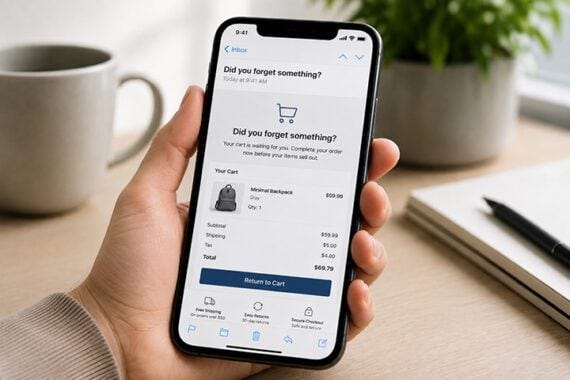
Cart recovery in 2026 should go beyond generic reminders and focus on addressing the likely reason a shopper abandoned a purchase. The article groups those reasons into transaction friction, purchase uncertainty, and resistance to the offer. Traditional fixed email and SMS sequences can help, but often make broad assumptions about individual shoppers. Merchants can improve results through better segmentation, coordinated channels, retargeting, and measurement—or use AI decisioning to dynamically select the message, incentive, and timing most likely to convert each shopper.
Three key takeaways
Cart recovery should address specific barriers—such as checkout friction, product uncertainty, shipping costs, or price—rather than simply reminding shoppers about abandoned items.
Merchants can improve fixed recovery programs with multiple sequences, coordinated email and SMS, retargeting, A/B testing, and measurement of incremental revenue.
AI decisioning offers a more personalized approach by using cart value, product type, purchase history, and shopper behavior to determine the best recovery tactic and timing.
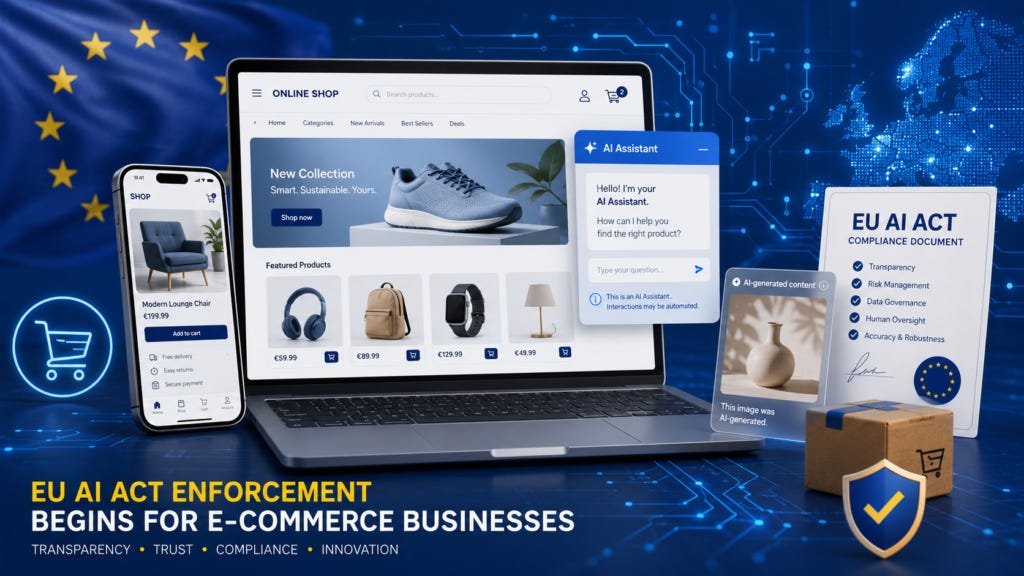
From 2 August 2026, Article 50 of the EU AI Act introduces new transparency requirements affecting e-commerce businesses that use chatbots, generative AI, and synthetic media. Customer-facing AI systems generally need to identify themselves as AI, while visible labels for AI-generated content are mainly required for deepfakes and certain public-interest material. Ordinary AI-assisted product descriptions and marketing images do not automatically require labels. Retailers should audit AI systems, preserve technical markings, establish meaningful human review, clarify vendor responsibilities, and ensure synthetic content does not mislead consumers.
Three key takeaways
Customer-facing chatbots and virtual assistants should clearly disclose that users are interacting with AI from the first interaction.
AI-generated commercial content does not automatically need a visible label, but deepfakes and certain public-interest content face stricter disclosure requirements.
E-commerce businesses should document human review, audit synthetic media, update AI vendor contracts, and avoid fabricated reviews or misleading product representations.

A July survey of 1,018 online shoppers suggests younger and AI-savvy consumers could play an outsized role in the 2026 holiday season. Among shoppers aged 18–29, 46.3% expect to spend more than last year, a higher proportion than any older age group. Price remains critical, with 81.8% saying prices and discounts will influence purchases. AI is also becoming mainstream: 40% have recently used it for shopping, while another 18.7% are interested in trying it, creating opportunities for retailers to improve AI-assisted discovery and recommendations.
Three key takeaways
Younger shoppers show the strongest spending optimism, suggesting retailers may want to prioritize the platforms and channels that reach them.
Price and promotions remain decisive, with 81.8% of respondents saying they will influence holiday purchases.
AI-assisted shopping is gaining traction: 40% already use AI to support shopping decisions, with a further 18.7% interested or curious about trying it.
That’s all for this week! See you in the next edition of E-Commerce Innovator’s Journal. Don’t forget to share these insights with your friends and colleagues to help them grow too!
No posts
Comments
Nothing yet. Say the first thing.
Sign in to join the conversation.