
If there’s a characteristic “soundtrack” for the World Cup, it’s relentlessly upbeat and mostly digital. Club music, often with a reggaeton undercurrent. On Telemundo and Fox and in the crisp FIFA highlight segments, the music seems designed to emphasize the speed and dexterity of the athletes. It’s a kind of audio shorthand: brisk elevated-heartrate beats supporting sleek and inevitably repetitive stadium-sized themes.
But soccer itself depends on graceful motion. The drives are fast, sure, but they’re rarely unbroken; it’s a sport of pivots and fakes, redirections and sudden surges. Watch some with a Chopin nocturne playing, and the contest slows down a bit, to reveal the balletic control and poise of the players. And, also, the long-game coordination between them as a drive unfolds.
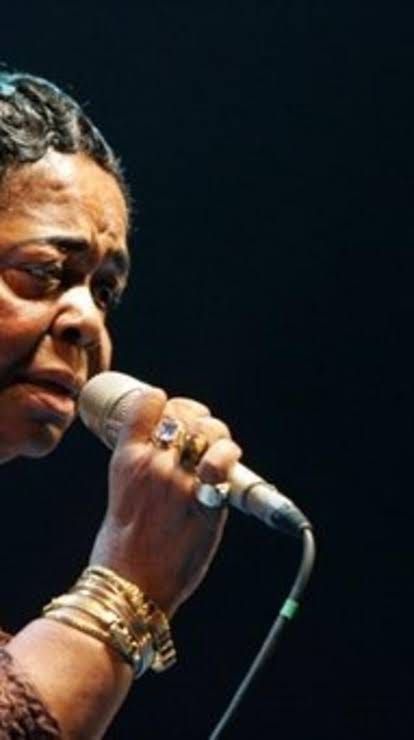
Or maybe put on some stately morna from Cabo Verde – sung by the late Cesaria Evora, the “barefoot diva” who brought it to global awareness in the 1990s. This track, released in 1995, was part of her second attempt at a career, which began when she was in her ‘50s.
Right now, the comments underneath many of Evora’s songs on YouTube say things like “World Cup 2026 Brought Me Here” – remarkable considering how isolated Cape Verde was when Evora was born. The nation is made up of s a string of small islands in the Atlantic, off the coast of West Africa. Population: Small, about 1% of Argentina’s. Character of the people: Fierce. That resolve is an inescapable trait of the music, not just with Evora but the other singers of morna who preceded her, including the 7-foot-tall Bana…
Those who caught the heroic David vs. Goliath run of the Cabo Verde team witnessed the spirit of the people over and over again – tying Spain in its first-ever Cup match, then fighting to draws against Uruguay and Saudi Arabia before reaching the knockout round. Where they took defending Cup champion Argentina into extra time, and only then lost. The key to the team’s run was the score-denying work of uncannily agile goalkeeper Vozinha (Josimar Dias). Who is 40 years old (!) and has been with the Cape Verde national team since 2012. Spain made 27 attempts on goal against Cape Verde; Vozinha saved every one of those that FIFA designates as “on target.” (The below highlight reel was not produced by FIFA.) If pressed for the short explanation for Cabo Verde’s long run, it’s one word: Vozinha.
Morna is reflective, sentimental music. It’s usually sung in Cape Verdean Kriolu, a blend of Portuguese and West African dialects. It gathers elements of the romantic fado (from Portugal) and the wistful boleros and modinhas of Brazil, and uses instruments common in samba, including the four-string cavaquinho. The quality of longing present in the abovementioned styles is known in Portuguese as “saudade,” and in Kriolu as “sodade.”
In interviews during the years of her international popularity, Evora spoke reverently about the physical beauty of Cape Verde, explaining that its pace of life suited her better than the bustle of cities like New York and London. She talked about performing regularly on radio, as a young woman just starting out in the 1960s. Some of those recordings were sent to a label in Holland, then edited for a limited release in 1965.
Evora was not compensated for those recordings at the time – or others she made in the ‘60s. As she explained in a 1983 interview, she needed the money and quickly grew disillusioned about music. “I was exploited and never had the luck to face music as a possible future. Because of this I closed myself at home with no pleasure of going out.”
Evora eventually allowed them to be released internationally in 2008, as Radio Mindelo via Lusaafrica. They capture her working with a small group of musicians, and though her vocal instrument is brighter and at times radiates optimism, the textural smokiness is there — along with her ability to wring disarming deep emotions from slight, seemingly offhand gestures. Check the understated phrasing on this, one of the tunes she recorded several times in later years:
And, of course, there’s a remix of one of Evora’s later versions….
Even here, situated within a somewhat incompatible machine groove, Evora puts her humanity right out there. Insists on it. Brings it to life with grace. Within her reverie are hints of disappointment and regret, the contemplation of losses that get filed under “what might have been.” But there is never resentment: She’s singing through scars, not simply because of (or in spite of) scars. She’s not defeated. The world dealt her an undeserved bad hand, and she’s using it the way great artists do: To chase down the sublime.

No posts
Comments
Nothing yet. Say the first thing.
Sign in to join the conversation.