
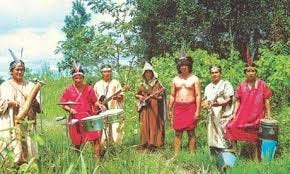
Longtime visitors to this space might remember that the correspondent has a soft spot for the irreverent and sometimes wacky musical smashups that came from Peru in the 1960s and ‘70s.
Not too long ago, we celebrated the insinuatingly tuneful Farfisa-organ-propelled surf-rock delirium foisted on unsuspecting Peruvian adolescents in the late ‘60s. Check here for our breathless overview, which was by no means a “completist take” or “deep dive.” Link: https://echolocator.substack.com/p/house-of-the-holys-when-kids-in-peru
(Yes, the sign over the cash register here at Echo Locator does, in fact, read “No Deep Dives.” And we mean it! You’re welcome.)
Today’s topic: The high-speed collision of a Peruvian traditional form called huayno with the steady propulsion of Colombian cumbia. This smashup began in the Amazon in the 1960s, and became known as chicha – named after a corn-liquor adult beverage preferred by the Incas. The musical style has had several other names and marketing tags since; some outfits from rural areas called their music “Jungle Cumbia” and dressed in traditional feather headdress and clothing similar to the Shipibo people of Peru. Others went more Farfisa. Either way, the music is one of those bubbly and delightfully summery concoctions that waltz right in and invade human pleasure centers without asking permission. No two-factor authentication needed.
While we’re marveling, check this deliriously psychedelic ode to medicinal psychedelics, complete with soft-porn vocal embellishments.
The band that’s often cited among the pioneers of chicha is Juaneco y su Combo. Formed in the Amazonian city of Pucallpa (one of Peru’s oil-boom cities) in the early 1960s, the group was led by Juan Wong Paredes, a descendant of Chinese immigrants. Paredes recognized the mind-altering power of cumbia’s steady horse-and-buggy rhythmic repetitions – and, crucially, the music’s connection to Afro-Cuban rhythmic codes. But he and his son, who took over the group shortly after the start of its recording career, also experienced life on the Amazon river, that mighty conduit of news and culture from the entire region. This made them citizens of the world.
As the combo developed, they snagged ideas from all over – incorporating the metallic percussion instruments that drive parades in Brazil, and the accordion that’s central to cumbia, and also electric guitars. These are key. Often there are at least two and sometimes three, each playing a distinct line with percussive crispness, contributing to a latticework of overlapping ideas about motion.
When the elements lock together, Juaneco’s crew suggests a massive, chaotic collision between Latin and South American musics that, despite common elements, don’t typically intersect. The vocalists use Spanish to urge listeners to enjoy the rhythm – while singing a thinly-disguised Brazilian folk song. The guitarists veer from traditional arpeggio patterns to evoke the careening frenzies of surf rock.
The prevailing vibe on the group’s early albums is pleasure. When Juaneco and his combo are motoring through a sinewy medium-tempo cumbia groove, all the dancefloor imperatives are active: This is a dance band making dance music.
Simple. But it’s never just that. As the crisp Afro-Cuban conga-bongo-bell patterns lift up these ancient pentatonic melodies of the Andes, it’s possible to hear a spirit of borderless creativity operating on this bandstand. Here is the kind of strong, profound, vibrant sound that isolationist politicians cannot hear and therefore fear: An irresistible unified thing, drawn from many places and many proud traditions and nationalities.

No posts
Comments
Nothing yet. Say the first thing.
Sign in to join the conversation.