
A historical epoch is measured by its great human types and superior individualities. That is why I shall always refuse to regard modernity as “decline” — it gave us Napoleon, Byron, Hegel. That triumvirate alone suffices to justify the modern world. The problem of modernity was the emergence of the idea of human equality. Without it, modernity would have been a mixture of idealistic aristocratic spirit and advanced technology.
Yet, at the same time that modernity fell victim to a disease of its own making—the idea of human equality—it created the antidote to that very idea: the melancholic and vengeful Byronic hero, an existential scourge endowed with a warrior’s soul, a philosophical spirit, and a superior nature forged by his people’s high culture. The Byronic hero manifests the truth of the modern world, for every exception embodies the very truth of the average from which it deviates. The degraded mass of modern men—broken by egalitarianism and domesticated by mass culture—does not represent the true nature of the modern world; rather, it is the instrument the post-French Revolution political order devised to prevent the emergence of the Byronic hero. Such a hero could awaken the fury latent in the hearts of domesticated sheep and unleash the flames of vengeance against the revolutionary order born of the ontological crime of 1789.

We must, however, understand the very structure of the Byronic hero’s soul, for—as Socrates so aptly demonstrated in The Republic—the structure of a man’s soul mirrors the structure of the city. The defining characteristic of the Byronic hero is a soul marked by a fundamental pain and a deep existential wound. The Byronic hero suffers from neither depression, psychosis, nor trauma—nor any other spurious term invented by modern medicine—but is instead endowed with melancholy. To the ancients, melancholy was a temperament typical of superior spirits and philosophical souls—of those capable of foresight and clairvoyance—a Saturnian gift bestowed upon certain individuals chosen by the higher powers of the cosmos. In other words, the Byronic hero is a providential man and a divine emissary sent to punish his contemporaries, who have forgotten and betrayed the great tasks of the spirit and culture.
In the soul of the Byronic hero there resides above all a superior tension and longing for the Absolute. An Absolute lost by the modern world — for as Hegel said, modernity resembles an altar bereft of the Most High. The modern world is like a ruined Gothic cathedral; instead of a sumptuous altar, there is a collapsed roof that contemplates the spatial vastness of the cosmos. The soul of the Byronic hero yearns for a restored cathedral and an Absolute present in the consciousness of his people, for he knows that it is transcendence that drives men toward the great tasks of culture — war and art. But since the modern world is incapable of living in the latitudes of the Absolute, the melancholic and aristocratic hero embodies within himself all the contradictions of that world. He metabolizes these contradictions in his soul and alchemically transmutes them into a superior existential substance capable of serving as a dyke against the entropic forces of modernity. That is why we see in Romantic literature the figure of the Byronic hero as a tense constellation of intense qualities: personal magnetism, superior intelligence, extensive culture, strong charisma, violent sensual passions, despotic arrogance, and insubordination to the transcendent order and to God. Classic literary examples are: Manfred, The Corsair, and Childe Harold’s Pilgrimage by Byron; Victor Frankenstein in Mary Shelley’s Frankenstein; The Picture of Dorian Gray by Oscar Wilde; and The Count of Monte Cristo by Alexandre Dumas.
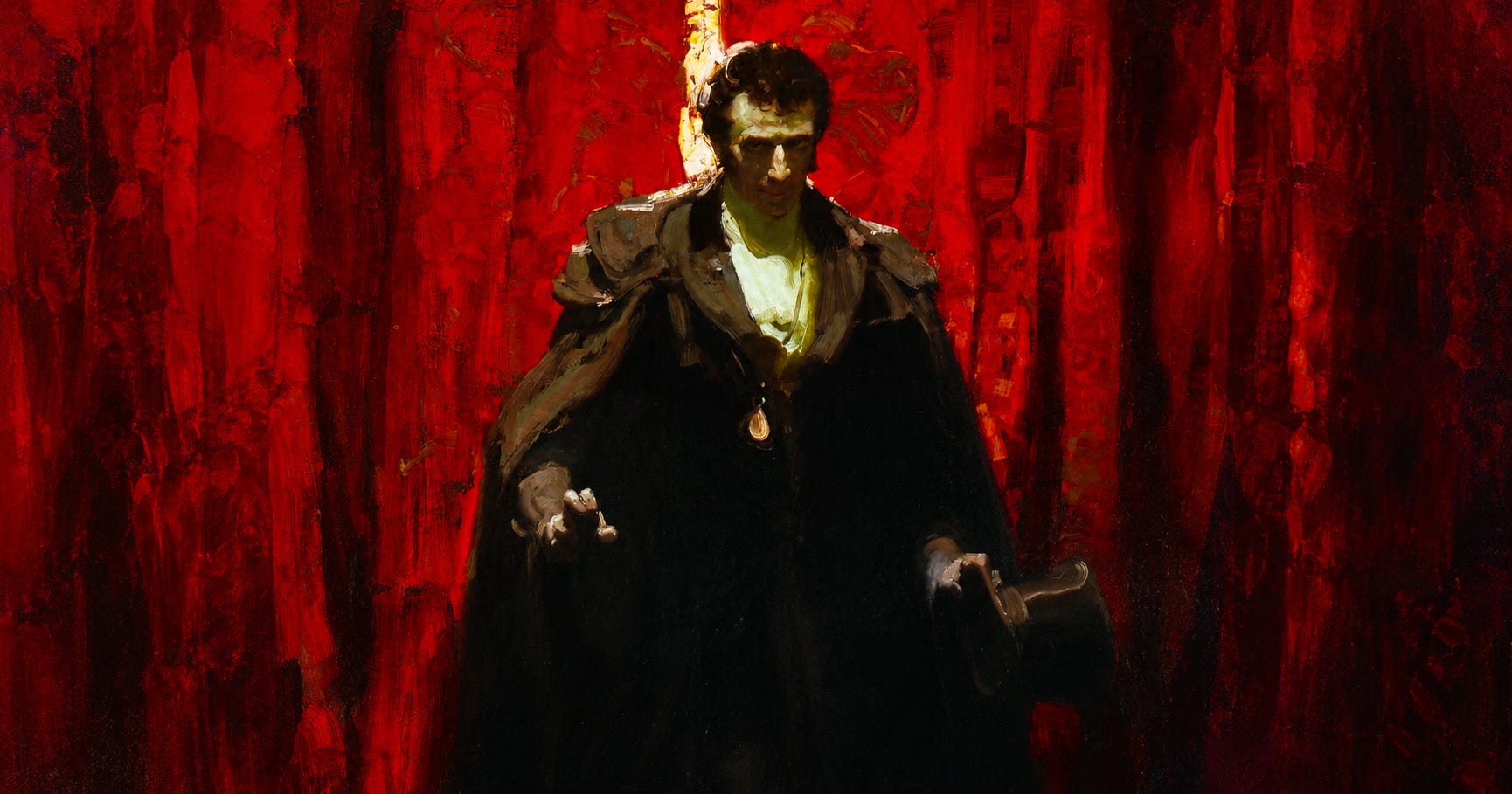
It may seem contradictory for me to affirm that the Byronic hero is a providential man and divine emissary while his figure and archetype itself — whether in the real person of Lord Byron or in his literary exemplars — always appears charged with a form of existential rebellion against God and the cosmic order. But this appears as a problem only to the sanitized, well-behaved Christianity of today, which does not understand the tortuous and mysterious ways of Providence. Hegel called the “Cunning of Reason” — List der Vernunft — the manner in which Providence makes use of the passions, ambitions, desires, and primordial impulses of superior individualities and personalities. It is typical of the philistine spirit of the contemporary Christian to imagine that God’s favourites are those spiritual eunuchs oppressed by the burden of a despotic family and completely resigned to their mediocre destiny. Such existential nullities are simply not the motor of history nor the vehicles of the Logos in the world. One need only read the Bible to see how God has always used superior and indomitable men as instruments of His will — including those of peoples who did not know the divine law. It is no accident that one of the scourges of the West said of himself: “Ego sum Attila, flagellum Dei” — I am Attila, the scourge of God.
Therefore, even in his personal revolt against the divine order the Byronic hero acts in the service of the divine cause. That is why he is tormented by an existential pain with which no conformist “Christian” sheep is endowed: he suffers for the lost Absolute of the modern world, while the Sunday-mass Christian leans on the security of family and community and ignores the true theological and spiritual drama of our age. The contemporary Christian is, for all practical purposes, an atheist in his private life, for he appears in no way tensed by the vertigo of the Absolute or by the abyss of nihilism that haunts the modern world. It is no accident that conventional and conservative Christianity has never managed to be an effective form of resistance against the levelling waves of modern egalitarianism. On the contrary, the degraded architecture of the churches, the horrible aesthetics of the “faithful,” the spiritual superficiality of religious communities, the shallowness and lack of culture of the typical contemporary Christian — all this manifests a surrender of present-day communal Christianity to the most degrading influences of modern egalitarianism. And this occurred only because the abyssal dimension of faith, the Gothic and violent character of the experience of the sacred, was replaced by a form of bovine adherence to communal morality and doctrinal conformism. The blame for this lies without doubt with Protestant rationalism; yet the Catholic Church is not exempt from this guilt, for the Counter-Reformation itself encouraged precisely this type of mentality and spiritual conformism.
For me everything is very clear: the manner in which certain individuals in an epoch awaken to the tasks of higher culture and the destiny of their tribe can only manifest the finger of Providence marking certain personalities with a superior destiny and elevating them above their milieu through certain gifts — intelligence, charisma, despotic will, beauty, magnetism, violent passions. And it is these personalities that must be nourished and encouraged by an aristocratic revolutionary cause that seeks to restore a vertical, hierarchical political order centered on the sacred. The idea of appealing to family fathers whose existential horizon is their job, their family, and a Sunday mass is a complete absurdity. No historical revolution was ever the work of the common man, who is by definition a man oppressed and subjugated by the force of his milieu and conformed in his submission. Only despotic, tormented, and volcanic personalities are the substance of a political revolution, for they are the ones who truly live in the drama of their souls the pain of that which the modern world has lost: the divine face revealed in the history of a people and in the interior of the soul of man.
*Consider becoming a paid subscriber and supporting my philosophical and cultural work. Your support is crucial for me to continue doing my work! Thank you very much for your attention.
Comments
Nothing yet. Say the first thing.
Sign in to join the conversation.