
Happy hump day, everyone. Last night I grabbed drinks at Bar Stella with Sophia Rivka Rossi and left feeling utterly inspired. She produced The Hills before building (and exiting) an undeniable media business, she’s consulted for some of the biggest players in the industry, and she’s also an emphatic LA evangelist. She’s the kind of multi-disciplinary media entrepreneur (though she might disagree with that characterization) that really only exists in LA, and I wish everyone could spend a few hours listening to her ideas.
Tonight I’m headed to El Prado, and on Friday I’m headed to the Mouthwash Magazine launch at Marta.
In today’s issue: comparing the development efforts of Zach Lasry and the Neman brothers (plus several new tenants for both), the end of Two Rose, the confirmed replacement for La Fe in Echo Park, a private school’s $200mm sports complex, a new Korean market in Highland Park, the east sider fronting Helmut Lang’s new campaign, Loose might be ending, Aubrey Plaza real estate updates, an art show in response to Taix’s demise, an $899k three-bedroom in Silver Lake, and the craziest house in Pasadena.
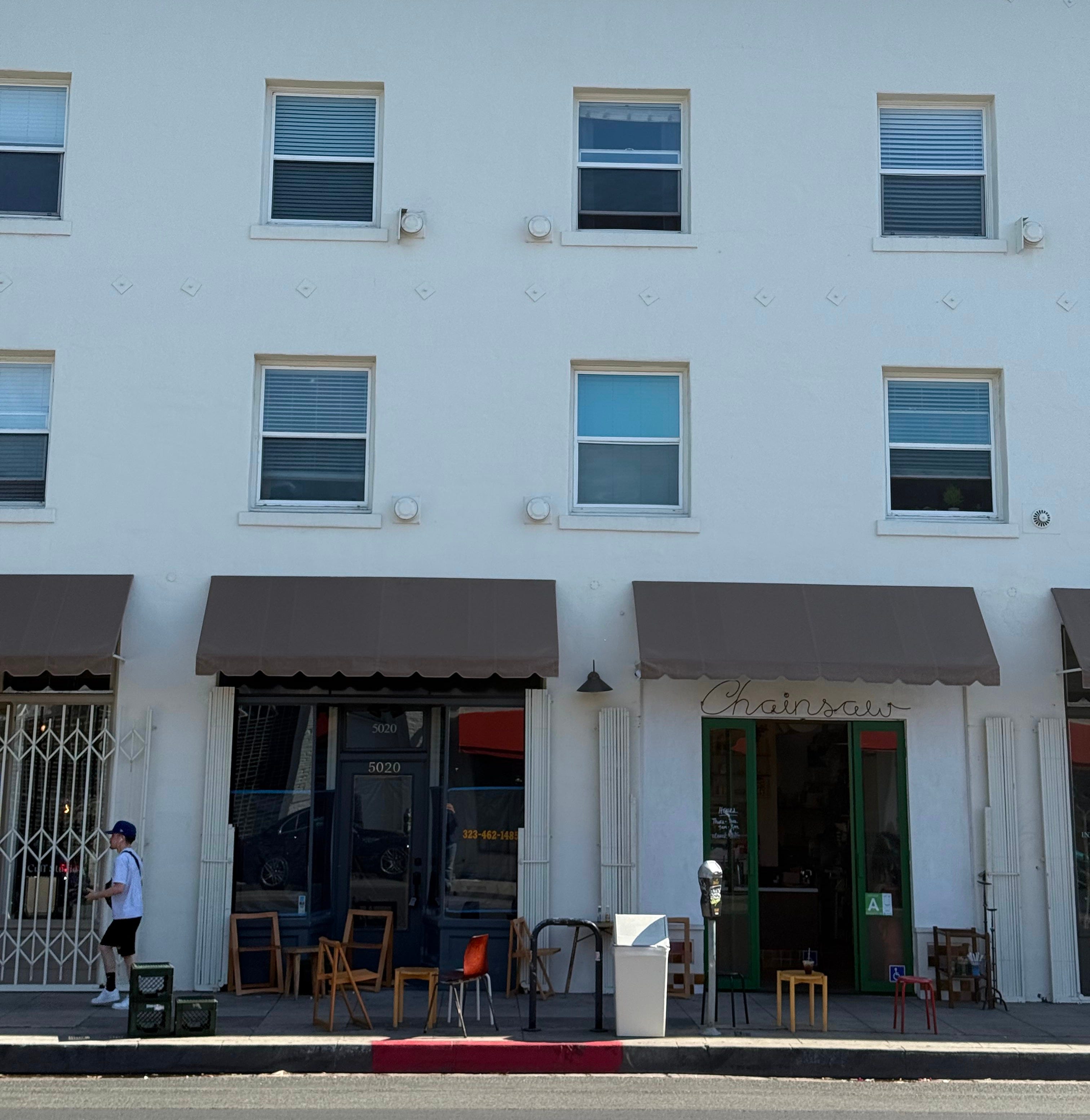
Love it or hate it — and there are plenty of haters, including those who take issue with the neighborhood’s name itself — no one can argue that what’s happening in Melrose Hill isn’t interesting. Billionaire heir Zach Lasry (his dad Marc is worth an estimated $2.2 billion and owns the Milwaukee Bucks) has acquired the lion’s share of the commercial real estate on the blocks surrounding the intersection of Melrose and Western and spent untold millions rehabilitating the neighborhood’s semi-dilapidated historic structures. His focus on restoration, rather than the typical LA developer strategy of razing and rebuilding, means the neighborhood remains uniquely low-rise. (It’s worth noting the obvious here: unlike most developers, Zach can afford to think about a return on his investment in terms of decades, not years.)
What really sets Melrose Hill apart, though, is the selectivity Zach and his team have employed in filling his newly-acquired properties. Over the course of conversations with with Melrose Hill tenants, employees, and real estate sources, many people spoke of Zach’s singular vision for the neighborhood: he knows exactly what kind of tenant he wants (and has been known to offer steeply reduced rent, subsidized interior buildouts, and other perks in order to secure those people), and conversely, what kind of tenant he doesn’t want (allegedly, several chain stores have been denied leases). The past few years have seen the arrival of instant culinary favorites like Ètra, Chainsaw, Little Fish, LA Grocery & Café, and Bar Ètoile; retailers like Pop Up Home and Ending Soon; and a slew of big-name art galleries (including, most notably, the first west coast location of David Zwirner) to an area formerly occupied largely by discount furniture stores.
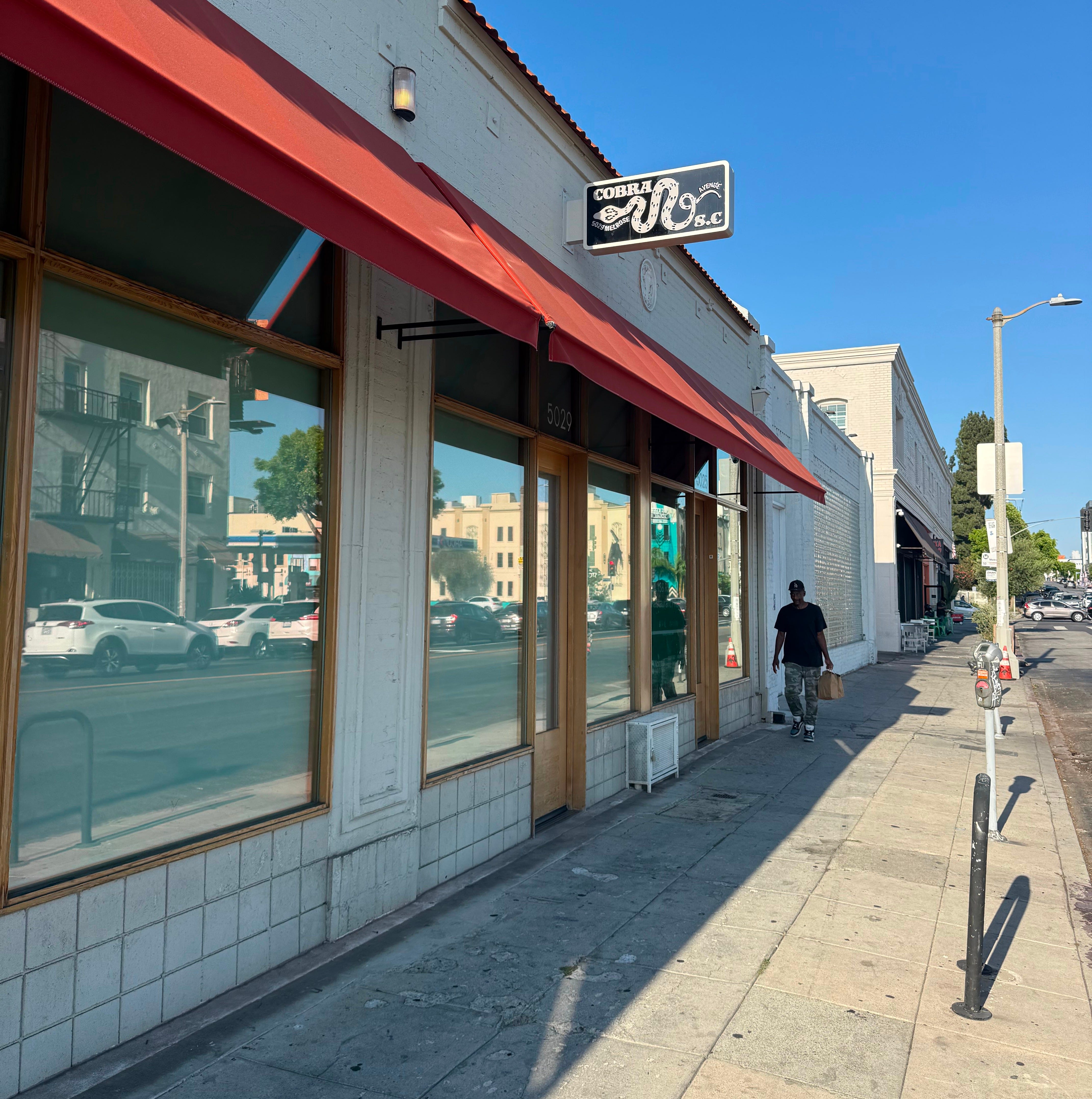
With the exception of the galleries (and a few other exceptions), almost all of the businesses Zach and his team have brought to Melrose Hill are local operators. They’ve been discovered at ghost kitchens, at east side pop-ups, and in many cases (this is going to sound like hyperbole, but it’s not) given life-changing opportunities to launch brick-and-mortar businesses. Melrose Hill’s detractors, including those who decry the neighborhood’s name as an unwanted brand-building exercise, regularly speak to the ongoing gentrification of a traditionally working-class corridor — a completely legitimate argument, to be clear — but there’s no denying that the neighborhood is playing a unique and fascinating role in incubating a new generation of local businesses and entrepreneurs.
It’s also worth comparing Zach’s efforts to those of his closest analogue, the Neman brothers (affectionally referred to as the Sweetgreen brothers) in Silver Lake. Ryan and Daniel Neman — they’re heirs to a Beverly Hills-based textile fortune, and their brother Jonathan is a cofounder of Sweetgreen — have snapped up a staggering percentage of the retail stock in Sunset Junction. Unlike the Melrose Hill team, they’re….decidedly indiscriminate when it comes to tenants. They’ve filled their growing Sunset Boulevard assemblage with corporate tenant after corporate tenant, from New Balance to DS & Durga to Baggu to Free People. According to many in the neighborhood, the brothers are almost single-handedly responsible for the ongoing and unfortunate “blandification” of Sunset Junction. (The Nemans don’t actually live on the east side, which could be part of the problem; Zach Lasry is a longtime Los Feliz resident.)
Comments
Nothing yet. Say the first thing.
Sign in to join the conversation.