
KYIV—Ukraine is currently going through a remarkable bout of optimism, something I don’t think we’ve seen since late 2022 and that I’ll discuss later in this issue. I wanted first to talk about a couple of interesting stories on Ukrainian politics that came out in the past few days. There’s first and foremost this piece by Ukrainska Pravda that reactivated the debate on potential wartime elections:
The headline looks like an impressive case of lede-burying, as it omits the piece’s biggest scoop that Zelenskyy has reportedly been considering holding presidential elections this autumn. Another, smaller scoop is that former general Valery Zaluzhny reportedly told Zelenskyy face-to-face that he would be a candidate in these elections.
Presidential elections in four months? While Zelenskyy has a knack for unexpected announcements, I think it’s fair to remain skeptical here, given the lack of any apparent preparations for such an incredibly complicated process to be held on such short notice. Zelenskyy and his team “seriously discussed” the possibility of a November election, the piece claims—while stopping short of saying a decision has been made.
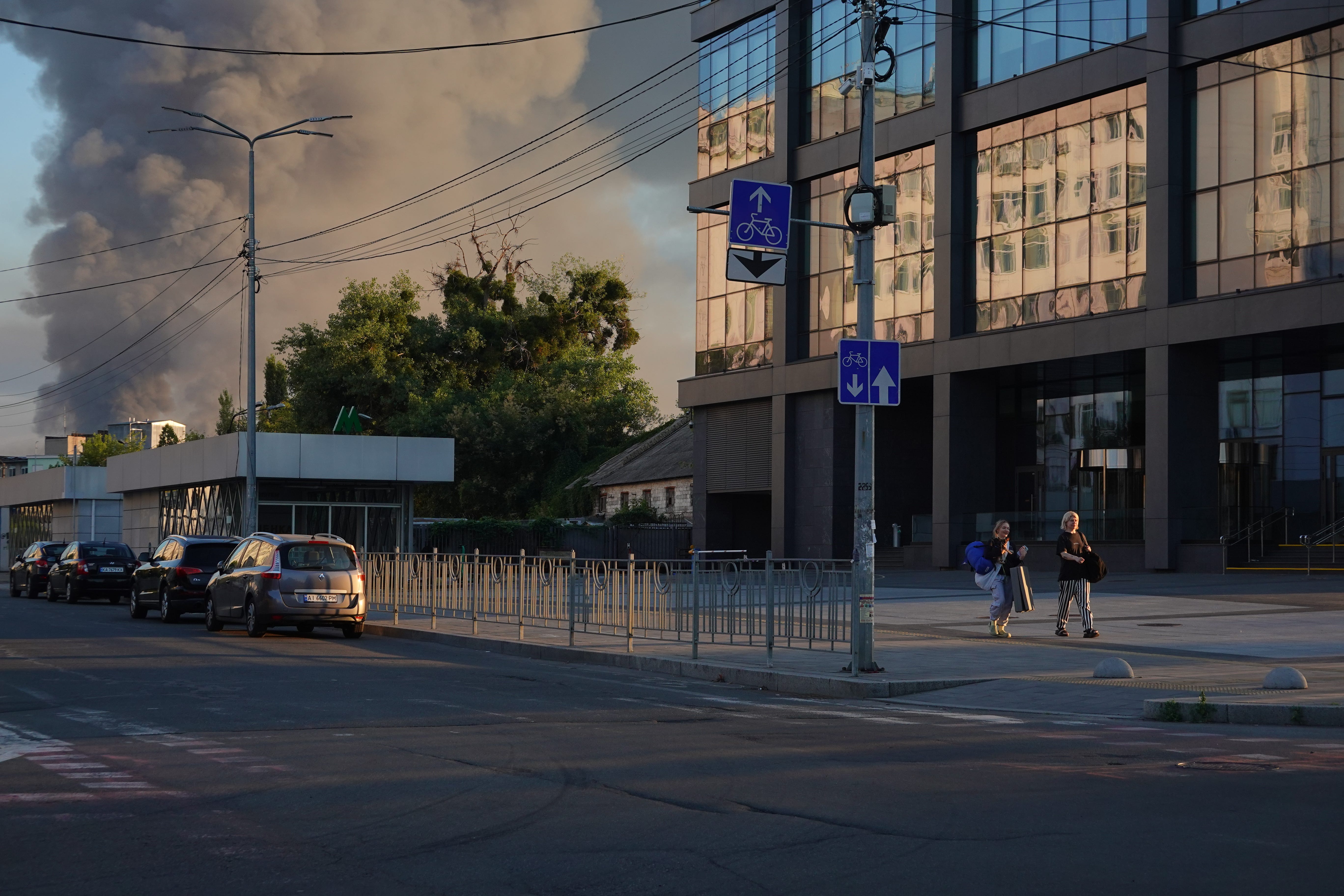
There’s nevertheless something interesting there. Until now, rumours and official Ukrainian statements about possible elections had always been the result of outside (read: American) pressure. This time, however, the possibility isn’t raised in an attempt to placate Donald Trump, but rather because the Ukrainian leadership believes there is a “window of opportunity” caused by the changes on the frontline and beyond. For Zelenskyy, the view that Ukraine is no longer on the back foot militarily has translated into improving poll numbers, and the temptation to secure a new term now. It’s also hard not to see the passage of the law on the construction of a “National Pantheon” as an indication of Zelenskyy’s growing confidence and pre-electoral positioning.
But all this relies on the “window of opportunity” remaining open long enough (far from a given, something I’ll discuss later in this issue). It would also involve side-stepping huge challenges that would be extremely unlikely to be overcome by the end of the year.
Speaking of which:
Election watch NGO “OPORA” just published the results of an ambitious study based on polls done in Ukraine and in European countries hosting significant numbers of Ukrainians, as well as on data from movements of subscribers to Vodafone, one of the biggest mobile carriers in the country.
The figures are as unsurprising as they’re sobering, making it clear that any elections organized quickly would likely only involve those still living inside Ukraine. Nearly half (48%) of Ukrainians living in Poland, Germany and the Czech Republic do not plan to come back to Ukraine after martial law is lifted. And while 74% of Ukrainians abroad want to vote in the next elections, only 16% are registered at their local consular office.
OPORA’s analysis of data showing the movement of 11 million Vodafone subscribers (which they then extrapolated to all Ukrainians) “shows that the state may be significantly underestimating the scale of migration”: 5.2 million Ukrainians went abroad, 1.2 million moved to a different region of Ukraine and 640,000 moved to a different district within their region.
The topic of elections also comes up in this interview of former Odesa overlord Gennadiy Trukhanov, whom Zelenskyy removed last year following a clumsy SBU operation (which involved releasing documents about Trukhanov’s alleged Russian citizenship that investigative journalist Christo Grozev convincingly showed were fake):
Trukhanov claims in the interview that his removal came because the Ukrainian leadership was preparing elections and needed the powerful Odesa mayor out. That may be, though it’s generally clear that Zelenskyy’s former chief of staff Andriy Yermak was very keen to get rid of independent regional figures to install his own power brokers. The interview itself points to Trukhanov’s growing confidence that the stripping of his Ukrainian citizenship will be overturned while his popularity in the seaside city remains intact. It is also telling that Trukhanov, while making it clear he considers Russia “an enemy”, insists on Odesa’s uniqueness and Russian language being part of that uniqueness (as he of course knows this is an opinion shared by a significant part of the population in Odesa).
All of this is interesting because it feels like preparations for future political debates. The bout of optimism I mentioned at the beginning of this issue is a much more immediate development.
Readers of this newsletter probably know the tone shift is rooted in Russia’s sputtering battlefield performance as well as the successes that Ukraine’s drones have found beyond the frontline.
There is no doubt that a lot is happening right now, much (but not all) of which is in Ukraine’s favour. You can see this in some of the reporting that my Financial Times colleagues and I have put out in recent weeks: Crimea’s big cities in total blackout after Ukrainian drone strikes; Vladimir Putin’s war machine sputters in drone age; Ukrainian drone campaign chokes Moscow’s lifeline to Crimea
But there is then the question of how to present and discuss these events, with, I think, two main turns of phrase used in the Western coverage: “narrative shift” and “turning point”. The first one implies a more skeptical view, with the underlying idea that the way we talk about the war has changed more than the war itself. Talking of a “turning point” dismisses that implication, describing instead a true, durable change on the battlefield. There are also some middle-of-the-road takes, chief of which has been the idea that Ukraine is no longer losing, though it may not be winning either—a cautious view that embraces a portrayal of a war at a stalemate but with no clear way out.
Looking at the narrative aspect makes sense in a war where perception plays such a big role and where the Ukrainian leadership has made huge efforts to project confidence in order to secure support. Even before Ukraine’s “middle-strike” campaign began having serious effects in Crimea, Volodymyr Zelenskyy had been pushing hard the idea that Russia’s military was on the back foot thanks to the tremendous casualties Ukraine was reportedly inflicting on Russian troops. This wasn’t particularly convincing until the end of the winter.
But the situation on the ground changed and caught up to the narrative. Compared to previous moments of optimism (like after Operation Spiderweb last year), Ukraine is now enjoying successes both on the frontline and in the rear in a sustained rather than one-off manner. Russian advances have been stalling for at least three months, while Ukrainian middle-range drones have been pounding the Novorossiya highway for two months straight now. Strikes on Russian refineries are also now happening on a weekly basis. This is new, and significant.
It also means that the positive spin has been given a huge boost and has, in the mouths of some officials and outside observers, once again overtaken the reality on the ground—with the idea that Ukraine is not simply “not losing” but is outright winning, that the Russian population has begun to see the war for what it is and will — eventually— pressure Putin to end it.
It is undeniable that Ukraine is, militarily speaking, now in a better situation than at any point since 2023. It’s also a fact that Russia is facing problems (particularly on the economic front) it didn’t really have to deal with for the first four years of its invasion. But then comes the “now what” question—and it is also evident that there isn’t a clear path to the end of hostilities yet. The hope is still largely pinned on Putin finally coming to his senses and going for a ceasefire, while his latest statements have made it clear that he is, if anything, becoming increasingly delusional and focused on his conquest of Donbas.
My feeling now is that of a war becoming more and more muddled, no longer following a slow but seemingly inexorable trajectory. Kyiv has embraced the “turning point” narrative but has also been more careful, describing the current moment as a less dramatic “window of opportunity”. Even the accurate battlefield assessment of a stalling Russian military conceals the fact that one of the few parts of the frontline where Russia is still advancing also happens to be the most strategically significant.
Eight months ago, I wrote this:
But there are a lot of people in Ukraine who can’t afford the luxury of wishful thinking and worry about this current ‘stable instability’ collapsing in the other direction: with faster and faster Russian advances as Ukrainian manpower woes, the methodical destruction of Ukrainian logistics and targeting of drone pilots leads to more and more critical situations all along the front and sees Ukrainian defenses crumble.
I do think this was wrong—or at least, that this worst-case scenario is increasingly unlikely, despite Ukraine’s constant manpower problems.
But I also wrote this:
Yet these slow, grinding assaults have now all coalesced into a situation where Russian forces have entered or reached the outskirts of at least five crucial urban strongholds: Pokrovsk-Myrnohrad, Kostiantynivka, Lyman, Siversk and Kupyansk.
Of those five strongholds, two (Pokrovsk and Siversk) are now under firm Russian control, while the fall of a third (Kostiantynivka) is looking all but inevitable. We’re currently seeing the opening phase of the battle for Kramatorsk and Sloviansk, the last two major cities of Ukrainian-held Donbas. The Russian army will not be able to take these cities anytime soon and will resort to destroying them. What happens at that point — diplomatically and politically — is now, to me, the biggest question.
No posts
Comments
Nothing yet. Say the first thing.
Sign in to join the conversation.