
KYIV—What’s in this issue: eight verdicts published by tribunals across Ukraine and the wholly imperfect portrait of a society that emerges from these stories. Except for the very first one, all verdicts were issued in the past couple of weeks.
Back in December last year, Ukraine’s Supreme Court ruled in a mundane inheritance case that did not register anywhere outside of the country’s judicial database. The lawsuit opposed a woman to her ex-husband (following a short marriage and a divorce settled in 2001). Both had filed inheritance claims after the death of their son, a 22-year-old soldier killed in March 2022 during the siege of Mariupol.
His body had been returned in May that year and buried in Dnipro, but remained unidentified until three months later. The mother filed to receive her son’s inheritance (161,608 hryvnias, or about 3,100 euros, stored on a PrivatBank bank account) in November. Her ex-husband did the same in January 2023. She argued in court the ex-husband had filed the claim past the six-month deadline following the issuance of the death certificate in July, and was therefore not entitled to part of the inheritance.
The judges said that while their son’s death, from a bullet wound to the head, had been first recorded on July 6, 2022, identification had come only on August 12, within the six-month limit. The Supreme Court threw out the case.
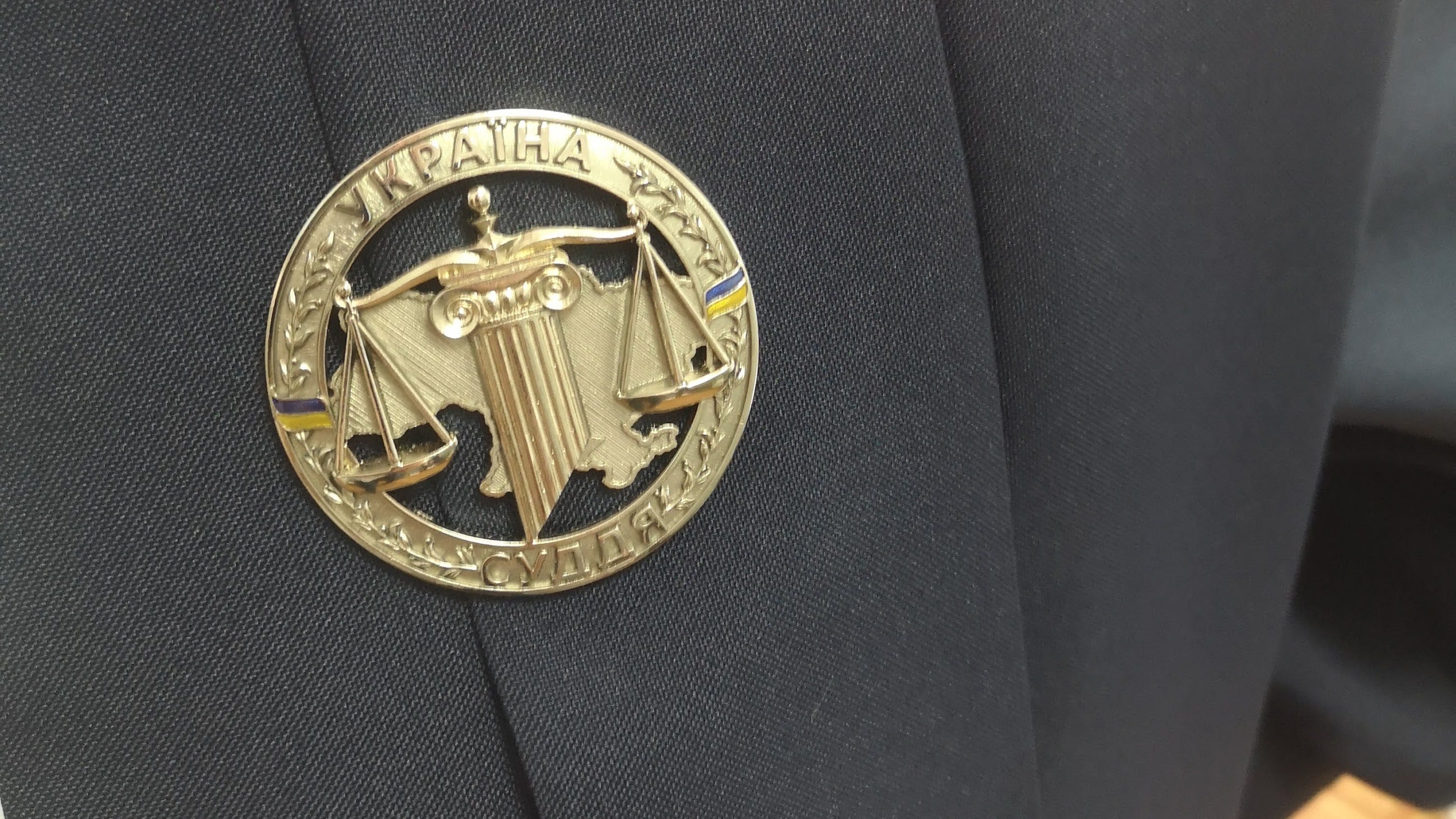
The war is everywhere in the thousands of rulings, sentences, decisions and opinions issued daily by the 587 courts dotting Ukraine (excluding the regions occupied by Russia).
There are the well-known sorts of cases—war crimes, collaboration, desertion, stories where the war is setting, cause and consequence all at once. On April 4, the Kharkiv court of appeal ruled on one of thousands of collaboration cases piling up in tribunals of frontline and formerly occupied regions. A teacher had previously been convicted for taking on the position of acting director of a high school in the Russian-occupied Kupyansk district in 2022, and had been sentenced to two years of prison and a five-year ban on education and local government work. She denied the charges and asked for the judges to overturn the sentence, but was rebuffed: the court rejected the appeal and increased the ban on working in education and local government to ten years.
Last month, a court in the Sumy region pronounced a ten-year, in absentia verdict for war crime, another category overwhelming the country’s judicial system (more than 200,000 war crimes investigations have been opened by Ukraine’s prosecutor general). This particular case involved a Ukrainian citizen fighting in the Russian army who had, in the first weeks of the invasion, tortured a woman in an attempt to find out the location of her son, suspected of being a Ukrainian soldier.
The Donetsk native (known by his call-sign ‘Medved’, ‘Bear’), had, according to the verdict, barged into a house of a village in the Sumy region in March 2022, threatened the woman, her husband and their grandson before seizing their phones. The verdict includes a dry, harrowing description of the family’s ordeal: “during the search, servicemen of the Russian armed forces fired into the well, thinking that the son could be hiding there [...] They then said they would take the grandson, a minor at the time, with them. The victim asked to be taken instead of the child, and said goodbye to her husband and grandson, because she thought she would not return alive”. She was then taken into an armored vehicle to a frozen pond and submitted to mock executions.
Other rulings give a glimpse into the immense strain that four years of war have put Ukrainian society under.
I came across three verdicts issued in the past couple of weeks in three strikingly similar cases of Ukrainians recruited by Russian intelligence to destroy strategic infrastructure or military vehicles. The three, unrelated attacks all took place within a few weeks of each other, in March and early April of last year. Initial recruitment always happened on the Telegram messaging app and, in two of the three cases, as the defendants were looking for paid work. On the orders of their handlers, one tried to burn a military car; another to destroy the transformer of a hydroelectric plant; and the third one to torch the trackside relay cabinet a a train signalisation system. Every time, they filmed the act in order to receive payment—and, in two cases, their interlocutor refused to send the money anyway (arguing in one situation the attacker hadn’t shown their face on the video, and in another that geolocation hadn’t been turned on).
But looking at those three stories side by side is maybe most interesting in the way it highlights the more vulnerable part of Ukraine’s society and Russia’s eagerness to exploit that fragility.
In Kharkiv, a struggling, 2d year student at a technical university was looking for a job and agreed one morning last year to set fire to a military vehicle for 1,000 dollars. The same evening, he found a parked Honda sporting camouflage painting, doused the hood with lighter fuel and struck a match. The owner of the car, a soldier who had just returned from combat duty in Russia’s Kursk region, later sent a letter to the court asking for leniency and saying the student’s father had paid for the damages. The student received a suspended 5-year sentence. Of the three defendants, he’s the only charged for “intentional destruction of property” rather than the much more serious “crime against the national security of Ukraine” and sabotage, though, strangely, the verdict opens by saying that the student, “lacking patriotic convictions”, “decided to embark on a course of unlawful activity and to commit unlawful acts against the foundations of Ukraine’s national security”.
On the banks of the Dnipro river, in central Ukraine, a woman suffering from schizotypal disorder (a mental illness “characterized by thought disorder, paranoia, a characteristic form of social anxiety, derealization”) was convinced by Russian intelligence to attack the nearby hydroelectric powerplant. She failed to cause real damage to the electrical transformer, and was told she wouldn’t get the money unless she attacked the next target, a post office mailbox—where she was ultimately arrested. She was sentenced to 15 years in prison with compulsory psychiatric care.
And in the western city of Lviv, an orphaned, barely-adult refugee from the frontline city of Zaporizhzia clumsily tried to set fire to a railway relay cabinet, only managing to burn paint off the metal box. He quickly confessed, “actively cooperated with the investigation,” entered into a plea agreement with the prosecution, and will only serve one additional year in prison (on top of the year of pretrial detention).
Another, recent judgement really struck me.
The 8,800-word verdict was published last month by a court in a town of the Khmelnytskyi region, in the West of Ukraine. It’s a gruesome read, messy, contradictory and full of gutwrenching little details that cut through the flatness of a judicial document.
It is the tale of a man beaten to death on Christmas Eve, as he and nine other men waited in barracks to be sent to the military the following morning. The trial ended in a guilty verdict and an eight-year prison sentence for the defendant who, like the victim, had just been forcibly mobilised.
The events involved ten men mobilised in the previous days in the town of Shepetivka, as well as the five-or-so officers from the mobilisation center tasked with guarding them. At some point on the evening of December 24, 2024, the men learned they would be sent to the training ground the next day at 4 am. One of them panicked and tried to escape, was caught, tried to bite the finger of a mobilisation officer, was held and beaten—by the guards as well as the defendant. One of the military officers ended up tying the victim’s hands and feet with tape before stuffing a sock in his mouth and, according to two witnesses, giving him “an injection”. A military officer also reportedly told the men they would have to deal with the terrified recruit themselves if they wanted to sleep.
But the man didn’t calm down. The scene repeated itself over the next hour as he tried to escape and was beaten again and again, ultimately lying motionless on the ground between two beds. The flurry of hits left him with 15 broken ribs, among a multitude of other injuries “caused by at least 26 traumatic blows” to the head, chest and back. The court concluded that the defendant had landed the killing blow, a fist to the jaw that knocked the man down and caused him to hit his head on the floor.
The man moaned in agony throughout the night and was barely conscious, maybe fully unconscious (the document isn’t clear), by the time the group was woken up to go to the military unit. He was dressed, at which point one witness saw he had urinated on himself, while another noted “his ear was blue, and there was a red bed sheet under him” (yet another witness previously said he had noticed the man bleeding from one ear). At 4.30 am, he was dragged to the bus, at which point one mobilisation officer finally called an ambulance. The verdict doesn’t say when exactly he died, or whether any mobilisation officers were charged as well.
Then, and finally, there are all the other verdicts, where the war is seemingly absent, or appears as background noise rather than as an active presence.
In March, a court in Chernihiv, a region bordering Russia north of Kyiv, sentenced a man to a six-year jail term in a banal criminal arson case—nothing like the Russian-directed crimes highlighted above. Six months before, the man had joined an unidentified figure at a KFC restaurant on Odesa’s bustling Derybasivska street. There, he was promised 2,100 dollars to set fire to a cocktail bar in Chernihiv, on the other side of the country. The mysterious figure reportedly told the accused he had “decided not to go to Chernihiv himself because of the threat of being mobilised during a control” by military recruiters. He also demanded a video of the crime before sending payment.
The man went to Chernihiv a few days later and quickly went to work, holding the camera as his two accomplices lobbed three Molotov cocktails into the wrong restaurant. They retreated to Kyiv and tried again four days later, this time successfully torching the cocktail bar serving smoke-infused Bloody Marys and truffle Negronis that was the original target. The unlucky group was later arrested at a police checkpoint outside of Chernihiv.
The man, who already had multiple convictions served in Mariupol before 2022, repented. “He currently wishes to join the Armed Forces of Ukraine and has requested a suspended sentence” the verdict read.
No posts
Comments
Nothing yet. Say the first thing.
Sign in to join the conversation.