
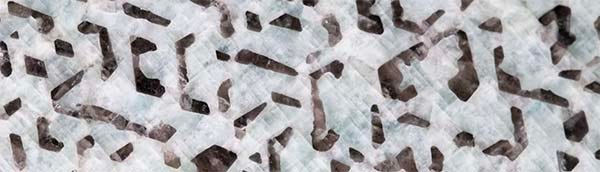
What makes art? I’ve grappled with this question for decades as I use scientific data in much of my artwork. If one makes data visually interesting, is it just fancy illustration – a more interesting form of presenting data? Expensive drafting?
A couple of months ago, I wrote here of my exploring calligraphy as art as I started playing with the visual image of graphic granite. Graphic granite results from two different minerals crystalizing at the same time – late stage granitic magma when feldspar and quartz grow together. The resulting texture reflects the crystalline structure of two minerals – and I think dominated by quartz……hexagonal, prismatic forms.
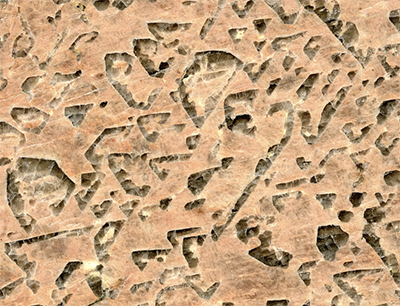
I traced the shapes of quartz crystals from this photograph. The results are ‘eh’ but - unfulfilled potential.
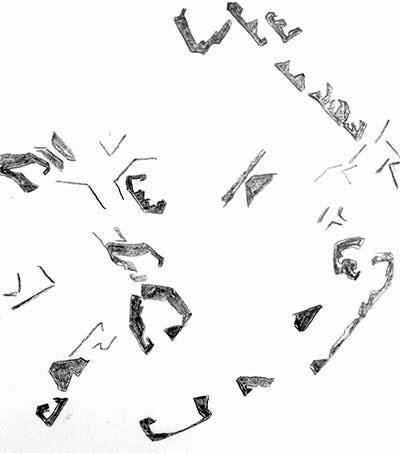
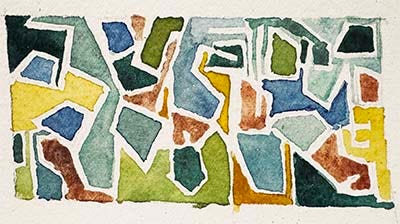
Then I attended a calligraphy workshop by Gabriel Soba of Barcelona. We explored Gaudi’s architecture and his modernist alphabet – a mixture of structure and ornamentation. Very organic. https://www.gabrielasoba.com/en-gb
I chose this workshop for the geometric forms Soba developed from Gaudi’s extensive mosaic work. This particular piece, especially the lower left-hand artwork, reads as stones to me.
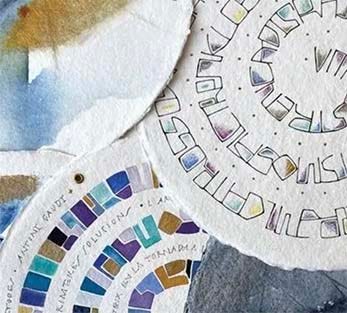
I developed my own script based on Gaudi’s own mosaics - which illustrates the potential of the granite for future exploration.
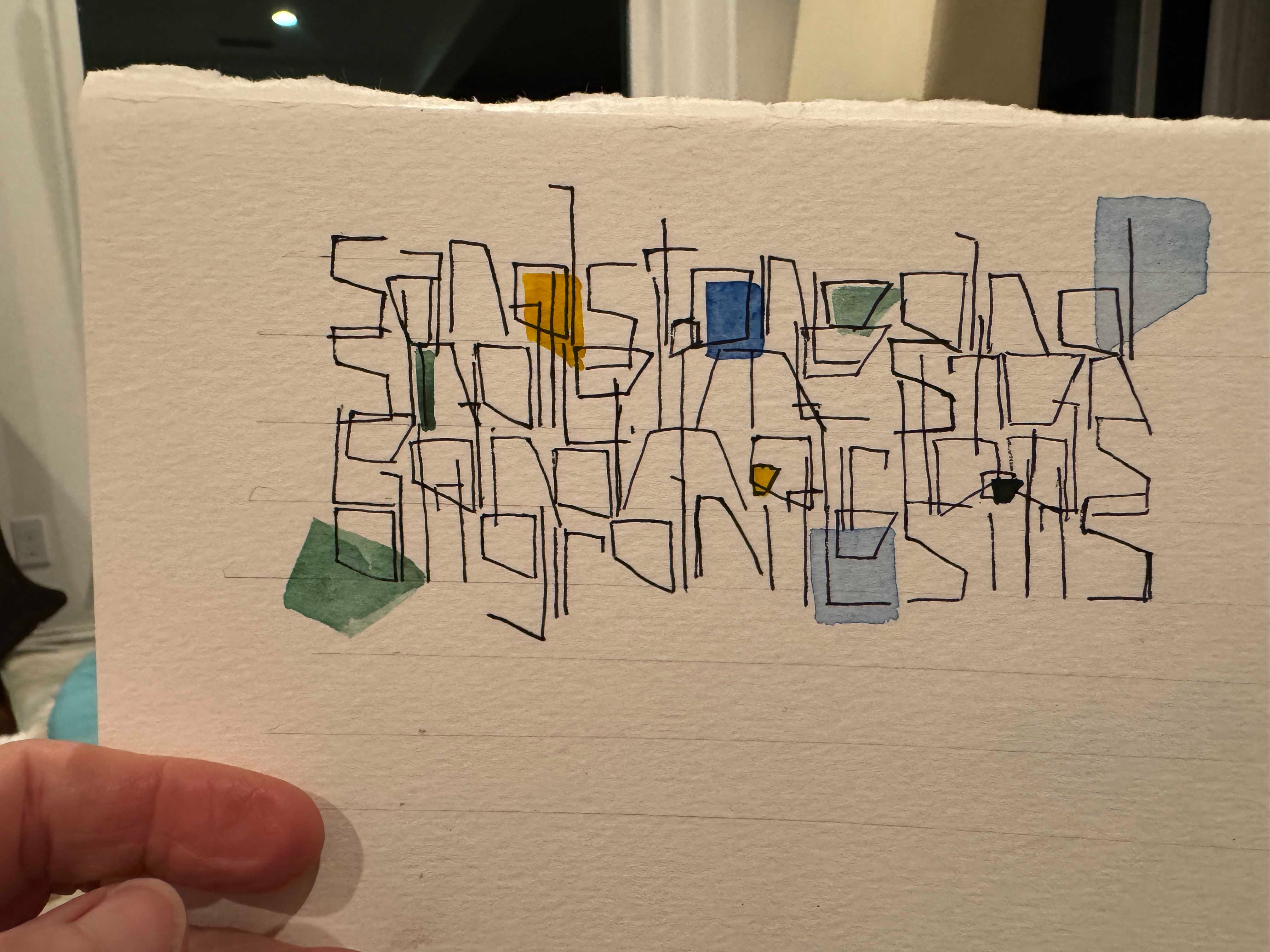
Stay tuned for more exploration.
I met a young woman at the San Francisco Writers Conference late last year. Emilie Lygren, a geologist, poet, and outdoor educator, had published a book of poetry which caught my eye - one need not wonder why. She has graciously offered a poem here.
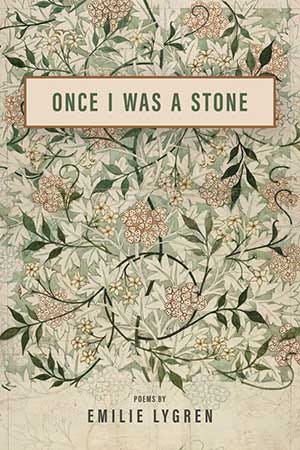
Text within this block will maintain its original spacing when published
Gathering stones

As a child I gathered stones.
Black-flecked granite grown
orb-like in a stream under cottonwoods,
their durable stories
shoved into the pockets
of my jean shorts or overalls.
When the other kids
looked at me sideways
asked me why I didn’t like
wearing dresses,
I could touch the stone
remember the trees,
who never asked me to
explain myself,
who understood
my silence perfectly.
I felt more like rock
than girl or boy,
more like sand than child,
something shaped slowly over years,
rubbed softly until smooth,
companion of tree roots,
young dragonflies,
the shimmer of fish.
When raised brows
said I didn’t fit in
I wanted to stare back
solid as the stones.
Eyes winking like flakes
of mica lodged between quartz.
Just as sure of myself
as something millions
of years old, just as
unconfused.
II.
My friend’s four-year-old
looks down at her new dress and says,
“This dress doesn’t have pockets…yet.”
She wants her mother to sew pockets
onto any garment that doesn’t have them
so she can gather stones and feathers,
acorns, tiny bird skeletons, leaves,
things she might find along a forest path.
“Yet” works like that:
A waiting pocket.
Placeholder for the number to be solved.
Orange flags to show the line of an unbuilt roof.
And gathering works like that, too:
looking around for what shines.
How everything I have ever picked up
helped me know myself a little better.
Like the stones I held tight,
not yet knowing how sure
I would someday become.
In my last newsletter, I described the geology of the Brandberg Mountains in Namibia, and I promised to go through the collection crystal by crystal. Well, today iMovie crashed - and it’s already been too long between newsletters. These crystals are millions of years old - they can wait another month.
I am writing a book about how people experience the Earth in different ways. In EarthToSusan, I’ll bring science, poetry, music, theology, literature, philosophy, history, geography, politics, and economics to these pages – all in relationship to Earth.
I believe that helping people understand that we all see the Earth in different ways will open conversations to help find solutions for the many issues facing the planet we call home.
I hope you will continue to read this and share with your friends! It’s free.
Until next month,
Thanks for reading Earth To Susan! Subscribe for FREE to receive new posts and support my work. Just click ‘no pledge’.
No posts
Comments
Nothing yet. Say the first thing.
Sign in to join the conversation.